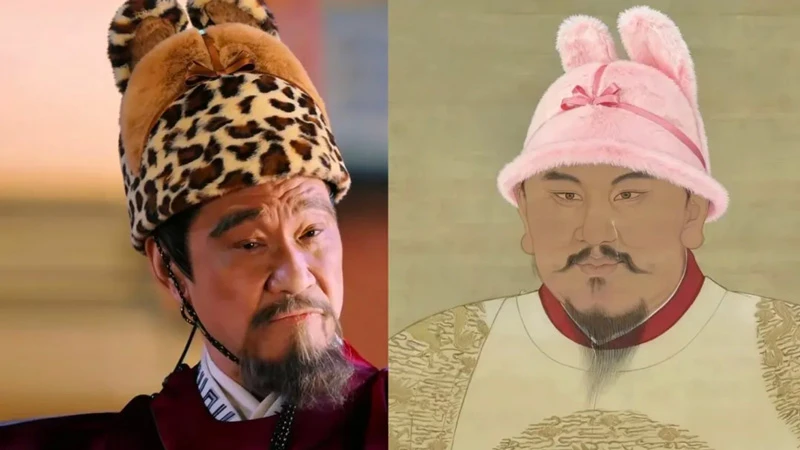
A simple black hat, once reserved for Ming Dynasty emperors, has hopped from the solemn pages of history into the playful heart of internet culture. Known formally as the Yishan Crown (翼善冠), this piece of royal headwear is now affectionately dubbed the “bunny hat” by netizens and Hanfu enthusiasts. Its journey reveals how a potent symbol of imperial authority can be transformed, through a lens of modern creativity and humor, into a beloved cultural icon. This shift is more than a mere change of name; it represents a fresh, accessible dialogue with the past.
A Crown’s Evolution
The story of this distinctive cap begins long before the Ming Dynasty. Its earliest ancestor is the Futou (幞头), a headscarf worn by men in the Tang Dynasty. Initially a practical cloth for tying up hair, its soft, hanging flaps might remind one of a rabbit’s drooping ears. By the Song era, the Futou had stiffened and formalized, most notably in the official’s black gauze cap with long, straight wings. When the Ming founder, Zhu Yuanzhang (朱元璋), sought to restore traditional dress codes, he adapted these styles for a new imperial aesthetic.
For his officials, he maintained the black gauze cap with horizontal wings. For himself and the royal family, however, he sanctioned a different design: a cap with two wings folded sharply upward. In 1405, it was decreed the emperor’s everyday crown would be black gauze with the angles pointing up. Because the shape of these folded angles resembled the Chinese character for “good”, the cap earned its formal name, Yishan Crown, or “Crown of Uplifting Goodness.”
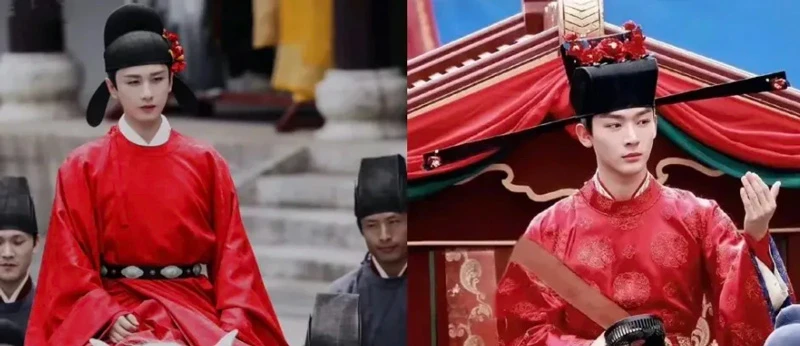
This royal version was an exercise in minimalist luxury. Comprising a front, a rear mountain, and the iconic golden folded angles, it was worn for various occasions. Its upward-thrusting profile also earned it the nickname “soaring crown,” famously referenced in the classic novel Journey to the West (西游记). The design evolved subtly over time; later versions, like one from the Wanli (万历) Emperor’s reign, were adorned with intricate gold dragons playing with a pearl, their angles becoming more rounded.
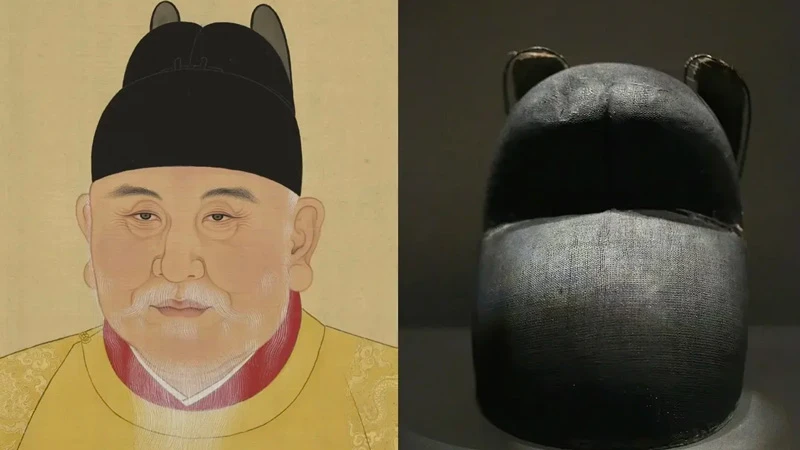
Ears of the Emperor
So how did this imperial symbol become an online “bunny hat”? The answer lies entirely in its most striking feature: the two upward-folded angles. To the modern eye, these smooth, curved protrusions bear an uncanny resemblance to a rabbit’s perked-up ears. The dark black gauze base completes the likeness, mirroring the color of many cartoon rabbit characters. This visual pun is intuitive and delightful, bridging six centuries in a single, charming comparison.
Netizens have fully embraced the metaphor, joking about inherent “rabbit” traits passed down through history. This affectionate rebranding does more than just assign a cute name. It actively demystifies a distant artifact, making it relatable and sparking curiosity about its true origins. The creativity extends beyond naming; crafters have even produced plush, furry versions of the crown, literally softening its imposing historical edges.
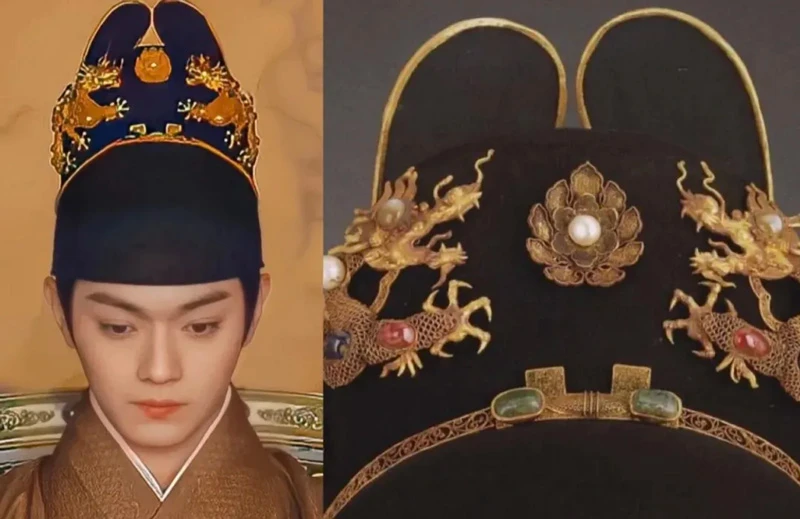
The phenomenon underscores a dynamic, living relationship with cultural history. It is not merely about preservation but about reinterpretation and playful engagement. By seeing a rabbit in an emperor’s crown, people forge a personal, emotional connection to an object once shrouded in absolute power. This spontaneous act of naming and sharing is a powerful form of contemporary storytelling, ensuring that the Yishan Crown is remembered not only for what it was, but for what it can whimsically become.