
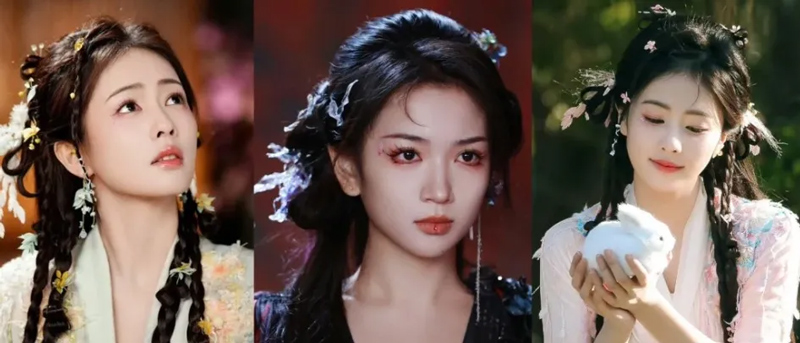
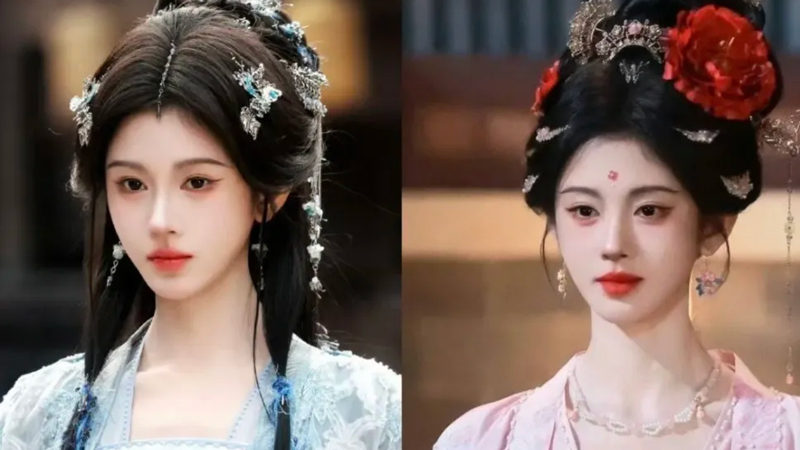
Watch any current Chinese historical television series, and a familiar visual echo emerges. From princesses of the Tang Dynasty to wandering swords-women of the Wuxia genre, a single, standardized face seems to dominate the screen. This uniform look features sharply defined eyebrows, porcelain-white foundation, dramatic eyelashes, and vivid red lips, all smoothed under heavy digital filters.
The result is a procession of performers who appear molded from the same template. This phenomenon transcends mere casting trends; it reflects a profound shift in aesthetic principles, where personalized character design has been sacrificed for a replicable, instantly recognizable "instagrammable" beauty. The question isn't just about makeup—it's about what we have collectively decided to value in visual storytelling.
The Disappearing Face
The craft of screen makeup was once a tool for transformation and revelation. Its purpose was to serve the narrative and illuminate character. An actor's face was a canvas where time, status, and personality could be painted. Today, that priority has often inverted. The primary goal appears to be making the actor conform to a trending, socially-mediated ideal of beauty, regardless of historical context or role. Makeup artists, sometimes less experienced than popular beauty bloggers, apply the same techniques to every performer.

This creates a jarring dissonance. A fierce general and a delicate scholar might sport identical eyebrow shapes. A peasant and a noble share the same flawlessly matte complexion. The makeup does not adapt to bone structure or skin tone; it imposes a blanket standard. This practice treats the actor's unique features not as assets to be enhanced for the role, but as irregularities to be corrected and hidden beneath a uniform mask. The individual vanishes, and with it, the audience's ability to believe in the character as a distinct person.
This standardized approach extends beyond the screen, influencing real-world beauty culture. Beauty salons and photography studios promote the same popular styles. Consumers chase trending lipstick shades with names like "Mermaid Tears" or "Dried Chili," often without considering if the color complements their natural coloring. The pursuit is not for a color that suits *them*, but for the color that signals they are in vogue. A foundational obsession with unnatural pallor sees the lightest shades of foundation sell out, while warmer, more natural tones linger on shelves. The screen's idealized image has become a blueprint for reality.
A Different Mirror
Historical Chinese aesthetics offer a striking contrast to this modern homogeneity. Philosopher Kong Zi (孔子) once stated, "The application of color comes after a plain ground is established." This idea, "Artistic embellishment comes after plainness," suggests true artistry and beauty build upon a solid, authentic foundation. Another enduring maxim, "Beauty is more about essence than appearance," asserts that beauty lies in bone structure and spirit, not merely in superficial skin. Makeup was meant to subtly highlight this inherent quality, not replace it.

Consider the Tang Dynasty, often misrepresented today by excessively heavy makeup. Historical records indicate Tang fashion indeed favored boldness, but it was a specific boldness of color—particularly red on the cheeks and lips—and an adventurous variety of eyebrow shapes painted directly onto the forehead. It was an expression of cultural confidence and artistry, not a one-size-fits-all mask. The story of Lady Guo (虢国夫人), sister of the famous Yang Guifei (杨贵妃), is telling. She was known for appearing before the emperor without powder or rouge, "show up with a bare face," confident in her own natural appearance. This act was celebrated, not scorned.
This historical perspective underscores a shift in confidence. Traditional wisdom valued the underlying canvas. Today's prevalent style often reflects a lack of trust in one's natural assets, opting instead to conceal them beneath a manufactured ideal. The goal of makeup has subtly changed from enhancing one's unique features to erasing them in favor of a safer, more universally accepted template. It is a move from celebration to camouflage.
Redrawing the Lines
Is there a path back to individuality? The work of master makeup artist Mao Geping (毛戈平)provides a clue. He famously compared his technique to "rearranging the bones." His approach was intensely personal, rooted in studying the individual's unique skeletal structure and using light, shadow, and color to harmonize and enhance it. The result was not a disguise, but a more radiant version of the person themselves, perfectly tailored for their role. This philosophy places understanding above application.
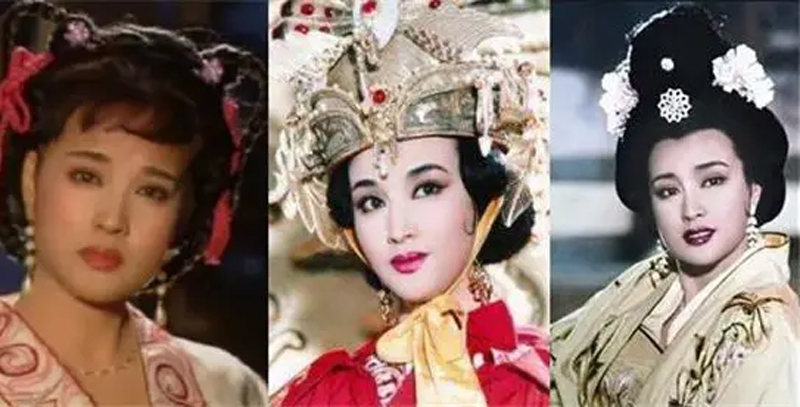
We can find powerful examples in older films. In the series The Burning of the Imperial Palace, actress Liu Xiaoqing (刘晓庆) played three vastly different roles—a courtesan, a princess, and a martial artist. Her makeup transformed not just her age, but her entire aura and character essence. Similarly, her portrayal of Wu Zetian (武则天) showed a believable aging process across decades, not a static face. The makeup told a story of time and power.
The ultimate test of this craft might be the 1996 Yue opera film Meng Lijun (孟丽君). Here, the then 70-year-old veteran artist Wang Wenjuan (王文娟) played the 17-year-old titular heroine. Through masterful, character-driven makeup and profound skill, she convinced audiences of the character's youth. Viewers today, upon discovering her real age, are often astonished. This is the power of makeup in service of character, not conformity.
The real challenge and opportunity lie in redefining the goal. The aim should not be to look at one's reflection after applying makeup and think, "I look like someone else." The victory is in thinking, "I look like the best, most authentic version of myself for this purpose." Whether on a film set or in daily life, the most compelling beauty has always been, and will always be, the courage to be distinctly you. In an ocean of similar faces, true impact comes from daring to be the original.
