Article
Search results:
-
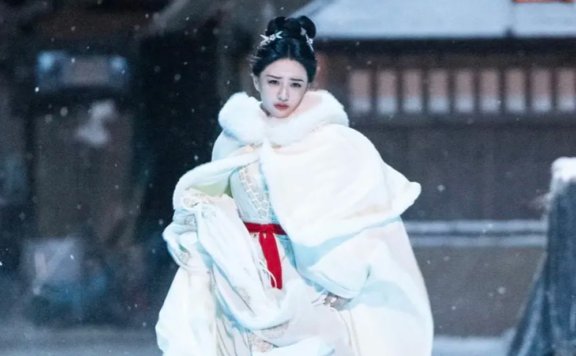
Why Does Xu Lu's Cloak in The Vendetta of An Look So Odd?
A curious detail in the new historical drama The Vendetta of An (长安二十四计) has captured the audience's attention. In it, actress Xu Lu (徐璐), who portrays the character Bai Wan (白莞), wears a cloak with an unusual feature: a separate panel of fabric draped over its back. This double-layered design strikes many modern viewers as anachronistic or simply strange, prompting questions about its historical accuracy. Could a cloak really be constructed this way in ancient times, or is this a fanciful creation of the costume department? The answer lies not in creative license, but in a forgotten practicality shaped by climate and necessity. A Functional Design The additional back panel is not mere decoration. It functions as a rain guard or wind flap. Its primary purpose was to create a protected air space between itself and the wearer's back. When rain or sleet fell, it would hit this outer layer first. Following gravity, the moisture would then slide down the panel's surface and away from the body, keeping the inner cloak—and the crucial lower back and waist area—dry and insulated. This logic is enhanced when the cloak material itself is water-resistant. Historical garments often used oils, waxed fabrics, or inherently… -
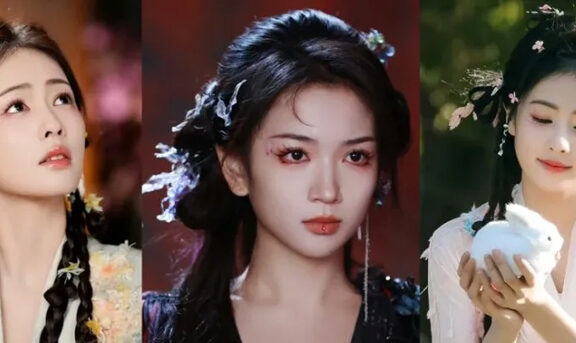
Why Does Every Face in Chinese Period Dramas Look the Same Now?
Watch any current Chinese historical television series, and a familiar visual echo emerges. From princesses of the Tang Dynasty to wandering swords-women of the Wuxia genre, a single, standardized face seems to dominate the screen. This uniform look features sharply defined eyebrows, porcelain-white foundation, dramatic eyelashes, and vivid red lips, all smoothed under heavy digital filters. The result is a procession of performers who appear molded from the same template. This phenomenon transcends mere casting trends; it reflects a profound shift in aesthetic principles, where personalized character design has been sacrificed for a replicable, instantly recognizable "instagrammable" beauty. The question isn't just about makeup—it's about what we have collectively decided to value in visual storytelling. The Disappearing Face The craft of screen makeup was once a tool for transformation and revelation. Its purpose was to serve the narrative and illuminate character. An actor's face was a canvas where time, status, and personality could be painted. Today, that priority has often inverted. The primary goal appears to be making the actor conform to a trending, socially-mediated ideal of beauty, regardless of historical context or role. Makeup artists, sometimes less experienced than popular beauty bloggers, apply the same techniques to every performer.… -
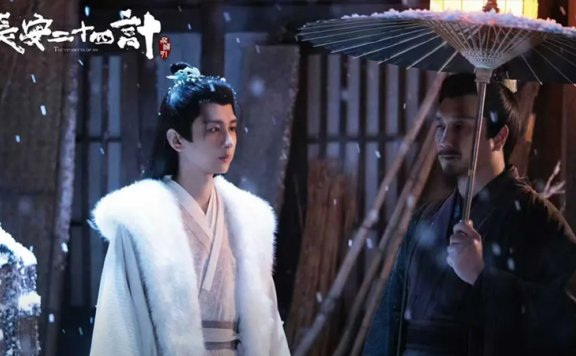
The Vendetta of An Leads the New Wave of Original Male-Oriented Dramas
The landscape of Chinese male-oriented content is shifting. For years, adaptations of sprawling web novels dominated this space. Now, a different model is gaining ground, one that favors original, tightly-plotted narratives over pre-existing fantasy worlds. This move represents a significant gamble for streaming platforms, trading the built-in audience of a popular novel for the unpredictable appeal of a fresh story. Exemplifying this trend is the new series The Vendetta of An (长安二十四计). It follows Xie Huai'an (谢淮安), portrayed by Cheng Yi (成毅), a man returning to the capital after years of planning revenge for his family's destruction. The plot revolves around his intricate schemes and dangerous alliances with figures like the new Emperor and a military commander. Without source material to guide them, viewers are plunged directly into a complex game of strategy and payback, making the viewing experience both challenging and engaging. The commercial confidence in this approach is evident. The series secured over forty brand partnerships before its premiere. Its rapid release on Netflix also marks it as an early international contender in the costume suspense genre this year. This year has seen a concerted push into this territory by platforms like Youku, with series such as The… -
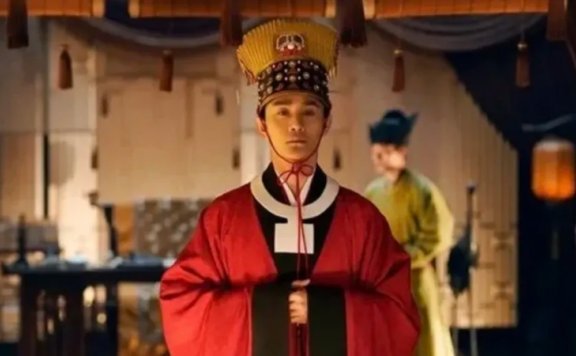
The Royal Collar: How a Song Dynasty Neckpiece Ruled the Court
In the historical drama Serenade of Peaceful Joy (清平乐), a peculiar white neckpiece adorns the robes of officials, instantly capturing the modern viewer's eye. To contemporary audiences, it might resemble an odd fashion accessory or even a pet's collar. But this item, far from mere decoration, was a powerful instrument of state authority. Its correct name is the Fangxin Quling (方心曲领), and its story is one of rigid hierarchy, cosmic symbolism, and physical discipline within the imperial system. A Mark of Rank Not every official in the Song Dynasty could wear the Fangxin Quling. Its privilege was reserved by law for those of the seventh rank and above, specifically those entitled to wear a certain type of ceremonial undergarment. This regulation, documented in texts like the Book of Sui (隋书·礼仪志七), made it a clear, visual demarcation between high-ranking central bureaucrats and lower-level local magistrates. It was a badge of inclusion within the empire's most powerful administrative circle. This was not a Song invention. The collar's institutional origins can be traced back to the Sui and Tang dynasties, evolving from more complex ceremonial attire. The Song court fully standardized and codified its use, embedding it firmly within the formal court robe… -

How Han Became a Cultural Marker
Have you ever wondered why we are called the Han people? What is the story behind this name that defines a civilization? A Name Forged in History The term "Han" finds its anchor in one of China's foundational dynasties. Following the brief but brutal Qin Dynasty, a power struggle erupted. Liu Bang (刘邦), a rebel leader, was granted the title "King of Han" after the region of Hanzhong (汉中). His advisor, Xiao He (萧何), saw profound meaning in this name. He connected it to "Tianhan (天汉)," a poetic ancient name for the Milky Way, arguing it signified majestic grandeur and celestial favor. When Liu Bang emerged victorious, founding a new era of stability and expansion, he adopted Han as the dynasty's name. This was no ordinary dynasty. Lasting over four centuries, the Han Dynasty solidified a centralized state, expanded its territory significantly, and established the Silk Road. Its administrative reforms, cultural achievements, and military strength created a powerful, enduring legacy. To people beyond its borders and to generations within, "Han" became synonymous with this powerful, sophisticated civilization. It was an identity marker long before modern ethnic concepts existed. Other powerful dynasties came and went, like the celebrated Tang. Yet while… -
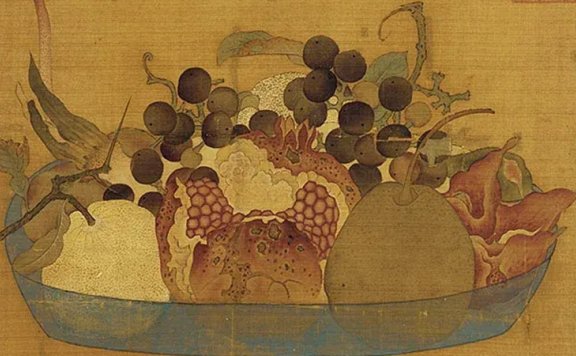
Did Ancient Chinese Emperors Crave Summer Fruits Like We Do?
Today, our globalized world delivers tropical delights to distant continents, making seasonal or geographic limitations seem like a quaint concept. But for most of human history, the contents of a fruit bowl were strictly governed by what the local land offered each season. The journey of fruit in ancient China is not merely a tale of agriculture, but a captivating story of imperial desire, technological ingenuity, and the slow, patient weaving of trade routes that connected empires. It reveals a world where a single peach was a token of friendship, a grapevine was a treasured import, and the taste of a fresh lychee was a luxury worth extraordinary cost. Peaches and Plums In the primal forests and along the riverbanks of ancient China, the first fruits were those provided by nature untamed. Early peoples were careful foragers, observing which berries and nuts animals ate before deeming them safe. The foundational fruits of Chinese civilization emerged from this period: the peach, the plum, the jujube (or Chinese date), and the apricot. These are the fruits immortalized in the Book of Songs (诗经), their flavors often tart or astringent compared to modern varieties. These native species held deep cultural significance. The phrase… -
Standout Chinese Historical & Fantasy Dramas of 2025
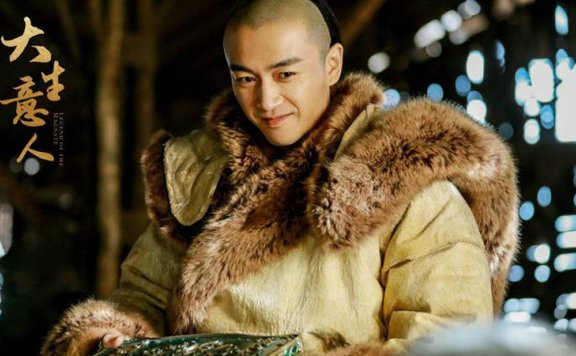
The year 2025 promises a rich harvest for Chinese period and fantasy drama, offering audiences not just escape into the past, but deep immersion into meticulously constructed worlds. This season’s standout series move beyond generic palace intrigues or simplistic romances, instead grounding their narratives in the specific textures of commerce, magic, and forensic science. From the clink of silver in merchant guilds to the whisper of ancient spells and the silent testimony of a corpse, each story finds its power in granular detail and specialized domains. Legend of the Magnate (大生意人) Aired: 2025 Period Background: Late Qing Dynasty, Xianfeng (咸丰) reign onwards Genres: Historical, Business Saga, Drama Main Roles: Chen Xiao (as Gu Pingyuan), Sun Qian (as Chang Yu'er) Adapted from: Original script The late Qing Dynasty was a cauldron of upheaval. Gu Pingyuan (古平原), a scholar falsely accused in the imperial examinations, finds himself exiled to Ningguta (宁古塔), a remote penal colony. His journey, however, becomes a detour into a different kind of arena. A chance encounter with an old merchant, Chang Si (常四), ignites his latent acumen. Starting from the precarious margins of the salt and tea trades, he navigates a world governed not by Confucian classics but… -
6 Must-Watch Dramas: Ancient China’s Hidden Worlds
While modern audiences often associate historical Chinese dramas with palace intrigues or fantastical romances, a new wave of storytelling is pushing into grittier, more specialized territories. These series are moving beyond familiar frameworks to examine specific institutions, professions, and social structures of the past, offering a fresh lens on history. They blend meticulous period detail with narrative tension, creating worlds that feel both authentically distant and compellingly immediate. The following six upcoming series exemplify this trend, each carving out a distinct niche within the broader historical and Xianxia landscape. Win or Die (夜不收) Win or Die shifts the focus from the Forbidden City's glittering halls to the wind-swept, perilous frontiers of the Ming Dynasty. This series delves into the world of military intelligence and covert operations during a fragile peace. Period Background: Ming Dynasty, during the Wanli (万历) reign. The setting is the tense border regions between Ming forces and the Oirat Mongols, a landscape of shifting alliances and latent conflict. Genres: Historical, Military, War, Espionage Main Roles: Jing Boran (井柏然) portrays Chen Guang (陈广), the stoic and capable commander of a "Win or Die" unit. Wu Xingjian (吴幸键) plays Qiao Sanyi (乔三一), his protege, tasked with a mission that… -
Legend of the Magnate: Lessons in Human Nature and Commercial Strategy
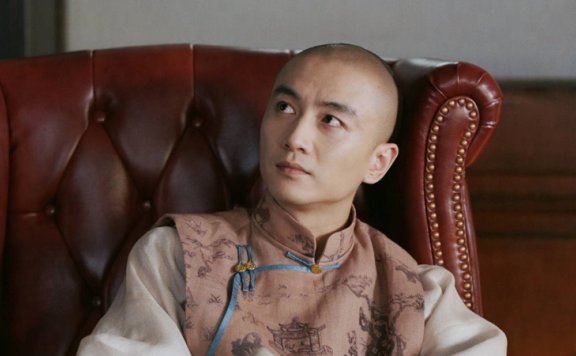
Set against the turbulent backdrop of late Qing Dynasty China, the television drama Legend of the Magnate (大生意人) has captured national attention. It follows the extraordinary journey of Gu Pingyuan (古平原), a man who rises from exiled convict to commercial titan. His ventures span banking, tea, and the lucrative salt trade, bringing him into complex dealings with officials, gentry, fellow merchants, and foreign interests. At its core, the drama is a masterclass in human psychology, demonstrating that success in commerce is inextricably linked to understanding people. The strategies Gu employs to navigate a world of greed, wisdom, and power are not relics of the past; they are timeless insights into human motivation. Mastering these principles of human interaction can provide a decisive advantage in any endeavor. Leveraging Greed The character of Wang Tiangui (王天贵) embodies insatiable greed. As a wealthy Shanxi (山西) banker, his vaults are full, yet his desire for more is endless. His ultimate goal is to seize the legendary Chuang Wang (闯王) treasure. Gu Pingyuan understands this driving force perfectly. Instead of confronting Wang directly, he dangles the ultimate bait: access to the treasure. Lured by the promise of unimaginable wealth, Wang follows Gu into a vault… -
Legend of the Magnate: The Tea Merchant Who Outsmarted an Empire
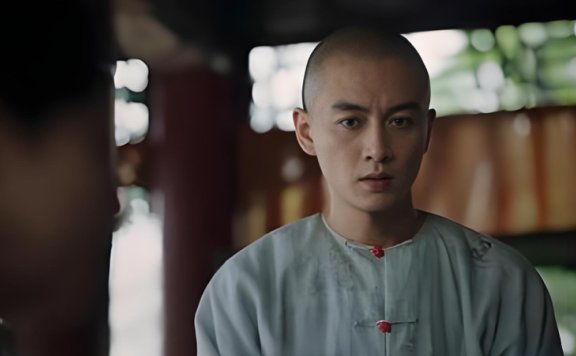
Fictional sagas often chronicle the rise of heroes, but few journeys are as starkly transformative as that of Gu Pingyuan (古平原). His life, a tapestry woven with threads of betrayal, ingenuity, and relentless patriotism, transcends a simple business fable. Stripped of everything during the Qing dynasty, he faced exile in the frozen wasteland of Ningguta (宁古塔), a punishment orchestrated by the unlikeliest of foes. Yet, from this desolation, he would emerge not just as a survivor, but as a commercial legend whose decisions swayed national economies and challenged foreign powers. His story is not one of unchecked triumph, but a testament to the cost of greatness, where every victory is tempered by personal sacrifice and the ever-looming shadow of a crumbling state. Exile and Survival Gu Pingyuan’s early path mirrored that of countless scholars, defined by books and the imperial examinations. A brilliant student, his destiny seemed fixed until a cruel interruption—news of his mother’s critical illness—shattered his composure in the exam hall. The resulting disturbance earned him a 15-year sentence to Ningguta. Unbeknownst to him, this was no accident of fate, but a calculated move by his own father, who had abandoned his family and rebuilt his life as… -
The Masterful Plot and Cast of The Vendetta of An
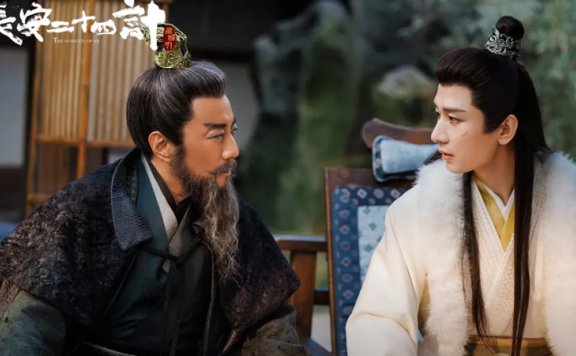
Can a historical drama thrive on cunning strategy and raw vengeance alone? The new series The Vendetta of An (长安二十四计) argues a resounding yes. Diverging from the romantic fantasies flooding the market, this show plants its flag firmly in the territory of high-stakes political intrigue and personal retribution. Its premiere has ignited fervent discussion, positioning it as a potential dark horse in the year-end lineup. The appeal lies not in lavish costumes or fantastical elements, but in a grounded, relentless narrative driven by complex characters portrayed by a formidable ensemble cast. It is a stark, compelling reminder of the power of a well-told story of revenge. A Cast of Calculated Performances The series' greatest strength is its collective acting prowess. Cheng Yi (成毅) shatters his previous youthful image to portray Xie Huai'an (谢淮安), a man transformed from a brilliant prodigy into a patient schemer burning with a ten-year-old grievance. His performance is a masterclass in restraint, where simmering rage and profound hurt are conveyed through a subdued gaze and measured delivery rather than overt outbursts. A line like "I cannot bear to see any of my enemies meet a good end" lands with chilling precision because of the quiet intensity… -

Why Zhang Yaqin’s Era-blending Outfit Divided the Internet
When actress Zhang Yaqin (张雅钦) recently appeared in a Hanfu ensemble, the internet divided. For some, it was an immediate callback to her role as Lu Yuan (陆鸢) in the time-travel drama An Ancient Love Song (古相思曲). For many others, the look missed the mark, feeling disjointed and overly busy. Why did this particular outfit, rich in historical references, fail to resonate? The answer lies not in a lack of beauty, but in a collision of eras. Her styling became a textbook case of how mixing distinct historical aesthetics without a unifying vision can create visual confusion, pulling the observer out of the immersive fantasy such clothing aims to build. Historical Harmony Lost The most striking issue is the temporal dissonance. Her hairstyle is a Shuang Huan Wang Xian Ji (双鬟望仙髻), a high, twin-loop style popular during the Wei, Jin, and Northern and Southern Dynasties, often seen in deity and court lady paintings. This ethereal look was complemented by dangling side locks, or Chui Shao (垂髾), enhancing the otherworldly vibe. However, the hairpins tell a different story. She wore two styles of Buyao (步摇), or step-shakers. One was a Western Han design, its dangling beads meant to sway gently with… -
Why Yang Mi's Hair Buns Are Sparking a Fashion Reshape?
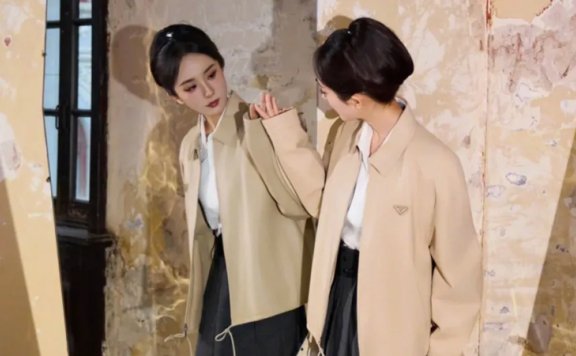
A recent public appearance by actress Yang Mi ignited a fiery online debate. Her choice? A meticulously crafted traditional Chinese hair bun paired not with a Qipao or modernized Hanfu, but with a crisp, contemporary blouse. Critics were quick to declare the mix a mismatch, questioning the logic behind blending a classical hairstyle with Western-style fashion. Yet, this seemingly simple style clash touches on deeper questions about tradition, modernity, and who gets to define the rules of cultural expression. Is this a fashion faux pas, or a bold step towards redefining a heritage art form for a new generation? A Historical Journey The Chinese hair bun, or Ji (髻), is far more than a hairstyle. Its history is woven into the fabric of social rites and personal identity. In ancient China, the act of a young woman putting up her hair for the first time during the Jiji Li (及笄礼), or Hair Pinning Ceremony, was a pivotal rite of passage into adulthood. This transformation from loose locks to a secured bun was a powerful social symbol. Archaeological evidence suggests the practice dates back to the Neolithic Age, evolving significantly through dynasties. The Han Dynasty favored soft, low-hanging chignons that conveyed… -
Is Treasure at Dawn the Best Mystery Show You're Not Watching?
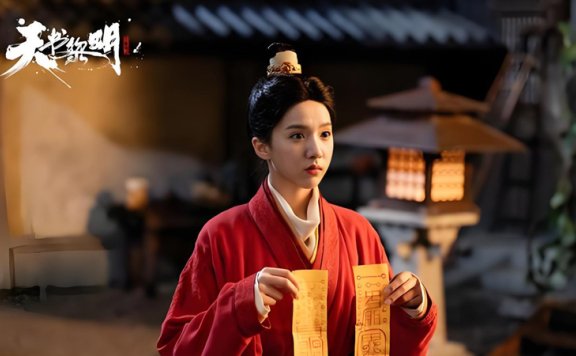
A new period mystery series quietly premiered on national television, yet its arrival stirred little immediate fanfare. Treasure at Dawn (天书黎明) features young investigators using ancient medical wisdom to solve crimes, a premise that seemed ripe for attention. Starring Li Hongyi (李宏毅), Su Xiaotong (苏晓彤), and Yu Cheng'en (余承恩), the show promised a blend of historical intrigue and Traditional Chinese Medicine (TCM) unlike anything else on air. Despite its creative ambitions, viewer numbers have been modest, leaving many to wonder if this unique drama has been prematurely overlooked. What happens when a detective's toolkit contains not a magnifying glass, but acupuncture needles and herbal formulas? A Novel Prescription The series immediately distinguishes itself through its core investigative method. The story begins with a mass poisoning at a medical gathering. Li Hongyi's character, Fu Sheng (符生), a young physician, finds himself the prime suspect after his mentor dies clutching a rare medicinal ingredient. To clear his name, he must rely on the Yellow Emperor's Inner Canon (黄帝内经), applying diagnostic principles like observation, listening, questioning, and palpation to crime scenes. A discolored tongue coating or an irregular pulse becomes a vital clue. In the opening episodes, over twenty specialized TCM terms are… -
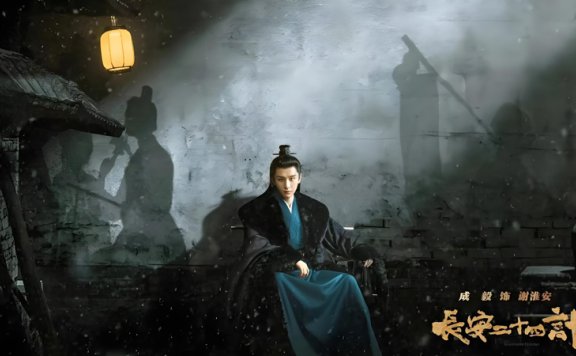
The Vendetta of An: A Strategist in the Imperial Capital
The long-awaited historical drama The Vendetta of An (长安二十四计) has premiered, plunging viewers directly into a world of political decay and personal vendetta. At its heart is Xie Huai'an (谢淮安), portrayed by Cheng Yi, a man whose life was shattered fifteen years ago when the ruthless commander of the Huben Army (虎贲军), Yan Fengshan (言凤山), slaughtered his entire family. Now, a summons from the turbulent capital, Chang'an (长安), drags him back from a hard-won life of exile. The empire is in crisis. After the emperor's death, Yan Fengshan seized power, installed a puppet child emperor, and purged the nobility. The rightful heir, Xiao Wuyang (萧武阳), has marched his army to the gates of Chang'an to reclaim the throne, only to find the city a nest of spies loyal to the vanished tyrant. Xie Huai'an, carrying the weight of a blood feud, is recommended as a tool to navigate this deadly labyrinth. But his return ignites a chain of betrayals, forcing him to confront the true cost of revenge and loyalty in a city where every ally could be a hidden enemy. A Debt of Blood Xie Huai'an's quest begins not with a triumphant return, but with a devastating personal sacrifice.… -
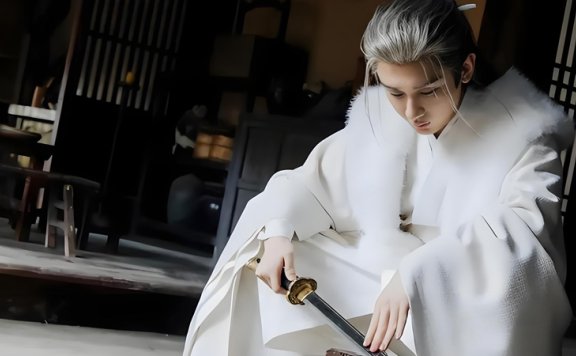
The High-Stakes Conspiracy of The Vendetta of An
Forget everything you think you know about historical revenge tales. A new series has captivated audiences not with flashy special effects or simplistic heroes, but with a labyrinth of intellect where every character is playing a high-stakes game. If you've ever felt your intelligence was insulted by predictable plots, The Vendetta of An (长安二十四计) offers a different promise: a narrative that respects your ability to think. This isn't just a story about settling a score; it's a masterclass in psychological maneuvering set against the breathtaking backdrop of the Tang Dynasty capital. The Chessboard of Revenge The premise seems familiar at first glance. A scholar, Xie Huaian (谢淮安, played by Cheng Yi), returns to the capital a decade after his family's massacre, his hair turned white and his body frail. He seeks answers. Yet, to label this a simple revenge narrative is to mistake the pawn for the king. Within episodes, the scope explodes. The personal tragedy is merely the first thread pulled in a tapestry of political conspiracy that envelops the entire court. Emperor Xiao Wuyang (萧武阳) sees Xie Huaian as a potential weapon against a powerful general, Yan Fengshan (言凤山), whose military success has made him a threat. The… -
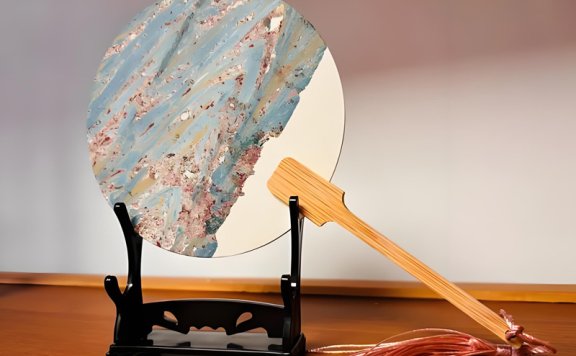
How a 7,000-Year-Old Lacquer Craft Defines Chinese Art and Identity
The story begins with a single tree, the Toxicodendron vernicifluum, and the precious sap it weeps. For millennia, this substance, known as Daqi (大漆), has been far more than a simple material; it is a flowing chronicle of Chinese civilization itself. Its deep, luminous sheen has reflected the faces of emperors and artisans, captured the ethos of philosophical schools, and preserved the artistic ambitions of countless dynasties. From the tombs of ancient kings to modern studios, the journey of lacquer is a testament to enduring beauty and resilience, a slow art in a fast world that continues to whisper secrets from the distant past. A Material History Archaeology provides the first chapter. At the Kuahuqiao (跨湖桥) site, a lacquered bow, silent for roughly 8,000 years, speaks of a Neolithic discovery. This artifact stands as the earliest known evidence of humanity's relationship with this transformative sap. Not long after, at Hemudu (河姆渡), a wooden bowl coated with a startling vermillion hue confirms that early communities had already mastered basic color application. These were not mere utilitarian objects; they were the first experiments in a medium that would come to define luxury and spiritual expression. By the Shang and Zhou dynasties, lacquer… -
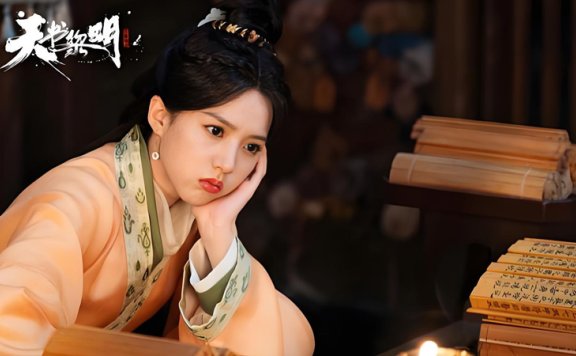
Fu Sheng’s Quest for Truth in Treasure at Dawn
The journey to West River was meant to be straightforward. For Fu Sheng (符生), the task was simple: find the scholar Song Jingye (宋静野), as instructed by his father's plea. Yet, in the shadowy world of Treasure at Dawn (天书黎明), nothing remains simple for long. A single meeting is all they get before Song Jingye is found dead, his life brutally cut short. The only clue he leaves behind is a fragment of jade, carved like a wisp of cloud. This small token thrusts Fu Sheng, alongside the sharp-witted Junzhu (郡主) and their companions, into a turbulent region where power is fragmented and trust is a scarce commodity. They arrive in a land torn between merchant guilds, horse clans, and a city lord, each faction operating as its own sovereign island. The central mystery of Song's death becomes a key, potentially unlocking a greater puzzle tied to legendary treasure and a cryptic Tianshu (天书)—a celestial book promising untold secrets. A Fractured City West River is a cauldron of conflict. The powerful merchant Shanghui (商会) and the nomadic Mabang (马帮) are locked in a violent stalemate, their battles spilling into the streets and poisoning daily life for the common people. Initial… -
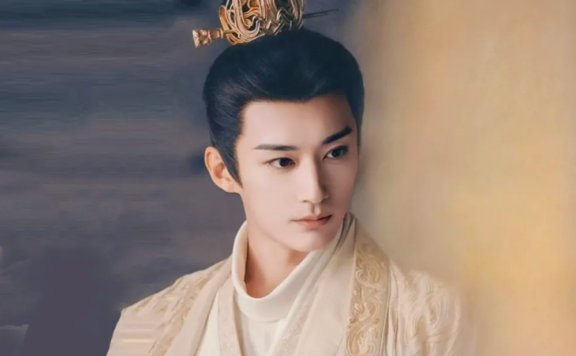
Did Han Dynasty Men Wear High-Collars?
A recent period drama costume has ignited curiosity about ancient Chinese fashion. Actor Liu Xueyi (刘学义) appeared in promotional images wearing a high-necked inner garment, a style unfamiliar to many modern viewers. Fans quickly dubbed it the "neckless" undershirt, sparking online discussions about its historical accuracy. This sartorial detail is not a costume designer's fantasy but a potential revival of a real, yet enigmatic, item from the Han Dynasty known as the Quling (曲领). The debate surrounding Liu's attire mirrors a century-old academic puzzle: what exactly was this garment depicted on countless clay figurines? Clay Figurine Clues Archaeologist Zeng Zhaoyu (曾昭燏) provided crucial evidence in her study of pottery figurines from Pengshan (彭山) cliff tombs in Sichuan. She noted a distinct, raised ring around the necks of many figures. This was not a sculptural flourish or a folded collar. The ring had clear, parallel seams and a defined edge, suggesting it was a separate, detachable item with its own structure. The most compelling proof came from two unique "nursing mother" statues. On these, the outer robe was open, revealing a separate piece of cloth covering the chest. Zeng observed this chest piece was continuous with the raised ring at the… -
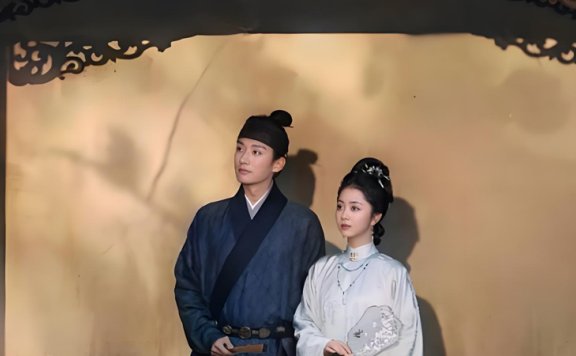
Against The Current: Tan Songyun and Liu Xueyi’s Gritty Historical Drama
Tencent Video is poised to launch a major historical drama in 2026, Against The Current (兰香如故), a series already stirring excitement among genre enthusiasts. Headlined by the talented Tan Songyun (谭松韵) and Liu Xueyi (刘学义), the story springs from the novel Lan Xiang Yuan (兰香缘) by renowned author Tong Hua (桐华), celebrated for crafting intense emotional and political narratives. This production immerses viewers in the Ming Dynasty, with sets and costumes rigorously designed to reflect historical accuracy, including dozens of exquisite, hand-stitched garments. It presents a compelling narrative of a privileged woman’s catastrophic fall and her clandestine struggle for justice and love, all while living under a borrowed identity. The combination of a revered source material, a dedicated cast, and visual splendor sets the stage for a memorable viewing experience. Star-Studded Ensemble Tan Songyun takes on the demanding dual role of Shen Jialan (沈嘉兰), the cherished granddaughter of a Grand Secretary, and later, the unassuming maid Xu Lanxiang (许兰香). Her performance traces a heartbreaking arc from opulent comfort to gritty survival, requiring her to masterfully depict both dignified grace and concealed intellect. The audience witnesses her character's inner strength as she endures the humiliation of servitude while secretly plotting a…