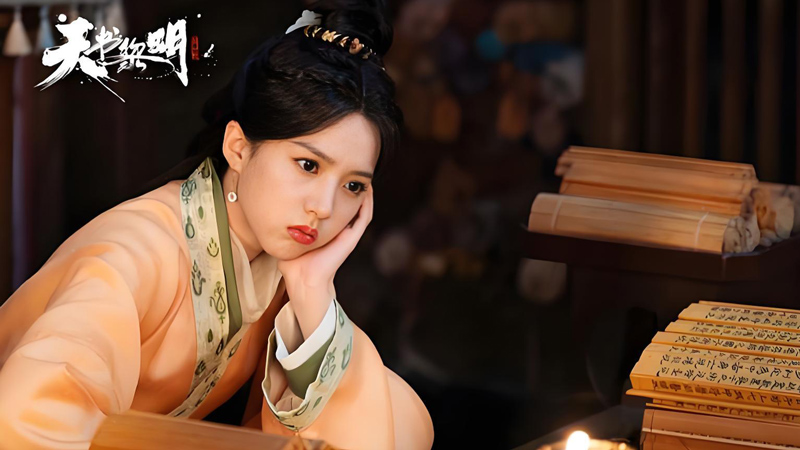
The journey to West River was meant to be straightforward. For Fu Sheng (符生), the task was simple: find the scholar Song Jingye (宋静野), as instructed by his father's plea. Yet, in the shadowy world of Treasure at Dawn (天书黎明), nothing remains simple for long. A single meeting is all they get before Song Jingye is found dead, his life brutally cut short. The only clue he leaves behind is a fragment of jade, carved like a wisp of cloud.
This small token thrusts Fu Sheng, alongside the sharp-witted Junzhu (郡主) and their companions, into a turbulent region where power is fragmented and trust is a scarce commodity. They arrive in a land torn between merchant guilds, horse clans, and a city lord, each faction operating as its own sovereign island. The central mystery of Song's death becomes a key, potentially unlocking a greater puzzle tied to legendary treasure and a cryptic Tianshu (天书)—a celestial book promising untold secrets.
A Fractured City
West River is a cauldron of conflict. The powerful merchant Shanghui (商会) and the nomadic Mabang (马帮) are locked in a violent stalemate, their battles spilling into the streets and poisoning daily life for the common people. Initial fears of tainted river water prove false, a distraction from a more insidious truth. The real poison is found on the lacquer of a temple Buddha statue, a scheme orchestrated by the vice-president of the very guild meant to foster trade. With President Song Jingye murdered, the ambitious Li Fuhuizhang (李副会长) seizes power, his hunger for control unmasked. The political landscape is a chessboard, and the protagonists are unwilling pieces navigating a game where allegiances shift like desert sand.
Amid this chaos, the case of Song Jingye's death stands out for its bizarre brutality. The murder weapon was no ordinary blade. The ancient Lin family mansion harbored a deadly mechanism: razor-sharp Tiancan Si (天蚕丝), or heavenly silkworm threads, tensioned between two stone lions, designed to slice through flesh with gruesome efficiency. The scene was staged to mislead, adorned with strange paintings of monkeys stealing peaches, meant to suggest supernatural folly. Yet, as Fu Sheng knows, the body tells a blunt truth. The theatricality of the crime scene points not to spirits, but to a calculating human mind using hallucinogens and folklore to hide a very earthly motive.
Threads of Alliance
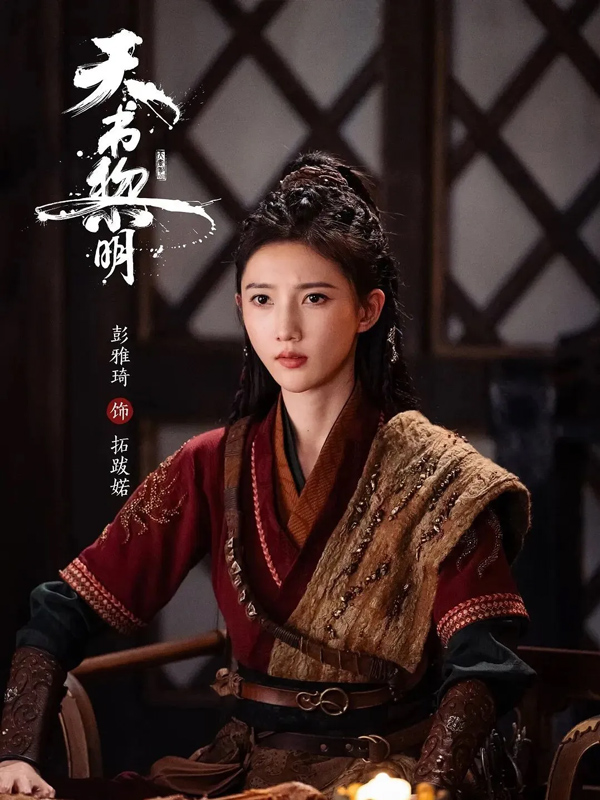
While Fu Sheng and Junzhu form the investigative core, their dynamic is friction-filled. His deliberate, almost lethargic manner of speech constantly tests her patience, a stark contrast to her more direct and proactive nature. Their partnership is less about easy camaraderie and more about the grudging reliance forged by necessity. In counterpoint, the subplot between Gu Tian (顾天), played by Yu Cheng'en (余承恩), and Yingying (盈盈) offers a lighter, melodic respite. Their bond, flourishing through shared song and dance, provides a glimpse of genuine connection and normalcy within the prevailing tension. These parallel relationships—one strained by duty, the other blossoming through art—create a richer emotional tapestry for the narrative.
Fu Sheng's value, however, is undeniable. His meticulous nature, so irritating in conversation, proves vital in diagnosis. When City Lord Wen (文城主) suffers from debilitating headaches declared incurable, it is Fu Sheng who uncovers the root cause: minute iron fragments from an old arrow wound, embedded and grown into a main artery for over a decade. His treatment—precise removal and hemostasis—is a masterclass in medical observation. This incident cements his role as the group's indispensable analyst, someone who solves puzzles of the body just as he untangles puzzles of crime.
Unveiling the Human Heart
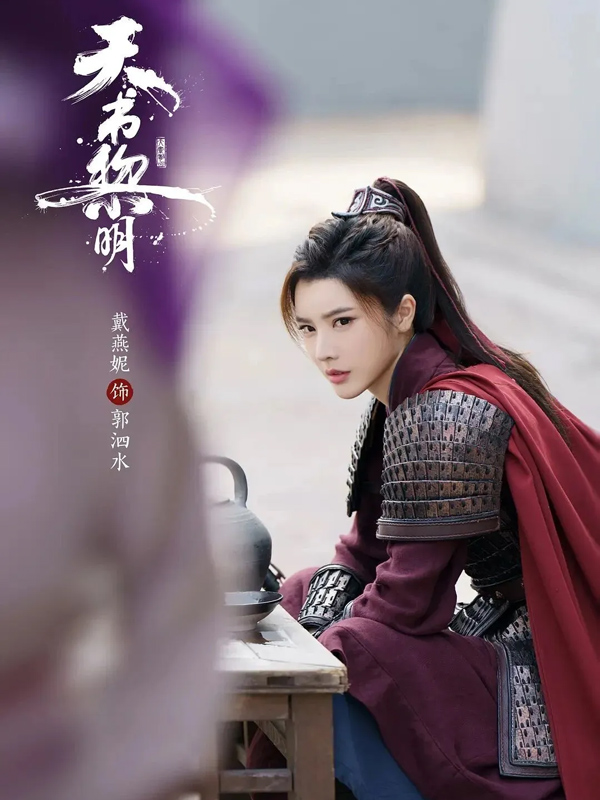
Each strange event in West River peels back a layer of human greed. The phantom carriage, wreathed in fire and echoing with a woman's cry, hurtles into the narrative as another spectral mystery. The charred corpse inside is likely Xu Buhuai (须补怀), another pawn removed from the board. The murderer behind the monkey-painting scheme himself meets a swift end, killed by a Manu (马奴), or horse servant, suggesting a hierarchy of villains where smaller foes are eliminated by more powerful shadows. These occurrences are not random ghost stories but calculated moves in a larger struggle for the Tianshu (天书) treasure. The jade fragment , the poisoned statue, the engineered accidents—all are threads pointing toward a conspiracy that leverages superstition to mask a ruthless quest for power and wealth.
Treasure at Dawn joins a growing wave of narratives that prioritize intricate plotting and intellectual pursuit over romantic idealism. Its focus is the methodical dissection of mystery, the satisfaction of connecting disparate clues, and the exposure of corruption festering beneath ancient roofs. The drama asks not "who will love whom?" but "who deceived whom, and why?" In doing so, it mirrors a broader audience appetite for stories where the triumph is one of intellect and perseverance. The treasure awaiting is not merely gold, but the truth—a revelation often more dangerous and valuable than any mythical artifact.