
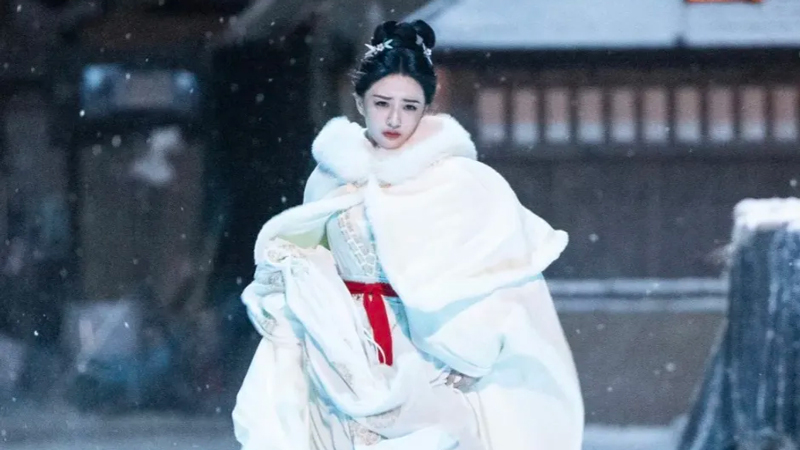
A curious detail in the new historical drama The Vendetta of An (长安二十四计) has captured the audience's attention. In it, actress Xu Lu (徐璐), who portrays the character Bai Wan (白莞), wears a cloak with an unusual feature: a separate panel of fabric draped over its back. This double-layered design strikes many modern viewers as anachronistic or simply strange, prompting questions about its historical accuracy. Could a cloak really be constructed this way in ancient times, or is this a fanciful creation of the costume department? The answer lies not in creative license, but in a forgotten practicality shaped by climate and necessity.
A Functional Design
The additional back panel is not mere decoration. It functions as a rain guard or wind flap. Its primary purpose was to create a protected air space between itself and the wearer's back. When rain or sleet fell, it would hit this outer layer first. Following gravity, the moisture would then slide down the panel's surface and away from the body, keeping the inner cloak—and the crucial lower back and waist area—dry and insulated.
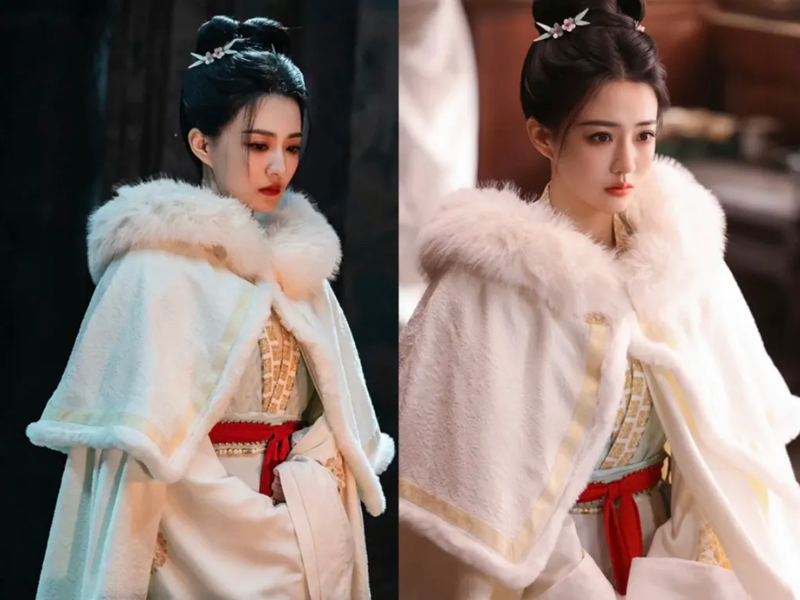
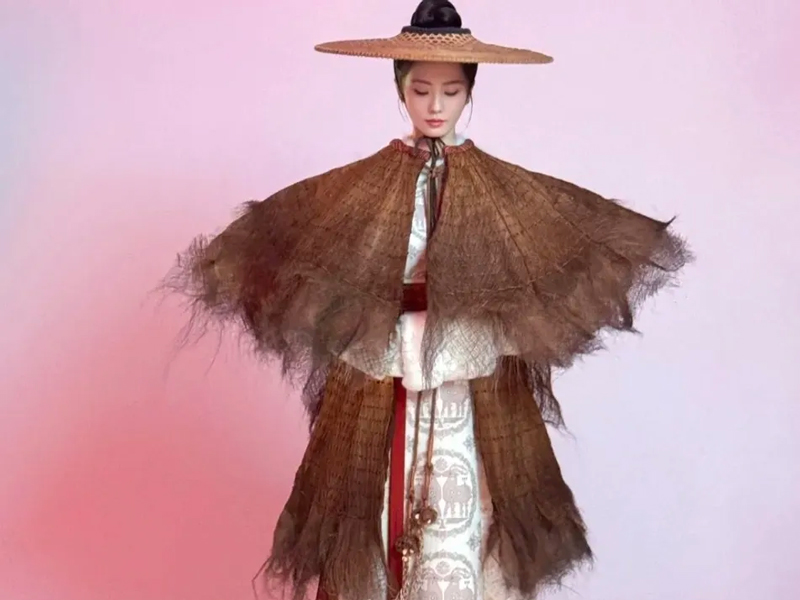
This logic is enhanced when the cloak material itself is water-resistant. Historical garments often used oils, waxed fabrics, or inherently shedding materials like certain furs. The layered approach with a dedicated runoff panel is a sophisticated solution, directly analogous to the storm flaps found on modern trench coats. The principle is identical; only the materials have changed from treated natural fibers to synthetic waterproof textiles.
Therefore, the design seen on screen is a thoughtful interpretation of a real historical need. It solves a specific problem: keeping the core torso dry in wet weather. This challenges the assumption that all historical cloaks were simple, single-layer garments. Utility often drove innovation, leading to complex constructions tailored to environmental challenges.
Historical Parallels
This raises another question: if this was primarily a rain-deflecting design, what about protection from wind? Historical records and artifacts suggest that strong, dedicated wind-blocking features in outerwear were not a central priority in much of ancient Zhongyuan (Central Plains) fashion. The region's climate, outside certain northwestern areas, involved less frequent, severe blizzard conditions.
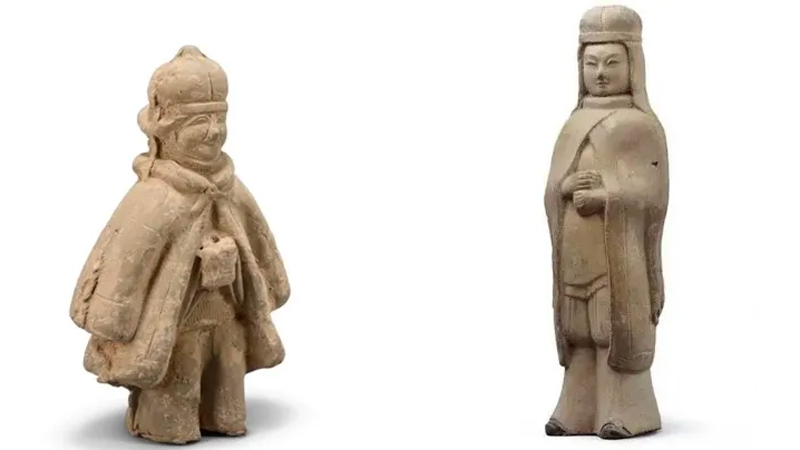
The influence for heavily wind-resistant clothing often came from northern and western nomadic cultures, historically referred to as Hu (胡) peoples. Figurines and descriptions from the Wei, Jin, Northern and Southern Dynasties through the Tang Dynasty show Hu attire featuring close-fitting wind caps and coats. These were often single-layered, designed for steppe winds rather than prolonged rain.
The convergence of these needs is seen globally. In a city like London, the classic trench coat serves as both raincoat and windbreaker. Similarly, military uniforms worldwide have adapted features for weather protection. The presence of a double-layered cloak or a back panel in various cultures indicates it was a pragmatic, geographically widespread solution to a common problem, not a modern or brand-original invention.
Culture and Climate
Ultimately, clothing is a dialogue between culture and climate. Culture dictates the aesthetic language—the cut, color, and ornamentation that communicate status, identity, and era. Climate dictates the functional requirements—the need for insulation, ventilation, or water runoff. The cloak from The Vendetta of An sits at this intersection.
This is why rigidly categorizing historical dress by dynasty alone can be misleading. While dynastic changes brought stylistic shifts, regional climate was a constant, powerful force. During the mid to late Ming Dynasty, for instance, the colder north saw the popularity of high-standing collared jackets, while the warmer, affluent Jiangnan (South of the Yangtze River) region still commonly used crossed-collar robes. Styles also echoed backwards, with later periods reviving fashions from earlier ones.
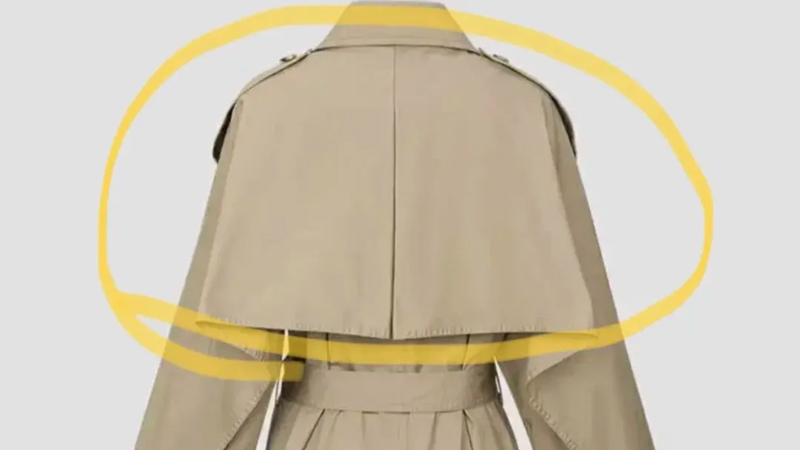
Viewing historical costume through the lens of "style" rather than a strict dynasty—speaking of Tang style or Ming style—allows for a more fluid and accurate understanding. It acknowledges that a garment from a southern tomb may differ significantly from one worn in the northern capital of the same era. The "odd" cloak, therefore, is not a mistake, but a potential clue. It points to a specific time, a possible place, and a very practical need, reminding us that historical fashion was always about intelligent adaptation to the world.
