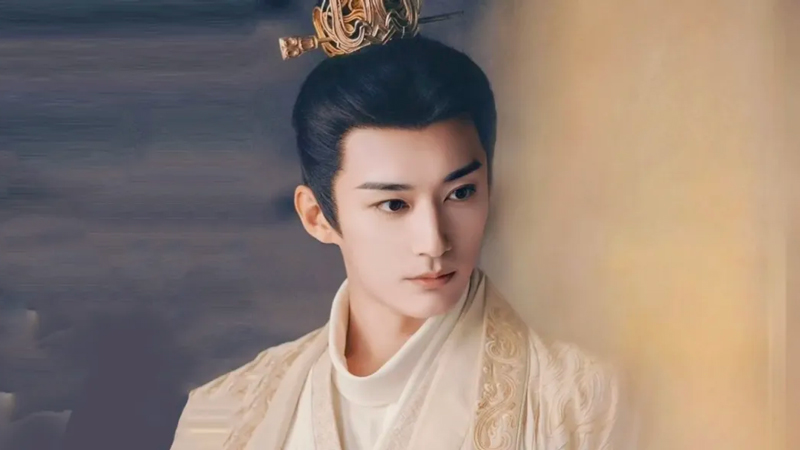
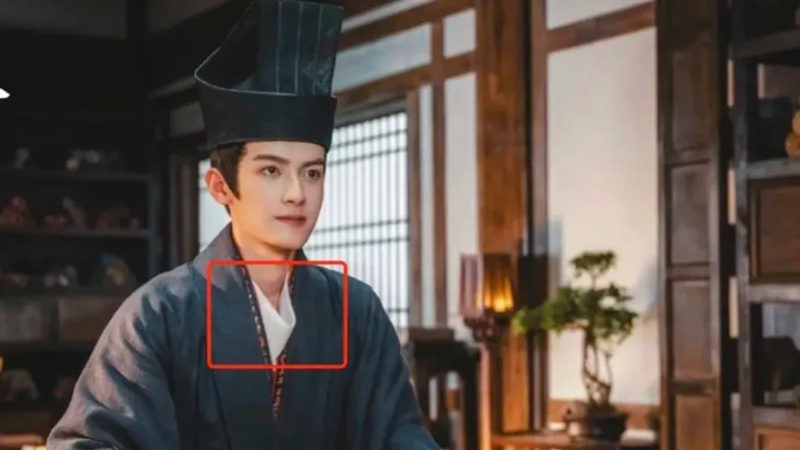
A recent period drama costume has ignited curiosity about ancient Chinese fashion. Actor Liu Xueyi (刘学义) appeared in promotional images wearing a high-necked inner garment, a style unfamiliar to many modern viewers. Fans quickly dubbed it the "neckless" undershirt, sparking online discussions about its historical accuracy. This sartorial detail is not a costume designer's fantasy but a potential revival of a real, yet enigmatic, item from the Han Dynasty known as the Quling (曲领). The debate surrounding Liu's attire mirrors a century-old academic puzzle: what exactly was this garment depicted on countless clay figurines?
Clay Figurine Clues
Archaeologist Zeng Zhaoyu (曾昭燏) provided crucial evidence in her study of pottery figurines from Pengshan (彭山) cliff tombs in Sichuan. She noted a distinct, raised ring around the necks of many figures. This was not a sculptural flourish or a folded collar. The ring had clear, parallel seams and a defined edge, suggesting it was a separate, detachable item with its own structure. The most compelling proof came from two unique "nursing mother" statues. On these, the outer robe was open, revealing a separate piece of cloth covering the chest. Zeng observed this chest piece was continuous with the raised ring at the neck, forming one cohesive object.
Based on this, Zeng proposed the Quling functioned similarly to a child's bib or a cleric's collar. It was a standalone accessory that encircled the neck, fastened at the back, and featured a square or circular cloth panel hanging over the chest. This design perfectly served a practical and social purpose. During the Han era, robes typically closed with a crossed collar. In situations requiring the front to be opened, such as breastfeeding, this separate chest panel provided essential modesty, adhering to contemporary standards of decorum.
Zeng's theory transformed the Quling from a vague term in old texts into a tangible object. Her work connected static art to lived experience. The artifacts from Pengshan offered a silent testimony to the garment's form, showing it was a real piece of clothing with a specific function, not merely an artistic convention.
Textual Evidence
Historical texts corroborate the physical findings. Annotations in the Han-era primer Jijiupian (急就篇) and the dictionary Shiming (释名) describe the Quling's purpose with remarkable consistency. Scholars like Yan Shigu (颜师古) explained it was worn inside other garments to "restrict the inner collar," preventing it from riding up and bunching uncomfortably around the neck. Its key characteristic was being "wide and curved" to fit the neck's shape.
This textual description of an inner support garment aligns seamlessly with the raised ring on the figurines. The "wide and curved" design matches the sculpted evidence, while the "restricting" function explains its necessity beneath layered Han Dynasty attire. The dual evidence from archaeology and philology creates a convincing picture. The Quling was likely a practical solution to a common wardrobe problem, standardizing the look of the inner robe's collar and maintaining a neat appearance.
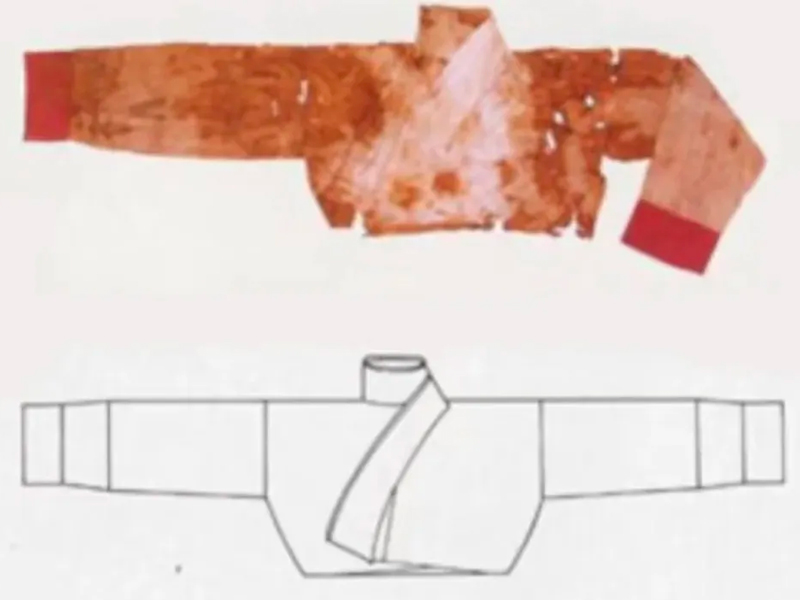
Further supporting this is the discovery of an intact "Quling robe" from the Niya (尼雅) tombs in Xinjiang. This remarkable find, a robe with a built-up, curved collar, provides a direct link between clay depictions and a wearable garment. It acts as a missing puzzle piece, demonstrating how the separate Quling accessory might have evolved into or inspired a robe with a permanently attached high collar.
Modern Wardrobe Revival
The discussion around Liu Xueyi's costume shows how historical detail can captivate a modern audience. His garment, possibly a "Quling Ru (曲领襦)," mirrors the integrated high collar found in the Niya tomb. This style has appeared subtly before, such as in the layered costumes worn by actor Hu Ge (胡歌) in the popular drama Nirvana in Fire (琅琊榜). These modern interpretations, whether consciously referencing the Quling or not, bridge a 2000-year gap.
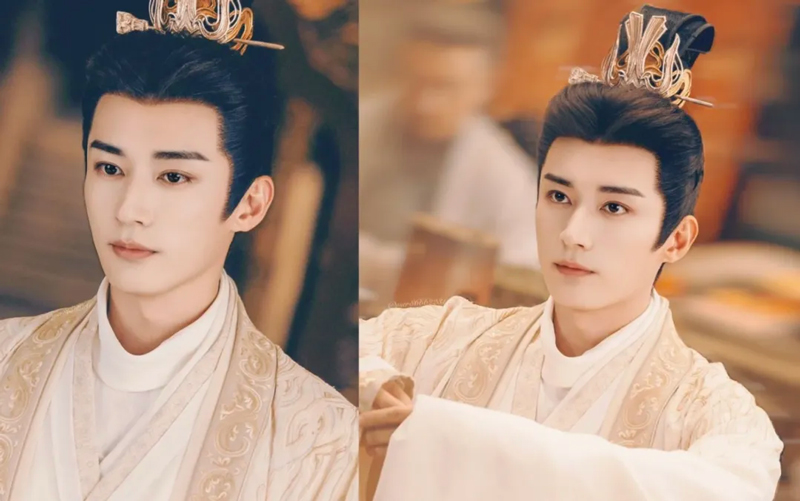
This incident highlights a growing audience appreciation for historical authenticity in period dramas. Viewers are no longer passive consumers; they investigate and debate. A seemingly odd "neckless" style prompts online deep dives into archaeological reports and classical texts, creating a unique form of public engagement with history. The costume becomes a conversation starter about Han Dynasty daily life, social norms, and aesthetic sensibilities.
Ultimately, the Quling's story is incomplete. Whether it was primarily a detachable accessory or a style of collar construction remains debated. Yet, its journey from clay figurines to scholar's notes and now to social media trends is fascinating. It reminds us that fashion has always been functional, social, and deeply human. The Han gentleman smoothing down his Quling and the modern actor wearing its interpreted version are connected by the universal desire for comfort, propriety, and perhaps, a touch of distinctive style.