
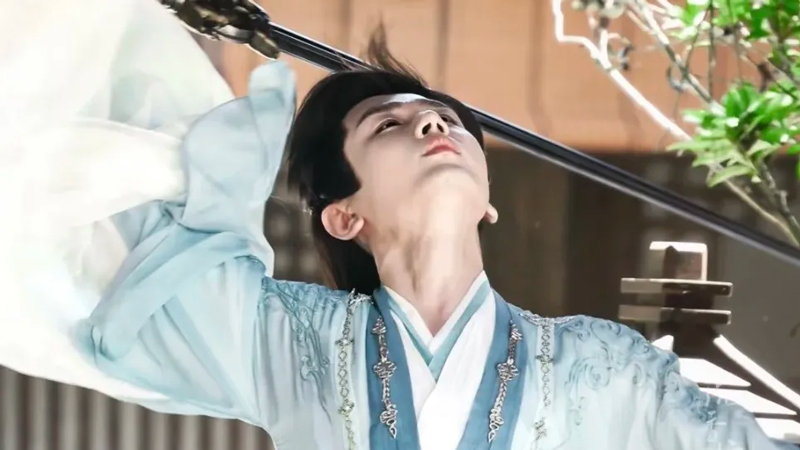
Recently, the ancient costume drama The Journey of Legend (赴山海) has gained popularity, and netizens have recalled the costumes of Li Lianhua, (李莲花) played by Cheng Yi, in Mysterious Lotus Casebook (莲花楼). They can’t help but question: “With such big sleeves, how do they fight? Wouldn’t the sleeves hit their faces or get tangled?”
Here’s the conclusion: The oversized sleeves in ancient costume dramas are designed to create a sense of elegance and grace—making characters look like they’re floating like a fairy . While the sleeves are as big as possible for this effect, there’s a practical solution: narrow sleeves and arm guards underneath. This way, swords won’t get caught in the sleeves, and characters don’t have to roll up their sleeves just to fight.
The Purpose of Oversized Sleeves
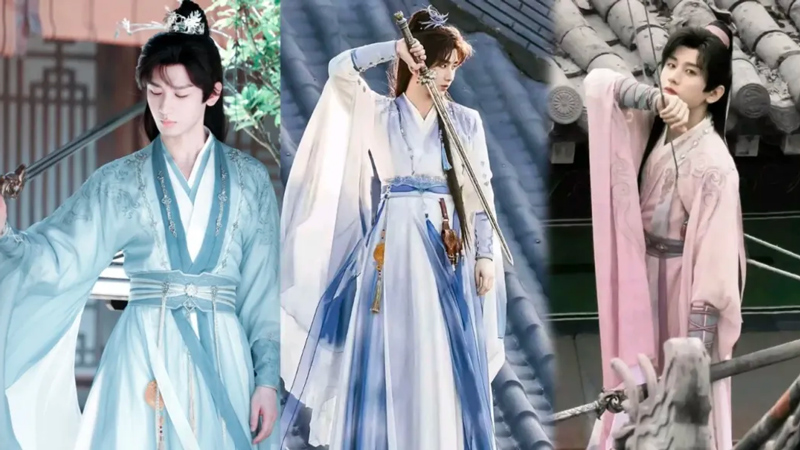
Oversized sleeves are all about visual appeal. Dramas use them to highlight a character’s ethereal presence—when characters walk, the sleeves flow like clouds, adding a magical touch. But this doesn’t mean practicality is ignored: the inner narrow sleeves and arm guards ensure fighting scenes stay logical.
What Are Arm Guards?
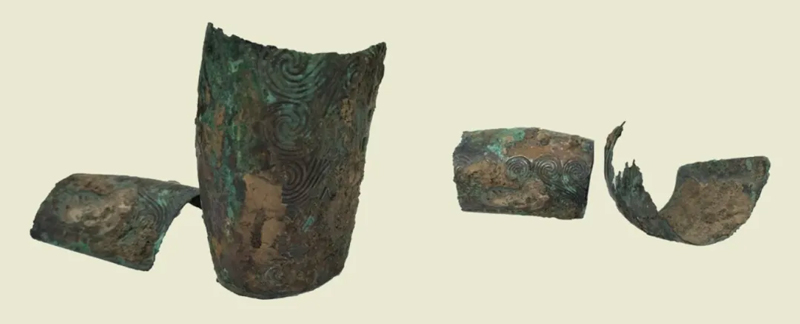
Arm guards have many names in Chinese clothing culture: “Gou” (褠), “Bi Yi” (臂衣), “Bi Gou” (臂鞲), and “Bi Fu” (臂缚). Their names often include radicals like “clothing” or “leather”, reflecting their material origins.
Early arm guards were made of leather. Ancient people used them for archery or farm work—even with narrow sleeves, rolling them up was a hassle, so leather arm guards tied around the arms to keep cuffs tight. Later, cloth arm guards emerged to avoid damaging inner clothes (leather could wear out fabric). A famous example is the “Five Stars Rise in the East, Benefiting China” arm guard, a brocade (织锦) artifact that shows cloth arm guards were part of formal clothing too.
Arm Guards Beyond Practicality
In the Tang Dynasty, arm guards became more than just practical—they turned luxurious. The poet Du Fu (杜甫) wrote in his poem Ji Shi (即事): “The girdle is adorned with a hundred kinds of treasures, and the arm guards are strung with real pearls.” (百宝装腰带,真珠络臂鞲)—meaning belts adorned with precious stones and arm guards strung with pearls.
For common people, arm guards were simple and affordable. Some were made of bamboo strips or straw, called “Bi Gou” (臂篝) or “Bi Long” (臂笼). As Wang Zhen (王桢) wrote in Nong Shu (农书): “Bi Gou looks like a small fish basket, made of bamboo strips. It’s also called arm Bi Long.” These arm guards were practical for farm work—they kept sleeves clean and prevented scratches from tools.
Balancing Aesthetics and Practicality
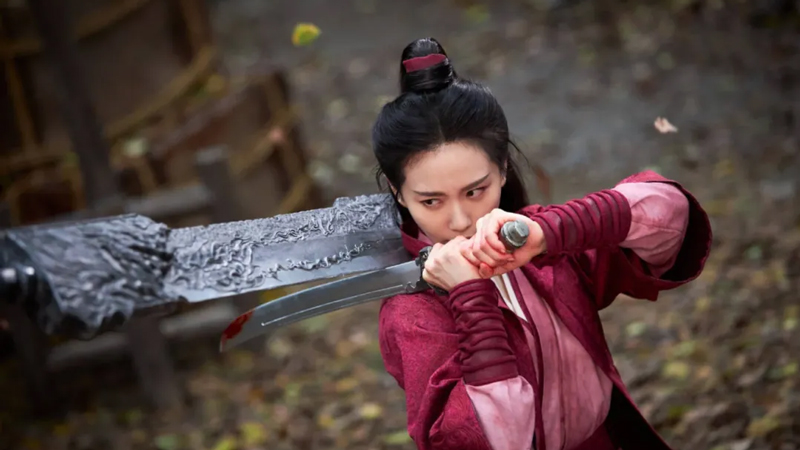
Logically, martial artists should use narrow sleeves or tie their sleeves for fighting. But dramas prioritize beauty, so they keep the oversized sleeves—while hiding narrow sleeves and arm guards underneath. For example, in Mysterious Lotus Casebook, Li Lianhua’s big sleeves have arm guards inside, so he can fight smoothly without his sleeves getting in the way. These small accessories are the “unsung heroes” of martial arts scenes!
