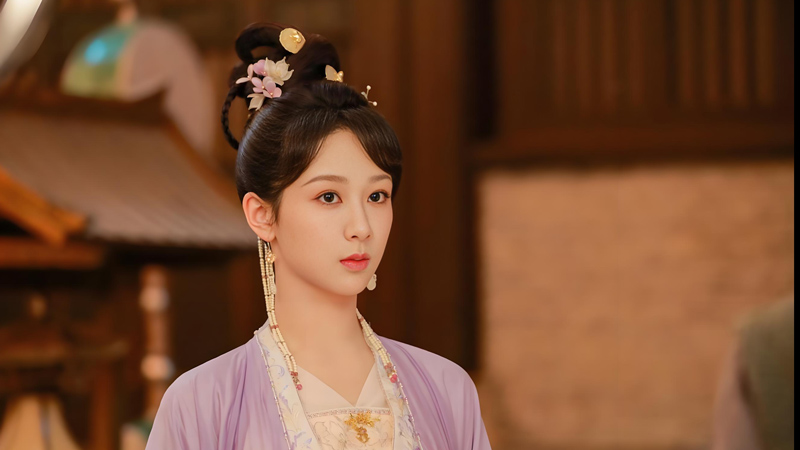
While modern audiences often associate historical Chinese dramas with palace intrigues or fantastical romances, a new wave of storytelling is pushing into grittier, more specialized territories. These series are moving beyond familiar frameworks to examine specific institutions, professions, and social structures of the past, offering a fresh lens on history. They blend meticulous period detail with narrative tension, creating worlds that feel both authentically distant and compellingly immediate. The following six upcoming series exemplify this trend, each carving out a distinct niche within the broader historical and Xianxia landscape.

Win or Die (夜不收)
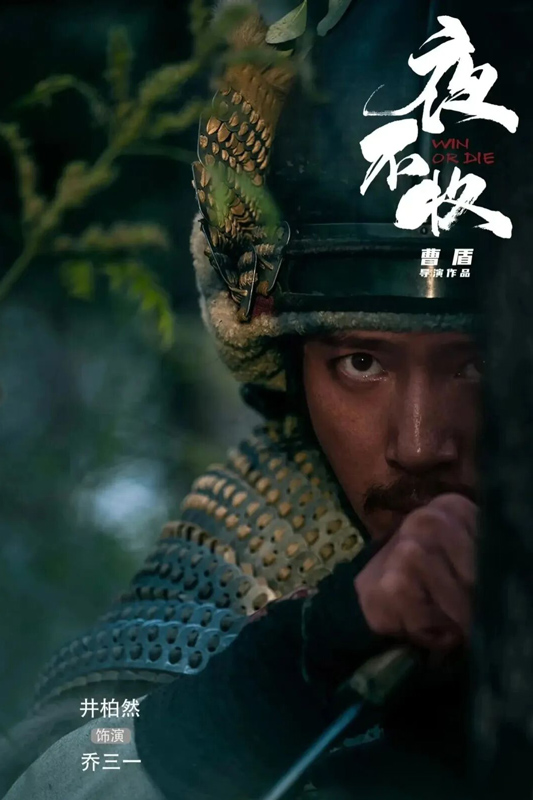
Win or Die shifts the focus from the Forbidden City's glittering halls to the wind-swept, perilous frontiers of the Ming Dynasty. This series delves into the world of military intelligence and covert operations during a fragile peace.
- Period Background: Ming Dynasty, during the Wanli (万历) reign. The setting is the tense border regions between Ming forces and the Oirat Mongols, a landscape of shifting alliances and latent conflict.
- Genres: Historical, Military, War, Espionage
- Main Roles: Jing Boran (井柏然) portrays Chen Guang (陈广), the stoic and capable commander of a "Win or Die" unit. Wu Xingjian (吴幸键) plays Qiao Sanyi (乔三一), his protege, tasked with a mission that spirals beyond their control.
- Adapted from: Original script
- Narrative Focus: The title refers to a real historical unit, elite scouts specializing in night reconnaissance and deep-insertion espionage behind enemy lines—a position with an alarmingly high mortality rate. The plot follows Chen Guang and Qiao Sanyi as they are assigned to escort a Oirat noble, Su Han Taiji (素翰台吉), to peace talks. What begins as a diplomatic escort mission rapidly unravels, entangling them in complex tribal power struggles and conspiracies that reach into the highest levels of the Ming court. The series promises a raw, tactical look at warfare, emphasizing the psychological strain and physical danger faced by these early "special forces" operatives.
Viewer Appeal: This is a departure from the polished, romanticized visions of the past. The appeal lies in its grounded, brutal realism and political complexity. Expect extensive practical filming on location, emphasizing vast, desolate landscapes that underscore the isolation and constant threat. The action is pitched around close-quarters combat, cavalry charges, and the tense, shadowy work of spies, offering a more visceral and intellectually demanding historical drama experience.

Zan Zhong Lu (簪中录)
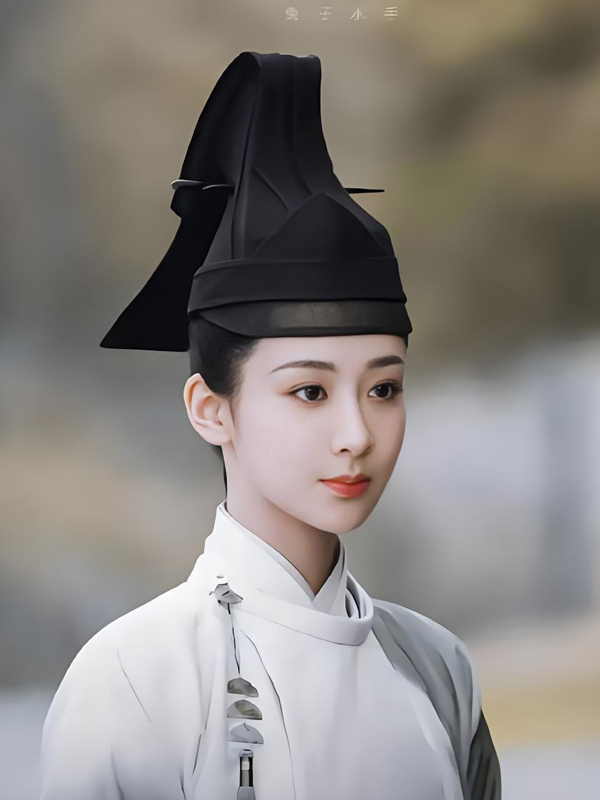
From the stark frontiers to the sophisticated heart of the Tang Dynasty (唐朝), Zan Zhong Lu (簪中录) offers a intricate puzzle of crime, curse, and courtly deception. It combines classic detective work with a nuanced character dynamic.
- Period Background: Tang Dynasty, an era renowned for its cultural flourishing, opulent court life, and intricate bureaucratic politics.
- Genres: Historical, Mystery, Detective, Light Romance.
- Main Roles: Yang Zi takes on the role of Huang Zixia (黄梓瑕), a brilliant detective turned fugitive. Peng Guanying (彭冠英) plays Prince Kui Li Shubai (夔王李舒白), a royal burdened by a mysterious and debilitating affliction.
- Adapted from: The popular novel of the same name by Ce Ce Qing Han (侧侧轻寒).
- Narrative Focus: Once celebrated as the empire's finest investigator, Huang Zixia finds herself framed for the murder of her own family. Forced into hiding, she disguises herself as a man and enters the service of the enigmatic Prince Kui. He is plagued by a sinister curse known as the "Curse of the Widower, the Cripple, the Orphan, the Solitary, the Invalid, and the Diseased." They form a transactional alliance: she will use her deductive skills to solve the mystery of his curse, and he will leverage his influence to help her clear her name and uncover the truth behind her family's tragedy. Their partnership evolves from one of mutual utility into a complex bond as they navigate a series of bizarre cases—involving poison mysteries, cryptic symbols, and floating corpses—that point to a larger conspiracy within the royal family.
Viewer Appeal: The series is a major production, with significant investment in recreating the vibrant markets and majestic palaces of the Tang. Its strength lies in cleverly plotted mysteries that weave period-specific customs with elements of the supernatural. The central relationship is a key draw, built on intellectual equality and restrained emotion rather than overt passion. Huang Zixia's resilience and brilliance paired with Li Shubai's layered, morally ambiguous nature creates a compelling "master-servant" dynamic that feels mature and earned.

Lai Zhan (来战)
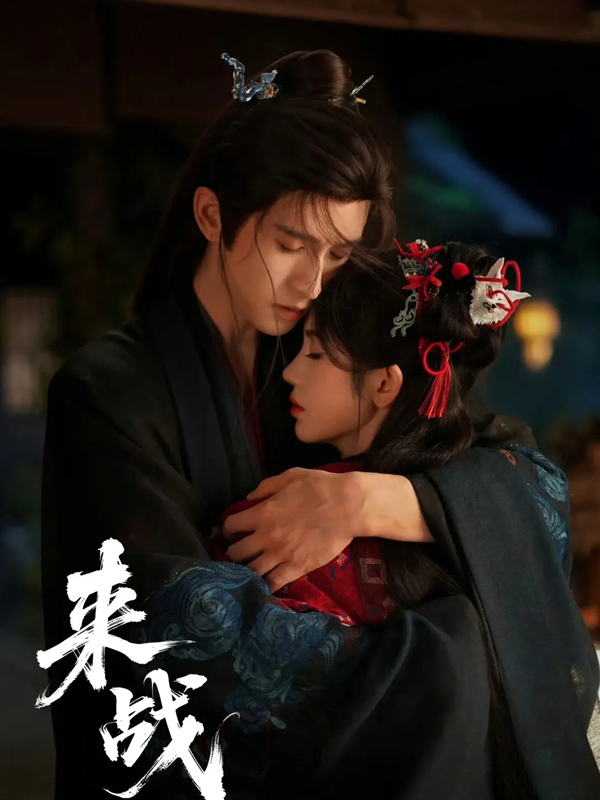
Venturing into the realm of immortal heroes and ancient magic, Lai Zhan seeks to revitalize the Xianxia genre by inverting a classic trope and injecting a strong dose of character-driven conflict and dark humor.
- Period Background: A fictional ancient realm centered on the mythical land of Penglai (蓬莱), a place of immortal beings, deep-seated racial conflicts, and a millennia-old curse.
- Genres: Xianxia, Fantasy, Drama, Dark Comedy
- Main Roles: Ju Jingyi (鞠婧祎) portrays A Dai (阿黛), a survivor of a great tragedy in Penglai, driven and ambitious. Zhang Yunlong (张云龙) plays Xiao Yihan (萧逸寒), her laid-back and seemingly unmotivated master.
- Adapted from: The Shi Fu Xi Lie (师父系列) novels by Jiu Lu Fei Xiang (九鹭非香).
- Narrative Focus: The story begins with a deep bond between the diligent, almost obsessive disciple A Dai and her effortlessly talented but profoundly lazy master, Xiao Yihan. This unconventional setup is shattered by a catastrophic event linked to the fate of the Penglai people, turning their affectionate teacher-student relationship into one of bitter resentment and conflict. The narrative follows their painful journey from closeness to enmity and, ultimately, toward a hard-won reconciliation. To break a ancient curse haunting their people, they must eventually unite, gathering forces from human and demon tribes to orchestrate a perilous ritual known as the "Marrow-Cleansing Grand Array."

Viewer Appeal: This series consciously plays against standard Xianxia formulas. The initial dynamic of an overachieving student and a "slacker" master provides ample room for comedy and fresh relational tension. The plot promises a mix of lighthearted moments, intense emotional anguish, and high-stakes fantasy adventure. The appeal rests on the "taboo" and reversal inherent in the fractured master-disciple relationship, the catharsis of a redemption arc, and the spectacle of uniting disparate factions against a common, existential threat. It aims to balance visceral emotional payoff with a sense of epic, world-altering consequence.
Together, these three series demonstrate a conscious effort to diversify period and fantasy storytelling. They move beyond generalized romance or conflict to explore specific facets of imagined and historical worlds—be it the brutal mechanics of border espionage, the intellectual rigor of Tang-era forensics, or the emotionally fraught politics of immortal clans. By grounding their stories in distinctive professions, compelling character dynamics, and well-defined narrative hooks, they offer audiences more than escapism; they provide a pointed, engaging entry into the complexities of their respective worlds.

Mo Li (莫离)
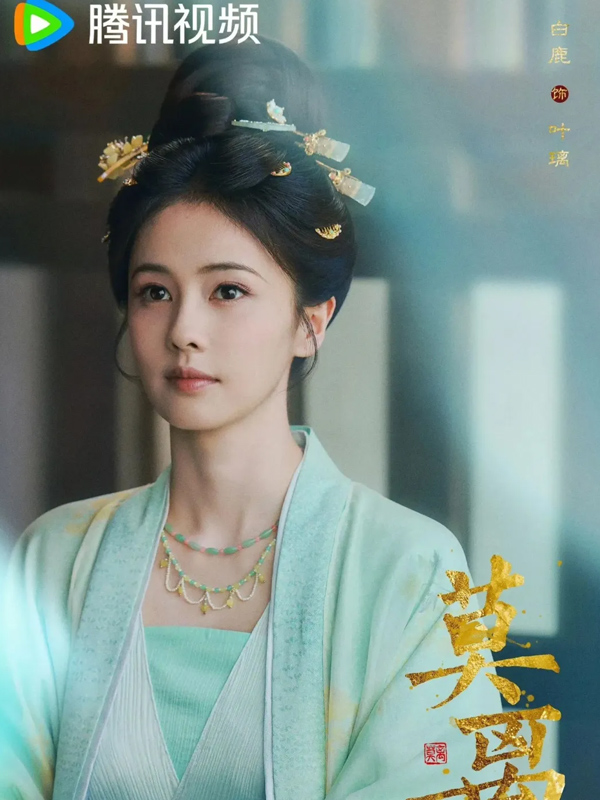
At its core, Mo Li is a narrative about performance and perception set against a backdrop of dynastic collapse. It asks what happens when two master manipulators, each wearing a meticulously crafted mask, are forced into the most intimate of alliances.
- Period Background: A fictional, war-torn ancient empire, evoking the instability of late dynastic periods where courtly elegance barely conceals ruthless ambition.
- Genres: Historical Political Intrigue, Strategic Romance, Time-Travel Fiction.
- Main Roles: Bai Lu as Ye Li (叶璃), the seemingly vulnerable eldest daughter harboring the psyche of a elite modern operative. Cheng Lei as Mo Xiuyao (墨修尧), the publicly humiliated and physically afflicted prince who secretly commands the loyalty of the shadowy Kirin Guard (麒麟卫).
- Adapted from: The web novel Sheng Shi Di Fei (盛世嫡妃) by Feng Qing (凤轻).
- Narrative Focus: The story begins with a political marriage between two figures the court considers useless: a disgraced noblewoman and a crippled prince. This is the first layer of deception. The second layer reveals Ye Li's anachronistic tactical mind, able to dissect social and military challenges with clinical precision. The third exposes Mo Xiuyao's vast underground network and his long-nurtured plan for vengeance. Their relationship evolves through stages of mutual assessment, wary collaboration, and eventual trust. The "domestic" sphere of the manor becomes a training ground, their private interactions a continuous negotiation of strategy and growing affection, before their partnership explodes onto the national stage to confront invasion and corruption.
Viewer Appeal: The pre-release buzz stems from a potent, almost modern, "power couple" dynamic. The appeal is intellectual and strategic. Audiences are invited to enjoy the suspense of two hidden aces recognizing each other's skill, the clever dialogue that serves as both flirtation and tactical planning, and the subversion of physical disability as a symbol of weakness. Mo Xiuyao's "wheelchair-bound commander" archetype redefines strength, while Ye Li’s contemporary mindset provides a disruptive, problem-solving perspective on ancient problems. It promises a satisfying blend of mental chess and slow-burn alliance.

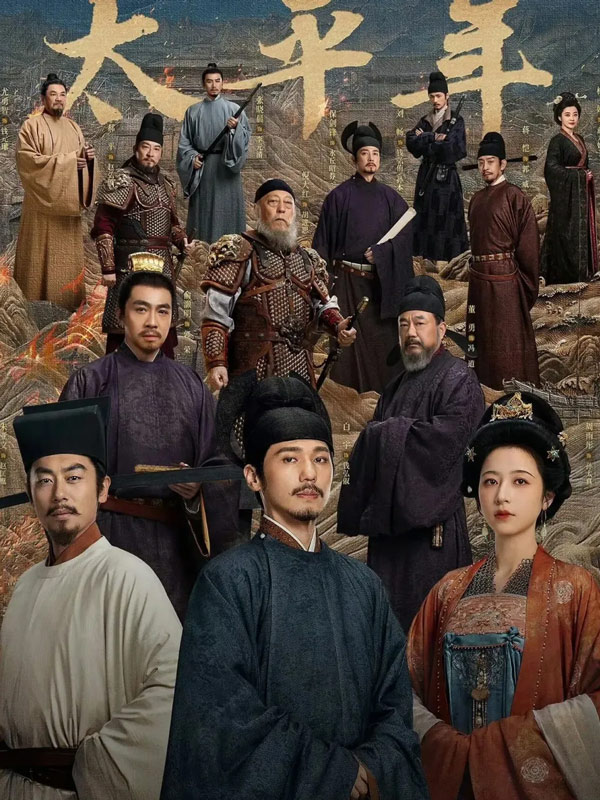
Swords into Plowshares turns from fictional intrigue to a focused examination of a documented historical decision. It narrows the epic scale of warring states down to the conscience and calculus of one man, portraying leadership not as glorious conquest but as agonizing responsibility.
- Period Background: The chaotic transition from the Five Dynasties and Ten Kingdoms period to the early Northern Song Dynasty, specifically centered on the final years of the Wuyue (吴越) kingdom (907-978 AD).
- Genres: Historical Drama, Political Biography.
- Main Roles: Bai Yu as Qian Hongchu (钱弘俶), the last King of Wuyue, whose journey from a pleasure-seeking prince to a solemn ruler forms the emotional spine. Zhu Yawen (朱亚文) as Zhao Kuangyin (赵匡胤), the founding Emperor of Song, a formidable unifier whose ambition is tempered by a pragmatic desire to minimize bloodshed.
- Adapted from: An original screenplay based on historical records.
- Narrative Focus: This is not a story of battlefields, though their horror forms the crucial context. It is a story of a negotiation and a surrender. The drama meticulously builds the pressure on Qian Hongchu: the military might of the rising Song, the weariness of his own people after decades of fragmentation, and the moral imperative to protect them from slaughter. His relationship with Zhao Kuangyin becomes a tense diplomatic dance, moving from hostility to wary respect.The climax is the voluntary 978 AD incorporation of Wuyue into the Song, known as Na Tu Gui Song (纳土归宋). The narrative invests in the profound loneliness of this choice—the personal defeat transformed into a civic triumph—and the complex, unsentimental partnership between the two leaders that made this peaceful unification possible.
Viewer Appeal: This series positions itself as a "serious history" production, and its power lies in stark juxtaposition and moral weight. Early promotional materials effectively contrast the visceral brutality of the era—clashing steel, famine—with the insulated luxury of the ruling class. This visual dichotomy underscores the stakes of Qian Hongchu's decision. The appeal is for viewers interested in the psychology of power, the less-celebrated paths of statecraft, and nuanced performances that explore the burden of command. It offers a contemplative look at an alternative to martial glory, defining heroism as the wisdom to yield for a greater peace.

The Eternal Fragrance (千香)

The Eternal Fragrance operates in a register of heightened romantic fatalism. It takes the foundational elements of Xianxia—immortal cultivation, ancient bloodlines, sect politics—and sharpens them into instruments of intense personal agony and obsessive love.
- Period Background: A classic Xianxia universe of immortal clans and cultivation academies, with particular focus on Qingqiu (青丘), a mythological land often associated with fox spirits.
- Genres: Romantic Fantasy, Mythological Melodrama.
- Main Roles: Ju Jingyi as Xiao Bangchui (小棒槌), an orphan whose messy exterior belies a majestic and catastrophic heritage. Song Weilong as Lei Xiuyuan (雷修远), a cultivator whose initial, calculated mission to approach her becomes hopelessly entangled with genuine, tormented emotion.
- Adapted from: The novel The Eternal Fragrance Bai Mei (千香百媚) by Shi Si Lang (十四郎).
- Narrative Focus: The plot is engineered for maximal emotional whiplash. It begins with a deceptive simplicity: a ragged, spirited girl enters a prestigious academy and draws the interest of a handsome, mysterious senior. Their early interactions mix playful tension with his underlying agenda. As they face dangers together, a genuine bond forms, making the ensuing betrayal more devastating.The central catastrophe is dual: the revelation of her bloodline's apocalyptic potential and the exposure of his own forbidden identity as a member of a despised species. The story then spirals into a cycle of separation, desperate reunion, and mutual sacrifice, where love is inextricably linked with pain and the threat of mutual destruction.
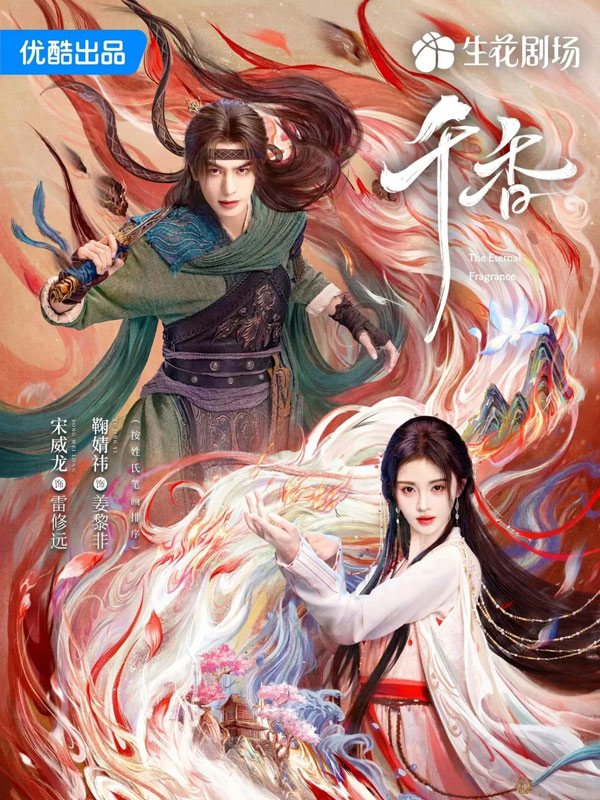
Viewer Appeal: This drama targets viewers who seek visceral emotional engagement from fantasy. Its promotion heavily features the leads' dramatic aesthetic transformations: Ju Jingyi's evolution from a prickly, disheveled tomboy to an elegant, tragedy-tinged figure, and Song Weilong's (宋威龙) portrayal of a hero defined by physical and emotional "battle damage"—the bloodied brow, the gaze heavy with restrained longing. The appeal is the high-stakes, almost Gothic, romantic entanglement. The "forbidden" tropes—the deadly heritage, the cross-species taboo, the mentor-student tension—are not just plot points but engines for generating sustained, melodramatic passion and scenes of profound yearning.
Together, these three series demonstrate a matured narrative palette. One offers the cerebral pleasure of a strategic partnership born from deception. Another provides the sobering gravity of historical choice over conquest. The third delivers the cathartic intensity of a love forged in betrayal and destiny. They move beyond simple categorization, instead exploring how grand historical or mythical forces are ultimately navigated, shaped, and endured through complex, compelling human relationships.

Character-Driven Epic Fantasy Narratives
This new wave of series represents a significant maturation in Chinese period and fantasy television. By moving beyond broad romantic archetypes and generalized conflicts, these dramas delve into the granular details of professions, institutions, and psychological landscapes. Whether exploring the tactical grimness of Ming border espionage, the intellectual puzzles of Tang forensic investigation, or the emotionally charged politics of immortal realms, they share a common thread: a commitment to grounded, character-driven narratives within meticulously realized worlds.
This trend toward specialization and narrative ambition offers audiences not merely escape, but a pointed and engaging portal into the complex human stories that shape both history and myth. It is a compelling redefinition of what the genre can achieve.