The story begins with a single tree, the Toxicodendron vernicifluum, and the precious sap it weeps. For millennia, this substance, known as Daqi (大漆), has been far more than a simple material; it is a flowing chronicle of Chinese civilization itself. Its deep, luminous sheen has reflected the faces of emperors and artisans, captured the ethos of philosophical schools, and preserved the artistic ambitions of countless dynasties. From the tombs of ancient kings to modern studios, the journey of lacquer is a testament to enduring beauty and resilience, a slow art in a fast world that continues to whisper secrets from the distant past.
A Material History
Archaeology provides the first chapter. At the Kuahuqiao (跨湖桥) site, a lacquered bow, silent for roughly 8,000 years, speaks of a Neolithic discovery. This artifact stands as the earliest known evidence of humanity's relationship with this transformative sap. Not long after, at Hemudu (河姆渡), a wooden bowl coated with a startling vermillion hue confirms that early communities had already mastered basic color application. These were not mere utilitarian objects; they were the first experiments in a medium that would come to define luxury and spiritual expression.
By the Shang and Zhou dynasties, lacquer had ascended to a central role in ritual and power. It was used to create vessels for sacred ceremonies, offered to ancestors and deities. The technology evolved, allowing for more elaborate designs and sturdier forms. Lacquerware began to lead aesthetic trends, its gleaming surfaces and bold colors setting the standard for prestige. The material moved beyond ceremony into architecture, music, and the trappings of aristocratic life, becoming inseparable from the cultural fabric of early China.
This historical trajectory showcases a crucial point: the development of lacquer art paralleled the development of Chinese statecraft and cosmology. The effort required to harvest and process the sap—a slow, seasonal, and demanding task—mirrored the patience and order valued by society. Each layer applied to an object represented not just time, but a deliberate act of creation, building protection and beauty simultaneously.
The Hands-On Process
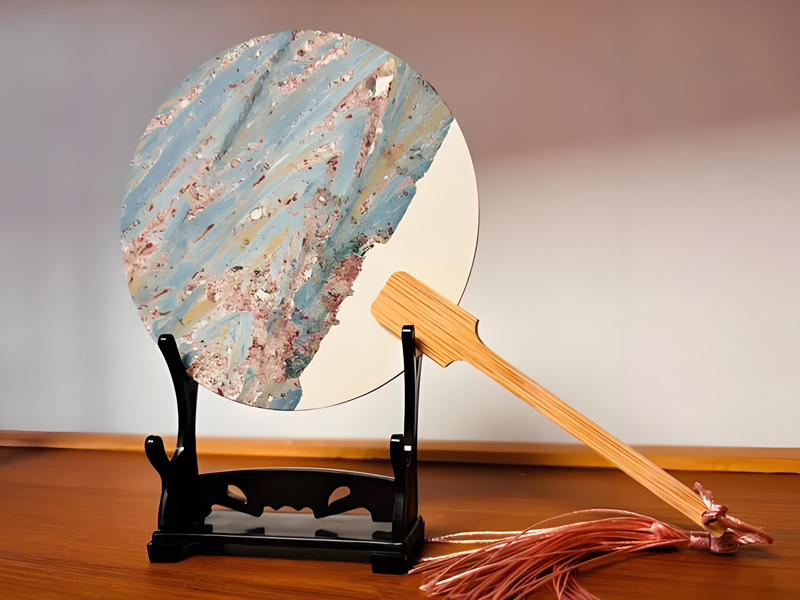
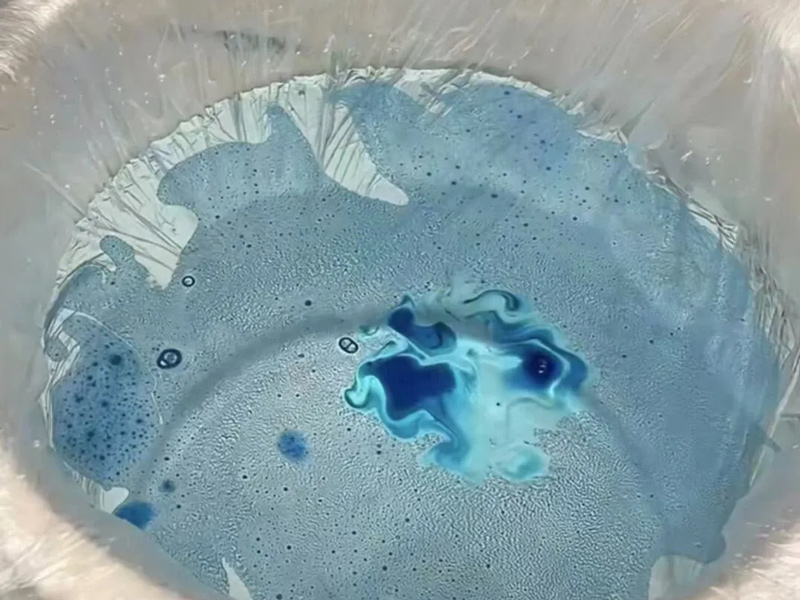
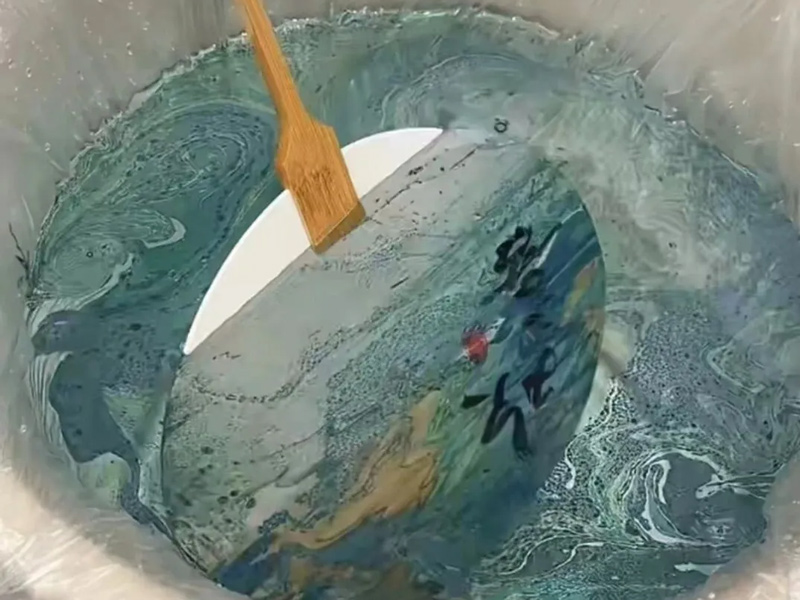
Understanding lacquer's significance deepens by engaging with its basic application. A simple project, like coloring a handheld fan, reveals the material's unique character. First, water is poured into a basin. Drops of raw Daqi are added and gently dispersed across the surface; the colors are kept minimal to maintain clarity. The lacquer floats, creating a delicate, swirling film. This is the critical moment of transfer.
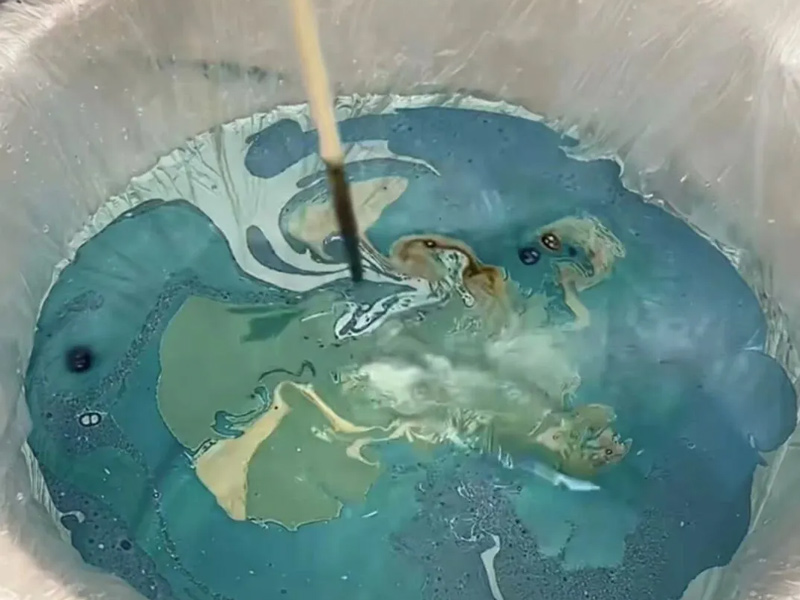
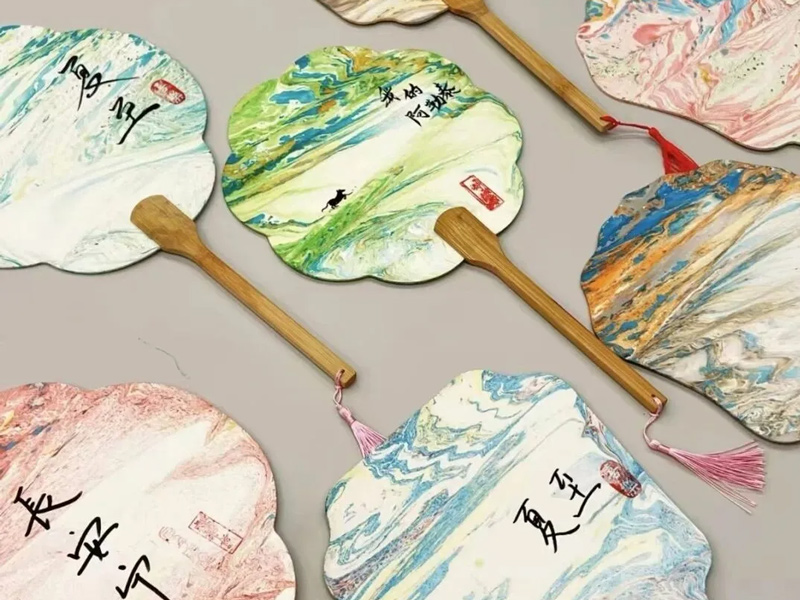
The fan's silk or paper surface is then slowly, carefully introduced into the water at an angle. A subtle rotation catches the floating lacquer, allowing it to adhere in organic, unpredictable patterns reminiscent of marble or flowing ink. The lifted fan, now coated, is a snapshot of that liquid interaction. After the excess water is dabbed away, the piece is left to dry. This curing is not mere evaporation; it is a chemical transformation where the lacquer polymerizes, hardening into its legendary, durable finish.
This DIY glimpse demystifies the art. It shows that while mastery takes a lifetime, the fundamental interaction with the material is accessible. The process demands focus and respect for the medium's properties. There is no rushing, only a harmonious cooperation between the artisan's intent and the material's natural behavior. The result is a one-of-a-kind object, bearing the faint, beautiful trace of its liquid birth.
More Than Varnish
The true weight of lacquer lies in what it carries beyond its physical form. Artistically, it creates a visual depth unmatched by other coatings. Through techniques like carving, inlaying with mother-of-pearl or gold, and building up hundreds of layers, artisans created objects of breathtaking complexity. Consider the revered Qin (琴) zithers of the Tang dynasty, such as the Dasheng Yiyin (大圣遗音) and Jiuxiao Huanpei (九霄环佩). Their sonorous quality is inseparable from their lacquered bodies, proving how the material served both aesthetic and acoustic perfection.
Culturally, lacquer became a powerful social symbol. Its use in palace furnishings, ceremonial vessels, and scholar's objects marked status and refinement. It represented not just wealth, but a cultivated appreciation for subtle beauty and ancient craft. To possess a fine lacquer piece was to align oneself with a continuum of tradition and taste. This symbolism extended to literary and poetic references, embedding the material firmly in the intellectual landscape.
Finally, its philosophy is rooted in a profound dialogue with nature. The entire process—from tapping the tree without killing it, to patiently collecting the sap, to the slow building of layers—embodies principles of harmony and sustainability. The material's incredible durability, resisting water, acid, and time, became a metaphor for resilience and cultural permanence. Lacquer does not hide the substrate it protects; it enhances it, making the base material stronger and more beautiful. In this way, it mirrors an ideal: that tradition is not a rigid shell, but a living, protective, and luminous layer that allows the core of a culture to endure and shine.