
Forget everything you think you know about historical revenge tales. A new series has captivated audiences not with flashy special effects or simplistic heroes, but with a labyrinth of intellect where every character is playing a high-stakes game. If you've ever felt your intelligence was insulted by predictable plots, The Vendetta of An (长安二十四计) offers a different promise: a narrative that respects your ability to think. This isn't just a story about settling a score; it's a masterclass in psychological maneuvering set against the breathtaking backdrop of the Tang Dynasty capital.
The Chessboard of Revenge
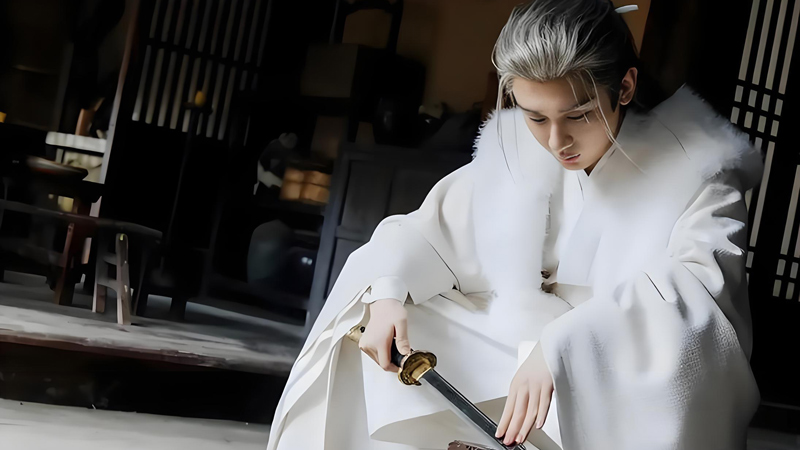
The premise seems familiar at first glance. A scholar, Xie Huaian (谢淮安, played by Cheng Yi), returns to the capital a decade after his family's massacre, his hair turned white and his body frail. He seeks answers. Yet, to label this a simple revenge narrative is to mistake the pawn for the king. Within episodes, the scope explodes. The personal tragedy is merely the first thread pulled in a tapestry of political conspiracy that envelops the entire court.

Emperor Xiao Wuyang (萧武阳) sees Xie Huaian as a potential weapon against a powerful general, Yan Fengshan (言凤山), whose military success has made him a threat. The general, portrayed by Zhang Hanyu (张涵予), is no mere brute; he is a tragic figure trapped by his own loyalty and the court's suspicion. Around them, factions of civil officials, mystical advisors, and figures from the inner palace all scheme in the shadows. Alliances shift like desert sand. A helpful guide in one scene might reveal themselves as an architect of ruin in the next.
This creates a thrilling, unstable environment. The core tension doesn't come from "good" battling "evil," but from brilliant, desperate people trapped on what they perceive as a sinking ship. They are all fighting for survival, and the rules of their game are written in whispers and half-truths. Every character operates on multiple levels of deception, making the audience an active participant in deciphering motive and truth.
Minds as Weapons
Complex plots can alienate viewers if they become confusing. The Vendetta of An excels because it makes the intricate comprehensible. We are shown the mechanisms of each scheme. Xie Huaian's greatest asset is his perceived weakness. His coughs and pale complexion are a perfect disguise. His true weapon is a profound understanding of human nature—the ambitions and fears that drive every player at court. He manipulates these flaws, setting opponents against each other without ever lifting a sword.
The female characters finally step out of the romantic subplot shadow. Xu Lu (徐璐) plays Bai Wan (白莞), a court artist with a photographic memory. Her value lies in her exceptional skill, not in whom she loves. She operates a crucial intelligence network, proving her worth through talent and nerve. This is a refreshing departure from stereotypes, offering a model of agency where a woman's mind is her primary tool.
The veteran cast delivers a performance clinic. Liu Yijun's (刘奕君) emperor communicates paranoia with a glance. Ni Dahong (倪大红) can convey a universe of history with a single silent look. Wang Jinsong's (王劲松) civil minister hides sharp calculation behind a benevolent smile. Watching them share the screen is a privilege; their subtle expressions often tell a story deeper than the dialogue itself.
A City You Can Feel
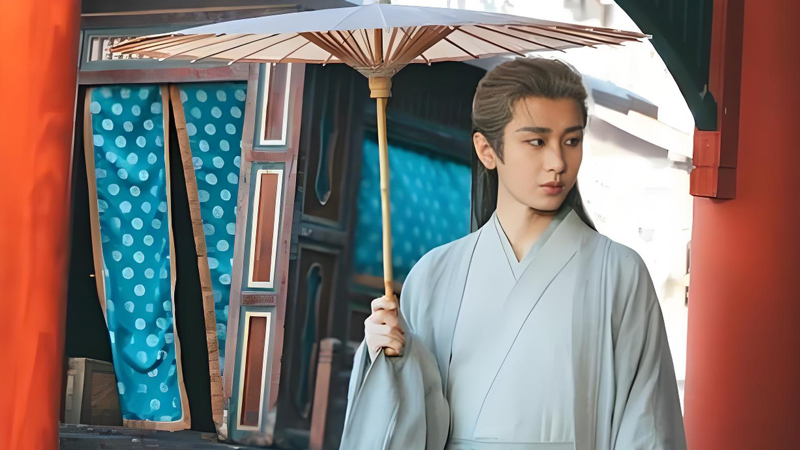
The show's power isn't confined to its script. Its visual storytelling is cinematic. A now-iconic scene of Xie Huaian holding a red umbrella in the falling snow is more than beautiful imagery. That stark red symbolizes lingering hatred, a warning, and a last fragile connection to a purer past. It's storytelling through color and composition.
The portrayal of Chang'an (长安) feels authentically lived-in. The production avoids glossy filters, instead showing worn flagstone streets, moss between bricks, and the bustling, chaotic energy of a real metropolis. This isn't a sterile set piece; it's a breathing ecosystem where the drama unfolds.

Action sequences reinforce this grounded aesthetic. There is no weightless wire-fu. Combat is brutal, visceral, and consequential. You hear the whistle of blades, see the arc of blood, and feel the impact of every blow. This tangible violence underscores the real, physical cost of political games. Similarly, costume design serves the narrative. Xie Huaian's robes gradually darken from white to ink-black, mirroring his soul's descent. Hair and makeup are period-appropriate and character-driven. Every detail, from a prop to a camera angle, is in service of immersing you in this treacherous, brilliant world.
