
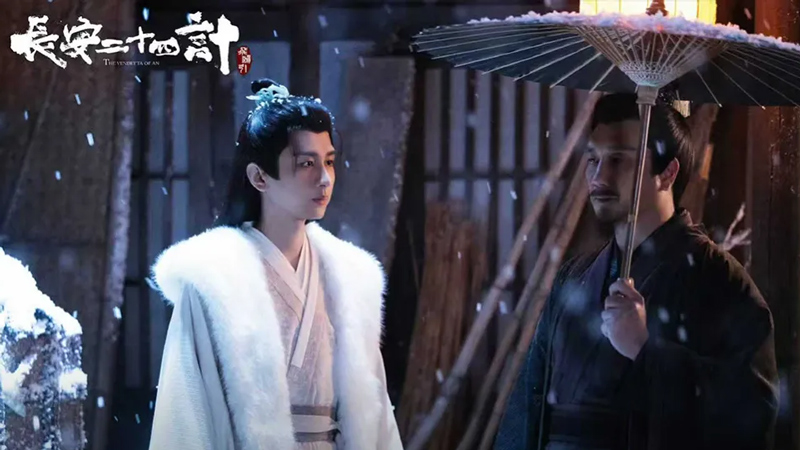
The landscape of Chinese male-oriented content is shifting. For years, adaptations of sprawling web novels dominated this space. Now, a different model is gaining ground, one that favors original, tightly-plotted narratives over pre-existing fantasy worlds. This move represents a significant gamble for streaming platforms, trading the built-in audience of a popular novel for the unpredictable appeal of a fresh story.
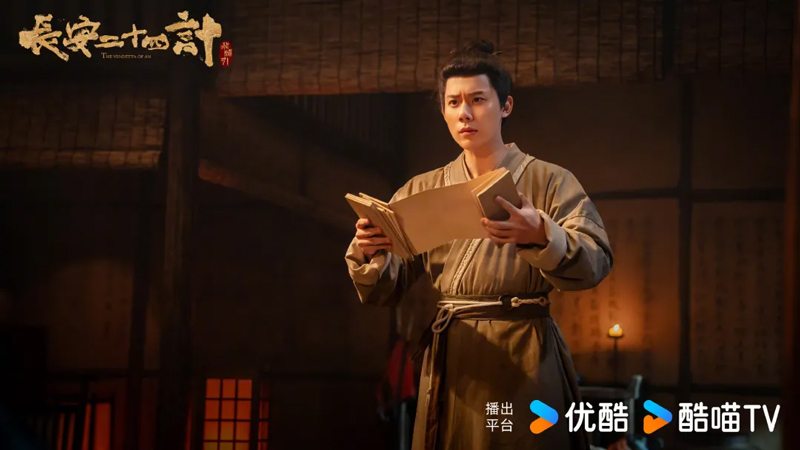
Exemplifying this trend is the new series The Vendetta of An (长安二十四计). It follows Xie Huai'an (谢淮安), portrayed by Cheng Yi (成毅), a man returning to the capital after years of planning revenge for his family's destruction. The plot revolves around his intricate schemes and dangerous alliances with figures like the new Emperor and a military commander. Without source material to guide them, viewers are plunged directly into a complex game of strategy and payback, making the viewing experience both challenging and engaging.
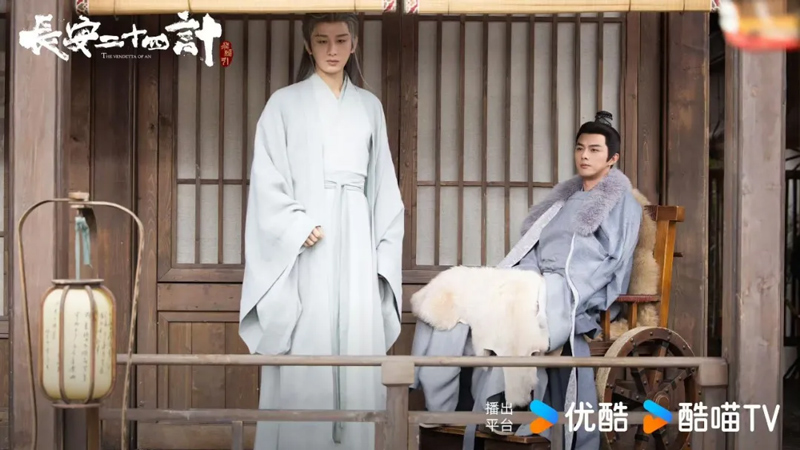
The commercial confidence in this approach is evident. The series secured over forty brand partnerships before its premiere. Its rapid release on Netflix also marks it as an early international contender in the costume suspense genre this year.
This year has seen a concerted push into this territory by platforms like Youku, with series such as The Legend of Zang Hai (藏海传) and The Vendetta of An. Their shared trait is a foundation in political intrigue and court drama, rather than the Xianxia or cultivation arcs typical of many web novel adaptations. Choosing original scripts is a risk, but it breaks a long-standing pattern. It suggests an attempt to attract viewers with sophisticated plotting and character motivation, potentially expanding the appeal of male-oriented stories beyond their traditional core audience. The success of these ventures could redefine the blueprint for the category.

1. A City of Shadows and the Man Who Walked Them
In the heart of a sprawling ancient capital, a game begins not with a roll of dice, but with a calculated smile and a hidden knife. The city is Chang'an (长安), the luminous epicenter of the Tang Dynasty, but its glittering façade masks a labyrinth of power where every ally could be a foe and every truth a carefully laid trap. Into this world steps a man named Xie Huai'an, a minor official with a singular, burning purpose. His story is not one of heroic ascent but of deliberate descent into a moral twilight, a relentless pursuit where the path to vengeance is paved with constant, unnerving deception. The audience is not handed a map but thrown into the maze alongside him, where every assumption is challenged, every allegiance questioned, and the ground shifts with each passing moment.
The Player Enters the Game
The old order in Chang'an has crumbled. Prince Xiao Wuyang (萧武阳) has stormed the palace, ousting the previous emperor under the banner of cleansing the court. He finds the throne empty, his predecessor vanished alongside the leader of the elite Huben (虎贲) guard. Frustrated and suspicious, the new sovereign needs a unique tool to navigate the unsettled waters. His advisors point to Xie Huai'an, a seemingly low-ranking Zhubu (主簿) whose intellect is matched only by his deep, personal hatred for the very Huben forces he must now help hunt.
For Xie Huai'an, the political upheaval is not chaos but opportunity—a door long waited for, finally swinging open. He watches the change in power from a distance, his expression unreadable. The moment is one of cold calculation, not celebration. He knows his journey to the capital will be his first and most critical performance, a test before the true war even begins. His past, a burden he carries silently, is about to become his most potent weapon.
Before leaving, he shares a poignant farewell with friends, revealing fragments of his tragic history. The moment feels raw, almost vulnerably candid. But this, too, is a gambit. Every word, every display of emotion, is a calculated move on an invisible board. In a swift, shocking act, he confronts his immediate superior—a man with a hidden allegiance—and ends his life. Just as the viewer brands him a ruthless operative, another layer unfolds: even this violent act was a premeditated step in a larger scheme. From the very outset, Xie Huai'an establishes that nothing around him is as it seems, least of all himself.
A Labyrinth of Loyalties
Arriving in Chang'an is like stepping into a different dimension. The brief serenity of his provincial life is shattered, replaced by the capital's oppressive grandeur and palpable tension. Here, power is a subtle language spoken in glances, veiled threats, and unspoken agreements. Xie Huai'an is immediately thrust into a series of tests, not of strength, but of wit and perception. He must prove his value to the new emperor, demonstrating an understanding of the city's dark mechanics that goes far beyond his official rank.
He navigates these initial trials with a disquieting ease, his mind working several steps ahead of his opponents. Each challenge is a thread he follows, pulling it to see what—or who—unravels at the other end. The palace, the streets, the taverns—all become stages for his intricate performance. He builds alliances knowing they are temporary, collects secrets as currency, and maps the factions vying for control. The straightforward revenge mission begins to twist, entangled with the ambitions of princes, generals, and scheming courtiers.
The narrative pace accelerates, mirroring Xie Huai'an's own relentless drive. Portrayed by actor Cheng Yi, Xie Huai'an operates with a chilling, focused efficiency. He does not linger on moral quandaries or engage in lengthy confrontations. When faced with obstacles—be it the cunning official Zhou Mo (周墨), a treacherous relative, or figures from the fallen regime—his response is swift and decisive. This is not mindless brutality; it is the methodical removal of pieces from the board, a relentless narrowing of the path toward his ultimate target.
The Weight of a Frozen Heart
Beneath the strategic brilliance and cold action lies the man's tragic core. The cinematography often isolates Xie Huai'an against vast, beautiful backdrops, particularly in haunting scenes of falling snow. The white blanket that covers Chang'an symbolizes purity, but for him, it only deepens the sense of isolation and echoes the coldness that has settled in his soul. These quiet visual moments speak volumes, revealing the profound loneliness that fuels his mission.
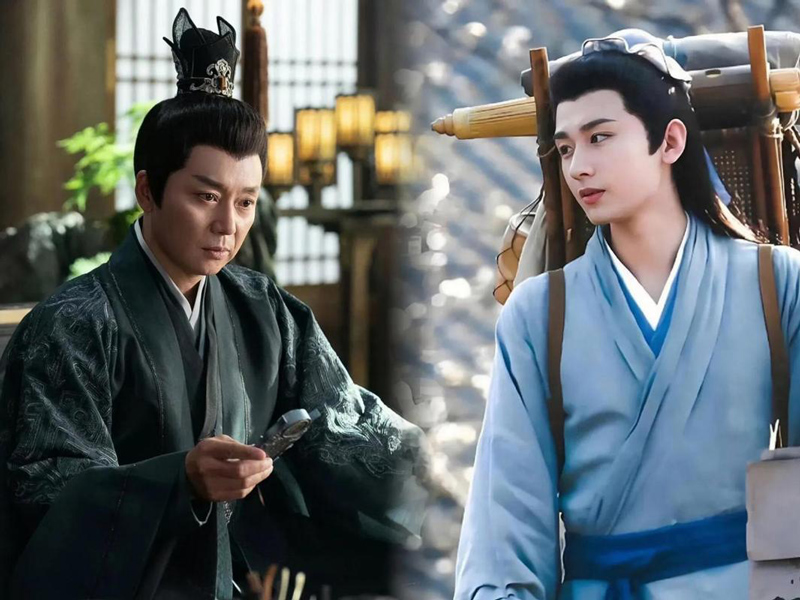
Cheng Yi's portrayal masterfully balances this duality. He brings a contained intensity to the role, where silent glances can convey more menace than a shouted threat, and moments of presumed solitude crack with unresolved pain. There is a "broken" quality to his resilience, a sense that his strength is forged from unimaginable loss. In dream sequences, we glimpse flashes of the helplessness he once felt, now buried under layers of resolve. This internal fracture makes him compelling; he is a hero eroded by his own quest.
His purpose, once solely personal, begins to strain under new pressures. The simple arithmetic of revenge becomes complicated by the unstable fate of the empire itself. He finds himself shouldering not just the weight of his family's memory, but the potential collapse of order in Chang'an. The "great righteousness" of the state becomes an unwelcome partner to his private vendetta, forcing impossible choices. Is he using the empire's chaos for his own ends, or is he being used by it? The line blurs, adding profound moral gravity to his every move.
An Unending Stratagem
The Vendetta of An excels not in providing answers, but in meticulously dismantling expectations. It constructs a narrative house of mirrors where each revealed truth often proves to be another reflection, another deception. The audience's experience mirrors Xie Huai'an's own: trust is a luxury, and certainty is the first casualty. This structure turns every scene into a puzzle, demanding attention to subtext and unspoken tension.
The drama draws from the rich tradition of Chinese Wuxia narratives and court intrigue, but filters them through a modern, psychological lens. It is less about flamboyant martial arts and more about the violence of thought, the assassination of character, and the war waged in shadowed corridors. The title itself suggests a manual of schemes, and each episode feels like a chapter from that clandestine text, enacted in real time with mortal stakes.
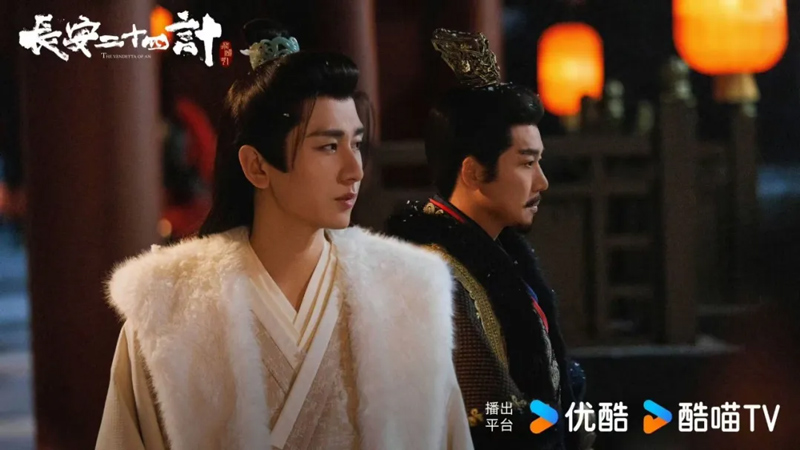
Ultimately, the story transcends its revenge plot framework to become a study of obsession and identity. Xie Huai'an’s journey asks what remains of a man when his life becomes a single, all-consuming purpose. As he moves through the snow-swept nights of Chang'an, a figure of both formidable power and profound sorrow, he embodies the central, unsettling question of the tale: in a world built on lies, can vengeance ever bring truth, or does it merely complete the tragedy? The game in Chang'an continues, and every move, every life taken, brings him closer to an answer that may destroy the very self he fights to avenge.


2. No Romances, Only Schemes: A New Kind of Revenge Thriver
The television landscape is shifting. A new series, The Vendetta of An, breaks familiar molds by offering a narrative driven not by romantic entanglements, but by intricate strategy and raw ambition. It presents a world where loyalty is fluid, every smile may hide a dagger, and the only constant is the relentless pursuit of power or vengeance. This drama constructs its entire plot around the cunning wisdom of ancient Chinese military tactics, promising a cerebral and adrenaline-fueled experience where the audience becomes a detective, piecing together motives and predicting the next shocking betrayal.
The Game of Plots
At the story's core is the innovative use of the Twenty-Four Stratagems. Each episode weaves a classic stratagem, like "Deceiving the Heaven to Cross the Ocean" or "Besieging Wei to Rescue Zhao", directly into its plot mechanics. These are not mere references but the engine of the narrative. Characters employ these tactics against each other in a high-stakes mental duel, creating layers of deception where every rescue mission might be a trap and every retreat a preparation for a greater assault.
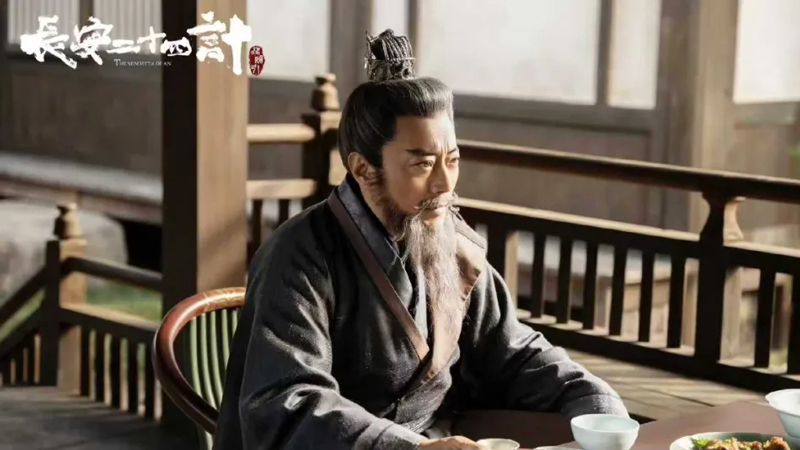
The result is a structure built for surprise. The narrative is designed with dozens of reversals, ensuring that no character's position is ever truly safe. The head writer, Shuang Cheng (霜城), emphasizes that while forces of relative good and evil exist, membership in these camps is constantly in flux. Allegiances are traded, and hidden agendas surface when least expected, making it impossible to label anyone conclusively until the final moments.
This uncertainty transforms viewing into an interactive gamble. Audiences are invited to "invest in" characters, betting on their true loyalties, their survival odds, and even the possibility of their return after apparent demise. This meta-layer of engagement turns plot speculation into a primary pleasure of the show, fulfilling the "thrilling" promise of its genre in a uniquely intellectual way.
A Protagonist Apart
Central to this unstable world is the enigmatic Xie Huai'an. He is defined by a conspicuous absence: the complete lack of a romantic subplot or official pairing. Shuang Cheng reasoned that a man shaped by profound suffering and singularly focused on a bloody quest for vengeance has no emotional space for love. His journey is one of continuous loss, making a traditional romance seem not just unnecessary, but tonally dissonant.

His visual design reinforces his isolated destiny. Xie Huai'an bears a unique trait—he was born with white hair that slowly darkened with age. This "white-headed child" motif serves as a metaphor for his preternatural intelligence and the lonely, burdensome path he must walk. He is a strategic genius, but one cursed by his own clarity of purpose.
His key actions are poetically tied to the solar terms of the traditional Chinese calendar. He bids farewell to friends on the Autumn Equinox, returns to Chang'an on Winter Commences, and confronts his greatest foe on the Spring Equinox. This synchronization of personal fate with the rhythm of the cosmos deepens the narrative's atmosphere, lending his revenge a sense of inexorable, seasonal timing.
An Ensemble of Shadows
The series commits to a "cast of formidable players" philosophy. Every role, regardless of screen time, is crafted with complexity and agency. There are no mere bystanders. Liu Yijun's (刘奕君) character, the martial general Xiao Wuyang, ascends to the throne not for personal glory but to correct a kingdom's course. His motivations blur the line between usurpation and righteous duty.
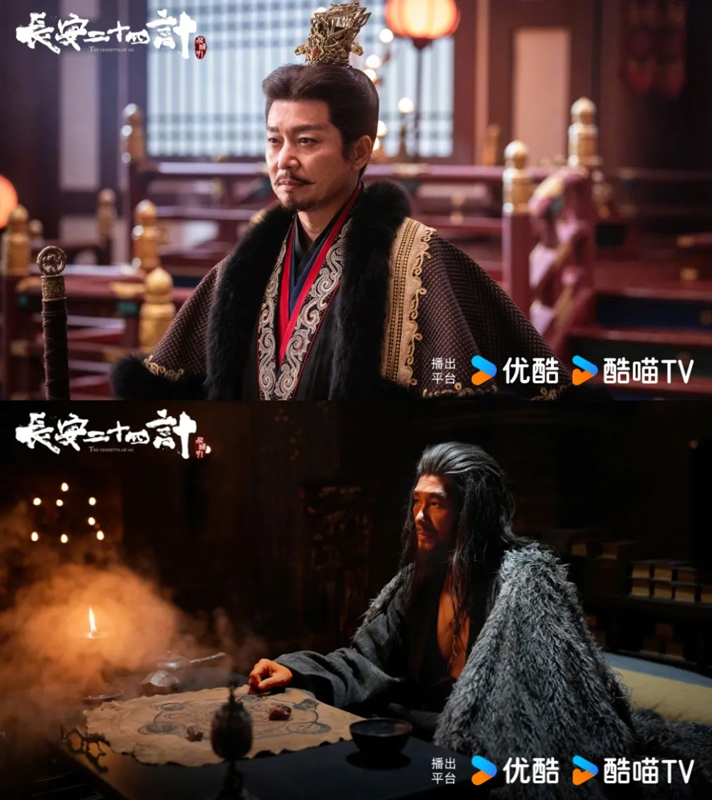
Meanwhile, Zhang Hanyu (张涵予) portrays Yan Fengshan (言凤山), the empire's deadliest covert operative and architect of a horrific massacre. He is a figure of profound, inscrutable depth. Conversely, Zhou Qi's (周奇) Xiao Wenjing (萧文敬) is an emperor perpetually under threat. Ironically, it is only after being toppled from power that he begins to discover his authentic self.
This refusal of simple binaries is the show's hallmark. Like the stratagems it employs, the drama operates in the vast gray area between moral extremes. Characters are driven by tangled mixes of trauma, duty, ambition, and a twisted sense of honor. Their conflicts are never just about winning, but about surviving with some shattered piece of their identity intact, making each victory feel precarious and every defeat multilayered.

3. Male-Oriented Dramas Forge a New Path
In the competitive landscape of Chinese streaming, a specific category of series is commanding significant attention. Often adapted from popular web novels targeting a male readership, these male-oriented dramas have traditionally promised high stakes, power fantasies, and thrilling progression. Their potential for massive viewer engagement and commercial success makes them a crucial battleground for platforms. This year, several major releases have moved beyond simple wish-fulfillment, suggesting a deliberate and sophisticated evolution of the genre.
Shows like The Legend of Zang Hai and The Vendetta of An represent this shift. They are not mere repetitions of past successes but deliberate attempts to refine a formula. The goal appears to be crafting narratives with a sharper, more serious edge that can resonate widely while still delivering the core satisfactions their core audience seeks. This approach suggests a maturation, treating the genre not as a niche product but as a vehicle for ambitious storytelling.
Genre Alchemy and Narrative Depth
The evolution is clearest in how these series blend genres. The Legend of Zang Hai, for instance, builds its world not just on political scheming but intricately weaves in elements of traditional Chinese Feng Shui (风水) and geomancy. This creates a unique texture, offering viewers a fresh lens through which to experience a revenge narrative. The setting becomes more than a backdrop; it is an active, credible system that influences the plot and character decisions.
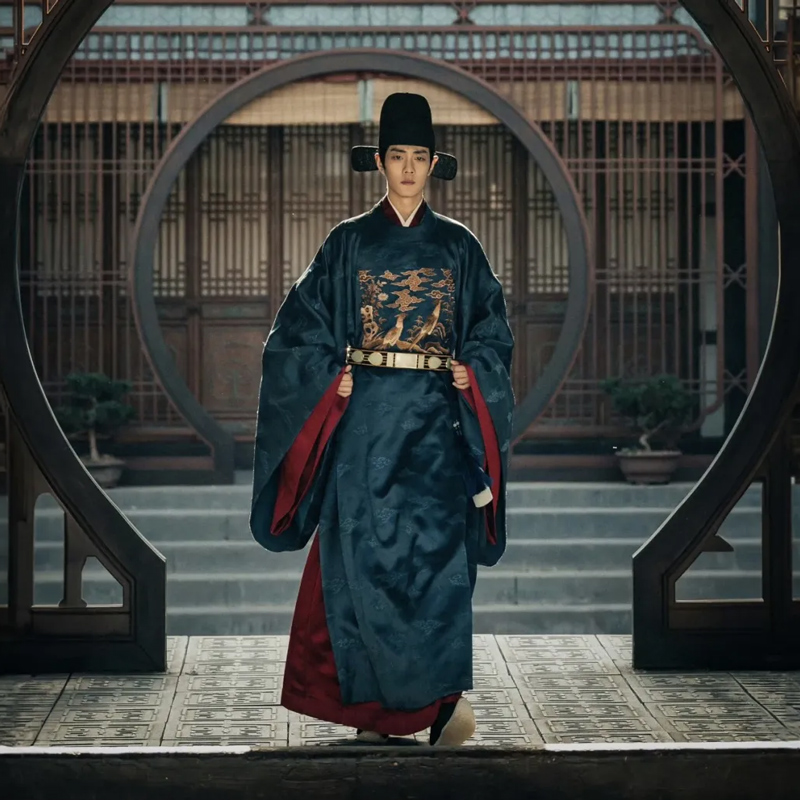
This fusion elevates the narrative ambition. The story centers on a protagonist's decade-long quest for vengeance, a classic trope, but executes it with the pacing and gravity of a historical political drama. The plot involves meticulous suspense and complex personal choices set against a backdrop of dynastic intrigue. The experience feels less like escapism and more like an immersive, strategic puzzle.
Such depth naturally fuels audience participation. During its run, The Legend of Zang Hai spawned countless fan theories and derivative video content online. Viewers actively dissected clues, debated the true identities of masked figures, and engaged with the story’s mysteries well beyond passive watching. This organic, discussion-driven engagement is a key indicator of a show's successful integration into contemporary viewer culture.
Youku's Calculated Signature
A distinct pattern emerges from Youku's recent offerings. Series like The Legend of Zang Hai and The Vendetta of An share a recognizable stylistic signature: rapid pacing, frequent plot reversals, a serious tone, and a focus on narrative innovation. This consistency suggests a platform-level strategy to own a specific, quality-driven niche within the broader male-oriented drama space.
The Vendetta of An exemplifies a further, riskier step in this strategy: championing original screenplays over pre-existing popular novels. Using an original IP requires greater confidence and patience, as it lacks a built-in fanbase. The show can be seen as a direct continuation of the creative philosophy behind The Legend of Zang Hai, applying its lessons to a completely new story world.
This commitment to originality is intentional. Producer Zhou Jing (周静), who oversaw both The Legend of Zang Hai and this new series, has stated that Youku actively respects and encourages original story development, aiming to provide high-quality, enduring content for its users. Screenwriter Shuang Cheng noted that an initial story concept only fully blossomed into a series because of the platform's active encouragement and support.
Originality as the Necessary Risk
For the entire long-form series market, innovation is no longer optional—it is imperative. Youku's current slate demonstrates a willingness to embrace this, blending established genre appeal with creative risk. The focus is on building a reputation for distinctive, well-crafted series that defy easy categorization and predictable plotlines.
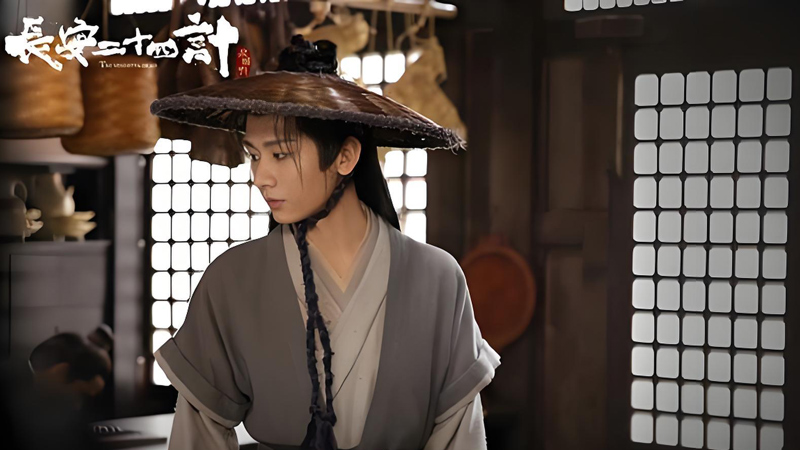
The development of these dramas indicates a move towards "premium" genre content. It balances the need for compelling, binge-worthy narratives with the artistic desire to explore new thematic ground and technical execution. The success of this approach could redefine audience expectations, proving that male-oriented stories can be both massively popular and critically respected.
Ultimately, the trajectory of shows like The Legend of Zang Hai and The Vendetta of An points toward a future where genre is a starting point, not a boundary. Their goal is to open new avenues for storytelling, providing a template that values suspenseful originality as much as it does broad audience appeal. This path, while challenging, may well secure the genre's vitality for years to come.

4. A New Blueprint: Originality as the Ultimate Stratagem
In conclusion, the strategic pivot from adaptation-dependent models to original, intricate narratives in male-oriented content marks a significant evolution. As exemplified by series like The Vendetta of An, this shift trades the safety of pre-built audiences for the high-risk, high-reward pursuit of sophisticated storytelling. It is a conscious move to elevate the genre through complex political intrigue and psychological depth, aiming to captivate both core and broader viewerships.
The commercial confidence and international ambitions backing these ventures suggest a transformative moment. If successful, this commitment to original screenwriting will not only redefine the category's creative boundaries but also establish a compelling new blueprint for the future—where innovation itself becomes the most powerful plot device.

