
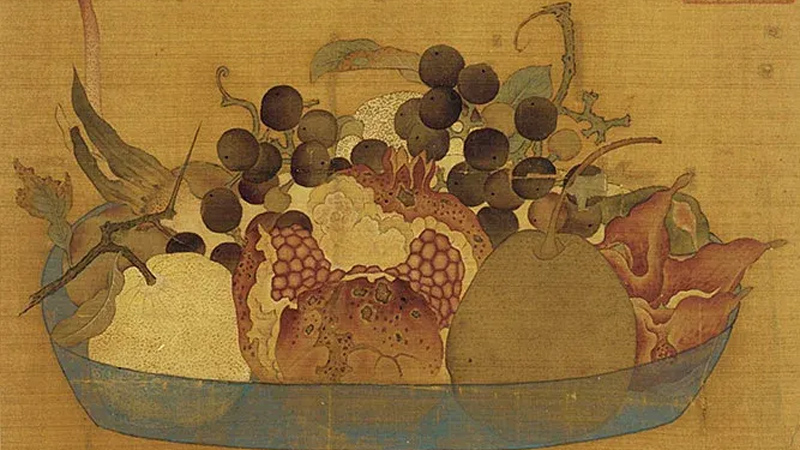
Today, our globalized world delivers tropical delights to distant continents, making seasonal or geographic limitations seem like a quaint concept. But for most of human history, the contents of a fruit bowl were strictly governed by what the local land offered each season. The journey of fruit in ancient China is not merely a tale of agriculture, but a captivating story of imperial desire, technological ingenuity, and the slow, patient weaving of trade routes that connected empires. It reveals a world where a single peach was a token of friendship, a grapevine was a treasured import, and the taste of a fresh lychee was a luxury worth extraordinary cost.
Peaches and Plums

In the primal forests and along the riverbanks of ancient China, the first fruits were those provided by nature untamed. Early peoples were careful foragers, observing which berries and nuts animals ate before deeming them safe. The foundational fruits of Chinese civilization emerged from this period: the peach, the plum, the jujube (or Chinese date), and the apricot. These are the fruits immortalized in the Book of Songs (诗经), their flavors often tart or astringent compared to modern varieties.
These native species held deep cultural significance. The phrase "to give a peach and receive a plum" from the classics speaks to reciprocity and valued friendship. Nuts like chestnuts and hazelnuts were classified as fruits, vital for their fat and protein, especially when other food was scarce. The orchard began as a source of sustenance, poetry, and social ritual, firmly rooted in the local soil.
Grapes

A dramatic expansion of the Chinese palate began with the opening of the Silk Road during the Han Dynasty. The envoy Zhang Qian's (张骞) journeys west brought back exotic treasures that would forever change the empire's gardens and kitchens. Grapes, utterly foreign, were among the most celebrated introductions. They were quickly cultivated, their vines nurtured in imperial gardens, and their fermented juice enjoyed as a novel wine.
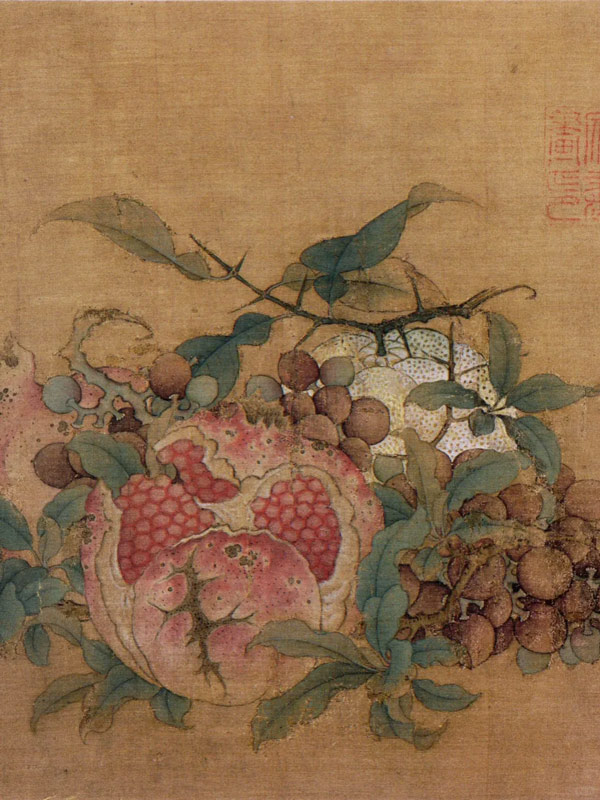
Alongside grapes came the pomegranate, with its bursting ruby seeds symbolizing fertility and abundance, and the walnut, valued for its rich oil and long storage life. These were "western" fruits, bearing the prefix hu (胡), meaning "from the northern and western tribes." Their arrival marked a new era of cosmopolitan taste. Meanwhile, southern China's own tropical specialties, like Longyan (龙眼), remained distant treasures for northerners, their fresh consumption a near-impossible dream due to the formidable mountains and vast distances.
Lychees
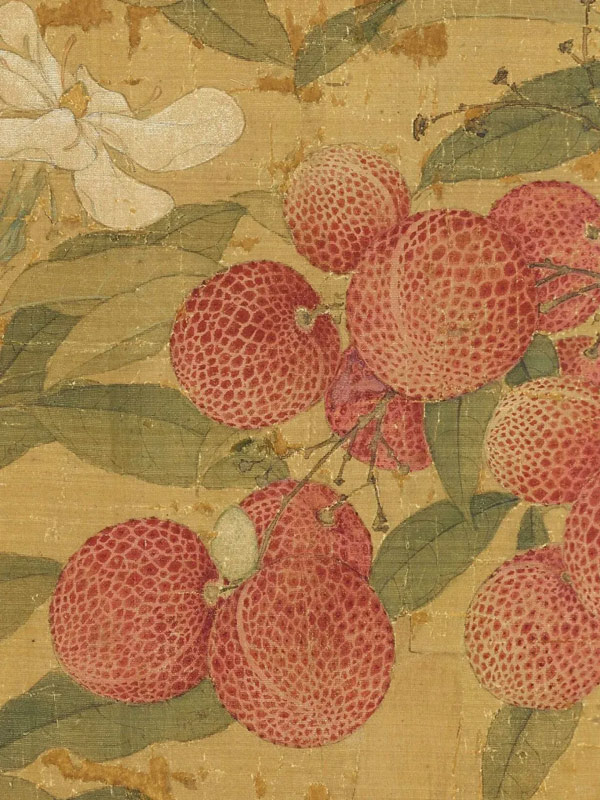
The Tang and Song Dynasties represent a golden age of fruit culture, fueled by economic prosperity. No story encapsulates the extremes of imperial indulgence better than that of Yang Guifei's (杨贵妃) famed craving for fresh lychees. To satisfy her, the court established a relay system of fast horses and riders, a desperate "flying gallop" from the southern coast to the capital, Chang'an. This effort, romanticized in poetry, laid bare the immense human cost behind a taste of fleeting perfection.
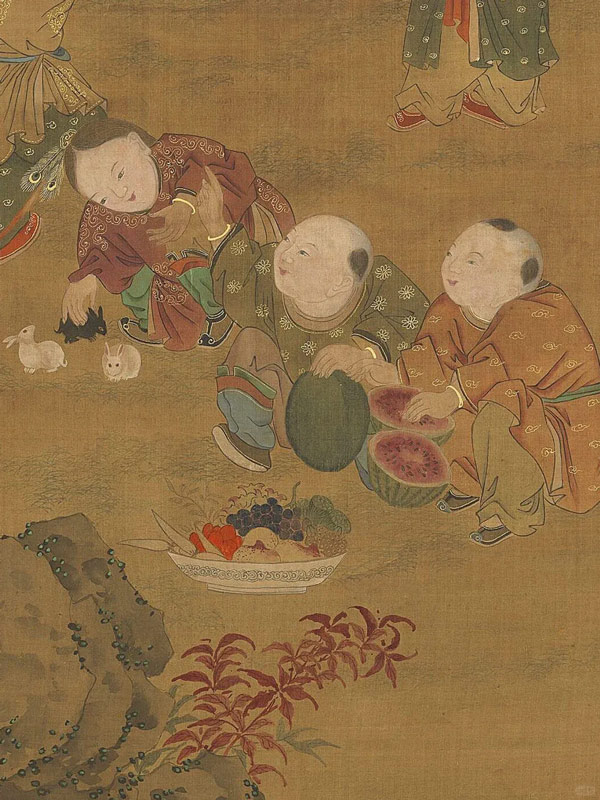
For the burgeoning urban class of the Song Dynasty, fruit became a sophisticated commodity. Markets in Bianjing (汴京, modern Kaifeng) boasted dazzling variety. Vendors perfected gentle harvesting techniques to preserve bloom and fragrance. Most ingeniously, they mastered cooling methods. "Floating melons and sinking plums" involved submerging fruits in ice-cold water drawn from deep wells or harvested winter ice stored in cellars. The watermelon, introduced during this period, became the ultimate summer refreshment, served chilled in precisely this way.
Ice-cooled Melon
By the Ming and Qing eras, the fruit basket expanded again with the Columbian Exchange. Pineapples, sugar-apples, and guavas from the Americas found a home in China's southern provinces. Yet, the fundamental challenges of preservation and transport persisted. Ingenious solutions flourished: fruits were sealed in wax, stored in deep cellar pits, or transformed into dried preserves and candied sweets.
Looking back, the ancient fruit stand was indeed limited. Its offerings were a testament to patience, a celebration of the seasonal, and a record of cultural exchange. Every grapevine carried a memory of the western deserts; every lychee pit told a story of imperial passion; every slice of ice-cooled melon reflected Song-era urban ingenuity. Our modern, year-round bounty is a marvel, but it has perhaps diminished our sense of a fruit's true journey. To understand the fruits of ancient China is to taste history itself—a flavor that is sometimes sweet, sometimes tart, and always profoundly human.
