Article
Search results:
-
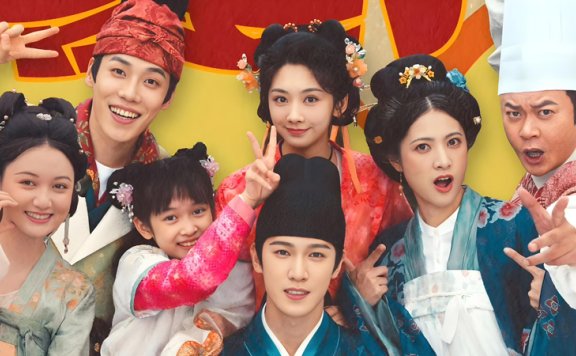
A Modern Family’s Culinary Adventure in the Tang Dynasty
What happens when a modern family gets stranded in the Tang Dynasty? Yummy Yummy Yummy (宴遇永安) serves up a delicious answer, blending time-travel chaos with culinary charm. This series, adapted from the novel Chang'an Small Restaurant (长安小饭馆), has quickly captured audiences with its unique premise. Instead of a lone hero, the entire Shen family accidentally journeys back to ancient China. They navigate the bustling streets of Yong'an (永安) City, using their modern know-how to survive. With a rating soaring high shortly after its release, the show mixes humor, heart, and historical intrigue. It turns food into a bridge between eras, offering laughs and life lessons in equal measure. Viewers find themselves drawn into a world where street snacks spark revolutions and family bonds defy time. Unexpected Beginnings The Shen family's journey starts not with magic, but a viral video mishap. While filming a tribute to their ancestor, they are whisked away to the Tang Dynasty. There are no royal welcomes or instant power-ups. Instead, they face the gritty reality of making a living. Food writer Shen Shaoguang (沈韶光) tries her hand at street vending, only to have a Jianbing Guozi (煎饼果子) mishap with a key official. Her clumsy attempt at… -
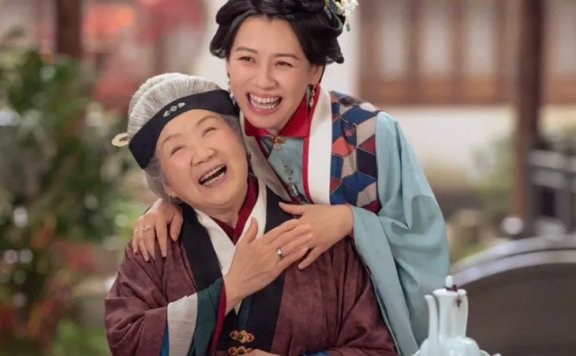
Were There Patchwork Clothes in the Tang Dynasty?
Did ancient Chinese fashionistas wear patchwork? The answer might surprise you. Long before sustainable fashion became a modern buzzword, a remarkable garment was turning heads in the dynasties of old. This was not merely clothing, but a canvas where artistry met resourcefulness, creating a style so enduring that its echo can be seen on runways today. The story of this attire weaves together threads of Buddhist humility, parental love, and the irrepressible human desire for aesthetic expression, forming a rich tapestry of cultural history that challenges our perceptions of vintage fashion. More Than Fabric The Shuitian Yi (水田衣), or "water field garment," earned its name from a charming visual metaphor. Its composition of irregular, multi-colored fabric patches was said to resemble the fragmented layout of a rice paddy. While its popularity peaked later, evidence of such patchwork clothing exists from the Tang Dynasty, mentioned in the poetry of Wang Wei. This style is a close relative of the monastic Baina Yi (百衲衣), or "hundred-patch robe," worn by Buddhist monks. These robes were constructed from scraps of cloth gathered through alms, serving as a physical manifestation of ascetic principles—practicing frugality while transcending material attachment. A parallel tradition existed for children, known… -

Where the Great Wall Lives: The Intangible Culture Beneath the Stones
Where the Great Wall stands, an intangible cultural legacy lives on. Through ancestral rituals, storytelling, and traditional crafts, local communities keep history alive. The stones are silent, but the people are not—their stories, dances, and flavors form a living heritage that continues to breathe along the ancient ridges. Tower Visiting: A 400-Year-Old Ritual That Keeps History Alive In the shadow of the Great Wall, where the mountains of Yanshan (燕山) meet the sea near Qinhuangdao (秦皇岛), history isn’t just remembered—it’s relived. Every spring, during Qingming Festival (清明节), descendants of Ming Dynasty soldiers return to the watchtowers their ancestors once guarded. They call it "tower visiting"—a custom that has endured for over four centuries. It began with Qi Jiguang (戚继光), the general who reinforced this section of the Wall during the Ming Dynasty. To sustain morale, he allowed soldiers’ families to join them. Each clan was assigned a watchtower. They farmed the land, stood guard, and when they died, were often buried near the towers they protected. Today, their descendants still return. They climb the same steps, touch the same stones, and share the same stories. Elders pass down tales of courage and sacrifice. Children fill their pockets with black beans… -
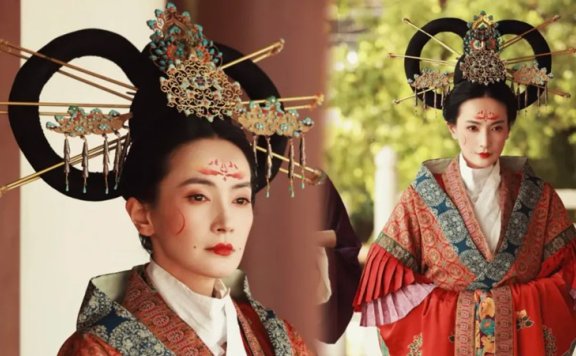
The Tang Dynasty Symbolism Behind Li Yuan's Celestial Hanfu Look
When actor Li Yuan (李媛) unveiled her latest Hanfu (汉服) editorial, the internet struggled to recognize the same person who played the fierce, shaven-headed assassin Yu Chang (鱼肠) in the hit drama The Longest Day in Chang'an (长安十二时辰). Her breathtaking transformation into an early Tang Dynasty noblewoman left viewers questioning whether this could possibly be the same performer. With intricate hairstyles resembling celestial wheels and lavish silk robes, the images present a radical departure from her on-screen persona, inviting both admiration and curiosity about the historical accuracy and symbolism behind such extraordinary designs. The Celestial Hair One of the most striking elements of Li Yuan's new look is the magnificent twin-chignon hairstyle, towering high above her head like twin halos or ancient wheels. This specific design, known as Shuang Huan Wang Xian Ji (双鬟望仙髻, Immortal-Adoring Twin Loops), draws direct inspiration from murals found in the tombs of noblewomen from the early Tang period. These elaborate styles often reached heights exceeding two feet and required immense skill and time to construct. Historical records and archaeological findings suggest that wealthy Tang women often used pre-made structured hairpieces to achieve such dramatic looks. These accessories were secured with gold hairpins, Dian (钿, inlaid… -
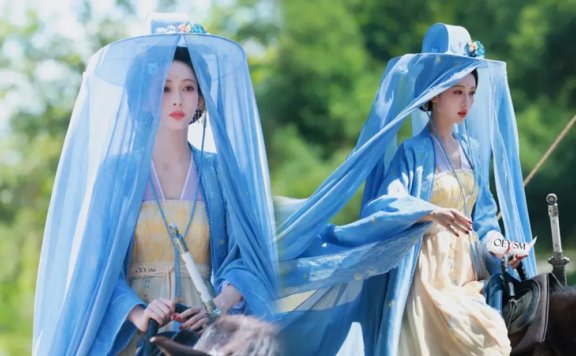
The Story of Weimao and Mili in Tang Dynasty China
When watching Tang Dynasty-set dramas, have you ever wondered why some female characters wear hats with long veils covering their faces—or even their entire bodies? These headpieces, often called "face-covering hats" in period shows, come in varying styles: some veils drape to the shoulders, others sweep down to the ankles. But what lies behind these differences? Were ancient women truly hidden so thoroughly, or was there more to these hats than meets the eye? Let’s uncover the stories woven into Tang Dynasty headwear—Weimao (帷帽) and Mili (羃篱). Weimao vs Mili: Fabric, Length, and Timeline First, a quick clarification: Weimao and Mili are distinct, though often confused. Weimao, made of cloth or thin silk, features a wide brim with short veils that typically reach the neck—just enough to "lightly cover" the face, as Tang records describe. Mili, by contrast, is crafted from bamboo with longer veils that can shroud the entire body. Their popularity also shifted over time: Mili dominated in the early Tang (618–649 CE), while Weimao rose to fame during Empress Wu Zetian’s reign (690–705 CE) before fading in the Kaiyuan era (713–741 CE). For example, Yang Zi’s Weimao in the drama Flourished Peony (国色芳华) aligns closely with historical… -
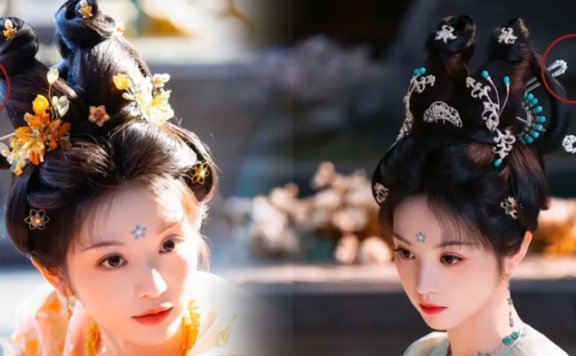
Ancient Hair Art: How Tang Dynasty Styles Defied Gravity in Dramas
When watching historical dramas, we often marvel at the gravity-defying hairstyles—elaborate loops, towering buns, and intricate coils that seem to float effortlessly. These "zero-gravity aesthetics" leave us wondering: how did ancient women achieve such dramatic looks without modern tools? This article delves into the ingenious methods used in dynasties like the Tang, revealing how hairpins and accessories transformed hair into art while defying physics. Through examples from popular shows and paintings, we uncover the secrets that kept these styles intact, blending functionality with breathtaking beauty. The Role of Hairpins In historical dramas, characters sport stunning coiffures that appear weightless, like those in Moonlit Reunion (子夜归) featuring Tian Xiwei (田曦薇). Her character's ring-shaped styles aren't held by wire or glue; instead, ancient artisans relied on hairpins for both fixation and adornment. These pins, often single-pronged or double-pronged, anchored the hair at key points, creating a sturdy framework that supported even the most complex shapes. Unlike today's temporary solutions, these tools were elegant and durable, proving that ancient craftsmanship was both practical and artistic. Hairpins weren't just functional—they added decorative flair. For instance, in Ladies Wearing Flowers painting, symmetrical pins embellished the hair, their designs varying from simple to ornate based on… -
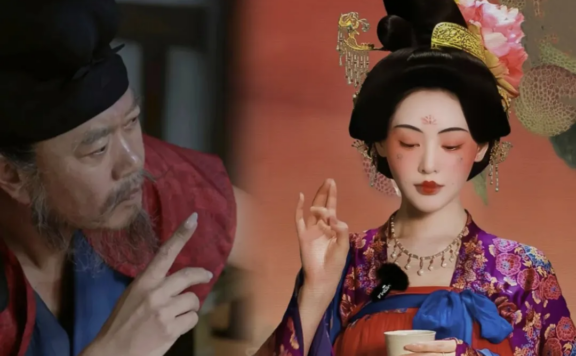
Nail Art is So Fashion in Tang Dynasty
In the cdrama The Lychee Road, not only women but also men are into manicures. He Cishi, a seemingly rugged man, and some officials have well - manicured nails, which challenges many people's modern thinking. What's going on? Were the Tang people more progressive than us? Actually, ancient men also liked growing nails. But it wasn't for beauty. It was a symbol of upper - class status, showing they didn't do manual labor. We can see long nails in some portraits. Take Zhuge Liang, a well - known figure in the Three Kingdoms period. In a Yuan - Dynasty portrait of him (collected in the Palace Museum in Beijing), he has long nails, and the ruyi in his hand is delicate. His black - and - white - and - red clothes are still fashionable today. Nail Art in Tang Dynasty The trend of manicures became more popular in the Tang Dynasty. There were 'nail - dyeing' techniques and a specialized manicure industry. Similar to today, nail - dyeing was a sign of beauty and noble status, especially favored by noble women. In ancient times, 'Koudan' referred to dyed nails or delicate hands with dyed nails. Balsam flowers, also known… -
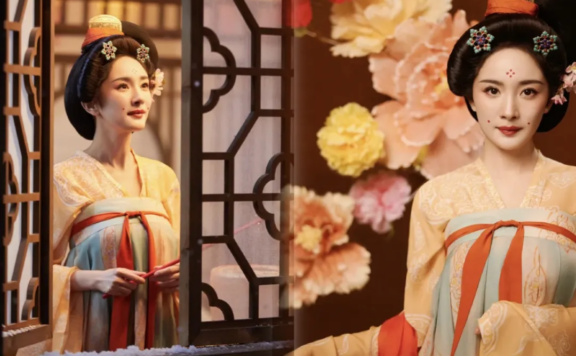
Why Yang Mi's Tang Dress is So Advanced?
The poster of the movie version of The Lychee Road reveals that Yang Mi plays Zheng Yuting, the lawfully - wedded wife who shouts, "I'm marrying him, not Chang'an". She always accompanies Li Shande played by Da Peng. Fans believe this can make up for the regret of the TV series version. Careful fans found that the stripes on her dress in the play are horizontally gradient. Similar striped prints have even been featured on various international fashion runways by foreign designers! Were the people in the Tang Dynasty so trendy? Let me give you the conclusion first. This horizontally gradient dress is inspired by the pattern of a woman's dress in the Tang Dynasty silk painting The Birth of Buddha. And this pattern is created through the dyeing and resist - dyeing techniques of the Tang Dynasty. The dyeing and resist - dyeing techniques can be further divided according to their functions. "Dyeing" mainly focuses on coloring the fabric, while "resist - dyeing" is about creating patterns on the fabric. It is said to have originated in the Qin and Han dynasties and was very popular from the Sui, Tang to the Song dynasties. According to Shuowen Jiezi, "Xie… -
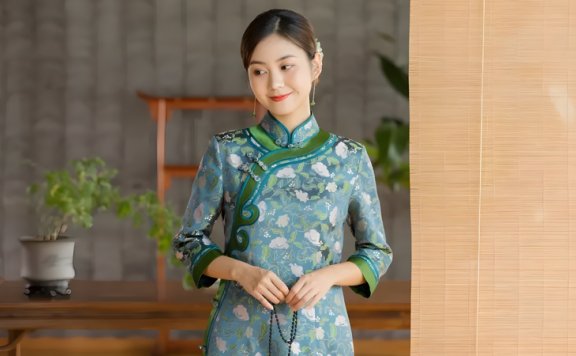
Tang Brocade: How Did This Silk Art Define Splendor?
In the heart of Chinese cultural heritage, Tang Brocade stands as a luminous symbol of silk artistry from the Tang Dynasty era. This exquisite fabric, woven with meticulous care, once adorned the nobility and now finds new life in contemporary fashion like the Qipao. Its rich patterns and opulent textures reflect a timeless pursuit of beauty, bridging centuries of craftsmanship. As we delve into its story, we uncover not just a textile, but a narrative woven with threads of history and innovation. Roots in Royalty Tang Brocade emerged during China's Tang Dynasty, flourishing as a hallmark of aristocratic life. Crafted primarily from silk threads, it incorporated gold and silver accents to signify wealth and status. Nobles favored it for ceremonial robes and palace decor, using its radiant sheen to display power. For instance, in royal courts, this fabric became synonymous with prestige, worn during grand events to command respect and admiration. Its rarity stemmed from labor-intensive methods, ensuring only the elite could afford such luxuries. Over time, Tang Brocade evolved beyond mere adornment, embodying cultural identity. Artisans drew inspiration from nature, infusing designs with symbolic motifs like birds and flowers to convey harmony. This artistic expression resonated deeply, making the… -
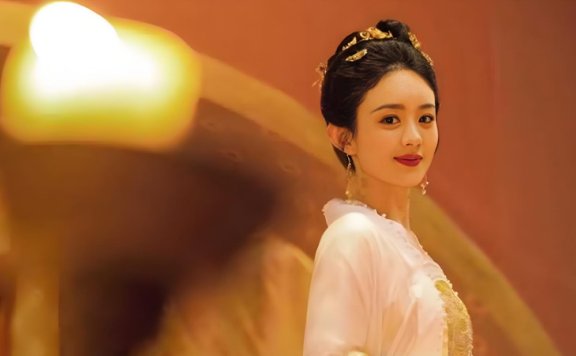
Zhao Liying in Tangzhuang: Hairstyle, Fabric, and Makeup Secrets
What makes an outfit transcend centuries? Zhao Liying's (赵丽颖) recent embrace of Tangzhuang (唐装) offers a masterclass in ancient Chinese aesthetics. Moving beyond her usual youthful charm, she embodies imperial elegance through deliberate choices in hairstyling, fabric selection, and makeup. This transformation reveals core principles of Tang fashion – principles centered on sophistication achieved through restraint, quality, and harmony, not mere extravagance. Her look serves as a powerful testament to the enduring brilliance of historical Chinese design, proving its relevance for modern style seekers. Hairstyle Forget towering, jewel-encrusted creations. Zhao Liying's Tangzhuang impact begins with a remarkably simple coiled bun. This choice defies a common misconception: that historical Chinese hairstyles require overwhelming complexity to feel regal. Her sleek, unadorned updo demonstrates that true luxury lies in clean lines and impeccable execution. The polished finish creates an immediate sense of refinement, allowing the wearer's features and the clothing itself to take center stage. The allure of intricate braids and multiple ornaments is understandable, yet often leads to visual chaos. Zhao Liying's stylists understood that a single, well-crafted bun provides a stronger foundation for elegance. It offers a timeless quality, avoiding the dated look that overly elaborate styles can project. This focus… -
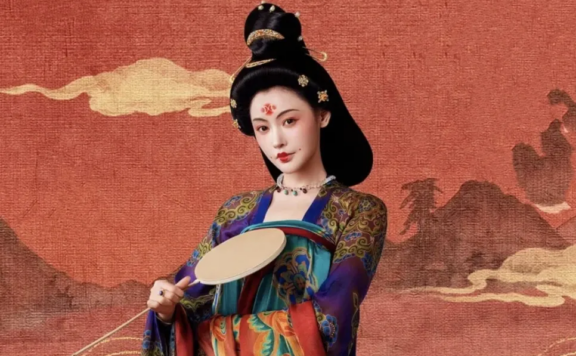
Zhang Tian'ai Tang Style Royal Hairstyle
In the ancient costume drama "The Litchi Road", Zhang Tian'ai (张天爱) portrays Shiqiniang. When she first appears on stage in a Tang - style shirt and skirt, netizens comment, "This makeup and aura... She really brings the villainess to life!" First, the Tang Dynasty hairpin system is quite extensive, generally reflecting the current concept of "face framed by hair". Currently, the two hairpins Zhang Tian'ai wears are highly recognizable from the High Tang period. Especially the loose - hair style on the right, as it was prevalent in the ladies' makeup from the mid - to late Kaiyuan era to the end of the Tianbao era, netizens affectionately call it the "Tianbao Pifa - hair Style". These two hairpins belong to the characters of Shiyiniang and Shisanniang in the Dunhuang mural "The Picture of the Governor's Wife Paying Homage to the Buddha". There's also a subtle connection when compared with Zhang Tian'ai's on - screen characters. The fact that these two hairpins appear in the same mural also indicates their popularity. The Coiled Hairpin Let's start with the coiled hairpin, which resembles the "Woduo Ji". This hairpin was popular during the Kaiyuan period of the Tang Dynasty. When women styled… -
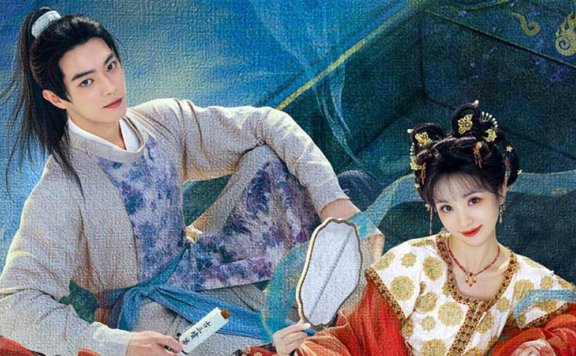
Zi Ye Gui: Tang Couple's Dangerous Secret by Night
Tencent Video's highly anticipated 38-episode historical fantasy drama Moonlit Reunion (子夜归) promises to dominate summer viewing. Starring popular actors Xu Kai (许凯) and Tian Xiwei (田曦薇), the series transports viewers to a meticulously crafted Tang Dynasty Chang'an, where daylight reality conceals a perilous supernatural underworld. Duality of Worlds Chang'an transforms dramatically between day and night. Under the sun, the city thrives as a magnificent human capital. Here, we meet Mei Zhuyu (Xu Kai), an unassuming official at the mysterious Xuanjian Bureau (玄鉴司), and his spirited noblewoman wife, Wu Zhen (Tian Xiwei). Their playful, often chaotic married life unfolds amidst bustling markets and grand palaces, filled with shared meals, lighthearted mischief, and genuine affection developed after their arranged marriage. Sunset triggers a complete metamorphosis. The familiar streets warp into the eerie Demon Market. Mei Zhuyu (梅逐雨) sheds his mild facade, becoming a formidable demon-slaying Taoist master clad in dark robes, wielding talismans against creatures threatening humanity. Simultaneously, Wu Zhen (武祯) reveals her true nature as the powerful ruler of this hidden realm, the crimson-eyed, cat-eared Cat Lord, fiercely protective of her domain and its inhabitants. This stark duality forces the couple into nightly conflict. Their daytime intimacy clashes violently with their… -
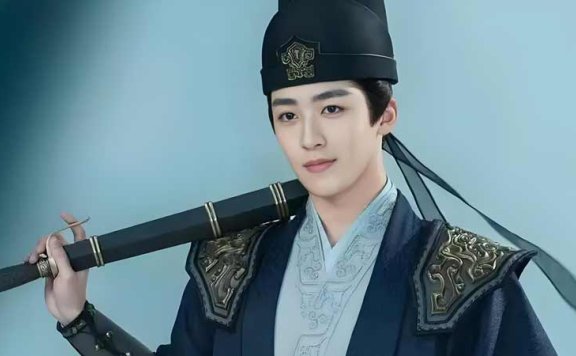
The Wanted Detective: A Masterclass in Tang Dynasty Suspense
Summer delivers an exceptional gift for historical mystery enthusiasts: The Wanted Detective (定风波). Following the success of Coroner’s Diary (朝雪录), this new series immediately captivated audiences with its intricate plotting and rich atmosphere. Viewers praise its relentless pace and layered storytelling, declaring it another standout from iQiyi's summer lineup. The Wanted Detective masterfully blends political intrigue, chilling crimes, and a compelling ensemble cast, creating an experience that demands binge-watching. Cases Within Cases The narrative opens explosively with the Monument Tears Case. Three high-ranking officials meet grotesque, seemingly supernatural deaths: one decapitated while riding, another incinerated at his desk, and a third drowned mysteriously. All clues point to the elusive Night Shades. Young detective prodigy Xiao Beiming (萧北冥) and his mentor, Zhong Yunchi (钟云赤), attempt a wedding trap to catch the suspects. The plan catastrophically fails. Zhong Yunchi and the suspects are brutally killed using the distinctive "seam murder" technique, while Xiao Beiming, gravely injured, plunges into Fengbo Lake. Framed for the massacre, he vanishes. Within two episodes, the show establishes the core conflict, political unrest, and Xiao Beiming's devastating fall. Three years later, the Bridal Seam Murders shock the capital. Four brides are found murdered, their bodies sewn shut in… -
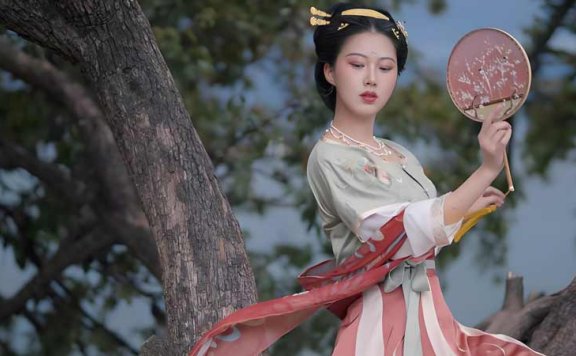
Sleeves: Tang Dynasty Fashion Through the Ages
Far more than mere attire, Tang-style Hanfu stands as a vibrant emblem of China's golden age. Rooted in profound aesthetics, it reflected societal shifts and technological prowess. As the ancient text Zuo Zhuan (左传) noted, the magnificence of ritual and dress defined Chinese civilization. Tang fashion, evolving dramatically across nearly three centuries, showcased unparalleled diversity in silhouette, color, and ornamentation, moving from restrained elegance to opulent grandeur and nostalgic revival, embodying the dynasty’s spirit of openness and cultural confidence. Its legacy continues to inspire contemporary fashion and cultural revival worldwide. Threads of Change The Early Tang period favored subtle refinement. Women wore slim-sleeved, short jackets paired with high-waisted skirts tied just below the bust. This "Ruqun" style elongated the figure, embodying an aesthetic of gentle grace. Fabrics were often light silks in soft hues, emphasizing understated beauty. Narrow stripes on skirts, known as "Jianse Qun (间色裙)," were initially modest. Empress Wu Zetian's (武则天) ascent catalyzed transformation. Necklines deepened into elegant curves, and the flowing "Pei Bo" (帔帛) scarf became essential. Waistlines gradually lowered to a high position under the bust. A bold trend emerged: women adopted male attire. Palace maids sported round-collar robes with practical slits, striped trousers, and functional… -
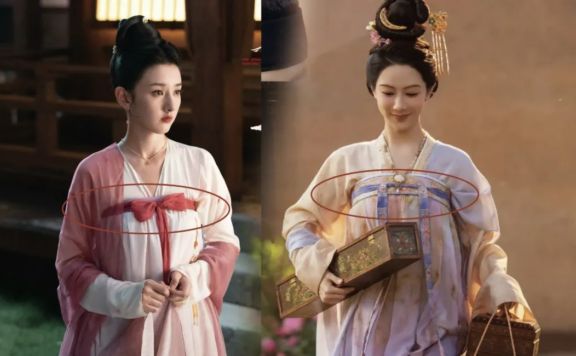
Why Tang Women Not Afraid of Qixiong Skirts Falling Off?
In ancient costume dramas or some images of Hanfu from the Tang Dynasty, you can often see these skirts that are directly tied around the chest. After all, there were no designs like elastic bands or safety pins for such skirts in ancient times. Did they rely entirely on large breasts to hold them up? Wouldn't they fall down? First, let's state the conclusion. In fact, this kind of skirt is supported by conforming to human engineering and the friction of the fabric. Moreover, this popular way of wearing was prevalent in the Tang Dynasty, and the plump body shape could also support such clothes. In addition, there were also designs like spaghetti strap dresses in history, so girls had a wide range of choices. Popularity in Tang Dynasty Why was this way of wearing popular in the Tang Dynasty? By the Sui and Tang Dynasties in the history of our clothing development, the waistline of skirts became popular to move upwards, especially during the prosperous Tang Dynasty and later. This was related to the confidence of women in their figures at that time and the trend of advocating a plump and strong body shape. Now, the common folk name… -
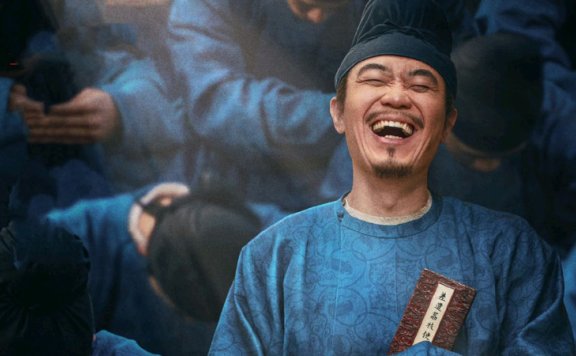
The Lychees from Chang'an: Tang Official's Unlikely Journey
Dapeng’s (大鹏) The Lychees from Chang'an (长安的荔枝) emerges as the summer’s most anticipated cinematic feat, translating Ma Boyong’s (马伯庸) bestselling novella into a visual spectacle. Directed by and starring Dapeng as the low-level Tang Dynasty official Li Shande (李善德), the film chronicles an impossible imperial mission: delivering fresh lychees from Lingnan to Chang’an before spoilage. The film masterfully balances historical authenticity with narrative tension, earning a 7.7 rating – Dapeng’s highest directorial score to date. Its blend of bureaucratic satire, breathtaking landscapes, and emotional depth offers audiences both laughter and poignant reflection on sacrifice and resilience. Visual Poetry on Screen Rejecting sweeping establishing shots, cinematographer employed long lenses to compress space, echoing traditional Chinese painting’s "scattered perspective." Li Shande appears minuscule against Chang’an’s oppressive palace walls, visually amplifying his vulnerability within the imperial machinery. This deliberate framing transforms architecture into a character – cold, imposing, and indifferent to human struggle. Lingnan provides a visceral contrast. Lush lychee orchards burst with saturated greens, while humid air practically shimmers on screen. Indigenous clothing, rugged dwellings, and bustling port scenes immerse viewers in a frontier region defined by cultural exchange and raw natural power. The production meticulously recreated Tang-era trade aesthetics, from Persian-inspired patterns… -
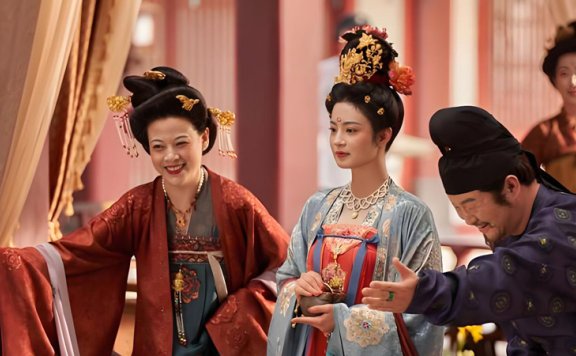
Tang Headdresses and Song Tea Rituals in Historical Dramas
A new wave of scrutiny washes over historical television dramas. Audiences, armed with digital tools and scholarly zeal, dissect every silk thread, architectural flourish, and ceremonial gesture. These modern-day detectives, playfully dubbed "Lievenhoeks" after the pioneering microscopist, transform viewing into an archaeological dig. Fueled by creators embracing unprecedented historical rigor, this phenomenon bridges entertainment and education, turning screens into portals for tangible cultural rediscovery. The meticulous recreation of bygone eras fosters not just immersion, but a profound public engagement with China’s rich heritage. Costume Archaeology Unlocked Beyond mere spectacle, costumes in series like Flourished Peony (国色芳华) become historical documents. The Peacock Crown worn by a dancer isn't just glitter; it’s a direct echo of the Tang Dynasty "Female Equestrian Drumming Figurine" housed in Xi'an's museum. Similarly, the towering "Half-Flipped Chignon" hairstyle sported by the Pingkang Fang proprietor in The Lychees from Chang'an (长安的荔枝) mirrors the grandeur seen in the Dunhuang (敦煌) mural "Portrait of the Governor's Wife." These aren't designer flights of fancy; they are careful reconstructions based on surviving artifacts and visual records, offering viewers a direct visual link to ancient aesthetics and social status markers. The accuracy transforms actors into living exhibits, their attire whispering tales of craftsmanship… -
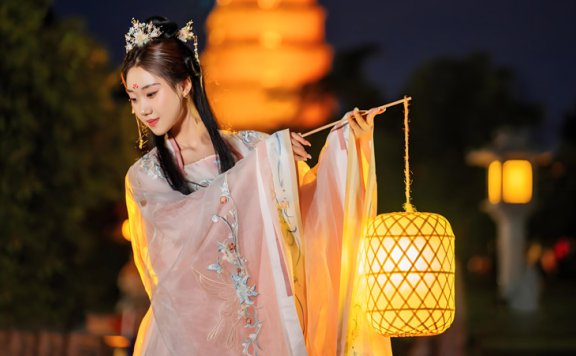
Tang Dynasty Splendor Walks Modern Xi’an Streets
Summer twilight descends upon Xi’an’s ancient city walls as a local ballad drifts through the humid air. Below the ramparts, a vibrant tapestry unfolds: young women in flowing Qixiong Ruqun (齐胸襦裙) skirts glide over cobblestones carrying silk fans, boys in traditional Futou headwear flash peace signs beside sausage vendors, and self-styled "Tang princesses" with tinkling hair ornaments weave through bicycle commuters. This seamless fusion of antiquity and urban life defines China’s ancient capital today. Across its historic quarters, a generation born after 1995 drives a cultural resurgence—transforming Hanfu from ceremonial costume into daily poetry. Threads of Transformation Xi’an’s streets have become runways for resurrected elegance. At the Tang Paradise Mall’s Hanfu Center near the Great Tang All-Day Mall, stylists livestream makeup tutorials, demonstrating how seventh-century "Luozidai" eyebrows complement Tang-style dresses. Behind them, racks display Ming Dynasty Mamian skirts and Tang half-sleeve robes—a sartorial timeline spanning dynasties. By day, tourists pose with circular fans before the Bell Tower’s soaring eaves. Inside the immersive "Chang’an Twelve Hours" theme park, scholars in round-collared gowns stroll alongside veiled maidens. As lanterns illuminate the 2-kilometer promenade at dusk, performers in reconstructed court dresses descend palace staircases, their gold Buyao hairpins catching spotlights. The Bell Tower… -
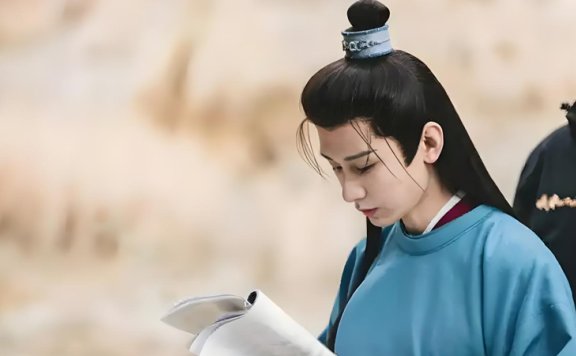
Cheng Yi's Cerebral Revenge Saga Ignites Tang Dynasty Intrigue
Anticipation surges for Chang’an Shi’er Ji (长安十二计), the historical political thriller starring Cheng Yi as Xie Huai’an (谢淮安)—a scholar orchestrating vengeance against 12 corrupt officials. Initially slated for Q4 2025, rumors of a surprise late-summer release intensify after savvy marketing leveraging the 24 solar terms and Cheng Yi’s Mysterious Lotus Casebook (莲花楼). Unlike his iconic martial roles, Cheng Yi embodies a weaponless tactician in this 32-episode drama, promising 50 narrative twists and a powerhouse cast including Zhang Hanyu (张涵予) and Liu Yijun (刘奕君). The Calculated Anti-Hero Xie Huai’an shatters Cheng Yi’s heroic mold. Where Mysterious Lotus Casebook’s Li Lianhua embraced resignation, Xie burns with icy fury. His credo—“No enemy deserves mercy”—fuels a decade-long vendetta against those who slaughtered his clan. Disguised as a lowly county clerk, he infiltrates the Tang court under Emperor Xiao Wuyang’s (萧武阳) secret decree, wielding intellect as his sole blade. A haunting teaser crystallizes his resolve: grey-haired Xie clutches ancestral tablets beneath a tattered umbrella, eyes blazing with deranged purpose. The line “I care not for survival; I demand your demise” strips the character to his ruthless core. This cerebral role trades physical prowess for psychological depth, challenging Cheng Yi to convey menace through stillness. Audiences… -
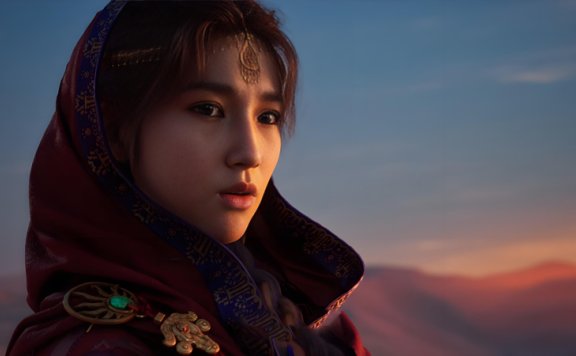
Blood Message: A Tang Dynasty Saga Captivates Global Gamers
Against expectations, an audacious Chinese game set in the neglected late Tang Dynasty period has ignited international fervor. Blood Message (归唐), developed by NetEase’s Lin’an 24 Studio, defied industry skepticism about its niche historical backdrop. Its debut trailer soared past a million YouTube views, sparking fervent demands from players worldwide for localized versions in Spanish, Turkish, Arabic, and Portuguese. This surge highlights a potent convergence of meticulous historical recreation, cutting-edge technical execution, and resonant storytelling ambition, positioning Blood Message as a potential milestone for Chinese AAA development. Authenticity Fuels Fascination The game’s foundation lies in the tumultuous era following the An Lushan Rebellion, specifically focusing on the Guiyi Army’s desperate struggle to reclaim lost territories in the Hexi Corridor. Choosing this lesser-known chapter of Tang history was initially seen as commercial folly. However, Blood Message leverages this specificity to immerse players in a richly textured world. Authenticity permeates every visual element, from the intricate designs of Tang-era armor and weaponry to the stark, sweeping landscapes of the northwest frontier. Collaboration with Gansu Provincial Department of Culture and Tourism underscores this commitment. Developers utilized advanced scanning technology to digitally preserve real-world historical sites, artifacts, and geological formations. This data directly informs…