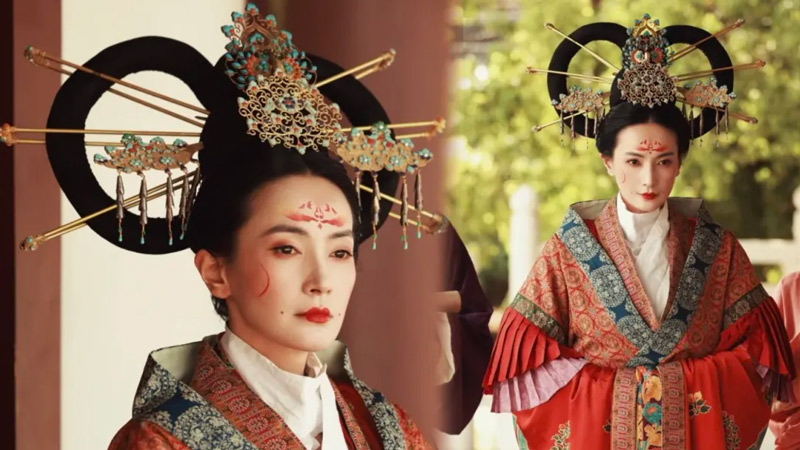
When actor Li Yuan (李媛) unveiled her latest Hanfu (汉服) editorial, the internet struggled to recognize the same person who played the fierce, shaven-headed assassin Yu Chang (鱼肠) in the hit drama The Longest Day in Chang'an (长安十二时辰). Her breathtaking transformation into an early Tang Dynasty noblewoman left viewers questioning whether this could possibly be the same performer. With intricate hairstyles resembling celestial wheels and lavish silk robes, the images present a radical departure from her on-screen persona, inviting both admiration and curiosity about the historical accuracy and symbolism behind such extraordinary designs.
The Celestial Hair
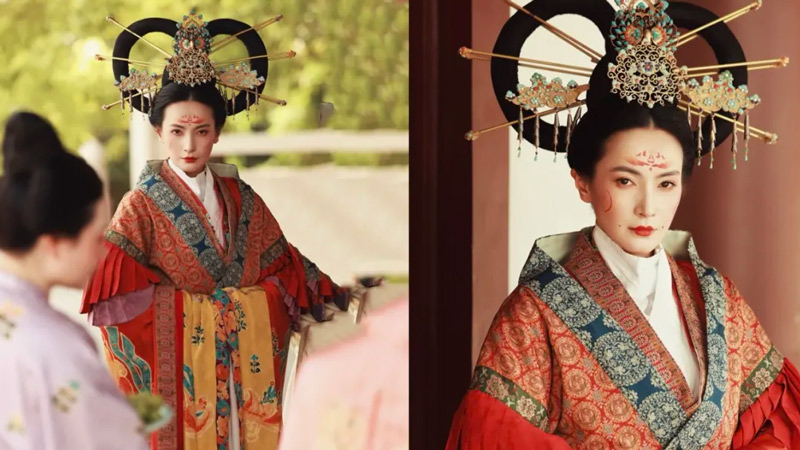
One of the most striking elements of Li Yuan's new look is the magnificent twin-chignon hairstyle, towering high above her head like twin halos or ancient wheels. This specific design, known as Shuang Huan Wang Xian Ji (双鬟望仙髻, Immortal-Adoring Twin Loops), draws direct inspiration from murals found in the tombs of noblewomen from the early Tang period. These elaborate styles often reached heights exceeding two feet and required immense skill and time to construct.
Historical records and archaeological findings suggest that wealthy Tang women often used pre-made structured hairpieces to achieve such dramatic looks. These accessories were secured with gold hairpins, Dian (钿, inlaid ornamental pieces), and other decorations before being affixed to their natural hair. The result was a magnificent crown of artificial locks that gave the illusion of immense, gravity-defying tresses, symbolizing both status and a connection to the divine.
In the context of Li Yuan's photoshoot, the hairstyle is not merely decorative. It echoes depictions of celestial beings and palace dancers from artifacts like the Yanfei (燕妃) Tomb murals, where court ladies are shown with similarly ambitious updos. This choice firmly roots the aesthetic in the early Tang Dynasty, a period known for its cosmopolitan flair and artistic experimentation.
The Symbolic Robes
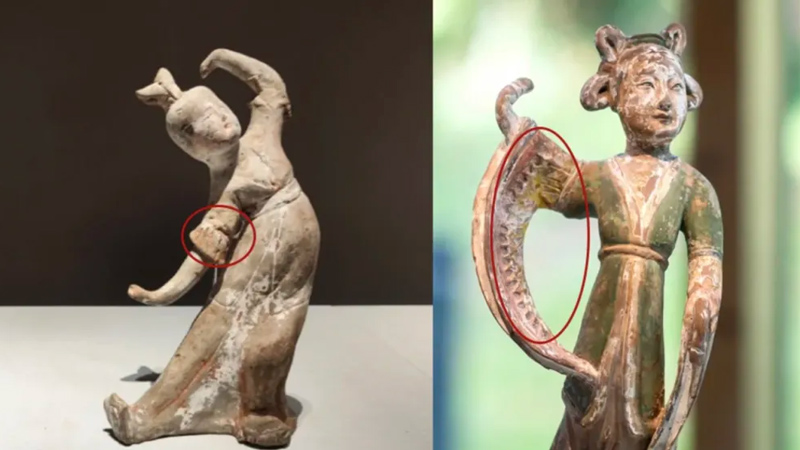
Li Yuan's attire is equally symbolic. She wears a sophisticated form of Qun Ru (裙襦, jacket and skirt), characterized by its striking feathered or lotus-leaf edge sleeves, a Bi Xi (蔽膝, decorative waist pendant), and upturned-tip shoes. The ensemble blends elements of formal noblewear with stylistic touches typically reserved for ritual dancers or musical performers. This hybrid reflects the Tang Dynasty's fluid approach to fashion, where performance costume influenced daily aristocratic dress.
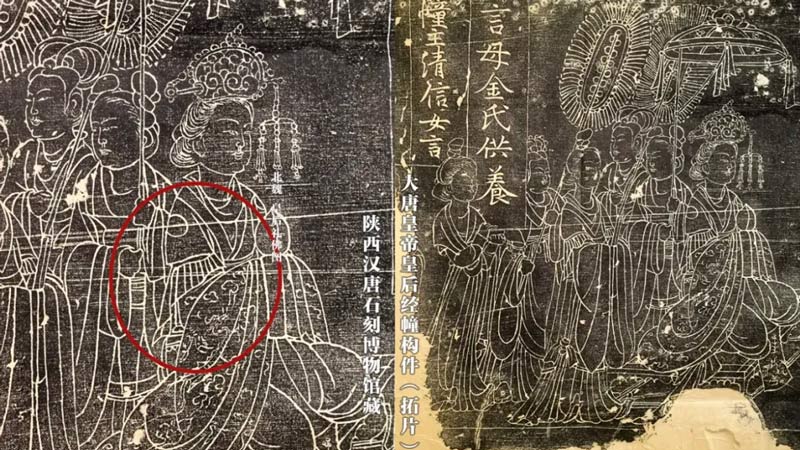
The distinctively flared sleeves trace their origins back to the Han and Jin dynasties, visible on pottery figurines of musicians and attendants excavated in Sichuan. By the Northern and Southern Dynasties, this sleeve style had been adopted by elite women as part of formal dress, as seen in stone carvings like The Northern Wei Empress Wenzhao Worshipping the Buddha (北魏文昭皇后礼佛图). The early Tang period saw it integrated into the wardrobe of imperial women, as evidenced by depictions of empresses on ceremonial objects.
What makes Li Yuan’s outfit particularly interesting is its creative recombination of historical elements. The designers replaced the typical chest-baring collar often seen on dancing figurines with a traditional crossed collar and an undershirt, suggesting a thoughtful reinterpretation rather than a strict replica. This demonstrates how contemporary Hanfu culture values both authenticity and creative expression.
Modern Reflections
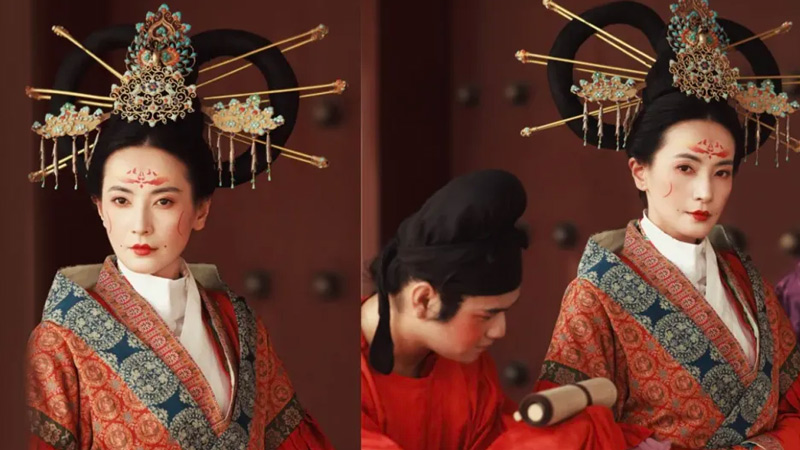
Li Yuan’s bold transformation has sparked broader discussions about historical representation, gender expression, and the evolving Guochao (国潮) movement. Her shift from a masculine, combat-ready role to an embodiment of classical femininity challenges modern audiences to reconsider how pre-modern Chinese aesthetics embraced fluidity and diversity. The dramatic contrast also highlights the sheer range of Tang fashion, which allowed for multiple forms of identity and presentation.
To some viewers, the styling felt unfamiliar or even surreal, partly because mainstream period dramas often simplify historical costuming for contemporary palates. However, the photoshoot’s commitment to archeological detail—from the hair ornaments to the layered silhouette—offers a valuable counterpoint. It invites the public to engage with history through a more nuanced, visually rich lens.
Ultimately, the conversation around Li Yuan’s new look is about more than just one actor’s image. It is part of a larger cultural moment where ancient traditions are being revived, reimagined, and reintegrated into modern life. Whether through fashion, media, or personal exploration, these acts of revival keep history alive, dynamic, and endlessly inspiring.