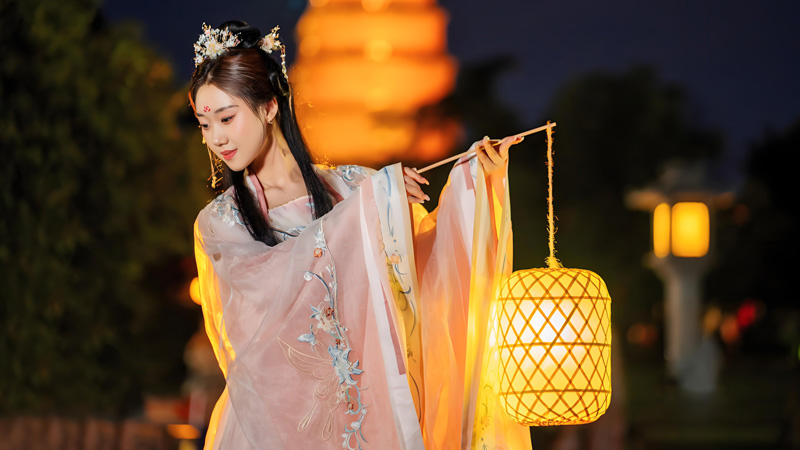
Summer twilight descends upon Xi’an’s ancient city walls as a local ballad drifts through the humid air. Below the ramparts, a vibrant tapestry unfolds: young women in flowing Qixiong Ruqun (齐胸襦裙) skirts glide over cobblestones carrying silk fans, boys in traditional Futou headwear flash peace signs beside sausage vendors, and self-styled "Tang princesses" with tinkling hair ornaments weave through bicycle commuters. This seamless fusion of antiquity and urban life defines China’s ancient capital today.
Across its historic quarters, a generation born after 1995 drives a cultural resurgence—transforming Hanfu from ceremonial costume into daily poetry.
Threads of Transformation
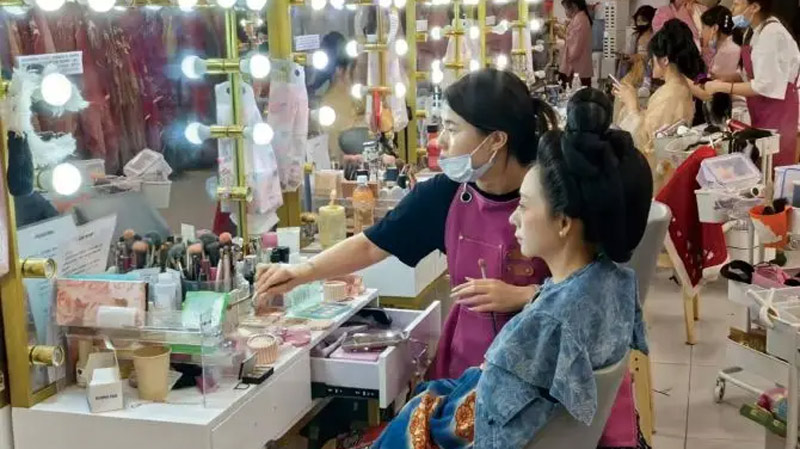
Xi’an’s streets have become runways for resurrected elegance. At the Tang Paradise Mall’s Hanfu Center near the Great Tang All-Day Mall, stylists livestream makeup tutorials, demonstrating how seventh-century "Luozidai" eyebrows complement Tang-style dresses. Behind them, racks display Ming Dynasty Mamian skirts and Tang half-sleeve robes—a sartorial timeline spanning dynasties. By day, tourists pose with circular fans before the Bell Tower’s soaring eaves. Inside the immersive "Chang’an Twelve Hours" theme park, scholars in round-collared gowns stroll alongside veiled maidens.
As lanterns illuminate the 2-kilometer promenade at dusk, performers in reconstructed court dresses descend palace staircases, their gold Buyao hairpins catching spotlights. The Bell Tower plaza buzzes with Hanfu-clad teens and armored "warriors." A Tianjin mother adjusts her daughter’s peony-embroidered jacket, explaining their evening photoshoot booking. "She adores these clothes," she smiles. This sartorial wave fuels an ecosystem: rental shops, photo studios, and accessory vendors cluster near heritage sites. During holidays, the city becomes a living fresco where "princesses" outnumber pedestrians. Industry reports confirm Xi’an leads nationally with 1,814 Hanfu enterprises.
National data reveals traditional attire experiences quadrupled spending year-on-year. Analysts project the Hanfu market will surpass ¥24 billion by 2027, spanning design, manufacturing, and tourism services. What began as tourist novelty now permeates daily life—locals grocery-shopping in Song Dynasty silhouettes or commuting in Ming coats signal profound cultural recalibration.
Living Heritage, Crafted Moments
"We’ve shifted from costume rental to cultural activation," notes Yuan Chenyang (袁晨阳), owner of Lianlizhi Hanfu Studio (莲鲤芝汉服馆). Her shop bustles with clients selecting garments ranging from imperial court robes to scholar’s Lanshan. A ¥388 package includes attire, historically accurate makeup, props, and a Bell Tower photo. Yuan scrolls through social media feeds showing modern outfits transforming into Tang nobility. "Youth seek immersion and emotional resonance," she observes.
In the studio’s makeup area, artists consult Tang Dynasty masterpieces like Court Ladies Wearing Flowered Headdresses. "Replica makeup demands precision," Yuan explains, pointing to lips painted in the "cherry blossom" style. Bookings stretch weeks ahead, with fifty clients daily—tripling during festivals. Outside, Wuhan visitor Liu sways a feathered fan while her mother and daughter pose near the Giant Wild Goose Pagoda. "We own thirty sets spanning dynasties," Liu shares. "Wearing Hanfu isn’t cosplay—it’s conversing with ancestors."
Photographer Chang adjusts a client’s sword belt near a stone lion. "Scenes must match attire," he says. "Tang gowns suit lotus ponds; warrior armor belongs near fortress walls." He ensures jewelry aligns with location—turquoise for Turkic-inspired looks near the Western Market ruins. This meticulous craftsmanship fuels demand: families commission multi-generational shoots, couples recreate betrothal rituals, and students document coming-of-age ceremonies through Hanfu lenses.
Armor, Artistry, Identity
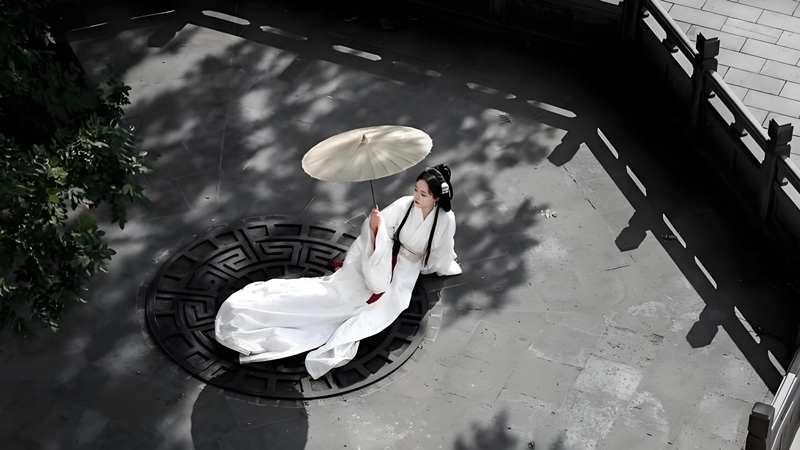
"Beauty demands witness," declares photographer Nie at the Wild Goose Pagoda south square. He recounts clients moved to tears seeing their Hanfu portraits—compelled to share this rediscovered heritage. Across town, 22-year-old Xiao Ji (小吉) embodies this passion. Her dark Warring States-era robe and Painted Skin (画皮) inspired ghost makeup draw stares. "My friends chose ‘goddess’ and ‘imperial consort’ styles," she laughs. "We celebrate diverse beauty."
Nearby, Shandong teenager Li stands proudly in 33-pound armor despite the sweltering heat. "People’s compliments make him glow," his father confides. The teen, fresh from high school exams, brandishes a prop sword. "Am I unique today?" he challenges. When affirmed, his smile mirrors broader cultural shifts. Folk scholar Wang Zhi interprets this phenomenon: "Youth traded guitars for Guqin (古琴) instruments. Hanfu isn’t mere clothing—it’s the material form of poetry, tea ceremonies, and ink painting."
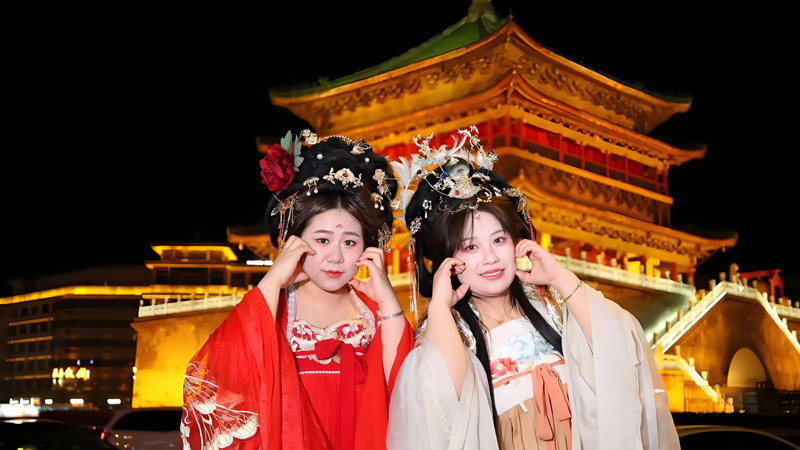
Wang observes wearers studying ancient music or palace cuisine, creating self-reinforcing cultural loops. At the Zhengguan (贞观) Square sculptures, groups practice Tang-era fan dances. By the Pagoda fountain’s mist, teenagers recite Li Bai’s (李白) verses. As lanterns flicker along the promenade, the line blurs between performance and personal expression—a city resurrecting its soul through silk and brocade.
When the ballad Xi’an Story echoes at midnight, twirling sleeves catch breezes carrying the melody over city walls. In these folds of fabric, a generation stitches past grandeur to present identity—one sash, one hairpin, one timeless step at a time.