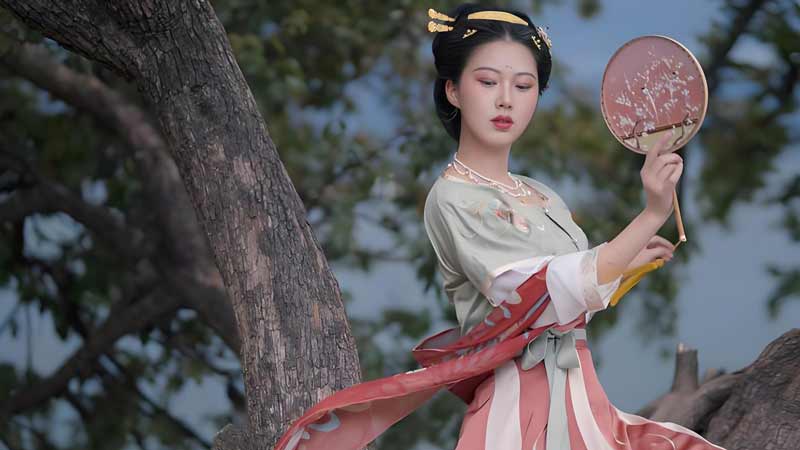
Far more than mere attire, Tang-style Hanfu stands as a vibrant emblem of China's golden age. Rooted in profound aesthetics, it reflected societal shifts and technological prowess. As the ancient text Zuo Zhuan (左传) noted, the magnificence of ritual and dress defined Chinese civilization. Tang fashion, evolving dramatically across nearly three centuries, showcased unparalleled diversity in silhouette, color, and ornamentation, moving from restrained elegance to opulent grandeur and nostalgic revival, embodying the dynasty’s spirit of openness and cultural confidence. Its legacy continues to inspire contemporary fashion and cultural revival worldwide.
Threads of Change
The Early Tang period favored subtle refinement. Women wore slim-sleeved, short jackets paired with high-waisted skirts tied just below the bust. This "Ruqun" style elongated the figure, embodying an aesthetic of gentle grace. Fabrics were often light silks in soft hues, emphasizing understated beauty. Narrow stripes on skirts, known as "Jianse Qun (间色裙)," were initially modest.
Empress Wu Zetian's (武则天) ascent catalyzed transformation. Necklines deepened into elegant curves, and the flowing "Pei Bo" (帔帛) scarf became essential. Waistlines gradually lowered to a high position under the bust. A bold trend emerged: women adopted male attire. Palace maids sported round-collar robes with practical slits, striped trousers, and functional belts, complemented by striking makeup.
The High Tang, under Emperor Xuanzong (唐玄宗), celebrated voluptuousness. Sleeves widened dramatically, and skirts ballooned in size. The veiled "Wei Mao" (帷帽) hat shed its gauze. Consort Yang Yuhuan (杨玉环) popularized lavish styles like the "Tear Makeup" and "Wine-Flush Makeup." Clothing became extravagantly decorated. However, the An Lushan Rebellion triggered a cultural shift. Anti-nomadic sentiment fueled a revival of Southern Dynasties fashion – characterized by loose robes and wide sleeves – alongside simpler, "Zen-inspired" cosmetics.
Icons of Silk
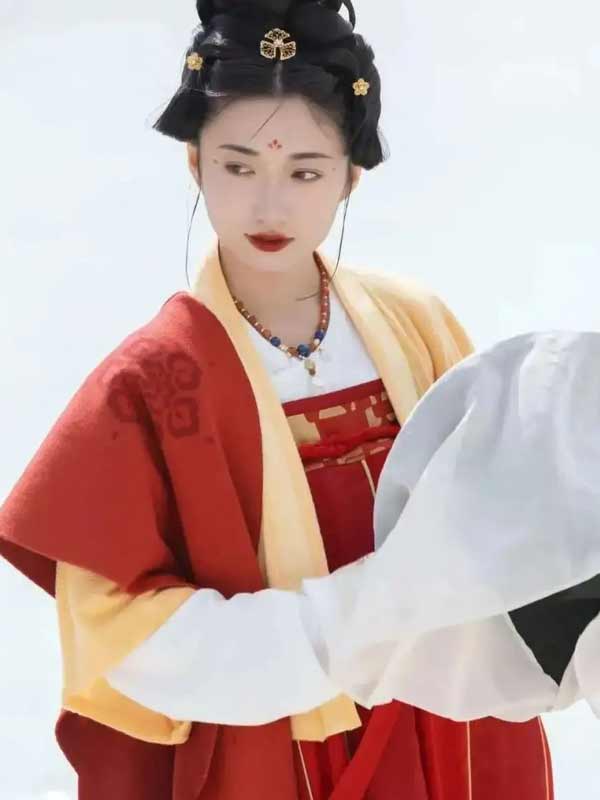
Qixiong Ruqun (齐胸襦裙) reigned supreme for Tang women. This iconic ensemble featured a short, fitted top worn under an immensely wide, high-waisted skirt tied above the breasts. It masterfully balanced revealing the body's curves with projecting an aura of luxurious freedom. Skirts exploded in vibrant colors – scarlet, violet, yellow, and emerald – with red being particularly coveted. The contrast between the snug top and billowing skirt created dynamic movement.
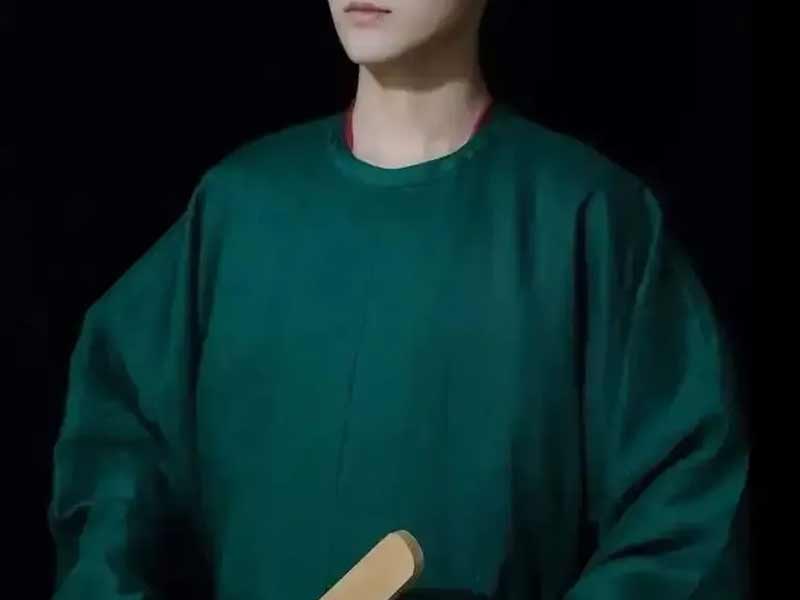
For Tang men, the Yuanling Pao (圆领袍) was a staple, signifying dignity. Its defining round collar sat flat against the shoulders, offering a clean line. Typically crafted from silk or brocade, it featured minimal, elegant embroidery. This robe presented a look of effortless authority and refined simplicity, suitable for officials and scholars alike.
Reserved for high-ranking court ladies, the grand Daxiushan (大袖衫) epitomized late Tang ceremonial wear. This multi-layered robe boasted enormous sleeves and was worn over the voluminous "Tang Qun" skirt that pooled heavily on the floor. The ensemble created a powerful impression of layered grandeur and imposing stature.
Beyond the Fabric
Tang-style Hanfu was a dynamic social canvas. Its evolution – from Early Tang restraint to High Tang exuberance and post-rebellion retrospection – mirrored the dynasty's political climate, economic power, and cultural exchanges. The daring adoption of male attire by women signaled shifting gender norms and a loosening of rigid Confucian codes. The explosion in textile patterns, dyes, and imported motifs vividly illustrated Tang's cosmopolitanism and thriving Silk Road exchanges.
Poets like Li Bai (李白) immortalized this beauty: "Seeing her cloud-like dress, one thinks of blooming flowers; Spring breezes brush the rail, dew-laden splendor." The intricate cuts, radiant hues, and symbolic richness of Tang garments captured an era of unmatched brilliance. They remain a dazzling thread in the tapestry of Chinese civilization.
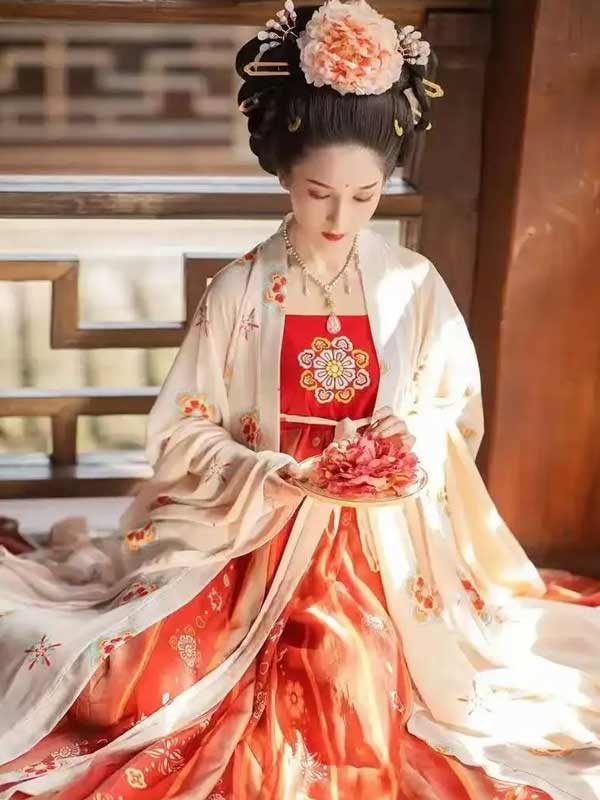
Today, this legacy transcends museums. Tang silhouettes inspire modern designers globally. The global "Guochao" (National Trend) movement sees young people embracing Hanfu, including Tang styles, fostering cultural pride and historical connection. Wearing Tang attire isn't just dressing up; it's stepping into the vibrant spirit of a glorious past, feeling the confidence and artistry that defined the Tang dynasty's enduring allure.