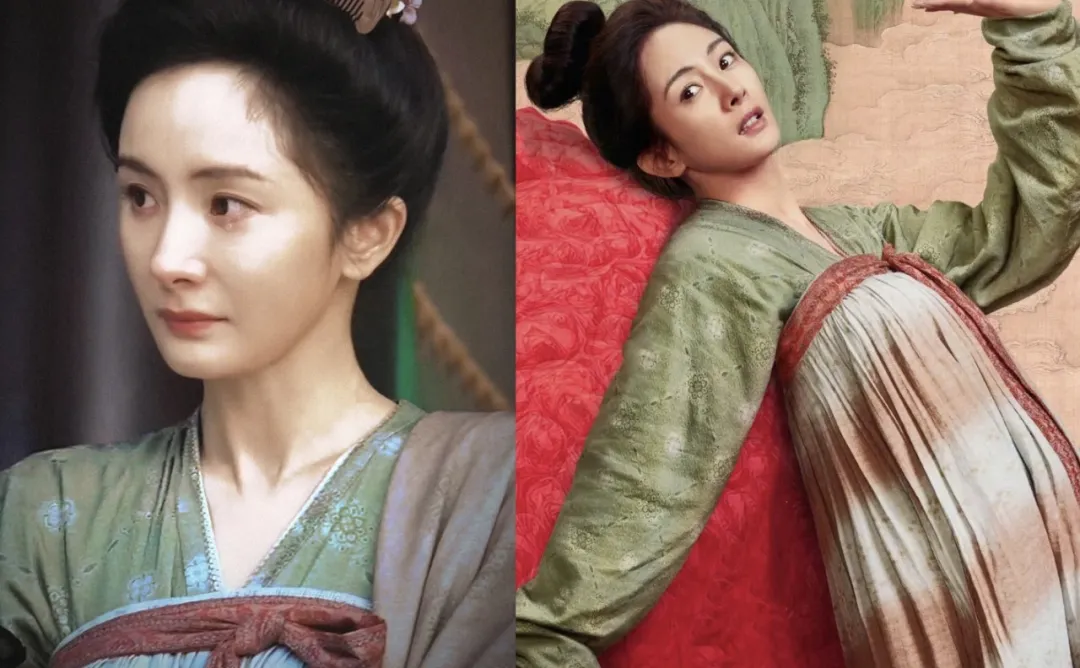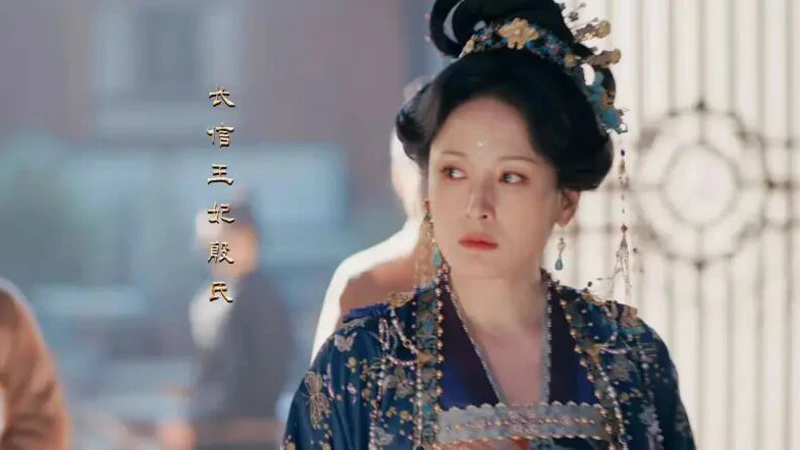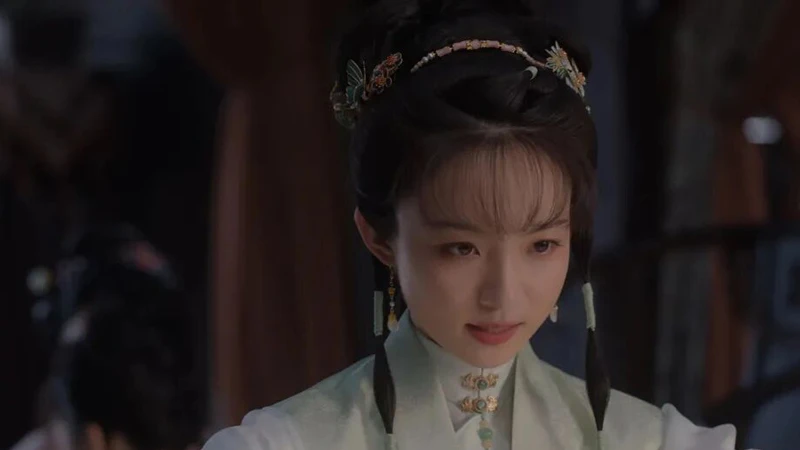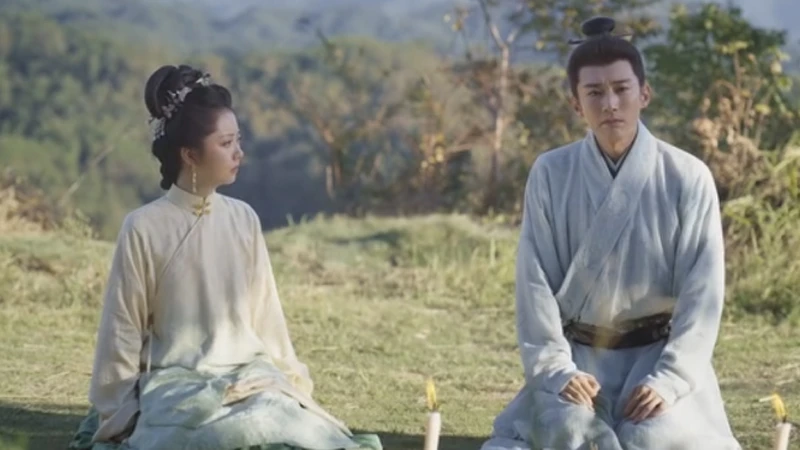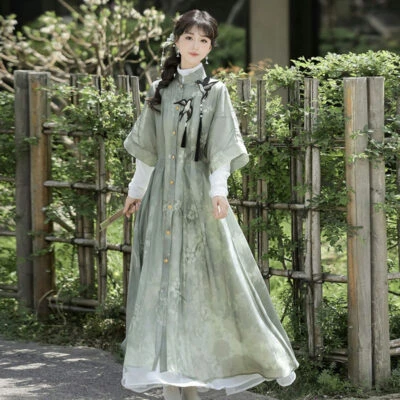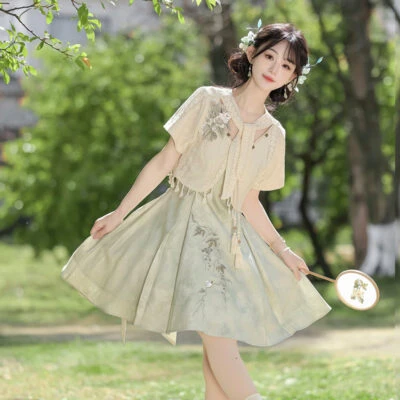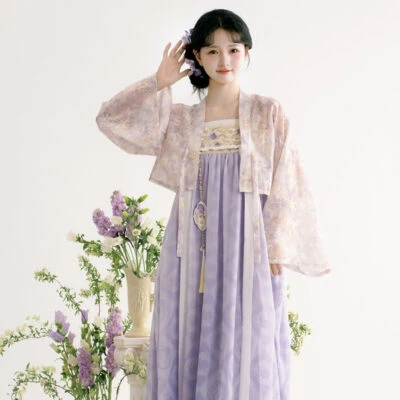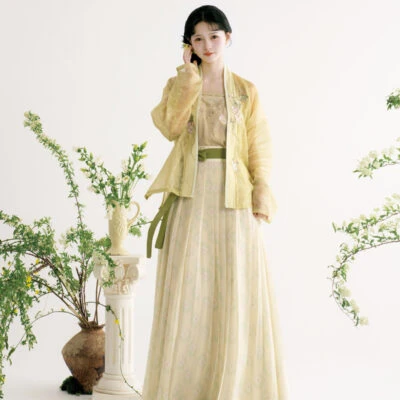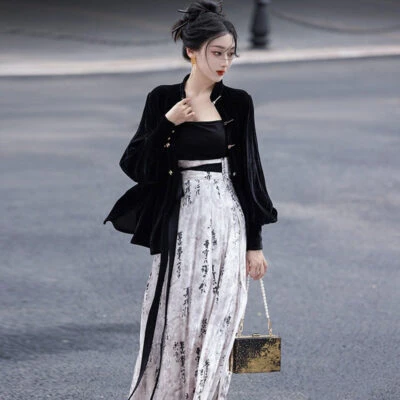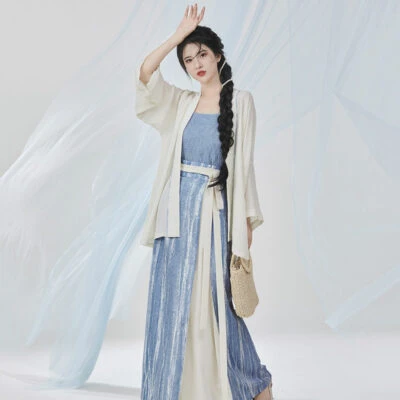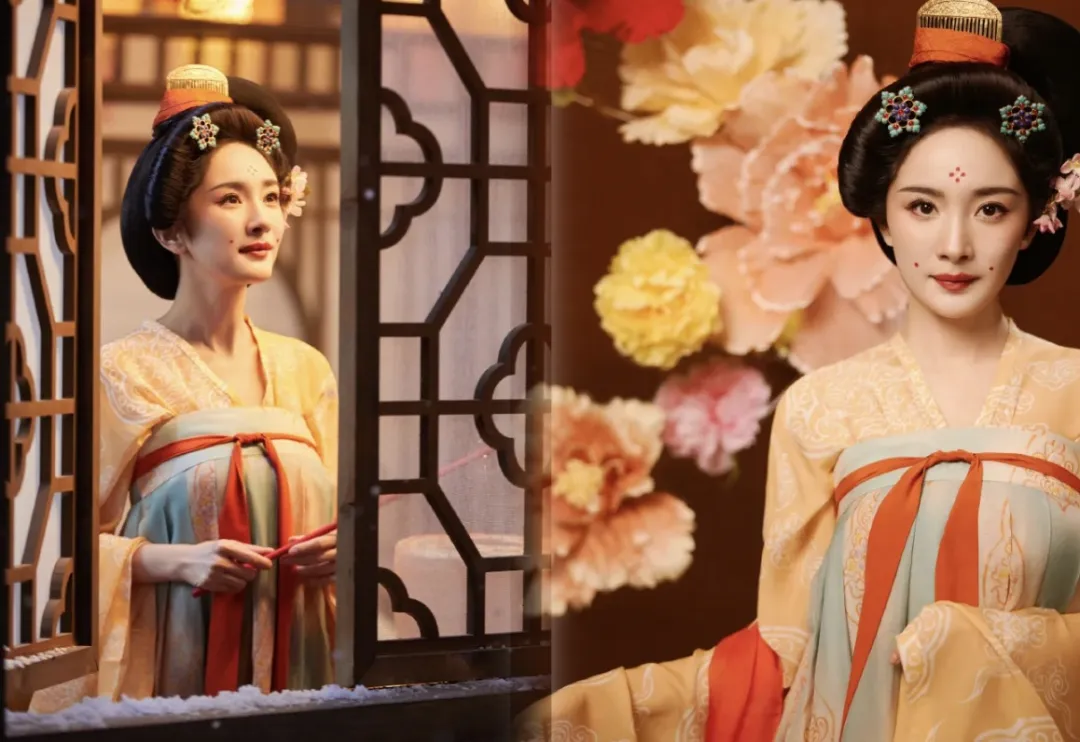
The poster of the movie version of The Lychee Road reveals that Yang Mi plays Zheng Yuting, the lawfully – wedded wife who shouts, “I’m marrying him, not Chang’an”. She always accompanies Li Shande played by Da Peng. Fans believe this can make up for the regret of the TV series version. Careful fans found that the stripes on her dress in the play are horizontally gradient. Similar striped prints have even been featured on various international fashion runways by foreign designers! Were the people in the Tang Dynasty so trendy?
Let me give you the conclusion first. This horizontally gradient dress is inspired by the pattern of a woman’s dress in the Tang Dynasty silk painting The Birth of Buddha. And this pattern is created through the dyeing and resist – dyeing techniques of the Tang Dynasty.
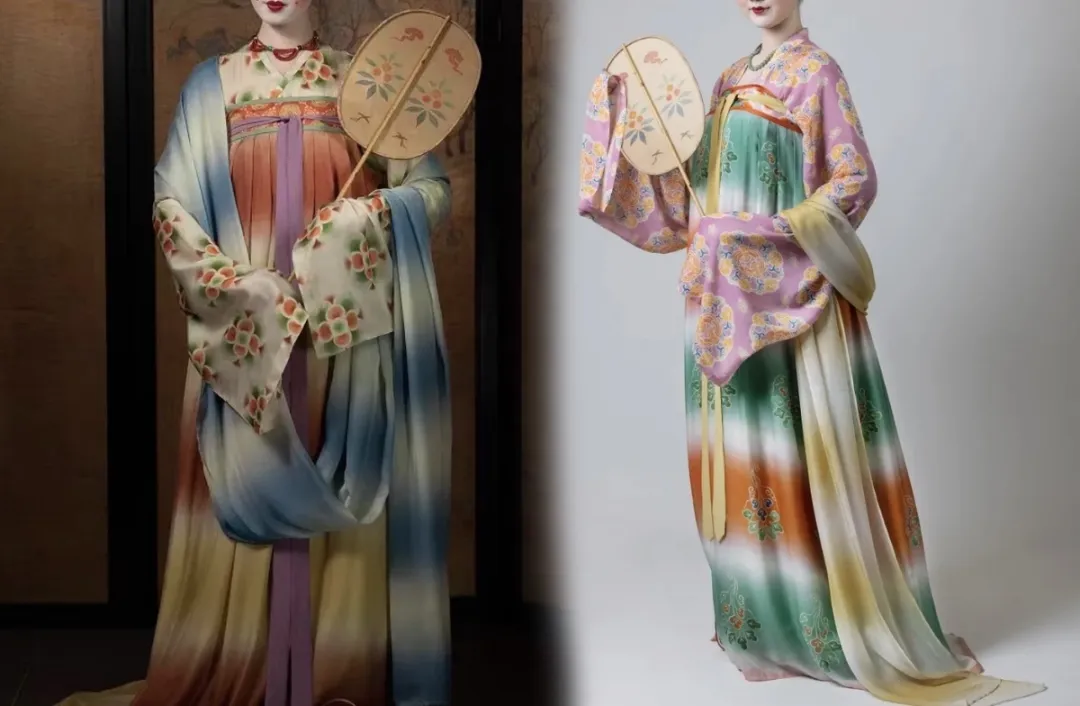
The dyeing and resist – dyeing techniques can be further divided according to their functions. “Dyeing” mainly focuses on coloring the fabric, while “resist – dyeing” is about creating patterns on the fabric. It is said to have originated in the Qin and Han dynasties and was very popular from the Sui, Tang to the Song dynasties. According to Shuowen Jiezi, “Xie (缬) means wrapping things with a garment flap.” According to Yunhui, “Xie means tying. It refers to tying silk and dyeing it to form patterns.”
According to Xuan Ying’s Yiqie Jing Yinyi, “Tying silk around the fabric and then dyeing it. After removing the silk, the pattern appears, which is called Xie.” According to Er Yi Shi Lu of the Sui Dynasty, “Xie originated between the Qin and Han dynasties, and it’s unknown who invented it. From the Chen to the Liang dynasties, people of all social classes wore it. Emperor Yang of the Sui Dynasty issued an edict allowing the attendants of the inner and outer palaces to wear it.”
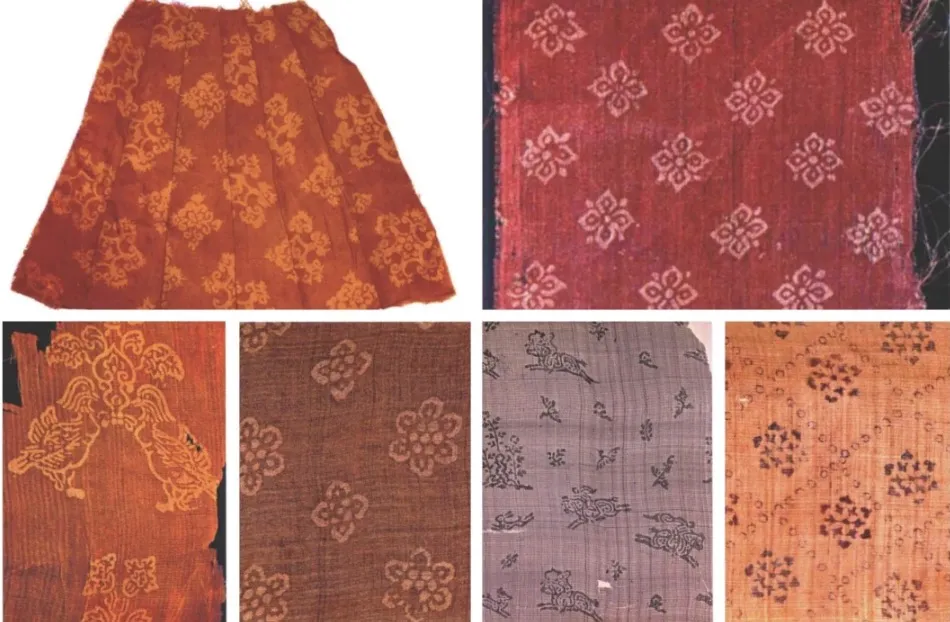
Jiajie (夹缬) Technique
Jiajie (夹缬) is a printing and dyeing method where the cloth is clamped between two carved hardwood boards with left – right mirror – image patterns. It is most commonly found in cultural relics from the Tang and Song dynasties. The patterns on the unearthed cultural relics were dyed using this technique. Through the Jiajie method, that is, clamping the fabric with wooden boards and then dyeing it, the dye will naturally spread on the fabric, resulting in the two – color gradient effect like the one Yang Mi is wearing. It can not only dye single – color but also gradient colors. Through the natural spreading of the pigment, it’s like a Chinese ink painting with layer – by – layer gradients, creating a unique three – dimensional effect and making the whole garment more fashionable.
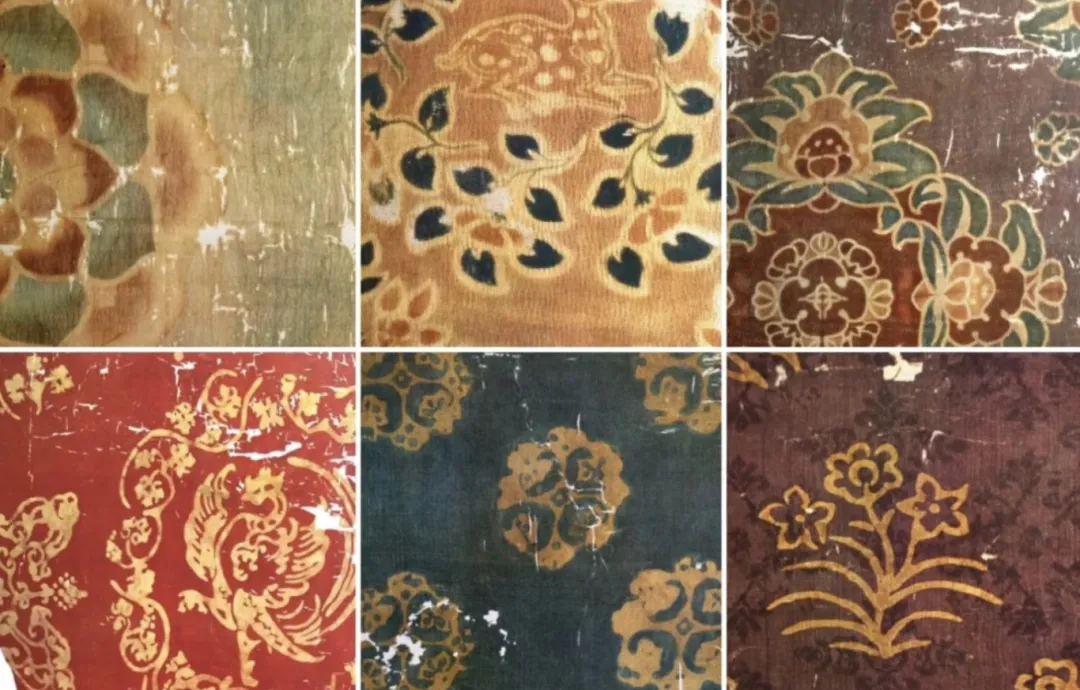
Several Jiajie cultural relics in Shosoin also show the diversity of this dyeing method. It can not only print the same patterns in an orderly arrangement but also print large – scale patterns on a large area, which depends on the size of the carved boards.
Other Patterns
The gradient horizontal stripes are just the tip of the iceberg. If you’ve seen the fish – scale skirt with its layer – by – layer gradient fish – scale patterns, you might also be impressed by the ancients’ imagination. The natural colors of this natural dyeing method can’t be replicated by industrialization. The imperfections of manual work also shape its unique beauty, making each piece of Jiajie fabric and each work unique. There is also the herringbone – patterned skirt. Although the herringbone pattern was used as a pottery decoration in prehistoric times, it’s rare to see it on a skirt as a decoration. This style has also appeared on modern fashion runways. It’s hard not to suspect that they learned from our ancestors.
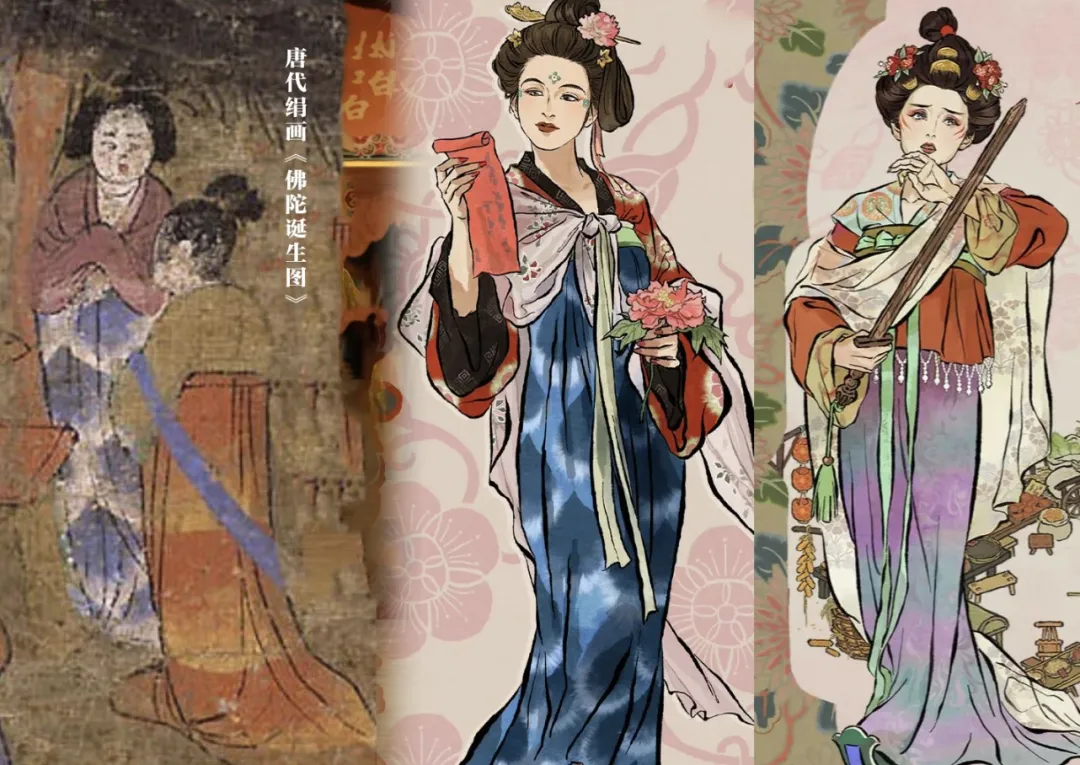
Although modern technology has advanced, and we can quickly produce the desired patterns and fabrics through fabric printing and other methods, we are getting farther and farther away from this traditional handicraft. Because things are precious when they are rare, the cost has also increased, resulting in fewer Jiajie products in the market. The inheritance of this intangible cultural heritage can mostly be traced back to Wenzhou, Zhejiang. Most of the Hanfu products in TV dramas and on the market now use computer – printed imitation Jiajie patterns.
However, national handicrafts are gradually being recognized and improved. I believe that in the future, we will also see the day when technology and handicrafts progress together. We can confidently tell the international fashion industry that, yes, we’ve been using these fashion elements for over a thousand years.