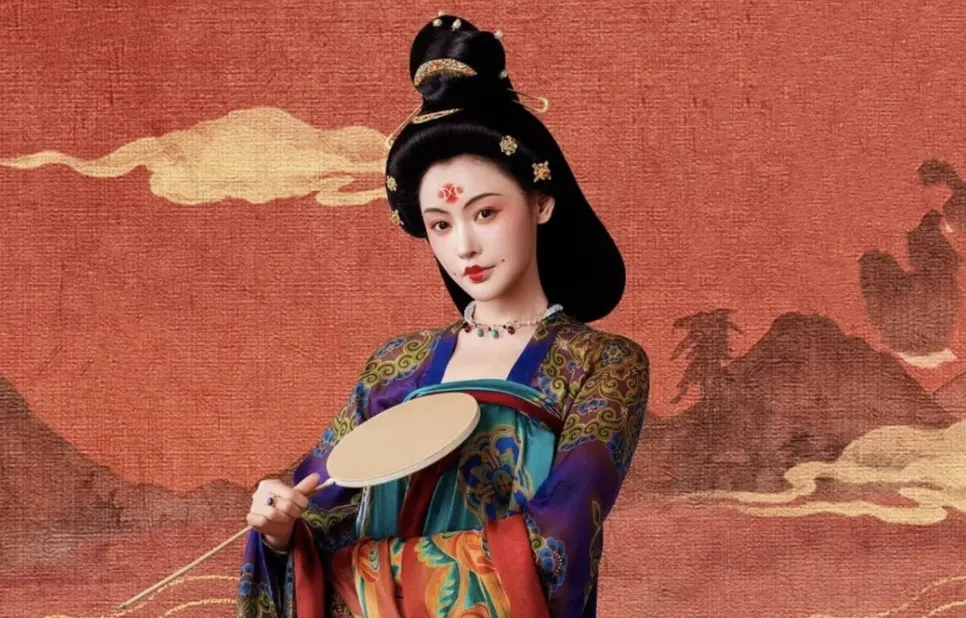
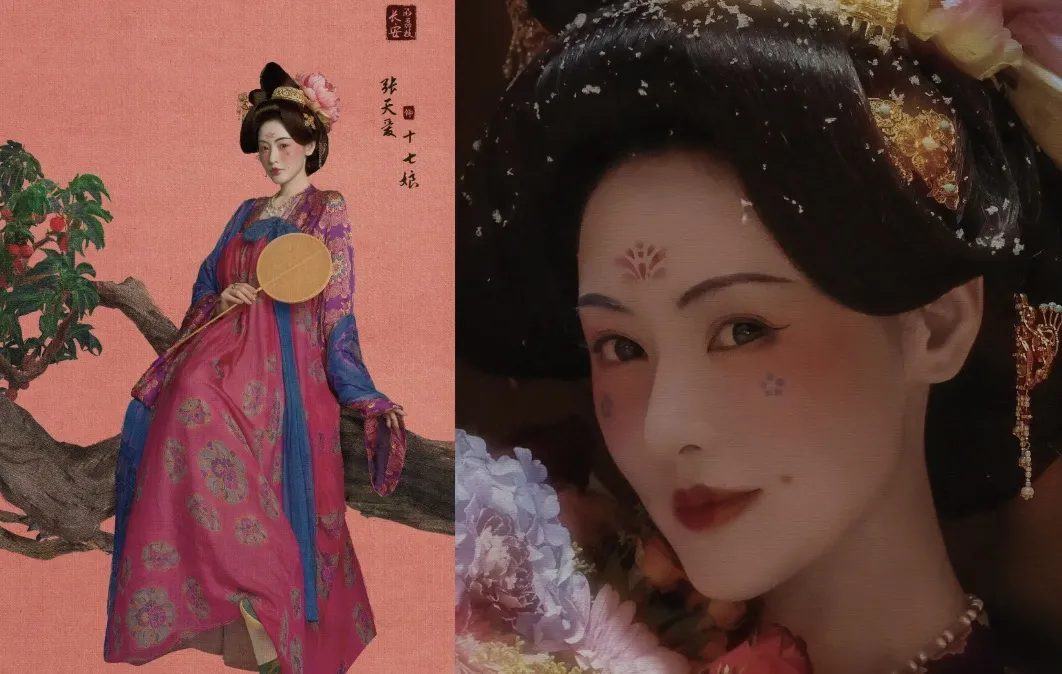
In the ancient costume drama "The Litchi Road", Zhang Tian'ai (张天爱) portrays Shiqiniang. When she first appears on stage in a Tang - style shirt and skirt, netizens comment, "This makeup and aura... She really brings the villainess to life!" First, the Tang Dynasty hairpin system is quite extensive, generally reflecting the current concept of "face framed by hair". Currently, the two hairpins Zhang Tian'ai wears are highly recognizable from the High Tang period. Especially the loose - hair style on the right, as it was prevalent in the ladies' makeup from the mid - to late Kaiyuan era to the end of the Tianbao era, netizens affectionately call it the "Tianbao Pifa - hair Style".
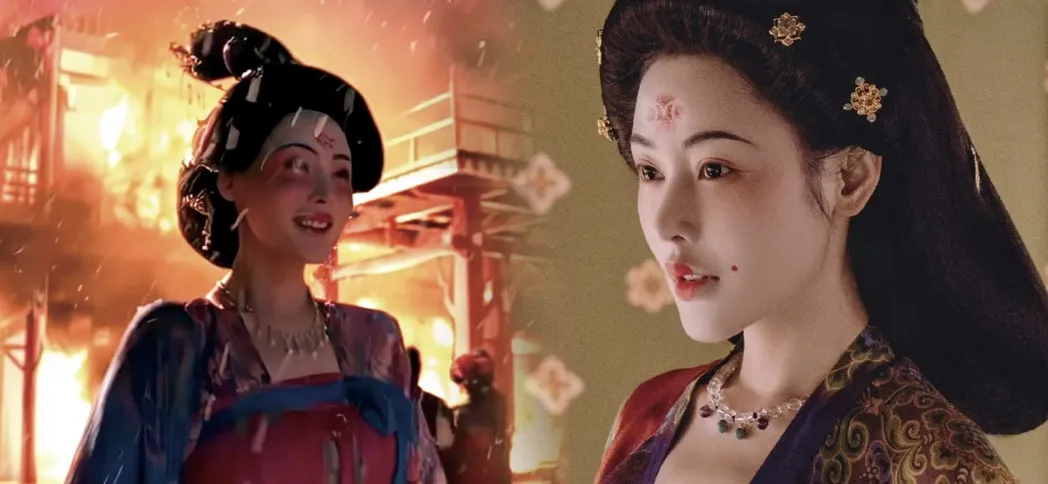
These two hairpins belong to the characters of Shiyiniang and Shisanniang in the Dunhuang mural "The Picture of the Governor's Wife Paying Homage to the Buddha". There's also a subtle connection when compared with Zhang Tian'ai's on - screen characters. The fact that these two hairpins appear in the same mural also indicates their popularity.
The Coiled Hairpin
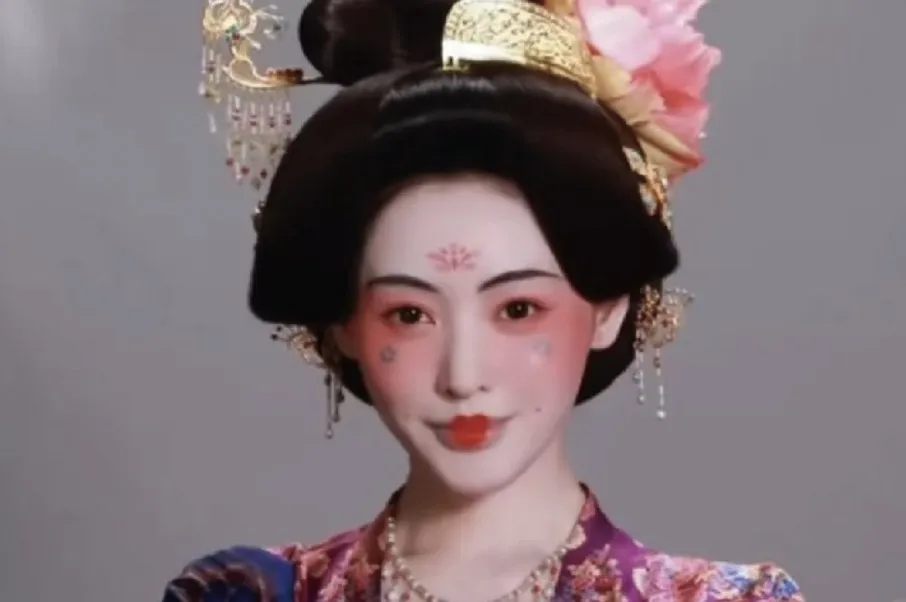
Let's start with the coiled hairpin, which resembles the "Woduo Ji". This hairpin was popular during the Kaiyuan period of the Tang Dynasty. When women styled their hair, they coiled it into one or two buns on the top of their heads and let the hair hang down from one or both sides of the top of the head, creating a look similar to modern bangs, usually symmetrically.
Tianbao Pifa - Hairstyle
Now, about the Tianbao Pifa hairstyle. The so - called "loose hair" here isn't real loose hair. Instead, after the hair is coiled into a bun, it hangs down at the back of the head, looking like loose hair. As can be seen from the murals, this kind of loose hair is usually parted in the middle and hangs down symmetrically, then is coiled up from the back of the head, and there must be another bun or a hair crown on the top of the head. This "loose - hair style" also appeared in "The Longest Day in Chang'an". It can be seen that this style mainly fills the empty space at the back of the head. Wearing a lotus crown, it creates a grand yet relaxed dressing style.
Compared with the traditional loose - hair style, Zhang Tian'ai's on - screen makeup has an additional "face - hugging" design, making it look more voluminous and spectacular. "Face - hugging", as the name suggests, refers to the hair close to the cheeks. Usually, it's padded or styled in various ways to form a shape where the hair surrounds the face. According to "New Book of Tang - Treatise on Five Elements", "In the late Tang Dynasty, women in the capital styled their hair with their sideburns hugging their faces." Later, the padding added to the three parts of our cheeks was collectively called "face - hugging".
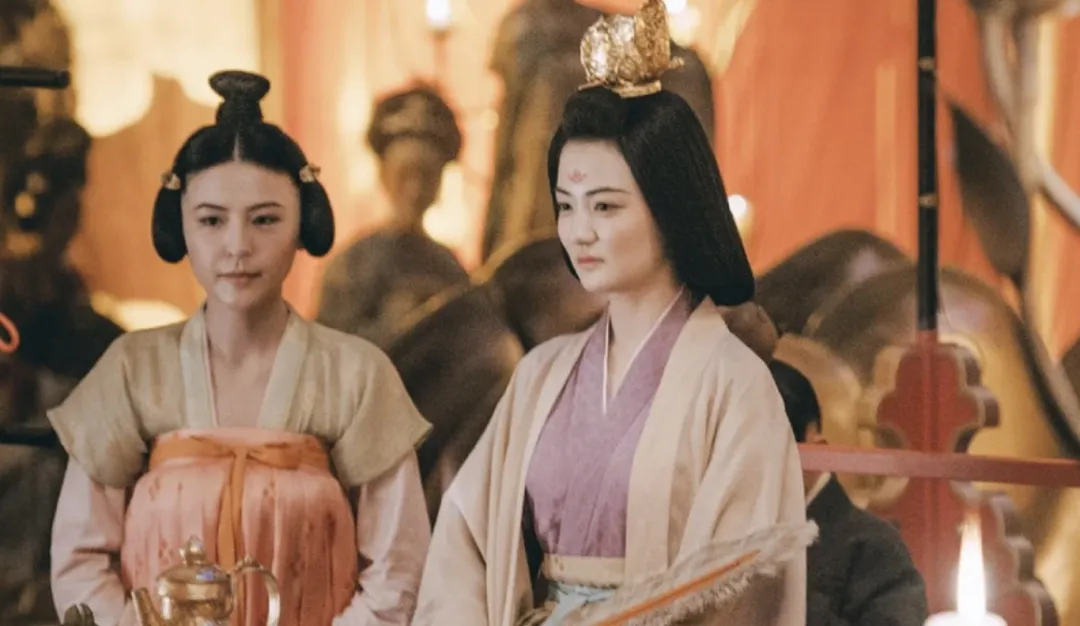
Of course, even in the Tang Dynasty, women might not have such thick hair. So these hairpins were surely not made of real hair. "New Book of Tang - Treatise on Five Elements" records that noble ladies in the Tang Dynasty used "false hairpins" as their main accessories, also known as "artificial hairpins". Various high - buns were popular in the Tang Dynasty, and there were even special wigs (artificial hairpins) for high - buns and filling hairpins. These wigs for noble ladies could be made of animal hair, wood chips, or real hair cut from prisoners.
In the classic Tang - style makeup, women wear Huadian (花钿) on their foreheads, draw crescent - shaped eyebrows, have small lips, red makeup on both sides of their faces, and wear comb - shaped gold ornaments, creating a strong atmosphere of the High Tang Dynasty. No wonder netizens say, "I really can't recognize her. Who would have thought it's Zhang Tian'ai?!"
These are just some of the more distinctive Tang - style hairpins. In fact, there are more than a hundred types of Tang - style hairpins. The changes in hairstyles and hairpins have evolved into various styles from different positions and angles, which is truly dazzling. Nowadays, the costumes, makeup, and props in ancient costume dramas are getting better. Many people are amazed and say, "Our traditional culture should be presented on the big screen in this way!" We look forward to more exquisite Tang - style costumes appearing to spread the beauty of traditional clothing culture. With the continuous improvement of production in ancient - costume dramas, we believe that more and more traditional cultural elements will be presented vividly, allowing the charm of ancient Chinese culture to be felt by a wider audience around the world.