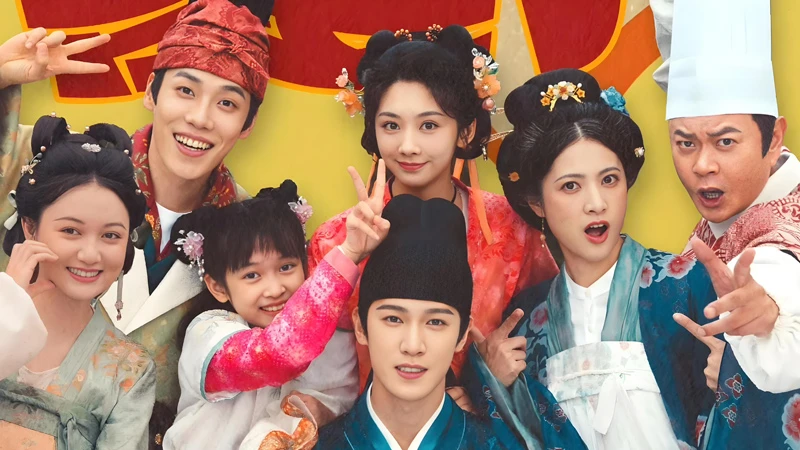
What happens when a modern family gets stranded in the Tang Dynasty? Yummy Yummy Yummy (宴遇永安) serves up a delicious answer, blending time-travel chaos with culinary charm. This series, adapted from the novel Chang’an Small Restaurant (长安小饭馆), has quickly captured audiences with its unique premise. Instead of a lone hero, the entire Shen family accidentally journeys back to ancient China. They navigate the bustling streets of Yong’an (永安) City, using their modern know-how to survive.
With a rating soaring high shortly after its release, the show mixes humor, heart, and historical intrigue. It turns food into a bridge between eras, offering laughs and life lessons in equal measure. Viewers find themselves drawn into a world where street snacks spark revolutions and family bonds defy time.
Unexpected Beginnings
The Shen family’s journey starts not with magic, but a viral video mishap. While filming a tribute to their ancestor, they are whisked away to the Tang Dynasty. There are no royal welcomes or instant power-ups. Instead, they face the gritty reality of making a living. Food writer Shen Shaoguang (沈韶光) tries her hand at street vending, only to have a Jianbing Guozi (煎饼果子) mishap with a key official. Her clumsy attempt at networking leaves him with a face full of food, setting off a chain of comedic errors.

Their survival strategy is as practical as it is absurd. Starting with simple stalls selling Malatang (麻辣烫) and Bingfen (冰粉), they gradually build a reputation. The family’s modern twists on ancient recipes catch the attention of locals. They introduce concepts like takeout and popular dishes, turning their small shop into a hotspot. Each step forward is paved with laughter, as their unfamiliarity with customs leads to repeated blunders.
What sets this story apart is its refusal to follow typical time-travel tropes. The Shens don’t rely on secret knowledge or superhuman skills. Their biggest asset is their unity and adaptability. From replicating their accidental journey to dealing with the fallout, every move feels fresh. This approach keeps viewers guessing and engaged, proving that sometimes the best adventures are the ones you never see coming.
Layers of Laughter
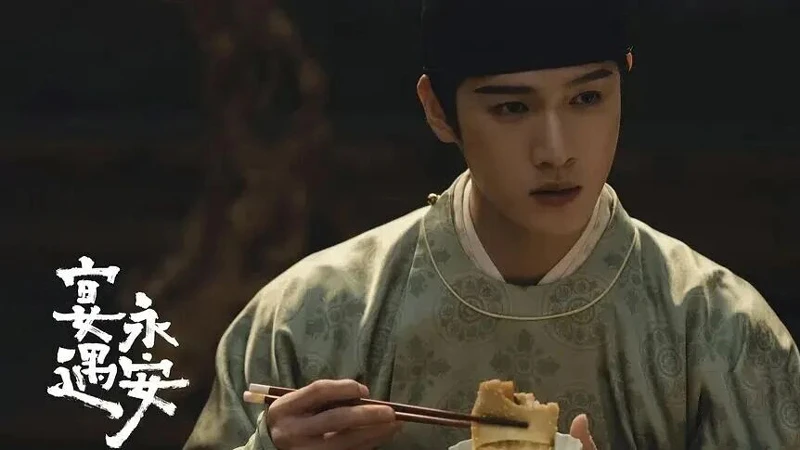
Beneath the lighthearted surface, Yummy Yummy Yummy weaves a rich narrative tapestry. Lin Yan (林晏), played with nuance, embodies this duality. As an official, he is stern and focused, his eyes hinting at a personal vendetta. Yet, when presented with a new dish, his demeanor softens instantly. This shift isn’t just for laughs; it reveals a character struggling with duty and desire.

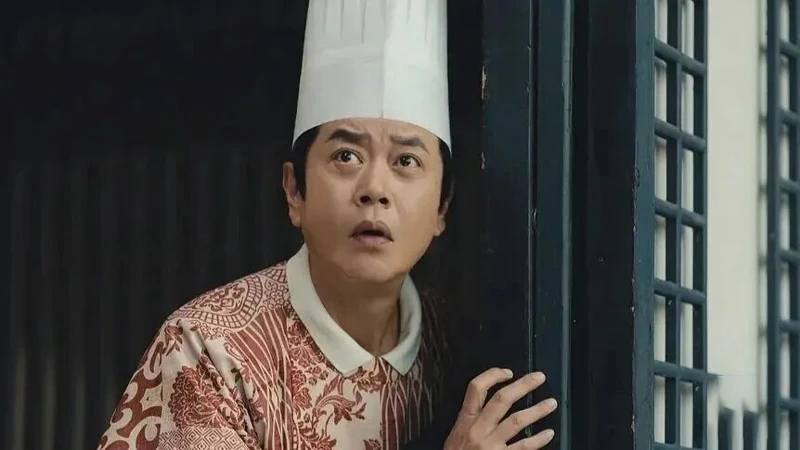
The supporting cast adds depth to the humor. The father, often flustered by ancient kitchen tools, provides many comic moments. His attempts to cook using historical texts like Qimin Yaoshu (齐民要术) result in chaotic meals. Meanwhile, the mother’s practical wisdom grounds the family.
These characters interact in ways that feel genuine. Lin Yan’s evolution from skeptic to ally is gradual and believable. His drunken confession of affection becomes a turning point, blending comedy with character growth. The show avoids painting anyone as purely good or evil, instead highlighting their complexities. This balance makes the emotional moments hit harder and the jokes land smoother.
Food as Bridge
Cuisine is the true star of Yummy Yummy Yummy, acting as more than mere backdrop. Dishes like Kaoluotuo (烤骆驼) and Zheng Dazhaxie (蒸大闸蟹) are filmed with vivid detail, making mouths water. But food here is a catalyst for change. When the Shen family serves Huoguo (火锅), it does more than fill stomachs. It becomes a tool for resolving conflicts among nobility, showing how shared meals can ease tensions.
The economic insights brought by the Shens shake up the local scene. Shen Shaoguang’s “jianbing economics”—using street food principles to explain broader concepts—impresses even officials. This clever integration of modern ideas into an ancient setting highlights the universality of innovation. Each recipe tells a story, whether it’s about survival, connection, or clever problem-solving.
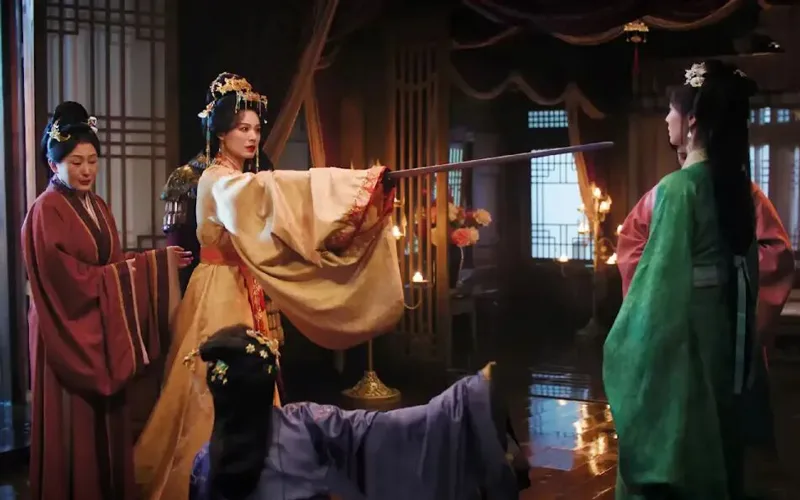
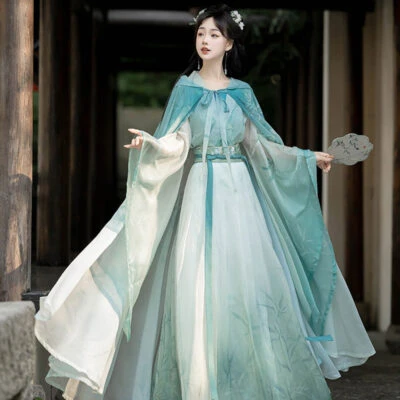
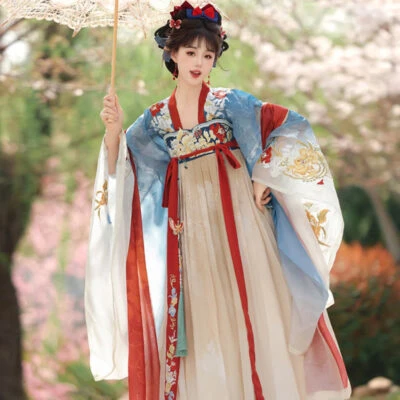
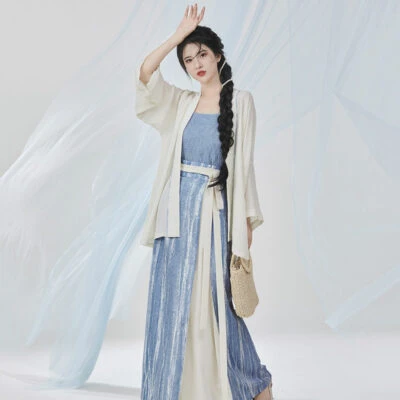
Attention to detail enriches the culinary journey. Costumes like Lin Yan’s official robe, made with Kesi (缂丝) silk weaving, and Shen Shaoguang’s Hanfu with hidden pockets, blend authenticity with creativity. Scenes shift seamlessly from grand palaces to lively markets, immersing viewers in the Tang Dynasty’s vibrant atmosphere. Food isn’t just eaten; it’s experienced, driving the plot and deepening character bonds.
Heartfelt Collisions
The clash of eras brings out the series’ most touching moments. Modern family dynamics meet ancient traditions, creating friction and warmth. The Shens’ egalitarian relationships stand in stark contrast to the period’s rigid hierarchies. Parents who treat each other as equals become a quiet revolution, inspiring those around them to rethink their own lives.
Relationships blossom in this cross-time environment. Lin Yan and Shen Shaoguang start as rivals, their interactions filled with witty banter. Gradually, trust builds as they work together to uncover corruption in the Hubu (户部). Their partnership shows how understanding can bridge vast differences, whether in time or perspective. It’s a testament to the idea that some values, like loyalty and compassion, are timeless.
Audiences have praised how the series balances joy and depth. One moment, viewers laugh at the family’s antics; the next, they’re moved by hidden emotions, like Lin Yan’s resolve noted in his journals. This emotional range makes Yummy Yummy Yummy more than entertainment—it’s a reflection on how we connect across boundaries. In a world that often feels divided, the show reminds us that laughter and love can unite any era.