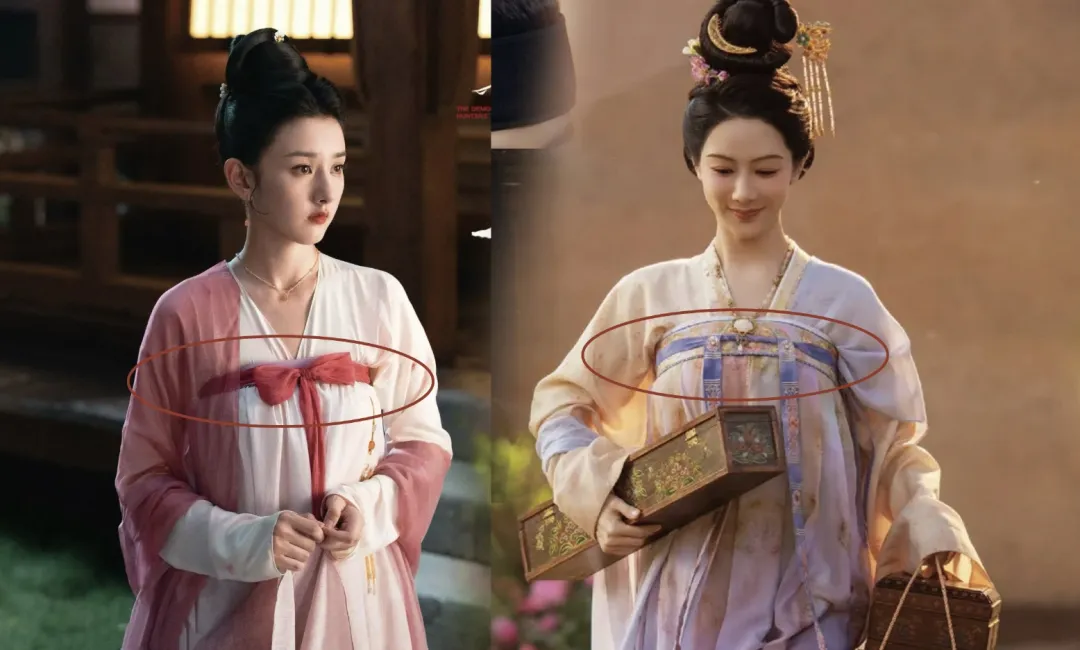
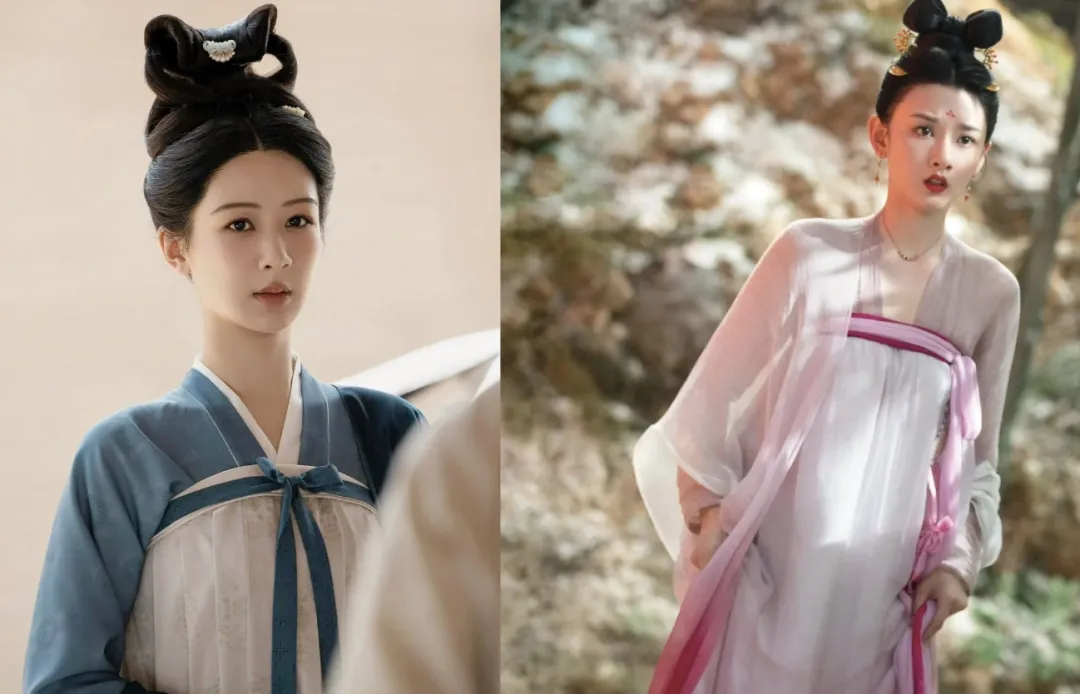
In ancient costume dramas or some images of Hanfu from the Tang Dynasty, you can often see these skirts that are directly tied around the chest. After all, there were no designs like elastic bands or safety pins for such skirts in ancient times. Did they rely entirely on large breasts to hold them up? Wouldn't they fall down? First, let's state the conclusion. In fact, this kind of skirt is supported by conforming to human engineering and the friction of the fabric. Moreover, this popular way of wearing was prevalent in the Tang Dynasty, and the plump body shape could also support such clothes. In addition, there were also designs like spaghetti strap dresses in history, so girls had a wide range of choices.
Popularity in Tang Dynasty
Why was this way of wearing popular in the Tang Dynasty? By the Sui and Tang Dynasties in the history of our clothing development, the waistline of skirts became popular to move upwards, especially during the prosperous Tang Dynasty and later. This was related to the confidence of women in their figures at that time and the trend of advocating a plump and strong body shape. Now, the common folk name for this way of wearing is "Qixiong" (齐胸). Since it is worn around the chest and the Qixiong skirts we often see don't have shoulder straps, the force can only go down, so the chest must bear the necessary pressure.
Principle of Non - falling
Let's use a normal logical way of thinking. We all know why a skirt won't fall when tied around the waist. It's because the waist is like a tenon - and - mortise structure. As long as it's tied tightly enough to prevent the waistline from slipping. Have you ever seen someone's wrap - around skirt fall off, unless it wasn't tied firmly? So, it's the same with wearing "Qixiong". As long as you tie the fastening point tightly, you can jump around however you like and the skirt won't fall off.
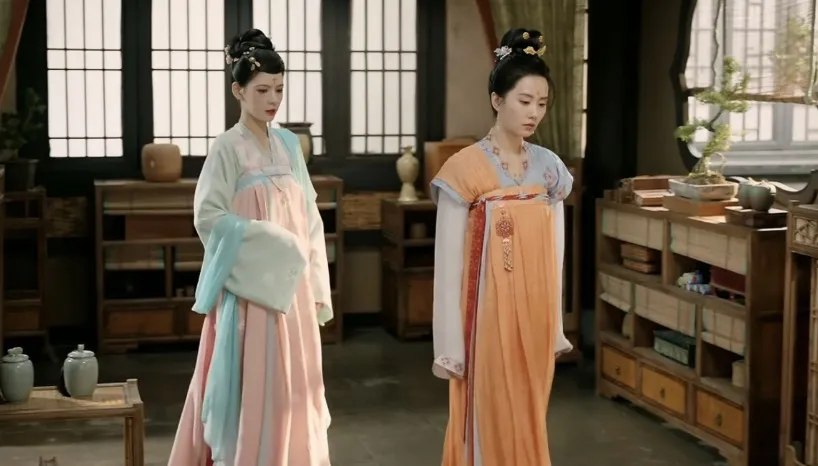
Of course, the people who make clothes aren't "stupid". When making the skirt waistband, they will choose fabrics with a rough surface or a surface that provides friction, or add a lining inside that increases friction or has a slightly rough surface. And the ties will also be made of materials with support, rather than smooth fabrics.
Many girls feel that their Qixiong skirts are easy to fall off. You can first check if the skirt waistband and ties of the skirt you're wearing take this into account (if not, forward this article to your merchant). If all smooth fabrics are used, even if you have large breasts and tie it tightly (unless you tie a knot that can't be undone), the rope is still easy to loosen and the skirt will still fall off, it's just a matter of time. At this time, you should consider adding an anti - slip lining, transparent clip - on shoulder straps, etc. to avoid the problem of the skirt slipping. This principle also applies to the way of wearing skirts tied around the chest or at the high - waist.
Solutions for Flat - chested Girls
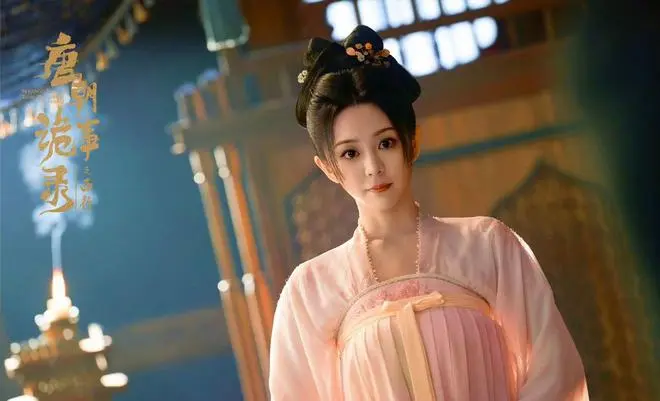
What if you have a flat chest? You probably haven't seen the spaghetti strap/over - the - shoulder strap dresses from the Tang Dynasty. Yes, we have skirts with shoulder straps! If this kind of skirt still falls off, then it can only be said that there might be a problem with the way you're wearing it. Looking further, we not only have spaghetti strap dresses but also elastic/drawstring skirts. Although they are not common, they did exist in history. So, for those who are afraid that their skirts will fall off, there are still many choices.
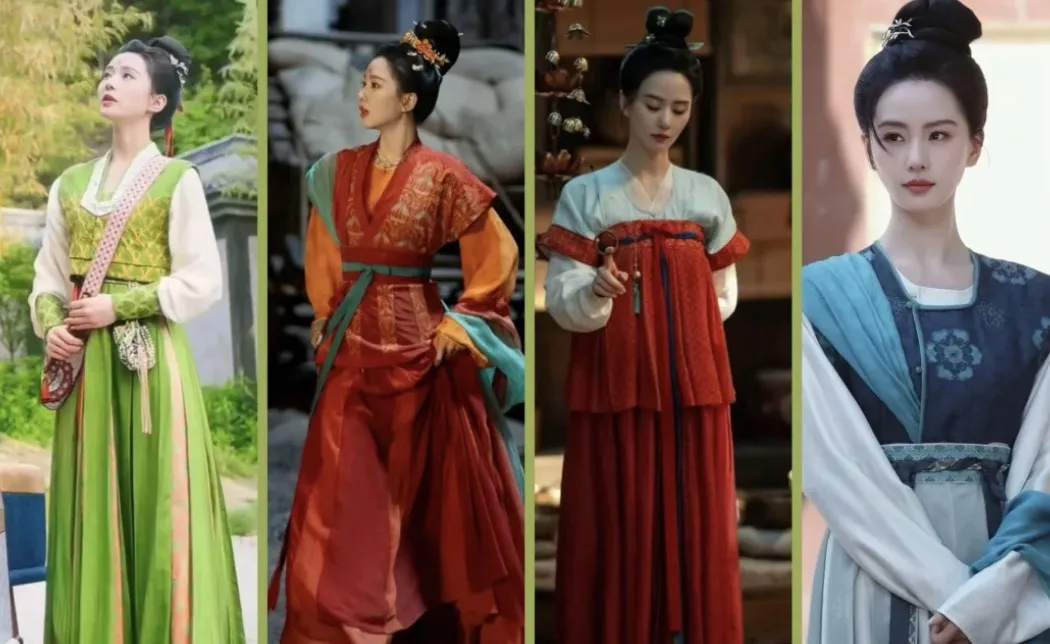
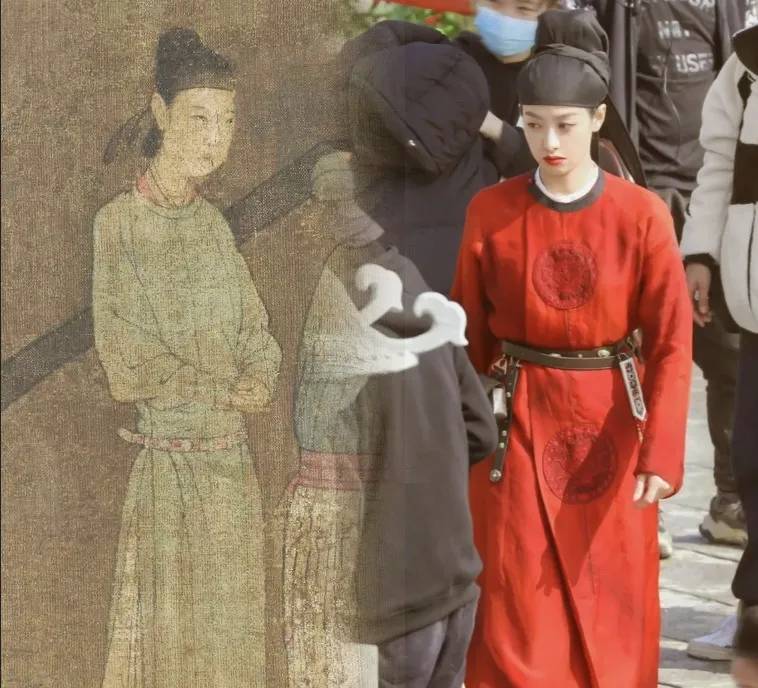
Finally, no matter what way you use, if you can't hold up the skirt, it doesn't matter. After all, we also have the "Qiyao" (齐腰) way of wearing, which is the normal way of tying the skirt around the waist. Wearing skirts at the waist has always been the most common way of wearing Hanfu. So, you don't necessarily have to adopt the popular "Qixiong" way of wearing. It's also okay to continue with the traditional "Qiyao" way. You can even follow the trend of women wearing men's round - collared robes. Even if you coil your hair up in a bun and wear a round - collared robe, you'll still look heroic. After all, for the women of the Tang Dynasty, there were so many types of clothes that they could be so confident. I wonder if this has solved your confusion?