Article
Search results:
-
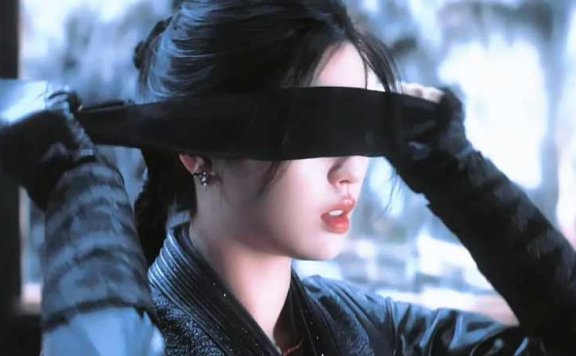
Yinian Jiangnan: Treasure, Bonds, and Rebirth
In the mist-shrouded waterways of Jiangnan, a disparate band of misfits discovers that true treasure lies not in gold, but in forging new beginnings. Yinian Jiangnan (一念江南), the highly anticipated sister drama to the acclaimed A Journey to Love (一念关山), weaves a tale of redemption and unexpected camaraderie against a backdrop of imperial intrigue and whispered legends. Directed by Hong Ling (洪泠), this historical drama unites rising stars Yu Shuxin (虞书欣) and Wang Anyu (王安宇) in a narrative that promises thrilling adventure, heartfelt warmth, and the quiet resilience of the human spirit. Set during a tumultuous era where the rival states of Song, Su, Yue, and Tang vie for dominance, the story follows five souls brought low by fate, converging on the struggling city of Yongxing. Driven by rumors of a hidden treasure rumored to contain both unimaginable wealth and miraculous cures, their quest becomes a journey of self-discovery and communal healing. Treasure Hunters' Bond Shen Zhiyi (沈知意), portrayed by Yu Shuxin, is no ordinary heroine. A resourceful wanderer skilled in evasion, she embodies resilience forged on the margins. Her path crosses with a disgraced minor official stripped of rank, a steadfast general searching for his missing commander, a devoted… -
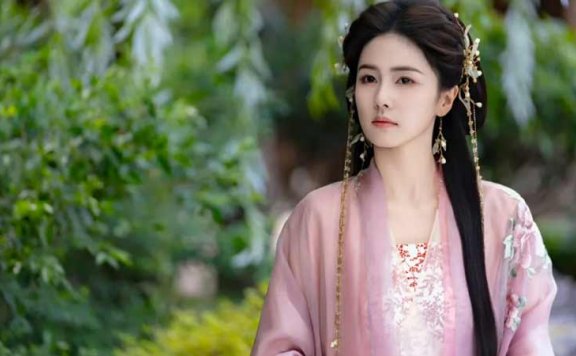
Pink Robes in Ancient Dramas: 8 Actresses' Stunning Styling
Pink carries a unique magic on historical drama screens. This gentle hue transforms actors into blossoms against intricate sets and rich storytelling. From celestial realms to royal courts, these costumes become visual poetry, each shade revealing character depth and narrative nuance. The recent surge in meticulously crafted pink styling highlights how color shapes our connection to these worlds. 1. Bai Lu (白鹿) Some performers embody pink's inherent softness. Bai Lu in Lin Jiang Xian (临江仙) exemplifies this. Her layered gown, adorned with subtle embroidery, harmonized with delicate hair ornaments. The ensemble created an aura of serene grace, mirroring her character’s gentle spirit. 2. Yang Zi (杨紫) Similarly, Yang Zi brought youthful radiance to Immortal Samsara (沉香如屑.沉香重华). Flowing pink chiffon contrasted with dark palace intrigue, visually anchoring her character’s innocence. Her subtle accessories enhanced rather than overwhelmed, proving elegance thrives in simplicity. 3. Ju Jingyi (鞠婧祎) Ju Jingyi’s unreleased drama Yuelin Qi Ji (月鳞绮纪) offers a glimpse of dynamic grace. Vibrant crimson florals danced across her pink robes, while a bold peony hairpiece commanded attention. This deliberate clash of hues suggested a character balancing delicacy with hidden fire. The intricate forehead adornment completed a look radiating poised energy. Her costume whispered… -

Jackson Yee's Que Xue Tour: Beyond the Stage, Within the Stone
When Jackson Yee announces a concert, it transcends mere performance. Each show becomes an archaeological dig into his artistic psyche, where ancient characters and geological metaphors fuse with contemporary soundscapes. From the rose petals of his 18th birthday to the crimson waves of his 19th solo debut, Yee architects immersive worlds where every setlist, prop, and syllable serves a dual purpose: entertainment and intimate dialogue with fans. The cancellation of his Guangzhou stop and subsequent stone-sent consolation gifts reveal an artist navigating commercial pressures while honoring five-year-old pledges to frontline workers. His current Que Xue (礐嶨) tour, interlocked with the Wedge Stone EP, continues this tradition—transforming overlooked Chinese characters into visceral concert experiences that resonate deeper than any chart position. The Concert Evolution Yee’s 18th birthday concert unfolded like a poetic manuscript. Dressed in crisp white, he materialized through a curtain of roses murmuring "I heard you"—a phrase that electrified the arena. This deliberate staging wasn’t spectacle; it was covenant. His 19th Su Er (玊尔) concert deepened this language, flooding venues in symbolic red while declaring each attendee "a unique jade." Behind these moments lay three years of meticulous planning. Postponed from 2023 due to filming commitments, the current tour… -
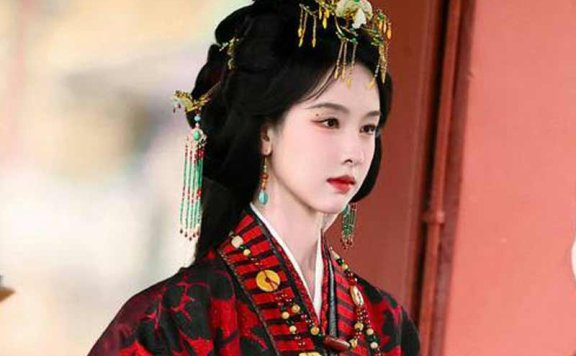
Chen Duling: The Crimson Phoenix Rising in Chinese Drama
Few could have predicted that Chen Duling (陈都灵), once celebrated as the gentle "campus goddess," would transform into a commanding presence on set during a torrential downpour in 2024. Clad in fiery red traditional robes with her hair sculpted into an imposing high bun, she shattered typecasting with an archer’s precision. Audiences witnessed not a damsel awaiting rescue, but a warrior unfazed by lashing rain—her poise earning viral praise as "crimson robes like war banners, hair coiled like victory standards." This metamorphosis obliterated assumptions about her artistic limits. Campus Muse to Period Drama Powerhouse Seven years after her breakthrough role as the fragile Li Su (李珥) in Left Ear, Chen has redefined her trajectory. Where she once embodied quiet innocence, she now dominates historical sets through meticulous character embodiment. Her shift transcends mere wardrobe changes; it represents an artistic evolution from supporting roles to commanding lead performances. Industry observers note her departure from predictable "flower vase" casting into complex, physically demanding parts. The contrast highlights stagnation among peers reliant on repetitive makeup and digital filters. While others chase trends, Chen immerses herself in historical authenticity—studying posture, movement, and period mannerisms. Her commitment extends beyond costumes into mastering martial sequences and… -
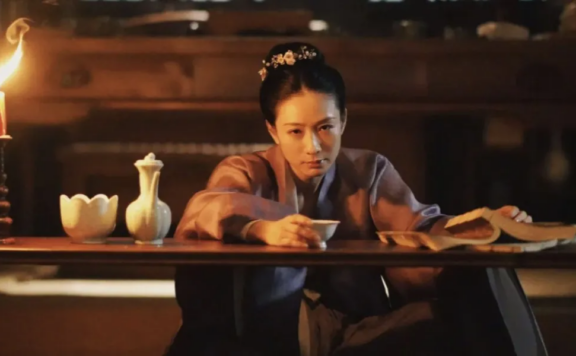
Tao Xinran Transforms into Li Qingzhao
In the documentary "Phoenix: Her Legend", Tao Xinran (陶昕然), who previously played the role of 'An Lingrong', portrayed Li Qingzhao (李清照). To start with, Li Qingzhao lived around the transition between the Northern and Southern Song Dynasties, so the clothing style at that time was somewhat grand and elegant, leaning towards the Northern Song style. The Northern Song still retained the legacy of the Five Dynasties, so compared with the Southern Song, there was still the beauty of layering and wide sleeves. Influenced by Neo - Confucianism, the makeup and dressing of women in the Northern Song tended to be reserved and simple, adhering to the aesthetic philosophy of 'A light touch is always appropriate, and charm comes naturally'. In the Northern Song's 'Dongjing Meng Hua Lu', it was described that 'Gold and jade glistened, and silk wafted fragrance.' In the Southern Song's 'Wu Lin Jiu Shi', it said, 'Women and children were dressed gorgeously and walked around in crowds.' In the Huang Sheng Tomb and the De'an Zhou's Tomb, the style of wide - sleeved clothing, which was the dressing style of noble women, can still be seen. The prevalence of the shirt - skirt combination reached its peak… -
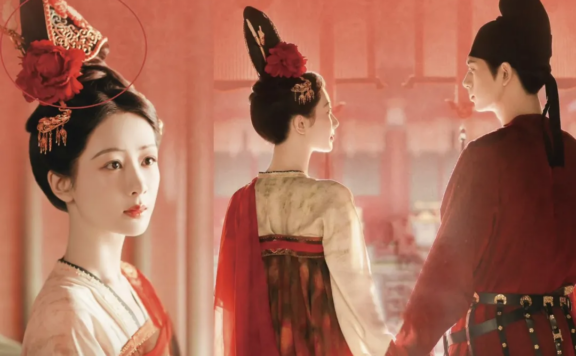
Yang Zi's New Hanfu Look: Like a Cone
The posters of the second part of Flourished Peony called In the Name of Blossom have revealed the new looks of Yang Zi and Li Xian. Yang Zi's hair bun on the top of her head resembled an upright cone. Some netizens joked, "Is this the so - called ‘cone - shaped hair’ in the Tang Dynasty?" First, let me conclude that this hairstyle is the single - blade half - flipped hair bun that was popular in the Tang Dynasty. Although it looks like a cone, its structure is actually much more complex than you might think. Let's break it down. The Chinese meaning is very clear: Single - blade means that when the hair bun is spread out, it looks like a single blade of a knife, and "half - flipped" means that the blade of the knife bends and flips inward halfway, resulting in the shape we see. Now, let's see how to visually identify the single - blade half - flipped hair bun. The two pictures on the left are from the Tang Dynasty, and the rightmost picture is from the Sui Dynasty. We can see that this hair bun, popular during the Sui and Tang… -
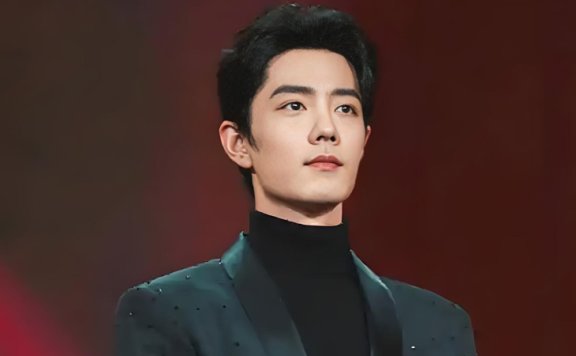
Xiao Zhan: Crafting Spotlight Beyond Reality Shows
At 33, an age where many Chinese celebrities actively court exposure through popular variety shows, Xiao Zhan (肖战) stands apart. His infrequent appearances on such programs spark constant speculation. While assumptions often point to restrictive management, the actor himself offers a different, surprisingly grounded rationale for his selective visibility. This deliberate approach, prioritizing artistic substance over fleeting fame, defines a unique path within China's fast-paced entertainment landscape. Choosing Depth Over Distraction Xiao Zhan's rise to stardom, propelled by the phenomenal success of the drama The Untamed (陈情令), brought immense pressure and scrutiny. Rather than capitalizing solely on this initial surge through ubiquitous variety show bookings, he articulated a clear preference in interviews. He consciously dedicates significant time and energy to selecting and developing substantial acting projects, viewing them as the true core of his career. This focus signifies a long-term commitment to craft over the immediate, often superficial, boost offered by constant reality TV presence. His management team operates with exceptional discernment. Invitations flood in, but acceptance is never guaranteed. Each potential variety show undergoes rigorous evaluation based on its core concept, target audience alignment, and potential impact on Xiao Zhan's carefully cultivated image. This meticulous filtering process reflects lessons… -
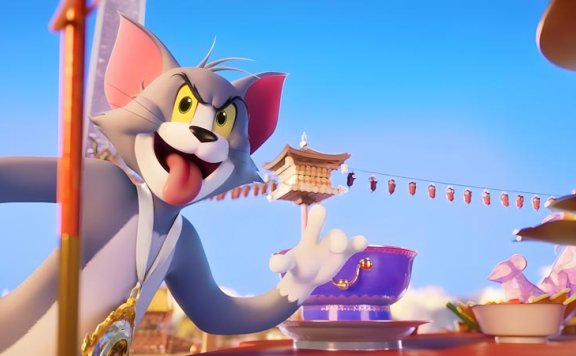
Tom and Jerry's Wild West Magic Chase
Prepare for a spectacular genre collision as the world's most iconic cat-and-mouse duo, Tom and Jerry, blast out of their familiar haunts and into a dazzling, danger-filled dimension in the animated feature Tom & Jerry: Forbidden Compass. This high-stakes adventure catapults the eternal adversaries from their classic chases into the heart of the Wild West Magic, a realm where dusty saloons sit beneath floating islands and six-shooters fire enchanted bolts. Their mission? To recover a shattered cosmic artifact before a malevolent sorceress uses its power to enslave dimensions. What begins as another frantic scramble over cheese spirals into an intergalactic rescue operation demanding an unprecedented truce. Broken Magic The chaos commences during one of their signature, house-wrecking pursuits. A tussle over a prized morsel inadvertently activates an ancient, ornate device known as the Star Chaser. This isn't some forgotten trinket; it's a relic of immense interstellar power. The sudden activation unleashes a swirling vortex of cosmic energy, swallowing both combatants and their contested treasure whole. Disoriented and tumbling, they crash-land in a landscape utterly alien yet hauntingly familiar: the Wild West Magic. Imagine sun-baked deserts stretching beneath levitating rock formations, cacti whispering secrets, and grizzled bovine gunslingers packing arcane ammunition.… -
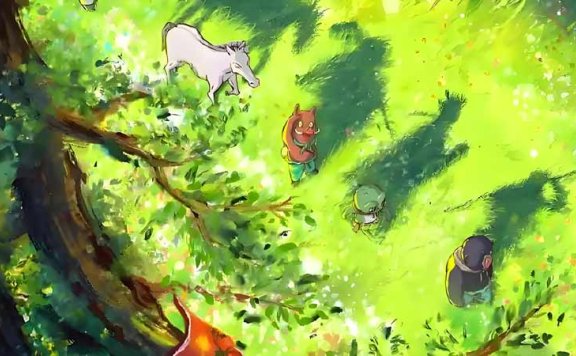
Nobody: Laughter and Struggle in a World of Hierarchy
Originally stemming from a standout episode in Yao-Chinese Folktales (中国奇谭), Nobody (浪浪山小妖怪) captivated audiences with its relatable workplace satire before being expanded into a full-length feature by the Shanghai Animation Film Studio. This film retains the studio's signature ink-wash aesthetic, blending ethereal landscapes with meticulous character details, creating a visually stunning experience rare in modern animation. Building on its short-form roots, the story evolves from a simple tale of underdog monsters into a profound exploration of ambition and societal structures, balancing humor with biting social commentary that resonates deeply in today's world. Comic Characters At its core, Nobody delivers non-stop laughter through the misadventures of four unlikely heroes. These underlings from Langlang Mountain decide to impersonate the revered pilgrims of Journey to the West (西游记) to reach enlightenment before the real team. This setup generates comedy from stark personality clashes, like the timid Ape Monster struggling to embody the bold Sun Wukong (孙悟空), his social anxiety making even a simple declaration impossible. Weasel Spirit's incessant chatter as Sha Wujing (沙悟净) leads to hilarious scenes, such as Piglet handing him a whetstone to grind whenever he talks too much, turning exhaustion into absurdity. The film's brilliance lies in how it uses… -
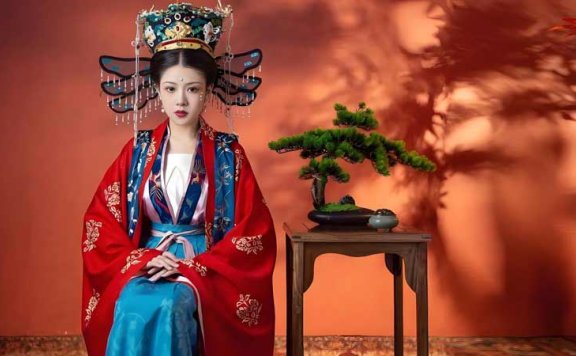
Ming Dynasty Hanfu: Ancient Artistry Reborn in Modern Fashion
In the vibrant tapestry of Chinese cultural heritage, Hanfu emerges as a radiant thread weaving through millennia of tradition. Among its most celebrated expressions, Ming Dynasty Hanfu stands as a pinnacle of sartorial artistry, where imperial aesthetics met technical mastery. This sartorial legacy transcends historical costume to become a living dialogue between past and present, offering contemporary wearers both beauty and cultural connection. The distinctive silhouettes and symbolic details developed during the Ming era continue to inspire designers and cultural enthusiasts worldwide. Form and Structure When Zhu Yuanzhang (朱元璋) established the Ming Dynasty, he initiated a sartorial renaissance by decreeing a return to Tang and Song clothing traditions. This restoration movement refined over twenty years culminated in the Hongwu (洪武) period's comprehensive dress code that balanced reverence for antiquity with Ming innovations. The resulting garments established new standards in Chinese textile history through meticulous tailoring and thoughtful design principles. Women's attire featured harmonious combinations like the Ao Skirt (袄裙) pairing fitted upper garments with voluminous lower skirts that created graceful movement. The iconic Ma Mian Skirt (马面裙) demonstrated particular ingenuity with its four overlapping panels and side pleats that produced elegant swirling motions. Supplementary layers including Yun Jian (云肩) shoulder… -
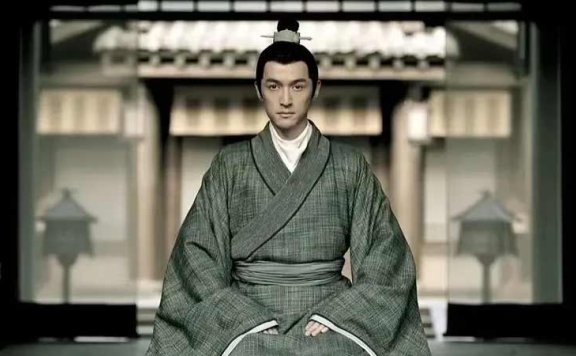
How 3 Historical Dramas Reimagine Hanfu Styles Across Dynasties
In the luminous realm of historical television, costumes transcend mere aesthetics to become portals to ancient China. Among these, Hanfu—the traditional clothing system of the Han ethnic group—serves as both cultural anchor and artistic expression. Through meticulous craftsmanship and dynastic authenticity, series like Nirvana in Fire (琅琊榜), The Story of Minglan (知否知否应是绿肥红瘦), and The Longest Day in Chang’an (长安十二时辰) have ignited global fascination with this sartorial heritage. Beyond visual splendor, they decode social hierarchies, gender roles, and philosophical ideals stitched into every fold. The Wei-Jin Spirit in Nirvana in Fire Nirvana in Fire channels the restrained ethos of the Northern and Southern Dynasties through its costumes. Unlike opulent Tang designs, its palette leans into muted ivories, inks, and azures—colors mirroring scholar-officials’ pursuit of humility. Protagonist Mei Changsu (梅长苏) epitomizes this philosophy: his unadorned ramie robes cascade like calligraphy strokes, while a jade pendant at his waist whispers Confucian integrity. Every drape rejects extravagance, echoing an era where intellect trumped ornamentation. Contrast emerges in the warrior nobility. Nihuang (霓凰), commander of the Southern borders, wears tailored tunics with geometric embroidery—subtle yet sharp as her strategems. Her ensembles blend femininity with authority through structured shoulders and muted gold threadwork. Even crowd scenes reinforce… -
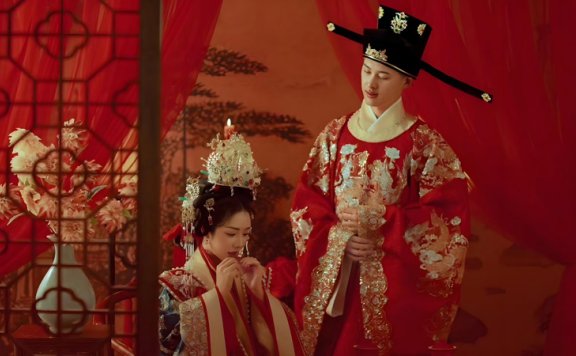
Hanfu Wedding Secrets: Red Attire Across Ages
Hanfu wedding attire, rooted in ancient Chinese traditions, embodies a "secret code" woven through millennia of cultural evolution. From the Zhou Dynasty's solemn rituals to the Ming-Qing era's vibrant celebrations, each garment—be it an embroidered robe or a phoenix crown—serves as a living archive. This attire not only marks marital unions but also reflects shifting societal norms, dynastic decrees, and philosophical ideals like yin-yang harmony. Today, as couples revive these practices, they unlock a visual language that spans dynasties, transforming weddings into historical reenactments. The red hues and intricate details narrate stories of class, cosmology, and continuity, making every stitch a testament to China's enduring heritage. This sartorial code, which governs every hue, stitch, and accessory, transforms weddings into living archives of cultural memory. Colors Through Centuries Early dynasties favored "Xuan-xun" (玄𫄸) tones—deep black symbolizing heaven and reddish-purple representing earth—as seen in Zhou-era ceremonies. These colors, prescribed in texts like Zhou Li (周礼), mirrored cosmic balance and were reserved for nobility. By the Tang Dynasty, imperial edicts allowed commoners to wear bright red and green, creating vivid contrasts in art, such as Dunhuang (敦煌) murals depicting joyful processions. The shift to all-red dominance began under Ming Emperor Hongwu's (明洪武) decree… -
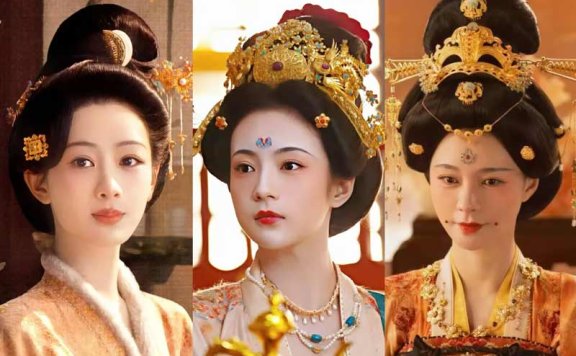
Hairpins and Wigs: The Art of Ancient Chinese Hairstyling
Ancient portraits and modern period dramas showcase women with gravity-defying towers of hair. From The Glory's (雁回时) intricate Ming-style coiffures to the Tang Dynasty grandeur in Flourished Peony (锦绣芳华), these elaborate styles spark wonder. How did historical figures achieve such volume? The answer lies not in mythical hair growth, but in ingenious artifice. Long before modern extensions, ancient artisans crafted sophisticated hairpieces known as Ji (髻)—the foundation of historical hairstyling. Materials of Illusion Far from relying solely on precious human hair, craftsmen employed diverse resources. Excavations at Astana Graves in Xinjiang revealed a lacquered wooden Ji shaped like a "single-blade half-upturned bun." This hollow structure, painted black with white floral motifs and clouds, featured small holes for securing hairpins. Wearers concealed their natural hair within this lightweight frame, creating instant volume and a base for ornaments. Another ingenious example used dyed palm fibers. Wrapped around a linen core and shaped into spirals, these pieces offered a ready-to-wear solution. Early classifications in the Zhou Li (周礼) distinguished types: the ornate Fu (副), the simpler Bian (编), and the blended Ci (次). Later terminology simplified to Bi (髲) and Ti (鬄). Materials ranged from affordable palm and horsehair for daily use to… -
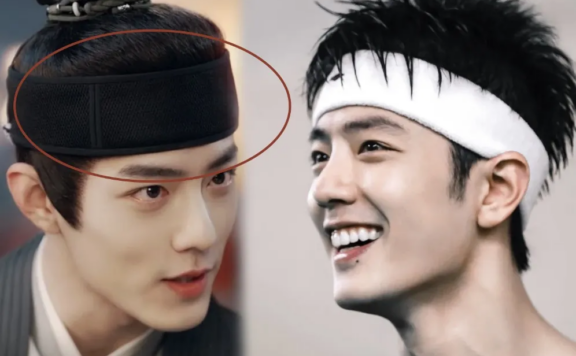
What's the Name of the Hairband in The Legend of Zang Hai
In the ancient costume cdrama The Legend of Zang Hai, when Xiao Zhan's character Zang Hai makes his appearance, he wears a similar 'hairband'. Netizens are saying, 'Isn't this the essential hairband for modern sportswear? Was it already around in the Ming Dynasty?' Let's start with the answer. It's a 'net cap' from the Ming Dynasty, more precisely, a simplified version of the Lazy Net Cap (懒收网巾) that was popular in the late Ming Dynasty. The net cap was a net-like headdress used by adult men in Ming Dynasty China to tie up their hair and gather loose strands. It has the same function as modern 'hairbands'. It can not only gather loose hair but also prevent hats from slipping. It's actually quite practical. The net cap could be worn alone in daily life. In the Ming Dynasty, people of status had to wear a cap over the net cap when attending important occasions. However, for convenience in daily life or among common people, they often didn't need to wear other hats after putting on the net cap. The popularity of the net cap can be attributed to Zhu Yuanzhang. It's said that one day, Zhu Yuanzhang visited the Shenleguan… -
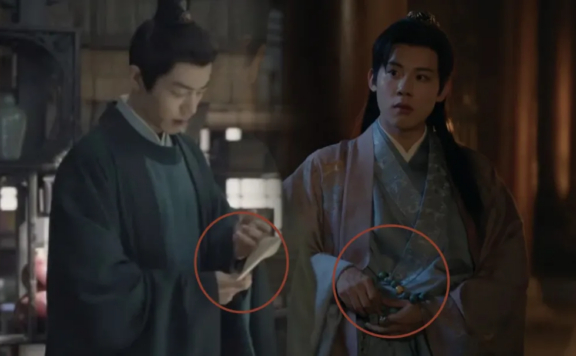
Exploring the Pockets in Cdrama: The Legend of Zang Hai
In the costume TV drama The Legend of Zang Hai, played by Xiao Zhan, can put letters in his sleeves. Can such seemingly large sleeves really hold things without them falling out? Let's start with the conclusion. In the past, most sleeves that could hold things had cuffs. Those completely open large sleeves were mainly for ceremonial purposes and generally couldn't hold things directly. Usually, there would be attendants following to carry bags. And Zang Hai's sleeves clearly have cuffs, so things can be directly stuffed into them. Additionally, apart from sleeves, the ancients also used handbags and backpacks. So, when we see characters like Zhuang Er taking out or stuffing things from their bosoms or belts, we can't help but wonder if it's uncomfortable. Moreover, things would fall out once the belt was loosened. Back to the issue of sleeves, there were actually some "tricks" in the design of ancient people's sleeves. Generally speaking, cuffed sleeves have two characteristics. One is the type with narrow - ended sleeves, such as the pipa - shaped sleeves popular in the Ming Dynasty and the hanging - beard sleeves popular in the Han Dynasty. The shape of these sleeves naturally forms a… -
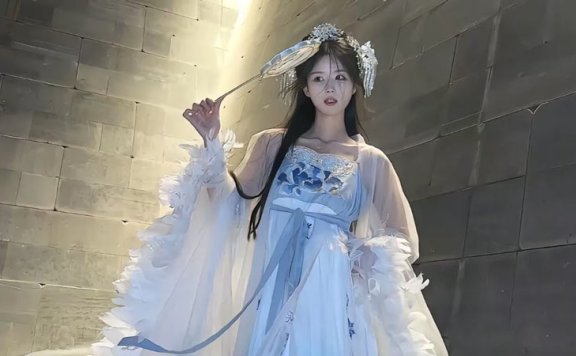
Wearing History: How Hanfu Reshapes Fashion and Identity
The rustle of silk on city streets signals more than a fashion trend. Across China and beyond, young people wearing flowing robes with wide sleeves and crossed collars aren't just dressing up—they're reviving a sartorial language spoken for millennia. Hanfu, the traditional attire of the Han Chinese, carries within its seams profound cultural narratives, aesthetic philosophies, and social codes that transcend mere costume. This resurgence isn't about recreating museum exhibits; it’s a dynamic reclamation of identity. Each fold in the fabric whispers stories of dynasties past, while the vibrant modern interpretations speak boldly to the present. Far from being static relics, these garments embody an evolving dialogue between heritage and innovation. Core Principles Woven in Hanfu distinguishes itself through fundamental design elements that carry deep symbolic weight. The cross-collar forming a "Y" shape visually represents the balance of yin and yang, reflecting ancient cosmological beliefs. The right-over-left lapel served historically as a cultural identifier for Han communities, contrasting with left-over-right styles associated with some neighboring groups. This distinction held such significance that Confucius remarked on its importance in defining civilized society. Equally characteristic are the absence of buttons, replaced by fabric sashes tying the garment, and the signature wide sleeves.… -

Stitching Tradition and Change: The Artistry Behind the Cheongsam
The cheongsam, once a modest Manchu robe, now epitomizes timeless elegance. Over centuries, this iconic garment transformed from rigid imperial attire into a canvas for contemporary artistry. Its stitches carry stories of rebellion, craftsmanship, and cultural renaissance. Today, designers navigate tradition and innovation, ensuring the cheongsam remains not just clothing, but a living testament to Chinese aesthetics. From Shanghai’s jazz-age salons to global runways, the cheongsam’s evolution mirrors China’s own metamorphosis—honoring roots while embracing change. The Evolution of Cheongsam In the Qing Dynasty (1644–1911), the cheongsam served as ceremonial dress. Straight cuts and layered embellishments concealed the body, reflecting Confucian ideals. Intricate "Eighteen Trims" embroidery featured dragons and florals, symbolizing status rather than individuality. By the 1920s, Shanghai’s cosmopolitan spirit reshaped the garment. Western tailoring techniques introduced darts and fitted sleeves, shortening hemlines to the knee. The modern cheongsam emerged—sleek, body-conscious, and emblematic of liberated women. Post-1980s, designers revived the cheongsam by blending tradition with practicality. Cotton and linen replaced heavy silks for daily wear, while ink-wash patterns and celadon blue evoked classical art. Cities like Suzhou became hubs for lightweight, adaptable designs. This era shifted the cheongsam from ceremonial rarity to accessible elegance, worn by professionals and artists alike.… -
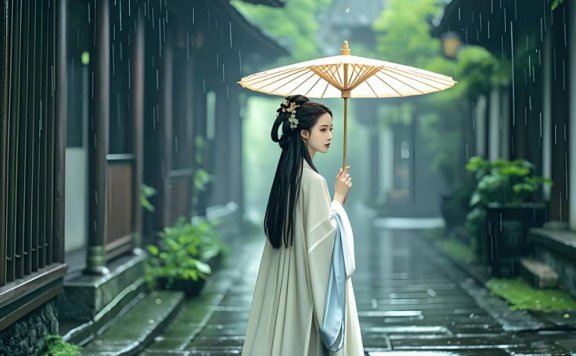
Rainy Jiangnan: A Symphony of Hanfu and Oil-Paper Umbrellas
The scene seems lifted from a classical scroll: narrow lanes paved with slick bluestone, veiled in a fine, persistent drizzle. A figure glides through the mist, the graceful lines of a Hanfu robe flowing like ink wash across damp paper. Beneath the shelter of a traditional oil-paper umbrella, the intricate layers of silk and linen whisper against the ancient walls. This is Jiangnan where the region's signature mist intertwines with the timeless elegance of traditional Han attire, creating moments where past and present dissolve into pure poetry. The delicate dance between fabric, rain, and architecture transforms the everyday into a living masterpiece, capturing an essence uniquely Chinese yet universally evocative. Canvas in Motion Jiangnan's rain possesses a particular quality—fine, persistent, softening the edges of whitewashed walls and black-tiled roofs. It’s within this atmospheric embrace that Hanfu finds a natural stage. The clean lines of a Song-style Beizi (褙子) jacket and pleated Sanjianqun (三裥裙) echo the minimalist beauty of the surrounding architecture. As the wearer moves, the hem skims the wet stones, the fabric absorbing the dampness, creating a visual echo of ink spreading on absorbent Xuan paper. This "aesthetics of dampness" becomes a photographer’s muse, raindrops beading on oil-paper umbrellas… -
5 Chinese Animations That Shape Our Values
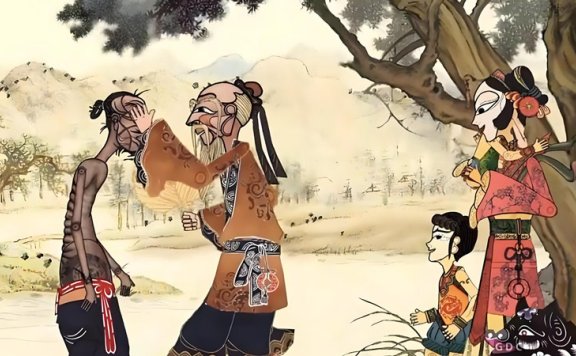
Chinese animation holds a unique mirror to the nation's soul. Beyond mere entertainment, a distinct category of films – often termed “philosophical animations” – weaves together threads of ancient scholar-gentry ideals, Buddhist and Daoist contemplations, and the enduring wisdom of the common people. These works, primarily suitable for audiences from middle school age upwards, don't just tell stories; they crystallize core aspects of Chinese cultural identity and values. Through masterful artistry and profound narratives, they explore timeless questions of existence, society, and the human spirit, offering young viewers a visually stunning gateway into the depths of Chinese philosophical tradition. 1. Tao Hua Yuan Ji (桃花源记) The 2006 animation Tao Hua Yuan Ji reimagines Tao Yuanming's (陶渊明) classic tale with striking visual and narrative depth. It employs a powerful flashback structure, following the fisherman after his return from the idyllic land. His report to the Prefect leads to a futile search and his punishment, countered only by the scholar Liu Ziyi's (刘子翼) intervention. The film significantly expands the story's social context, contrasting the harsh, shadow-drenched reality of common suffering with the luminous peace of Tao Hua Yuan using bold chiaroscuro. This visual strategy deepens the fisherman's motivations and internal conflicts, rendering… -
6 Historical Dramas Reviving China's ICH
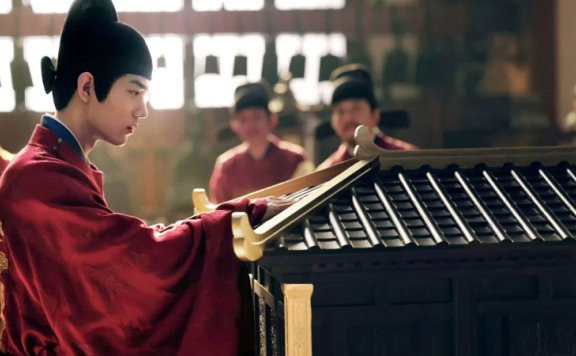
Historical dramas are breathing new life into China’s intangible cultural heritage (ICH), transforming age-old crafts into dynamic narrative tools. From woodwork magic to culinary traditions, these series weave cultural preservation into gripping storytelling. Six recent productions stand out for their authentic integration of ICH, introducing global audiences to traditions once confined to regional workshops and ritual spaces. 1. The Legend of Zang Hai (藏海传) Premiering May 18, 2025, on CCTV-8 and Youku, this Quantum Entertainment production stars Xiao Zhan as Zang Hai, an architectural prodigy. The drama spotlights yaofa puppet theatre from Zhejiang’s Taishun County, where gunpowder propels intricate wooden figures. These pyrotechnic puppets become tactical tools in Zang Hai’s political schemes, showcasing a 300-year-old art recognized by UNESCO in 2006. Zang Hai’s mastery of mortise-and-tenon joinery drives key plot developments. This 7,000-year-old woodworking technique—China’s UNESCO-listed architectural heritage—enables complex structures without nails or glue. When Zang Hai enters the capital, an eight-meter Qinhuai lantern screen illuminates his arrival. Crafted using Nanjing’s 2008 nationally listed lantern techniques, this piece merges paper art, painting, and sculpture. The production team creatively scaled up shadow puppetry (UNESCO 2011), using tiger and centipede silhouettes as metaphors for court factions. These enlarged "ancient IMAX" projections visualize…
