Chinese animation holds a unique mirror to the nation's soul. Beyond mere entertainment, a distinct category of films – often termed “philosophical animations” – weaves together threads of ancient scholar-gentry ideals, Buddhist and Daoist contemplations, and the enduring wisdom of the common people. These works, primarily suitable for audiences from middle school age upwards, don't just tell stories; they crystallize core aspects of Chinese cultural identity and values.
Through masterful artistry and profound narratives, they explore timeless questions of existence, society, and the human spirit, offering young viewers a visually stunning gateway into the depths of Chinese philosophical tradition.
1. Tao Hua Yuan Ji (桃花源记)
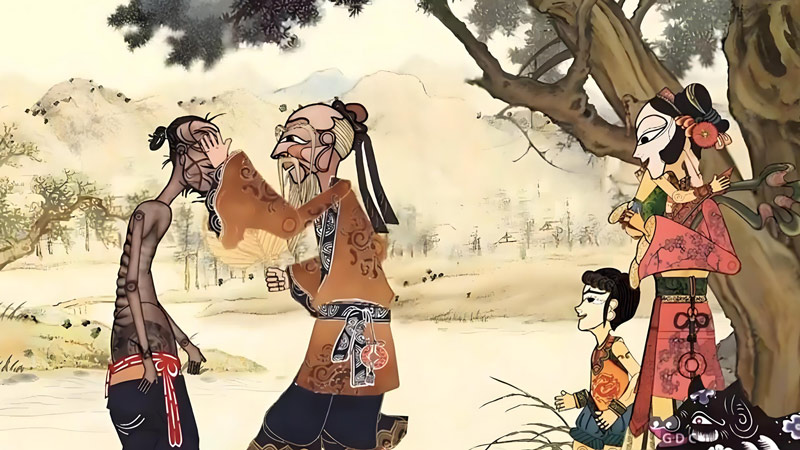
The 2006 animation Tao Hua Yuan Ji reimagines Tao Yuanming's (陶渊明) classic tale with striking visual and narrative depth. It employs a powerful flashback structure, following the fisherman after his return from the idyllic land. His report to the Prefect leads to a futile search and his punishment, countered only by the scholar Liu Ziyi's (刘子翼) intervention. The film significantly expands the story's social context, contrasting the harsh, shadow-drenched reality of common suffering with the luminous peace of Tao Hua Yuan using bold chiaroscuro. This visual strategy deepens the fisherman's motivations and internal conflicts, rendering him a more complex figure and grounding the narrative logic.
Crucially, the animation amplifies the emotional journeys of both Liu Ziyi and the fisherman. Liu embodies the scholar-gentry's intense yearning to escape worldly constraints, a longing tinged with intellectual pessimism. The fisherman represents the common people's profound desire for blissful peace, paradoxically intertwined with deep-seated skepticism about its very existence. Together, they fully articulate the multifaceted significance of Peach Blossom Spring – China's enduring, elusive "Ideal Land" – capturing the bittersweet tension between aspiration and doubt that has resonated for centuries.
2. Mu Di (牧笛)
Mu Di beautifully embodies the "dream imagery" pervasive in classical Chinese literature, from Zhuangzi's butterfly dream to Li Bai's celestial journeys. It's a simple story – a herd boy loses his buffalo, searches through a dreamscape filled with breathtaking landscapes, awakens, and finds his companion – perfectly illustrates the structure and meaning of the literary dream motif. This accessible narrative helps young viewers grasp how dreams function symbolically within the culture, blurring the lines between reality and illusion.
Simultaneously, the film stands as a masterpiece of pastoral artistry. Its depictions of willows, water buffalo, bamboo, magpies, mountains, and streams possess a serene, transcendent beauty. The delicate, flowing ink-wash animation evokes a profound sense of harmony with nature, making the viewer intimately understand the deep resonance nature held for ancient Chinese poets and painters seeking solace and inspiration beyond worldly concerns.

3. The Country of Summer Insects (夏虫国)
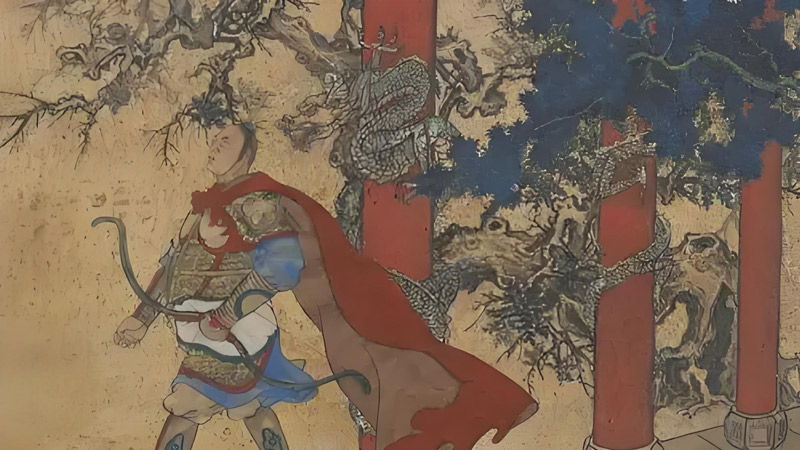
The Country of Summer Insects draws inspiration from Zhuangzi's "Autumn Floods." It depicts the citizens of a fictional kingdom who live only from spring to summer, never experiencing ice. A general and two companions defy their natural cycle, building a great ship to seek ice. Their arduous journey involves battling deities and monsters, only to be returned home, where they discover their long-sought treasure: winter has arrived, covering their land in snow and ice.
The film presents a profound philosophical lesson: individuals are inherently bound by their limitations ("Seeing only summer, they cannot conceive of ice"). Overcoming these confines demands immense effort, only to reveal that what lies beyond is often the mundane reality of the wider world – yet, for the individual, it represents a monumental transcendence. Executed in a stunning woodcut animation style, the film blends classical visual and musical elements into a captivating exploration of perspective and the human condition.
4. Three Monks (三个和尚)
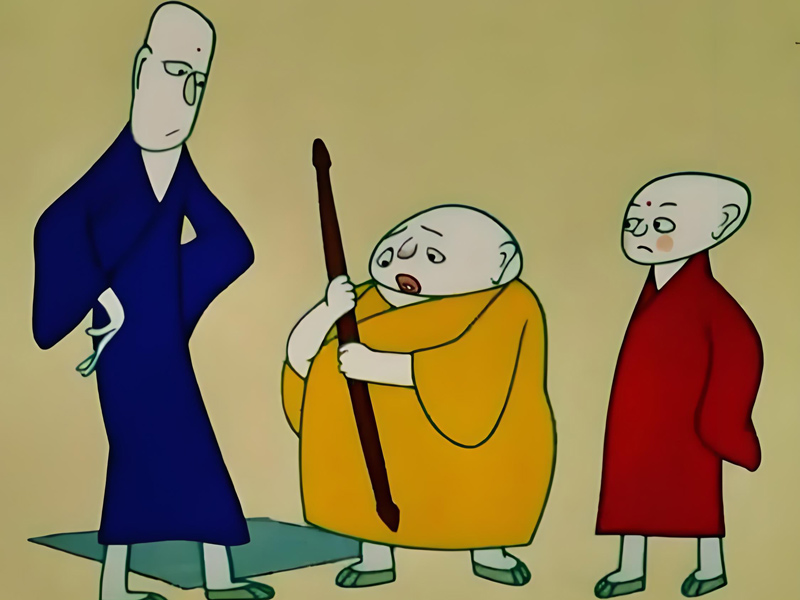
The timeless proverb "One monk carries water; two monks share the load; three monks have no water" receives brilliant life in the 1980 animation Three Monks. This adage sharply critiques the human tendency towards discord and inaction in groups. The film expands it into a narrative: three self-interested, uncooperative monks living on a hilltop temple. Their stalemate is broken only by a fire emergency, forcing them to work together to save their home. This shared effort leads them to realize the fundamental truth: unity brings strength and greater reward.
Beyond its potent message, the animation is a marvel of economy and expressiveness. Simple line drawings convey the monks' distinct personalities and internal thoughts with remarkable subtlety. The clean, uncluttered color palette and backgrounds, incorporating subtle ink-wash techniques and comic-inspired framing, create a work that is both visually charming and deeply insightful, its humor underscoring a profound lesson about human cooperation.
5. Incense Burner (摔香炉)
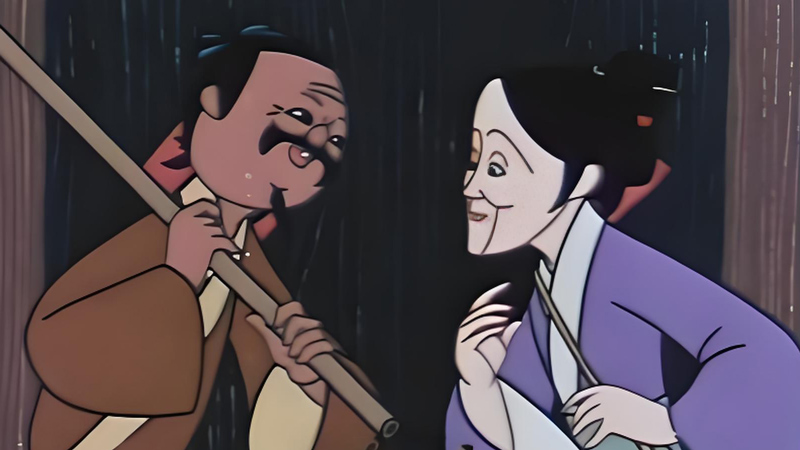
Incense Burner, a product of its specific historical context aiming at social education, carries a core message transcending its era: the paramount value of diligence and labor. The story involves an elderly couple: the husband works daily, while the wife devoutly prays to the God of Wealth. As their life worsens, the husband devises a plan. He smashes her incense burner, then pretends the God of Wealth demanded it in a dream and now requires her to spin thread daily. Secretly working for himself, he accumulates resources. A year later, with tangible rewards like grain and an ox-cart, he reveals the truth, demonstrating that real prosperity comes from hard work, not superstition.
This narrative powerfully reinforces the traditional Chinese virtues of valuing labor and self-reliance. While the specific context of combating superstition is clear, the essential affirmation of practical effort as the path to a better life resonates deeply. Furthermore, the husband’s clever, non-confrontational approach to resolving the domestic conflict showcases enduring folk wisdom in navigating human relationships.