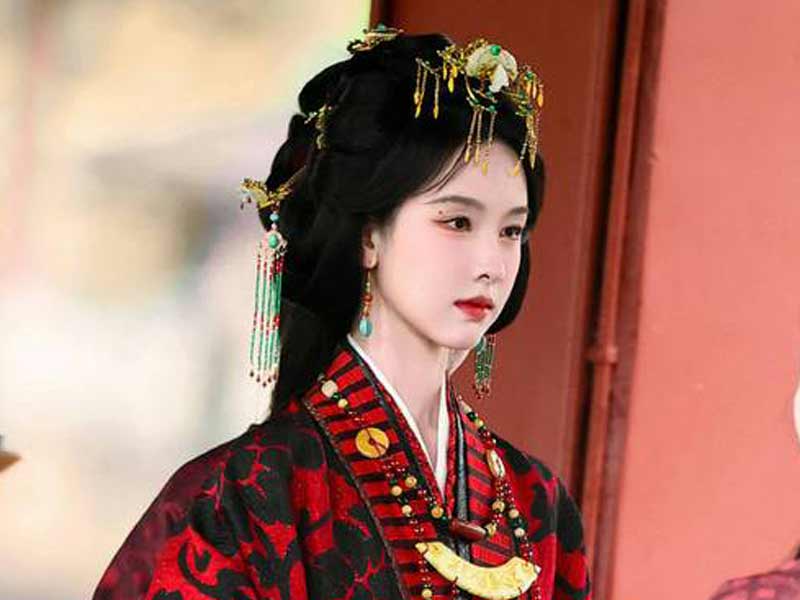
Few could have predicted that Chen Duling (陈都灵), once celebrated as the gentle "campus goddess," would transform into a commanding presence on set during a torrential downpour in 2024. Clad in fiery red traditional robes with her hair sculpted into an imposing high bun, she shattered typecasting with an archer’s precision. Audiences witnessed not a damsel awaiting rescue, but a warrior unfazed by lashing rain—her poise earning viral praise as "crimson robes like war banners, hair coiled like victory standards." This metamorphosis obliterated assumptions about her artistic limits.
Campus Muse to Period Drama Powerhouse
Seven years after her breakthrough role as the fragile Li Su (李珥) in Left Ear, Chen has redefined her trajectory. Where she once embodied quiet innocence, she now dominates historical sets through meticulous character embodiment. Her shift transcends mere wardrobe changes; it represents an artistic evolution from supporting roles to commanding lead performances. Industry observers note her departure from predictable "flower vase" casting into complex, physically demanding parts.
The contrast highlights stagnation among peers reliant on repetitive makeup and digital filters. While others chase trends, Chen immerses herself in historical authenticity—studying posture, movement, and period mannerisms. Her commitment extends beyond costumes into mastering martial sequences and royal etiquette. This dedication positions her uniquely among contemporaries navigating China’s competitive entertainment landscape.
Fan discussions emphasize how her artistic choices challenge industry norms. Where many actors cling to familiar archetypes, Chen’s trajectory demonstrates that reinvention requires courage. Her journey from modern romance to historical epics illustrates an actor deliberately expanding her toolkit.

Craftsmanship Over Celebrity
Behind Chen’s on-screen intensity lies relentless discipline. BTS footage reveals her kneeling on rain-slicked stones, lips blue from cold, yet maintaining razor-sharp focus between takes. Rather than retreating to warmth after "cut," she reviews performances while wrapped in blankets, dissecting subtle gestures. Such rigor extends to collaboration—she adjusts shoulder seams with costume designers three times for a single archery draw.
Her preparation includes developing character-specific micro-expressions: icy negotiation stares, trembling fingertips during tense dialogues. This granular approach earned crew admiration when she assisted extras with costumes, distributed hand warmers to child actors, and even repositioned heavy lighting equipment herself. Viral hashtags like #ChenDulingCarriesReflectors spotlighted her humility, contrasting starkly with diva stereotypes.
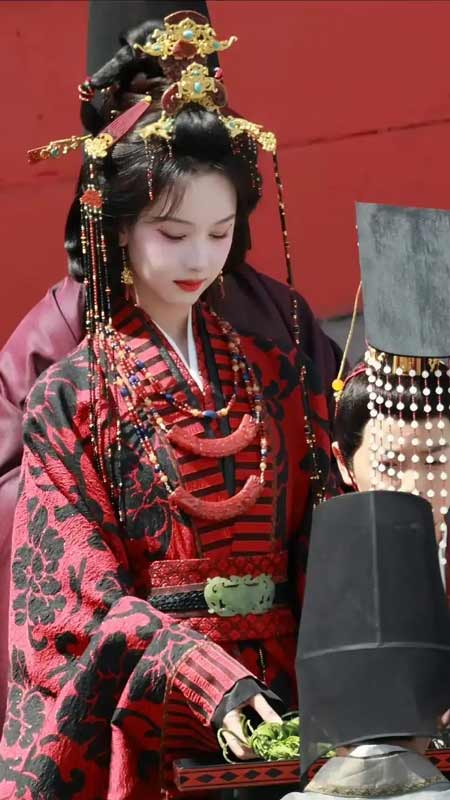
Costume designers attest that her anatomical awareness enhances historical garments. The iconic red Ruqun (襦裙) with its towering hairpiece required precise posture control—a feat she achieved through core-strength training. Her physicality turns fabric into armor, transforming aesthetics into narrative power.
Redefining Historical Archetypes
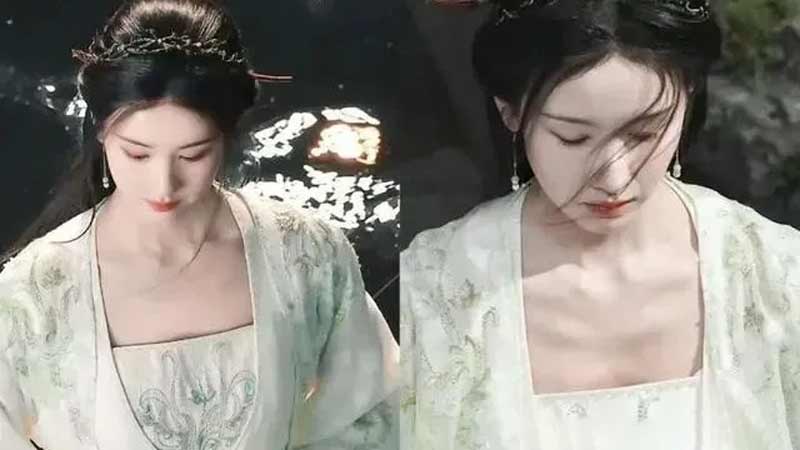
Chen dismantles period drama tropes through versatility. She fluidly transitions between roles: a rain-soaked warrior, an ethereal flower goddess, or a melancholic noblewoman—each distinct in gaze and gait. Unlike actors confined by "beauty filters," she embraces raw cinematography, where close-ups reveal authentic texture rather than airbrushed perfection.
Her range disrupts expectations of "gentle-faced" actors lacking presence. Recent set photos showcase her merging elegance with menace—a delicate profile contrasting with battle-ready stances. Netizens coined the phrase "goddess when gazing upward, demon when looking down" to capture this duality. Few contemporaries execute such tonal shifts within a single project.
This chameleon ability stems from rejecting cosmetic shortcuts. Where peers depend on signature makeup across roles, Chen adapts completely—whether wearing intricate Tang-dynasty yellow silks, minimalist hairpins, or warrior braids. Her face becomes a canvas for diverse eras rather than a branded commodity.
The Crimson Standard
Chen Duling’s crimson robes symbolize more than visual spectacle; they represent the backbone of artistic integrity. In an era where "historical beauty" often means digital enhancement and marketing hype, her seven-year evolution proves substance triumphs over surface. Each role chips away at the "campus goddess" mold through tangible craft—martial arts drills, historical research, and collaborative spirit.
Her journey answers whether period dramas demand more than pretty faces. When Chen stands unbowed in stormy scenes, hair coiled like ancient generals’ crests, she demonstrates that true presence emerges from discipline. The red fabric isn’t mere costume—it’s the banner of an artist forging her own legacy, one rain-soaked take at a time.