
Historical dramas are breathing new life into China’s intangible cultural heritage (ICH), transforming age-old crafts into dynamic narrative tools. From woodwork magic to culinary traditions, these series weave cultural preservation into gripping storytelling. Six recent productions stand out for their authentic integration of ICH, introducing global audiences to traditions once confined to regional workshops and ritual spaces.
1. The Legend of Zang Hai (藏海传)
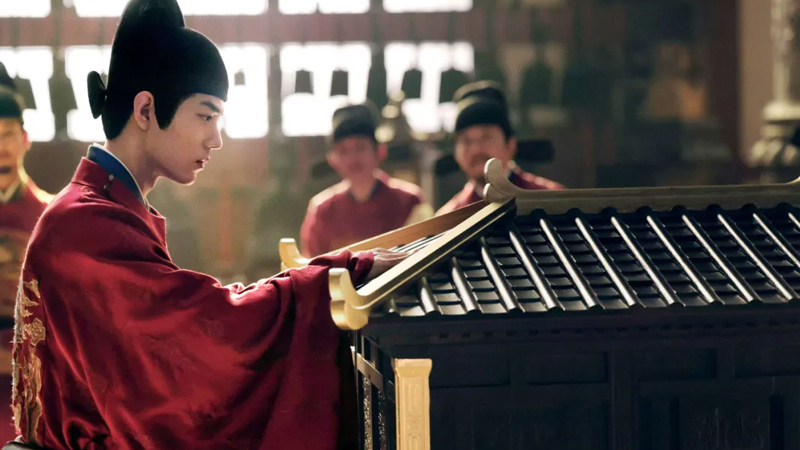
Premiering May 18, 2025, on CCTV-8 and Youku, this Quantum Entertainment production stars Xiao Zhan as Zang Hai, an architectural prodigy. The drama spotlights yaofa puppet theatre from Zhejiang’s Taishun County, where gunpowder propels intricate wooden figures. These pyrotechnic puppets become tactical tools in Zang Hai’s political schemes, showcasing a 300-year-old art recognized by UNESCO in 2006.
Zang Hai’s mastery of mortise-and-tenon joinery drives key plot developments. This 7,000-year-old woodworking technique—China’s UNESCO-listed architectural heritage—enables complex structures without nails or glue. When Zang Hai enters the capital, an eight-meter Qinhuai lantern screen illuminates his arrival. Crafted using Nanjing’s 2008 nationally listed lantern techniques, this piece merges paper art, painting, and sculpture.
The production team creatively scaled up shadow puppetry (UNESCO 2011), using tiger and centipede silhouettes as metaphors for court factions. These enlarged "ancient IMAX" projections visualize strategic maneuvers through light and shadow.
2. Rolling River Eastward (临江仙)
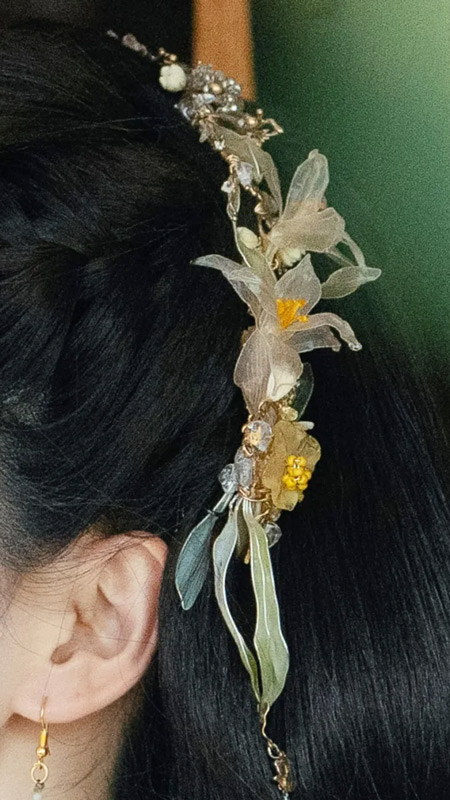
Huanyu TV’s fantasy series Rolling River Eastward, starring Bai Lu (白鹿), elevates Hangzhou’s tongcao leather molding from decorative craft to plot cornerstone. The process involves soaking oxhide, carving 0.2mm-thin petals, and hand-assembling botanicals like the protagonist’s lily hair comb—a symbol of resilience.
This Zhejiang provincial ICH technique requires twelve precision steps, from tanning to dyeing. By integrating leather artistry into character development and costume design, the series repositions craft as cultural identity rather than backdrop.
3. The Story of Yanxi Palace (延禧攻略)
Huanyu TV and iQiyi’s 2018 hit The Story of Yanxi Palace demonstrated ICH’s narrative power through kesi silk tapestry. Employing the complex "warp-weft" technique (national ICH, 2006), artisans recreated imperial fans that symbolized court hierarchy. Known as "indestructible silk art," kesi’s durability paralleled character arcs.
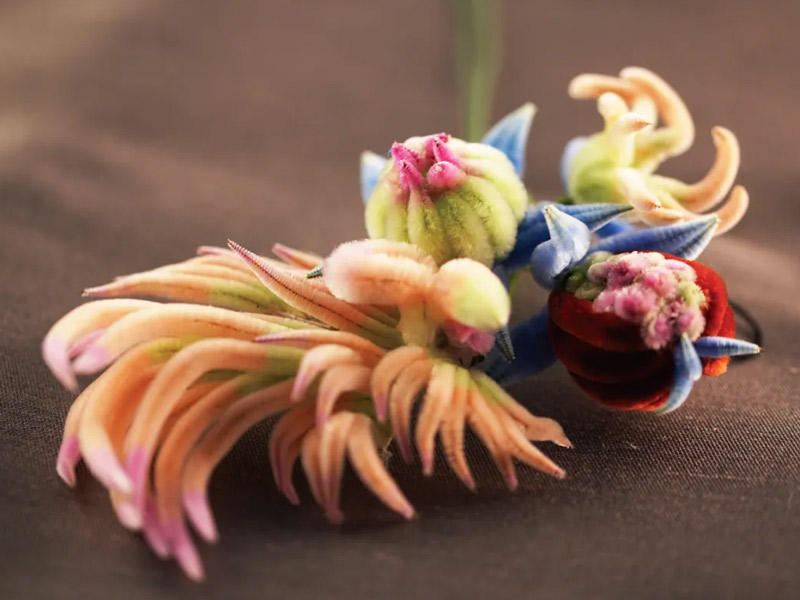
Velvet flowers—dyed silk wired into floral motifs—embodied frugality in the Qing court. Empress Fucha’s rejection of jewels for these Nanjing-made blossoms (now provincial ICH) mirrored historical records, turning craft into moral statement.
4. Weaving a Tale of Love (风起霓裳)
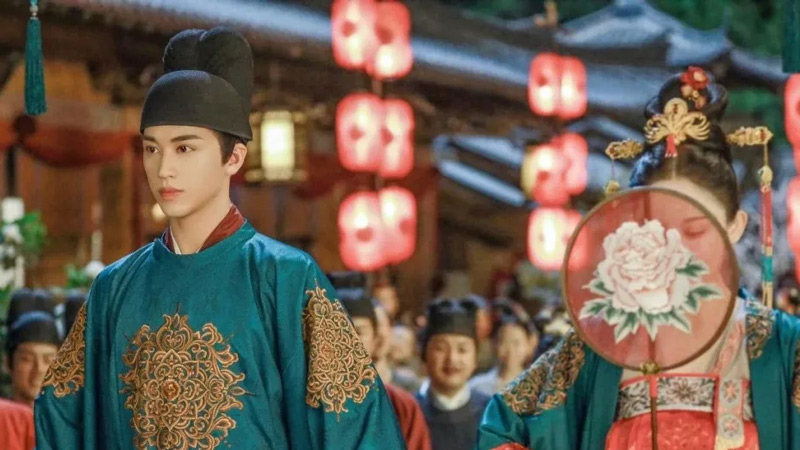
Youku’s 2021 series Weaving a Tale of Love starring Gulnazar (古力娜扎) used embroidery as political language. With over 60 national and 120 provincial ICH embroidery variants, including Four Great Styles (Su, Shu, Xiang, Yue), costumes became maps of social ambition.
Garment-making scenes advanced plotlines, blending needlework with intrigue. By framing embroidery as both weapon and heritage, the show interlaced craft survival with character survival.
5. Gourmet in Tang Dynasty (大唐小吃货)
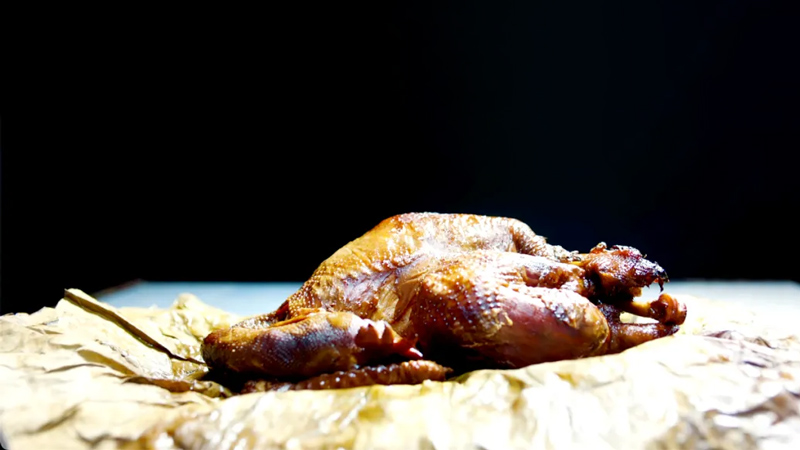
Film’s food-centric comedy Gourmet in Tang Dynasty (2021) celebrated edible ICH. Beggar’s chicken—clay-baked poultry recognized in Jiangsu and Zhejiang—appeared alongside rose cakes, a pastry preserved via Yunnan’s flower pastry techniques and Tianjin’s bakery traditions.
These dishes anchored historical authenticity while demonstrating foodways’ living legacy. The series proved culinary heritage thrives not in museums, but in steaming kitchens and shared meals.
6. Nuoxi (傩戏)
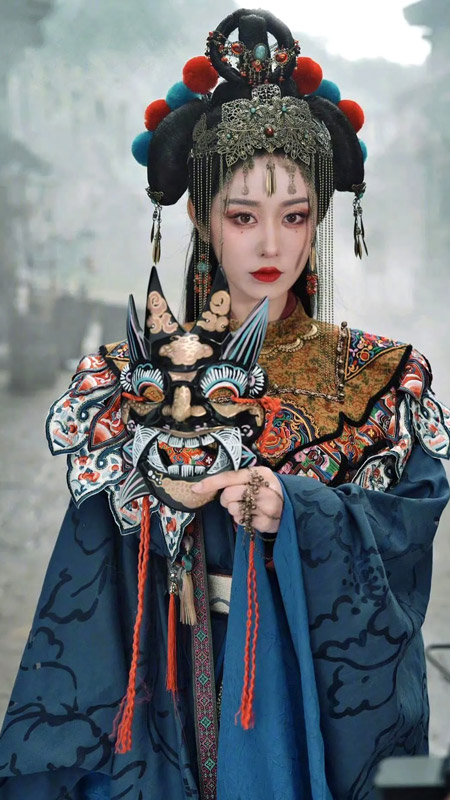
Shanhai Xingchen’s short drama Masked Shadows (July 2025) centers on nuo opera, a masked ritual-theatre form with 15 national ICH variants like Guizhou’s Gelao ethnic version. Drawing from exorcism dances dating to pre-Qin eras, performers adapted ceremonial movements into cinematic combat choreography.
The show’s viral success (50M+ views in 24 hours) on Douyin and Red Fruit exemplifies ICH’s digital-age potential, transforming temple rites into trending entertainment while preserving their spiritual core.
Through set design, character arcs, and plot mechanisms, these productions prove intangible heritage isn’t relic—it’s revelation. By embedding crafts in conflict, romance, and ambition, they ensure traditions resonate far beyond museum walls.
Conclusion
These dramas stitch heritage into living tapestries where emperors wield chisels and concubines knead dough. As screens glow with ancestral ingenuity, viewers don’t just watch history—they touch its texture. The question remains: Will this renaissance thread tradition into tomorrow’s fabric?
