
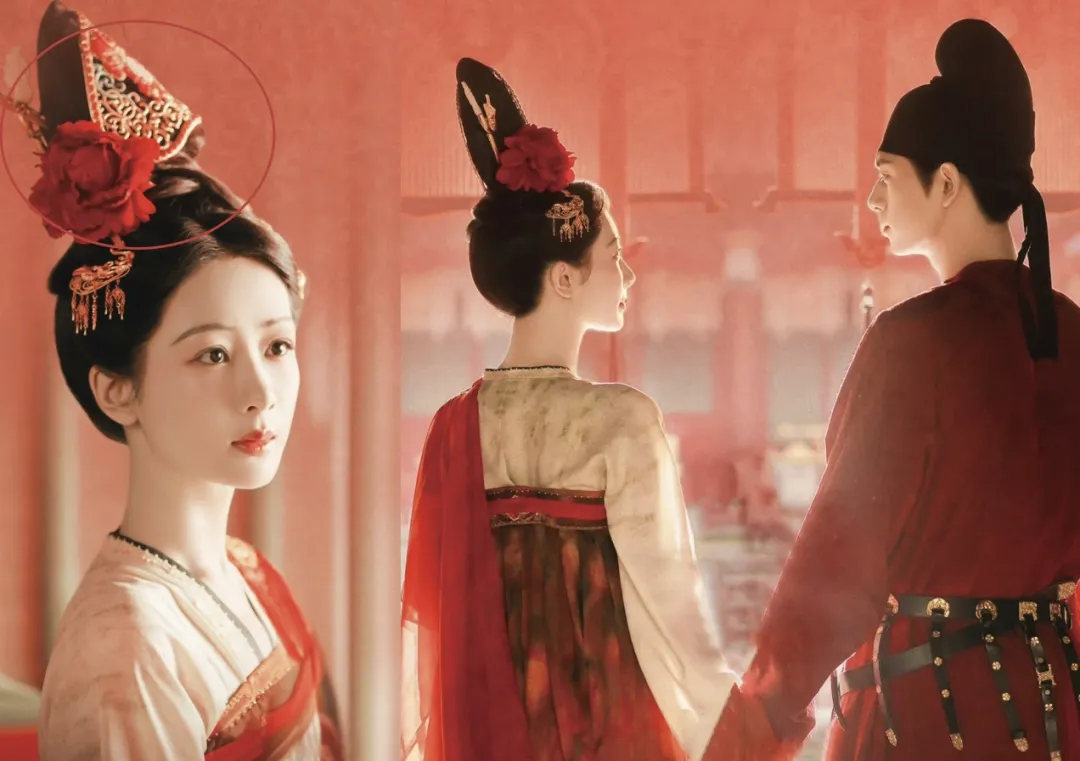
The posters of the second part of Flourished Peony called In the Name of Blossom have revealed the new looks of Yang Zi and Li Xian. Yang Zi's hair bun on the top of her head resembled an upright cone. Some netizens joked, "Is this the so - called ‘cone - shaped hair’ in the Tang Dynasty?" First, let me conclude that this hairstyle is the single - blade half - flipped hair bun that was popular in the Tang Dynasty. Although it looks like a cone, its structure is actually much more complex than you might think. Let's break it down. The Chinese meaning is very clear: Single - blade means that when the hair bun is spread out, it looks like a single blade of a knife, and "half - flipped" means that the blade of the knife bends and flips inward halfway, resulting in the shape we see.
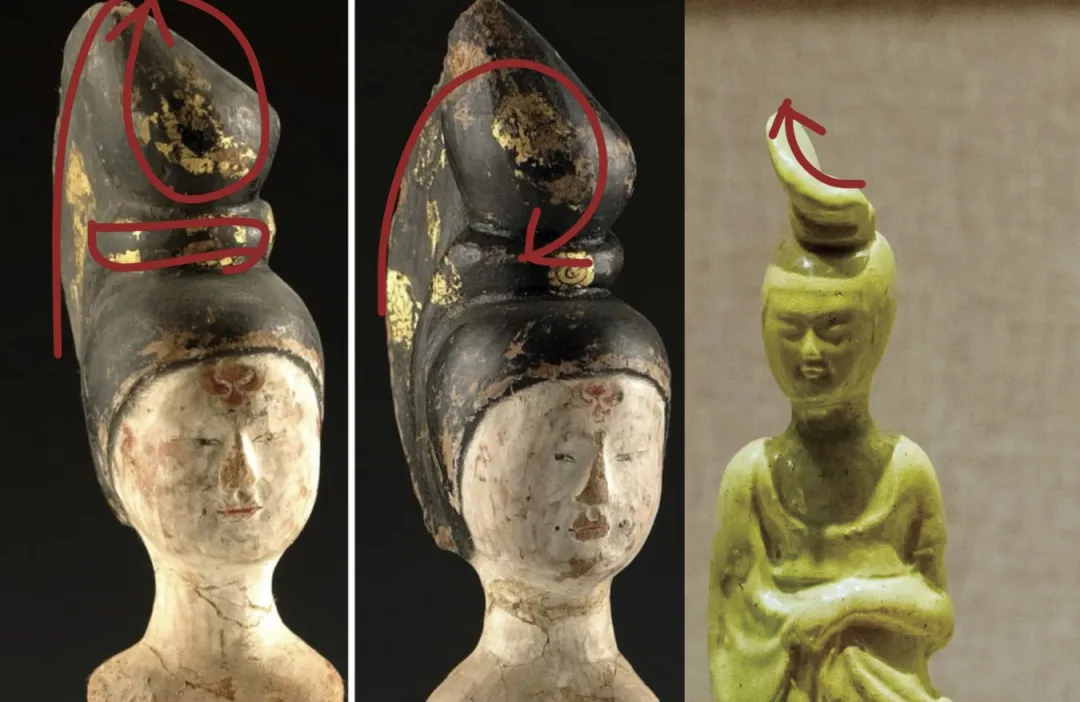
Now, let's see how to visually identify the single - blade half - flipped hair bun. The two pictures on the left are from the Tang Dynasty, and the rightmost picture is from the Sui Dynasty. We can see that this hair bun, popular during the Sui and Tang Dynasties, became more elaborate and exaggerated after evolution, but they all presented a state of being flipped halfway, either inward or outward, and curved. (The arrows in the picture only illustrate the flipping path, not the direction.) The cone - shaped hair bun on Yang Zi in "In the Name of Blossom" is more similar to the one in the left picture. Although it looks like a "cone", it actually has a flip.
Tang and Song Styles
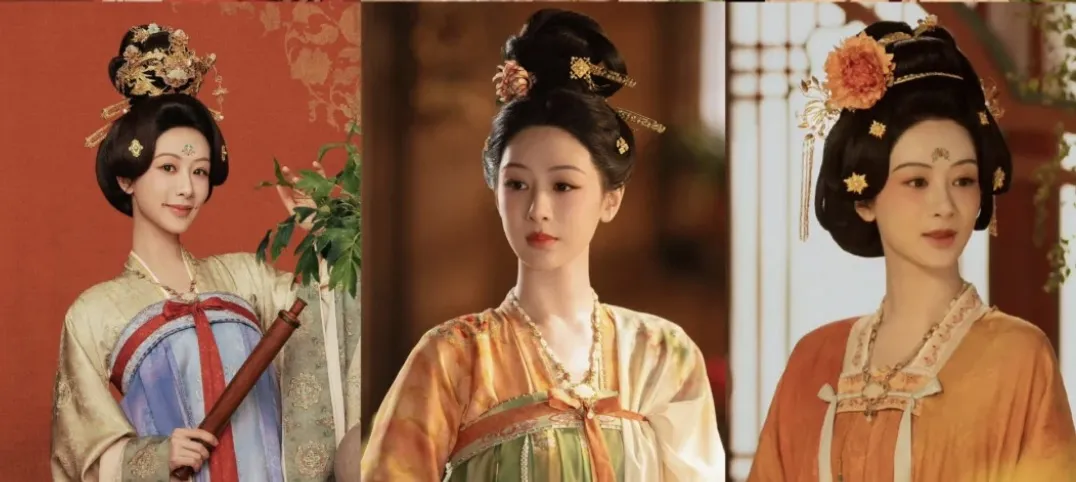
Tang Dynasty women were good at showing various ingenuities in their hair buns. A clear difference can be seen when comparing the Tang Dynasty styles in the upper row with the Song Dynasty styles in the lower row. Although ancient women liked to wear a single hair bun on top of their heads, which was a very common hairstyle, the styles of the Tang and Song Dynasties were quite different. High - hair buns were quite popular in the Tang Dynasty, and by the late Tang Dynasty, the hairstyles became extremely exaggerated. The Song Dynasty style was more simple and low - key. In addition to the single hair bun in the paintings of people from the Tang and Song Dynasties, it was also common to create and decorate a ring of varying widths and shallows separately, forming a hierarchical difference from the main hair bun.
False Hair Buns
Some netizens also asked: “Isn't it heavy for Tang Dynasty women to wear such hair buns?” The answer is that it's not as heavy as you think because many complex hairstyles in the Tang Dynasty used “false hair buns”. False hair buns were very popular since the Northern and Southern Dynasties and became even more prevalent in the Tang Dynasty, with a wide variety of styles. There are more than 30 kinds of hair bun records in books like “Zhuang Tai Ji”, “Ji Huan Pin”, “Zhi Gu Zi”, “New Book of Tang”, and “Zhong Hua Gu Jin Zhu”.
Phrases like “Throw the false hair bun into the river, and the yellow shirt floats with the current” and “When high - hair buns are in fashion in the city, people in the countryside will make them one - foot high” describe the use of wigs to stack up high hair buns in the Tang Dynasty. And in “The Story of Yang Guifei”, it is mentioned that Yang Guifei “often used false hair buns as jewelry”. This lacquered wooden false hair bun unearthed from the Astana Tombs in Turpan, Xinjiang, is a typical false hair bun of the single - blade half - flipped style. Its material is wood, painted with black lacquer, and images of flowers, auspicious clouds, and phoenixes are painted on the black lacquer with white paint. There are several small holes with residual metal rust at the bottom of the hair bun for inserting hairpins. It has a thin - wood base (hollow), and real hair is tied into a bun and placed inside, then fixed with hairpins. Besides this one - piece wooden hair bun, there were also false hair made of horsehair, human hair, and bamboo strips. Some people even sold real hair for rice. These wigs could be very realistic and were used to fill different hair buns.
Face - Hugging Style
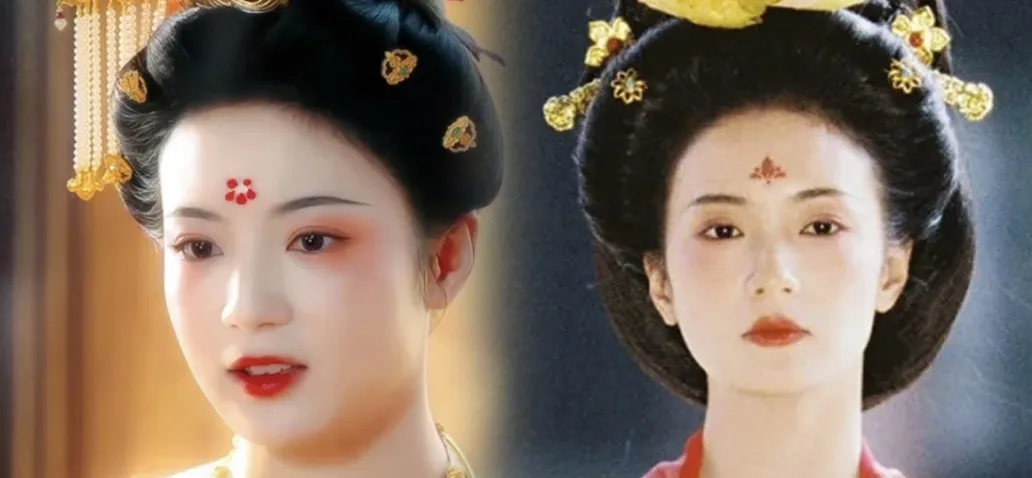
There was also a specially - designed “face - hugging” style in the Tang Dynasty. As the name suggests, it was the hair that clung to the cheeks. According to “New Book of Tang: Records of Five Elements”, “At the end of the Tang Dynasty, women in the capital combed their hair with their sideburns hugging their faces.” Nowadays, many people make similar wigs to lift the crown of the head, usually by padding the hair or creating various styles to form a shape where the hair hugs the face. Later, the padding added to the three parts of the cheeks was collectively called “face - hugging”.
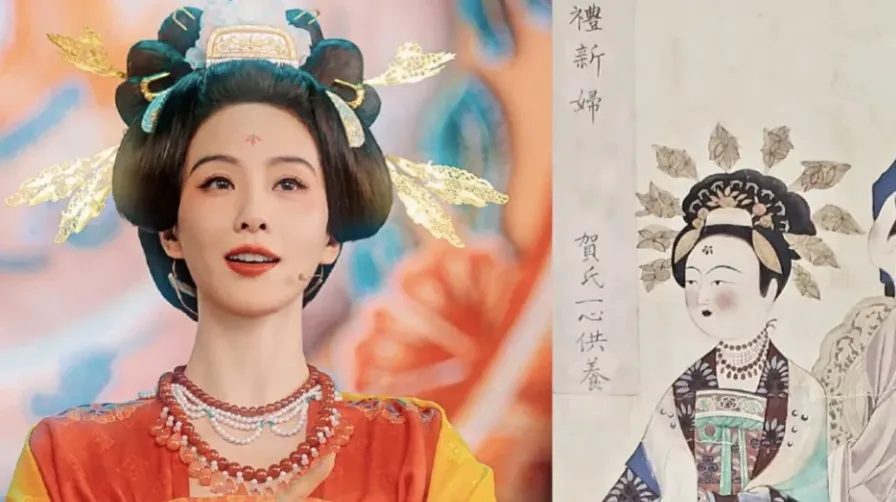
After reading this, are you more looking forward to the Tang Dynasty styles? I hope the new drama can continue the first part and keep spreading traditional Chinese clothing culture.
