
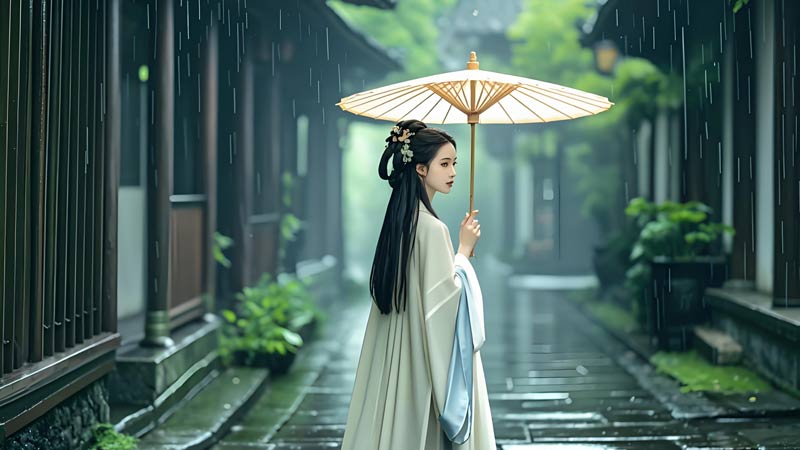
The scene seems lifted from a classical scroll: narrow lanes paved with slick bluestone, veiled in a fine, persistent drizzle. A figure glides through the mist, the graceful lines of a Hanfu robe flowing like ink wash across damp paper. Beneath the shelter of a traditional oil-paper umbrella, the intricate layers of silk and linen whisper against the ancient walls.
This is Jiangnan where the region's signature mist intertwines with the timeless elegance of traditional Han attire, creating moments where past and present dissolve into pure poetry. The delicate dance between fabric, rain, and architecture transforms the everyday into a living masterpiece, capturing an essence uniquely Chinese yet universally evocative.
Canvas in Motion
Jiangnan's rain possesses a particular quality—fine, persistent, softening the edges of whitewashed walls and black-tiled roofs. It’s within this atmospheric embrace that Hanfu finds a natural stage. The clean lines of a Song-style Beizi (褙子) jacket and pleated Sanjianqun (三裥裙) echo the minimalist beauty of the surrounding architecture. As the wearer moves, the hem skims the wet stones, the fabric absorbing the dampness, creating a visual echo of ink spreading on absorbent Xuan paper. This "aesthetics of dampness" becomes a photographer’s muse, raindrops beading on oil-paper umbrellas and skirts gaining weight with moisture, evoking a palpable sense of waiting—as if the sky itself holds its breath.
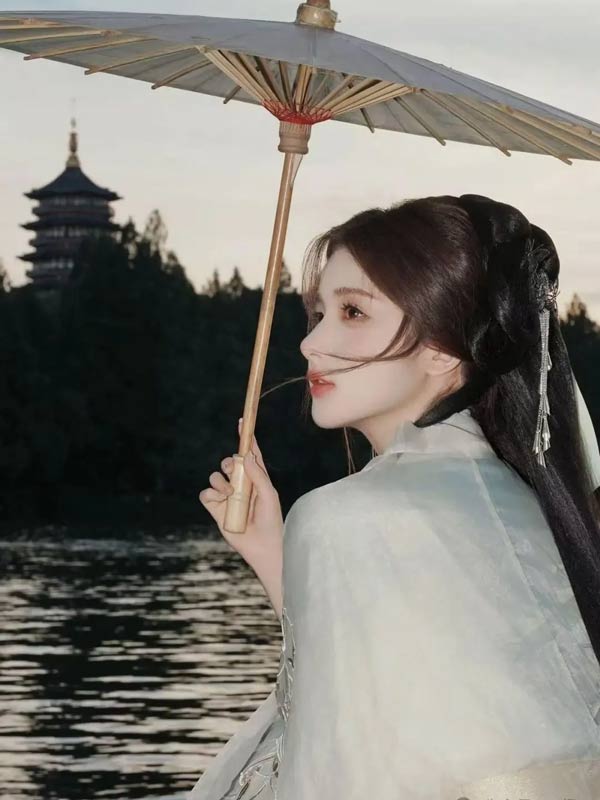
The oil-paper umbrella is far more than shelter. Crafted from bamboo ribs and treated paper or silk, its construction resonates with Hanfu's natural materials. Often adorned with hand-painted motifs like plum blossoms, orchids, bamboo, or chrysanthemums—symbols deeply rooted in literati culture—it completes the moving tableau. It frames the face, adds structure to the silhouette, and becomes an active element in the visual symphony of rain and silk. Together, garment, accessory, and environment compose a walking scroll painting, breathing life into the ancient waterways and alleys.
Sleeves That Sing
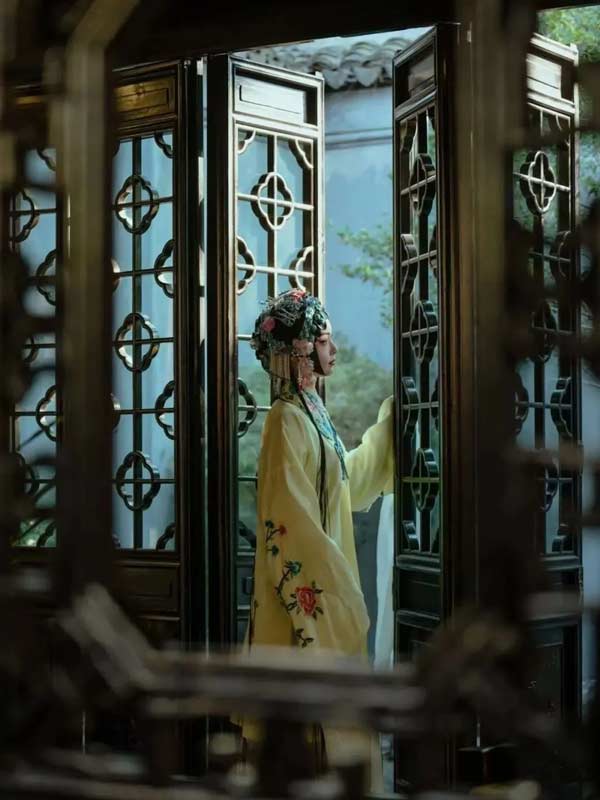
The grace of Hanfu extends beyond the street into the realm of performance, finding a profound connection with Kunqu Opera, one of China's oldest extant operatic traditions. The art of the water sleeve—where performers manipulate extraordinarily long, flowing white extensions—shares a direct lineage with the wide sleeves of many Hanfu styles. A flick of the wrist sends the sleeve unfurling like a wave; a subtle turn gathers it back. This "language of sleeves" transcends mere ornamentation, conveying emotion, status, and action, embodying the dynamic potential of fabric in motion—a kinetic poetry central to both stagecraft and the everyday elegance of Hanfu.
This artistic dialogue flows both ways. Kunqu costumes, renowned for their exquisite embroidery featuring intricate patterns like interlocking lotus vines and stylized clouds, have significantly influenced contemporary Hanfu design. Master artisans in Suzhou still practice the painstaking technique of splitting a single silk thread into 16 or more filaments to achieve breathtaking detail on pure silk grounds, recreating the splendour seen in costumes for classics like The Peony Pavilion. Today, along Suzhou’s historic Pingjiang Road (平江路), young enthusiasts don Hanfu and practice basic Kunqupostures and sleeve movements. In these moments, tradition sheds its museum-case stillness, becoming a vibrant, tangible art form lived and breathed.
Robes Among Rockeries
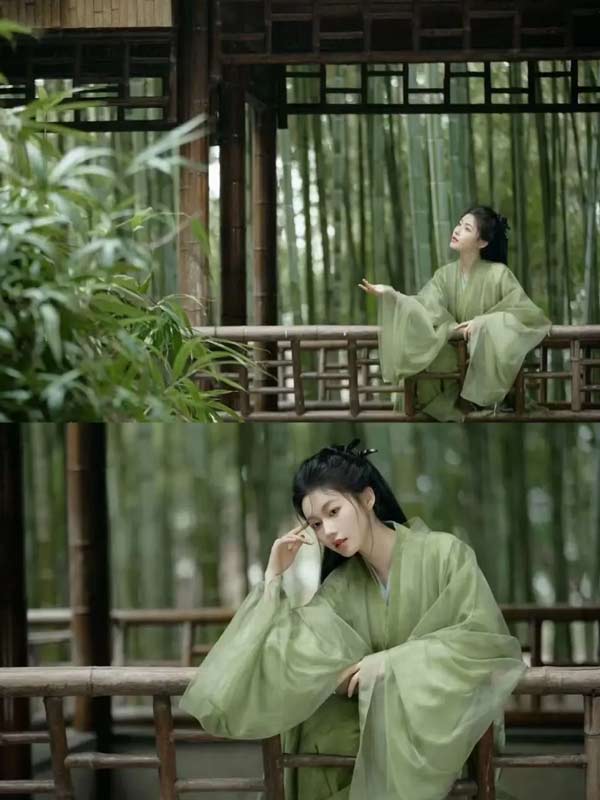
The meticulously crafted microcosms of Suzhou's classical gardens offer another exquisite stage for Hanfu. Designed as compressed landscapes embodying harmony between humanity and nature, their winding covered walkways, moon gates, and latticed windows create perfect, framed vignettes. The dignified lines of a Ming-style high-collar robe complement the structured wildness of miniature mountains and ponds. Standing before a scholar's rock or beside a koi-filled pool, the wearer becomes an integral part of the garden’s serene, philosophical composition—a living element within the "borrowed scenery."
The integration deepens during garden tea gatherings. Practitioners of traditional tea ceremony often choose Hanfu, finding resonance between the ritual’s meditative grace and the attire’s historical roots. As the tea whisk rhythmically beats the powdered tea into froth, sleeves are carefully gathered back. The resulting foam mirrors the delicate patterns embroidered on robes, echoing scenes of literati gatherings depicted in ancient paintings. This conscious recreation of past elegance fosters a profound connection to cultural heritage.
Recognizing this synergy, local teahouses and boutique hotels now offer specialized experiences like "Hanfu Garden Photography," capturing visitors at different times of day. As sunlight shifts across courtyards, filtering through latticework and dappling robes, the interplay of light, fabric, shadow, and architecture reveals new dimensions of both the garment and the garden's design philosophy. It’s a slow, contemplative appreciation of beauty unfolding hour by hour.
