In the luminous realm of historical television, costumes transcend mere aesthetics to become portals to ancient China. Among these, Hanfu—the traditional clothing system of the Han ethnic group—serves as both cultural anchor and artistic expression. Through meticulous craftsmanship and dynastic authenticity, series like Nirvana in Fire (琅琊榜), The Story of Minglan (知否知否应是绿肥红瘦), and The Longest Day in Chang’an (长安十二时辰) have ignited global fascination with this sartorial heritage. Beyond visual splendor, they decode social hierarchies, gender roles, and philosophical ideals stitched into every fold.
The Wei-Jin Spirit in Nirvana in Fire
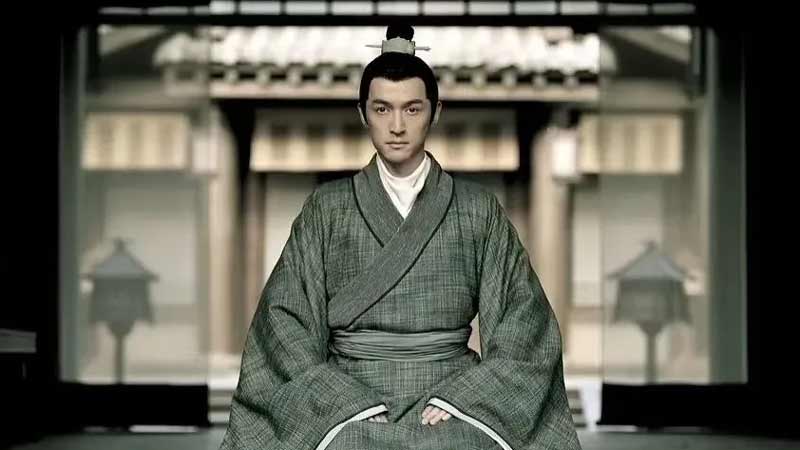
Nirvana in Fire channels the restrained ethos of the Northern and Southern Dynasties through its costumes. Unlike opulent Tang designs, its palette leans into muted ivories, inks, and azures—colors mirroring scholar-officials’ pursuit of humility. Protagonist Mei Changsu (梅长苏) epitomizes this philosophy: his unadorned ramie robes cascade like calligraphy strokes, while a jade pendant at his waist whispers Confucian integrity. Every drape rejects extravagance, echoing an era where intellect trumped ornamentation.
Contrast emerges in the warrior nobility. Nihuang (霓凰), commander of the Southern borders, wears tailored tunics with geometric embroidery—subtle yet sharp as her strategems. Her ensembles blend femininity with authority through structured shoulders and muted gold threadwork. Even crowd scenes reinforce this duality: scholars’ wide sleeves flutter like crane wings during debates, while soldiers’ practical hemp uniforms reflect wartime austerity.
The production’s genius lies in symbolic restraint. Scenes unfold against bamboo groves and ink-wash landscapes, where costumes harmonize with minimal sets. A single jade hairpin or woven belt becomes a narrative device—revealing rank, alliances, or hidden tensions without dialogue. This visual language proves Hanfu’s power lies not in grandeur, but in whispered elegance.
Song Refinement in The Story of Minglan
Set in the Song Dynasty—an era celebrating scholarly refinement—The Story of Minglan crafts costumes as soft as its heroine’s resilience. Minglan’s (明兰) daily wear features narrow-sleeved Ruqun (blouse-skirts) in hazy lotus pinks and duck egg blues. Layers of translucent silk mimic Song porcelain’s delicacy, while cross-collar jackets (Beizi) fastened with silk knots exemplify understated grace. Such designs mirror Confucian ideals: beauty through simplicity, dignity in modesty.
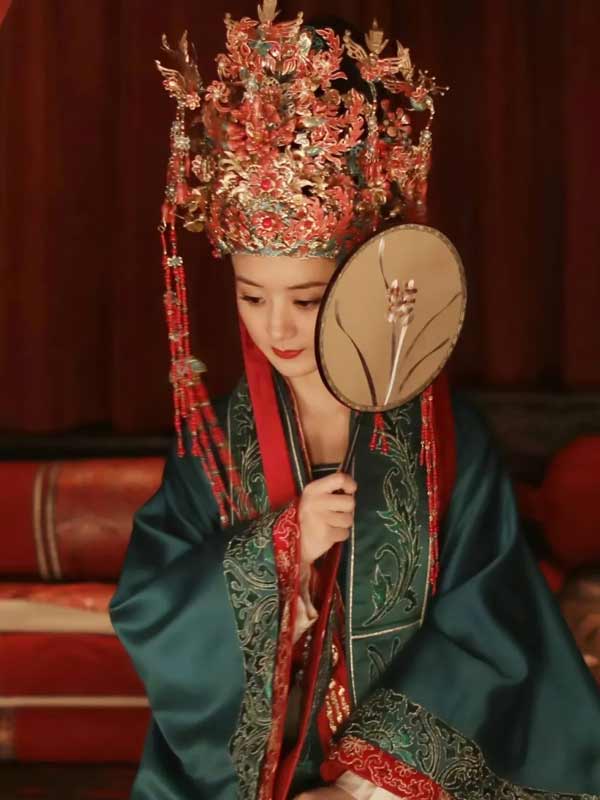
The series’ sartorial zenith unfolds in Minglan’s wedding. Defying modern red-dress tropes, she dons a green phoenix-embroidered robe over scarlet skirts—an authentic “green bride” custom symbolizing harmony with nature. Gold-threaded peonies bloom across her hem, each petal requiring 20 hours of hand-stitching. Yet this opulence stays grounded; even aristocrats’ brocades avoid Tang-era flamboyance, favoring geometric lattice patterns over mythical beasts.
Men’s attire similarly balances form and function. Officials’ round-collar robes of linen or cotton flow loosely, facilitating scholarly repose. Fabric textures—coarse for servants, finely ribbed for gentry—silently map social strata. When Minglan’s husband patrols farmlands, his mud-splattered hem telegraphs Song pragmatism: even silk must serve life’s rhythms.
Tang Opulence in The Longest Day in Chang’an
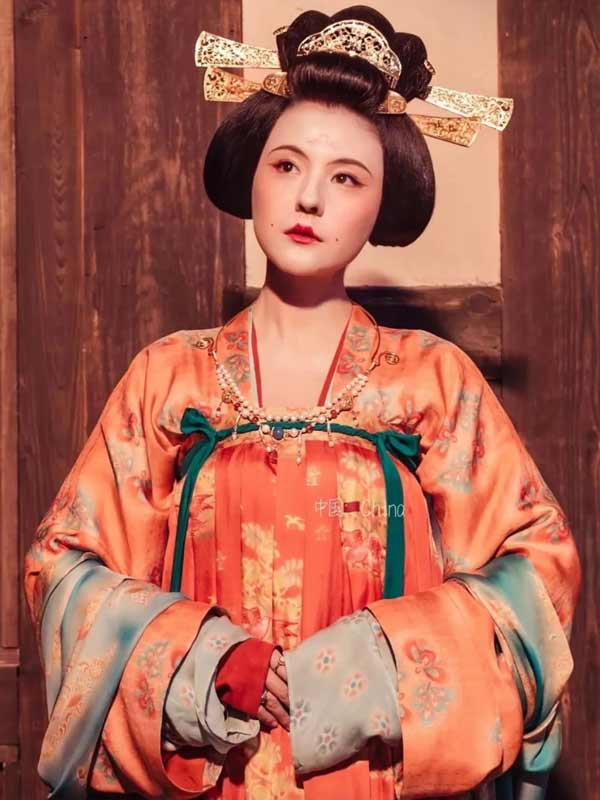
No dynasty celebrated splendor like the Tang—a truth The Longest Day in Chang’an amplifies through costumes bursting with technicolor audacity. Noble women’s high-waisted Qixiong Ruqun explode in saffron, emerald, and violet silks, their gauzy sleeves swirling like smoke. Gold-wire headdresses tower above faces painted with peony-shaped huadian (forehead dots), embodying an era where women’s confidence matched the empire’s expanse.
Masculine power parades through officials’ round-collar robes: crimson for high ranks, indigo for scholars, all ablaze with lion-medallion embroidery. Commoners’ earth-toned hemp garments anchor the spectacle—a deliberate hierarchy where color saturation equals status. Even fabric weights speak; silk brocades shimmer under Chang’an’s lanterns, while beggars’ frayed burlap dissolves into shadows.
The series weaponizes accessories as cultural code. Courtesans’ pearl-tasseled waist pendants swing with each step, their chimes echoing Tang musicality. Soldiers’ leather lamellar armor, studded with gilded rivets, merges Mongol practicality with Han artistry. In one market scene, a Persian merchant’s turquoise-trimmed cloak dialogues with Hanfu’s vermillion silks—a textile testament to Tang’s cosmopolitan soul.
As credits roll on these dramas, Hanfu emerges not as relic but living canvas. Each stitch resurrects philosophies: Wei-Jin restraint, Song harmony, Tang exuberance. They prove tradition isn’t frozen—it breathes through threads rewoven by modern visionaries. Which dynasty’s elegance speaks to you?