Article
搜索结果:
-
Chen Duling’s Phoenix Crown: Ming or Qing Style?
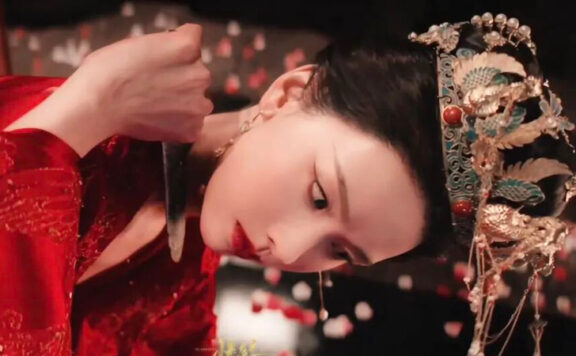
Has a simple costume detail ever sparked a heated debate about two great dynasties? Recently, actress Chen Duling (陈都灵) appeared in a promotional still from the upcoming drama Veil of Shadows (月鳞绮纪) wearing a magnificent phoenix crown. Fans immediately praised its antique elegance. But then came the question: is that headpiece from the Ming Dynasty (明朝) or the Qing Dynasty (清朝)? The answer is not as straightforward as you might think. While the two eras produced similar-looking crowns, their rules, shapes, and social meanings could not be more different. Let us break down what makes a Ming Feng Guan (凤冠, phoenix crown) different from a Qing one – and why Chen’s latest look leans heavily toward the later period. Spot the Difference The most obvious visual clue is coverage. A Ming phoenix crown is a full-wrap structure. It covers the entire top of the head like a helmet of jewels and feathers. In contrast, a Qing crown – especially from the mid-Qing onward – is often half-wrap, leaving the back or sides of the hair exposed. That said, some Qing examples are also full-wrap, particularly when they borrow elements from the Dian Zi (钿子, a hat-like hair foundation). But those… -
6 Stages of Takeout in Ancient China
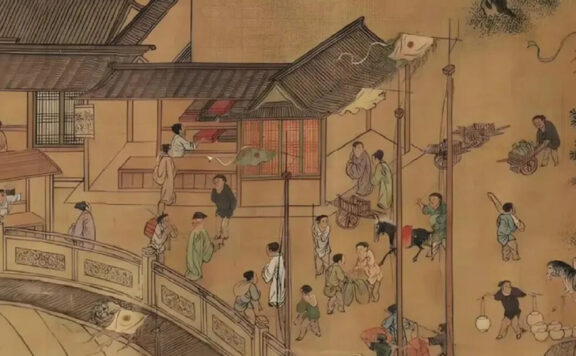
Before smartphones and delivery apps, you might think our ancestors had to cook every meal or dine out. But ancient Chinese people were already mastering the art of takeout—sometimes with more flair than we do today. From a quick bowl of meat soup in the Han Dynasty to a full-scale banquet arranged in hours during the Tang, and even professional runners who'd fetch your favorite snacks in the Song, the history of takeout is far older than you'd imagine. Let's time-travel and see how they did it, no Wi-Fi required. 1. Han Origins Two thousand years ago, during the Han Dynasty, a strange incident hinted at the birth of takeout. According to the Book of Han (汉书), a famine was ravaging the land. The usurper Wang Mang (王莽) asked his attendant Wang Ye (王业) about the people's condition. To make things look better than they were, Wang Ye went into the city, bought a serving of “Liang Fan Rou Geng (梁飰肉羹)”—a dish of rice and meat soup—and presented it to his boss, claiming even the starving peasants could afford such food. That might be the earliest recorded “takeout” in Chinese history. Fast forward to Emperor Huan's reign in the late… -
6 Spring Joys for Tang Women Without WiFi
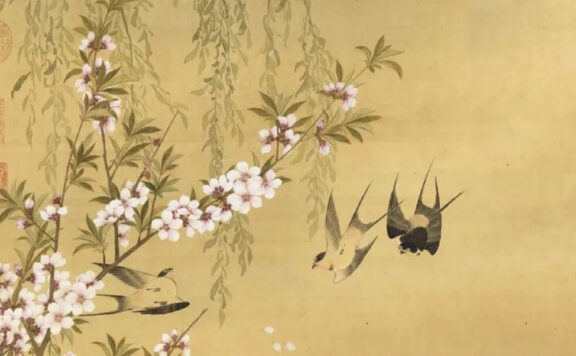
Before smartphones and roller coasters, how did the Chinese enjoy spring? The answer might surprise you. They didn't just go outside—they turned every breeze, blade of grass, and blooming flower into a ritual of joy. From riverbank parties that produced masterpieces to kite-flying that cleansed the soul, ancient spring was anything but boring. Let's step into their world and see why they laughed louder, played harder, and lived more poetically than we ever do with our screens. 1. Riverbank Outing On the third day of the third lunar month, the Shangsi Festival (上巳节), everyone in Chang'an (长安) headed to the water. Du Fu (杜甫) captured it in his poem Beautiful People Walk (丽人行): “The air is fresh, and by the river, lovely ladies gather.” But this wasn't a simple walk in the park. People bathed in the river to wash away bad luck, then picnicked on the grass. Nobles and commoners alike wore new clothes and carried food boxes filled with spring treats. The real fun was Qushui Liushang (曲水流觞)—placing wine cups on a winding stream. Wherever a cup stopped, that person had to recite a poem. Fail? Drink three cups as punishment. During one such party in Shaoxing (绍兴),… -
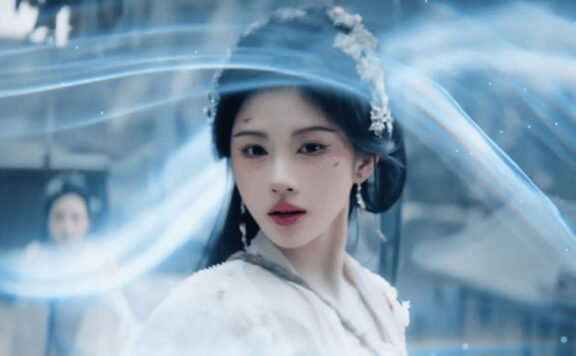
Veil of Shadows: Ji Ling’s Wooden Truth
In the fantasy world of Veil of Shadows (月鳞绮纪), a young fox spirit named Lu Wuyi (露芜衣) thinks she has found her fated love. Sent by the Fox King from Wuxiang (无相) Moon Hall, she must get close to a boy called Ji Ling (寄灵) at Luoyan Wei (洛安韦) Mansion. He is a cheerful young mage from the Shilin(侍鳞) Sect, always carrying a cloth doll. But when she sneaks into the sect after he gets hurt, she sees something terrible. Ji Ling dies in front of her. He turns into a wooden puppet. Her destined person was never real. So who is he? And what does this mean for her? The Puppet's Heart Ji Ling is not a normal boy. He laughs easily, loves giving flowers, and knows how to cheer someone up. When Lu Wuyi feels sad, he tells her to make a circle with her hands and look through it to see something beautiful. She feels a strange connection, as if they met years ago when she saved a little fox at the foot of a mountain. But that memory is not really his. It belongs to someone else. The truth is cruel. Ji Ling has no heartbeat… -
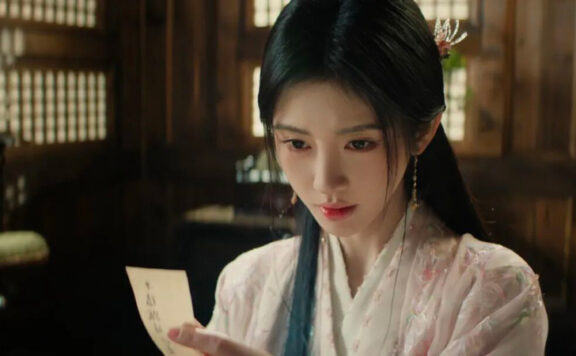
Did Xiaowei Betray Lu Wuyi in Veil of Shadows?
In episode 3 of the hit drama Veil of Shadows (月鳞绮纪), Lu Wuyi (露芜衣) follows a mysterious note to a weaving workshop. The moment she steps inside, a deadly formation traps her. Forced to reveal her true fox spirit form, her identity—along with her companion Wu Wangyan’s (雾妄言)—is blown. All their previous efforts to blend in become worthless. The one who lured her there? Xiaowei. But here’s the puzzle: Xiaowei and Lu Wuyi both belong to the same shadowy group, Wu Xiang Yue (无相月). According to Wu Wangyan, members of Wu Xiang Yue share deep emotional bonds. So why would Xiaowei set up her own ally? The answer isn’t betrayal. It’s something far bigger—a secret buried in the script that changes everything. 1. A Stranger Among Fox Spirits Let’s start with what the drama makes clear: Xiaowei is actually the disguised form of Liu Weixue (柳为雪). When Wu Wangyan first uses her word magic on the jade curtain, she instantly recognizes Xiaowei. But here’s the catch—Xiaowei shows no recognition of Lu Wuyi. If they were old friends from Wu Xiang Yue, why would she harm her? The most logical explanation is simple: Xiaowei has never met Lu Wuyi before. Wu… -
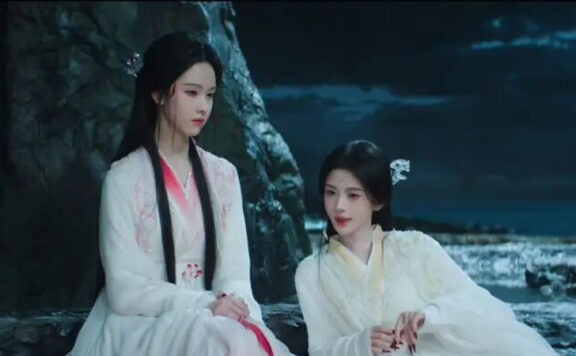
Veil of Shadows: Why She Betrayed Wu Xiang Yue
A nightmare shatters the fragile peace between two sisters. Veil of Shadows (月鳞绮纪), starring Ju Jingyi (鞠婧祎) and Chen Duling (陈都灵), has become a massive hit, breaking viewership records within 52 hours. The story follows Lu Wuyi (露芜衣) and Wu Wangyan (雾妄言), two fox spirits serving Wu Xiang Yue (无相月). They are beautiful, dangerous, and bound by centuries of shared duty. But a dark task—to kill the Dragon God—reveals a crack in their loyalty. Wu Wangyan has already betrayed them. Why? The answer hides inside a single, terrifying dream. That dream shows not glory, but horror: bodies piled high, blood soaking ancient battlefields. And in that dream, one of them weeps. This is not a tale of simple good versus evil. It is about women trapped in a system that forces them to kill, and what happens when one decides she can no longer obey. A Dream of Blood and Tears After finishing a mission involving Xiaowei (小唯), Lu Wuyi and Wu Wangyan return to Wu Xiang Yue. One night, Lu Wuyi has a powerful nightmare. She sees herself and her sister across different eras—wearing a Warring States robe, then Tang dynasty clothing. In every scene, they stand among corpses.… -
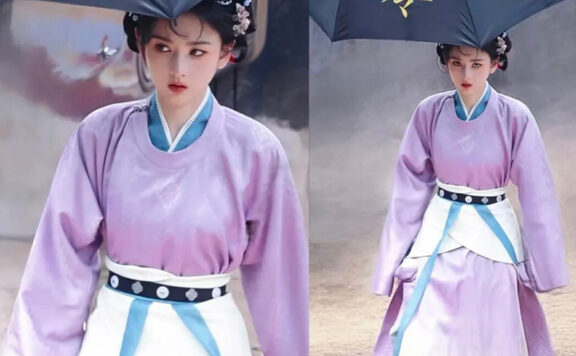
The Unisex Story of Yuan Ling Pao
Is a round-collar robe strictly male attire? That question recently sparked heated debate online after someone noticed ancient Chinese paintings showing women in what looked like men's clothing. The short answer? History is full of surprises. While the Yuan Ling Pao (圆领袍) did start as a male garment, Tang dynasty women boldly borrowed it—and looked fantastic doing so. From palace ladies to noble wives, they strapped on leather belts, tucked up their hair, and rode out in robes that once belonged exclusively to emperors and officials. This wasn't a freak accident of fashion. It was a cultural storm where openness, nomadic influence, and pure practicality collided. So no, women didn't just "get away with" wearing men's clothes. They made the robe their own, leaving us with a fascinating lesson in how gender and clothing have always been more fluid than we think. Male Origins The Yuan Ling Pao came from northern nomadic tribes. During the Wei, Jin, and Northern and Southern dynasties, it drifted south with migrating peoples. By Sui and Tang times, it had become the go-to daily formal wear for men. Picture a round collar, narrow sleeves, a long hem—paired with a Futou (幞头) headwrap, a Diexie belt… -
Why The Longest Day in Chang'an's Hanfu Inspires
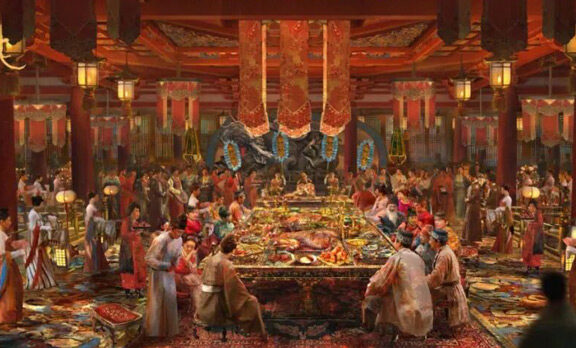
Scroll through any Chinese historical drama today, and you will spot a strange mix: flowing silks that belong on a fantasy poster, collars copied from European ballgowns, and colors that scream modern dye vats. Audiences have grown tired of this mess. Yet one drama, The Longest Day in Chang'an (长安十二时辰), which dropped several years ago, still stands as a quiet masterclass. Set in the Tang dynasty's capital Chang'an, it did not just tell a thrilling story about a plot to destroy the city. It showed us what happens when a production team actually studies Hanfu—the traditional clothing of the Han Chinese. The colors alone were a revelation: rich reds, deep blues, earthy yellows, pure whites, and blacks. These five primary hues, sometimes brightened with accents, formed the backbone of ancient Chinese dressing. And The Longest Day in Chang'an used them with care, not as decoration but as storytelling. Here is a look at three periods of Hanfu restoration that this drama—and a few others—have quietly championed, starting with the Wei-Jin era. Wei-Jin (魏晋) The Wei-Jin period inherited much from the Qin and Han dynasties that came before. But it also absorbed elements from nomadic cultures, creating a unique hybrid. Women… -
Xiu He Fu: A Modern Wedding Icon
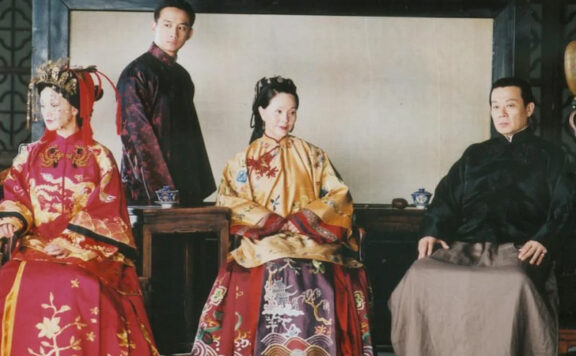
Walk into any Chinese wedding dress shop, and you will see rows of dazzling red gowns. The shop assistant will likely point you toward a style called Xiu He Fu (秀禾服). Brides love it. Celebrities have worn it. You might assume it is China’s ancient traditional wedding attire. But here is the truth: that gown has almost nothing to do with tradition. It was born on a TV set, designed for a tragic character in a sad drama. And its name comes directly from that fictional woman. So why do millions of people now call it “traditional”? Let us peel back the red silk and look underneath. The Accidental Icon In the early 2000s, a television drama called Orange is Red (橘子红了) swept across China. It told the story of Xiu He, a young woman trapped in a feudal marriage. She suffered, she obeyed, and she became a symbol of countless unhappy women from China’s past. Her costume designer was Ye Jintai (叶锦添). He looked at late Qing (清) dynasty clothing, then added his own modern touches. He created a single outfit for a single character. It was never meant to be a wedding dress for real people. But the… -
Comfortable Hanfu Fabric Guide
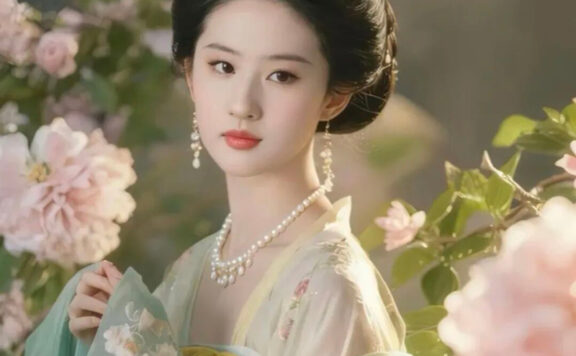
Does your Hanfu look stunning but feel like a straightjacket? You are not alone. Too many wearers sacrifice comfort for beauty, not realizing that the right fabric actually enhances both the look and the feel. Think of The Story of Ming Lan—when Ming Lan (明兰) walks through the summer heat of Kaifeng (开封), she would never choose a stiff, sweaty silk. Instead, she would know exactly which material breathes, which drapes, and which survives a busy day. This guide skips the fluff and gives you straight answers: how to pick fabrics for every season, what works for tops versus skirts, and the real strengths and quirks of chiffon, cotton, linen, synthetics, and silk. No vague “cultural significance” here—just practical tips so your Hanfu feels as good as it looks. 1. Seasonal Fabric Selection for Hanfu Spring: Jacquard cotton, silklike fabric, chemical fiber, etc. Summer: Chiffon, real silk, gauze, leno fabric, etc. Autumn: Cotton and linen, cupro, corduroy. Winter: Woolen fabric, coral fleece, etc. 2. Slight Differences Between Tops and Skirts Tops: Soft and skinfriendly fabrics are required for closefitting styles. For nonclosefitting styles, structured, wellshaped or moderately thick materials can be chosen. Skirts: Fabrics with good drape are preferred. They… -
No Stand-in for the General in Love Beyond the Grace
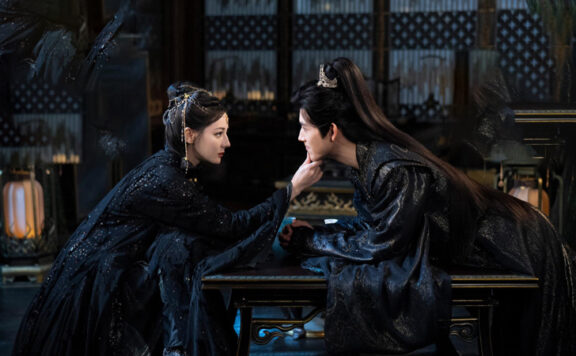
In the Chinese drama Love Beyond the Grace (白日提灯), a four-hundred-year-old spirit master without sight, sound, taste, touch, or smell meets a young general who carries her aunt’s legendary sword. She pretends to be a helpless orphan to get close to him, but every clue makes her doubt: Is this man truly who he says he is, or just a clever replacement? When a magical pearl suddenly glows on a frozen battlefield, she finally learns the shocking truth — the fox-like general standing beside her was never a stand-in. His painful past, hidden scars, and stolen childhood all point to one answer: he is the real Duan Xu (段胥), and her lonely world will never be the same. The Glowing Pearl In the bitter cold of Shuo Zhou (蒴州), He Simu (贺思慕) watches as Duan Xu leads his Tabai (踏白) Army against the northern rebels. Outnumbered, they plan to blow up the frozen Guan (关) River. She predicts a warm spell that will melt the ice, drowning the enemy’s path. But a spy leaks the plan, and both armies rush to cross first. The river becomes a bloody mess of clashing steel and dying men. He Simu, invisible as the… -
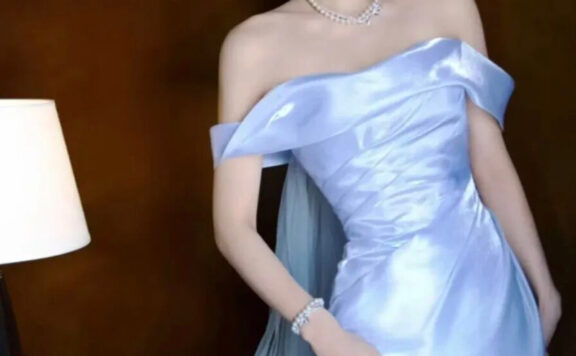
Yao Anna’s Floating Light Brocade Myth
Did a Tang dynasty novel trick millions into believing in a mythical million-dollar fabric? Recently, Chinese social media exploded over actress Yao Anna’s (姚安娜) red carpet gown. Bloggers claimed it was made of “Floating Light Brocade” – an ancient, non-heritage silk supposedly worth over ten thousand yuan per meter. The same material appears in hit period dramas like Empresses in the Palace (甄嬛传) and Legend of Zang Hai (藏海传), where concubines fight for it as a symbol of ultimate luxury. But here’s the twist: this so-called lost treasure might never have existed. The only historical record comes from a 9th-century novel filled with ghosts and exotic tributes. And that novel contains a glaring chronological error – a dead kingdom that couldn’t have sent any tribute. So what is Floating Light Brocade? A real fabric, a literary invention, or a modern marketing scam? Let’s unravel the threads. The Literary Origin It all begins with Du Yang Za Bian (杜阳杂编) during the late Tang dynasty. This book mixes historical anecdotes with outright fantasy – talking mirrors, immortal herbs, and tributes from mythical lands. One entry describes how the Gaochang (高昌) Kingdom presented Emperor Jingzong (敬宗) with a robe made of “Floating Light… -
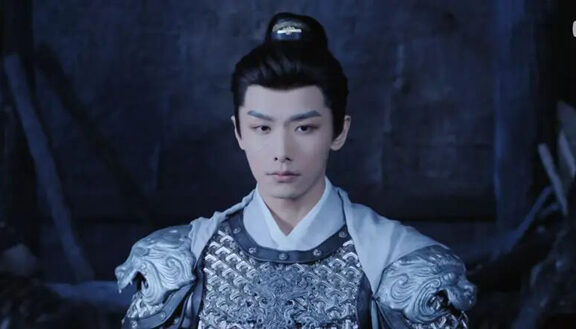
The Real Mole of Tian Zhixiao in Love Beyond the Grace
In the first five episodes of Love Beyond the Grace (白日提灯), the audience is thrown into a web of suspicion. Who is the spy leaking military secrets from inside the Da Liang (大梁) army? Most viewers point fingers at Han Lingqiu (韩令秋), a man of Bei Chong (北崇) origin. But they are wrong. The real traitor is not the outsider you fear. It is the wealthy merchant you trust. This is the story of a mask so perfect that even the spy himself forgot his own face. The Wrong Suspect After Duan Xu (段胥) captures Shuo Zhou (蒴州), he sends for He Simu (贺思慕). On the road, Bei Chong troops ambush her. Later, the army’s grain stores burn. A plan to blow up the Guan River reaches the enemy before the fuse is lit. Every sign points to a mole inside Da Liang. And Han Lingqiu looks guilty from his first scene. He arrives in Liang Zhou (椋州) a full day before the main force. He watches a prisoner take her own life without stopping her. On the battlefield, he sees a red bird shot down and whispers a Bei Chong proverb: “When the red bird comes, all living things… -
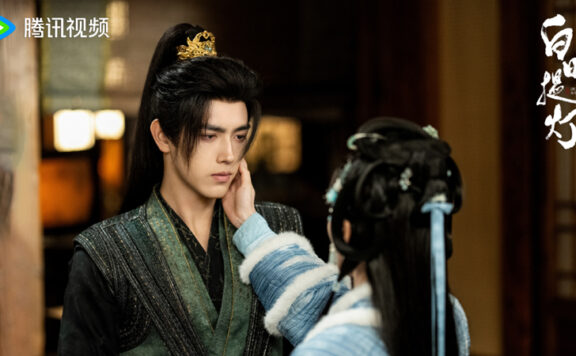
Love Beyond the Grace: Duan Xu’s Double Life
Was Duan Xu (段胥) a fake all along? In the new fantasy drama Love Beyond the Grace (白日提灯), a gentle-mannered general from a prestigious scholar family speaks perfect Bei Chong (北崇) dialect and defeats battle-hardened warriors with three moves. The evidence points to an imposter. But the truth, hidden in a childhood kidnapping and a secret death squad, is far more twisted. This is not a story of simple deception. It is a story of survival, identity, and a man who rebuilt himself from ashes. The Wrong General He meets her in a pool of blood. After the massacre of Liang Zhou (凉州), He Simu (贺思慕), the ghost king, wears the body of a fragile girl. Duan Xu rides a white horse, wears silver armor, and hands her a handkerchief. Polite. Gentle. But she only stares at the sword at his waist. That blade, called Po Wang Jian (破妄剑), was forged by her uncle three centuries ago. No ordinary man can wield it. Duan Xu has no spiritual power, yet the sword obeys him. She orders an investigation. The file says he comes from a family of Hanlin (翰林) Academician, three generations of imperial tutors. He never learned martial arts.… -
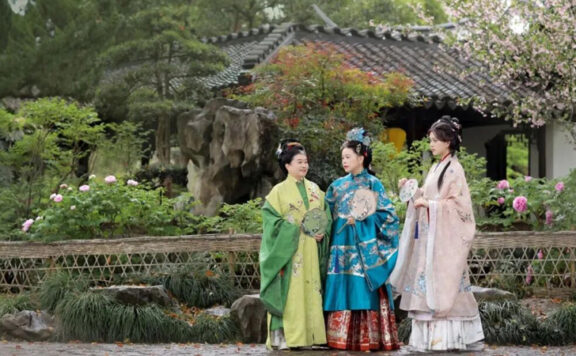
Silver-Haired Hanfu Stars
Who Says Tradition Belongs to the Young? Meet the 70-Year-Old Icons of Hanfu When you assume that Guochao (国潮), or Chinese national trend, is the exclusive domain of the young, a group of grandmothers with an average age of 70 has quietly become the real trendsetters. As the cultural tourism season ignites this spring, a recent festival spanning 12 major venues across 10 cities showcased a booming industry where Hanfu sales surged over 25% year-on-year. With over 7,000 related enterprises, the market has crossed the 20-billion-yuan threshold. Yet, beyond these impressive figures lies a more compelling landscape—one etched into the very wrinkles on the faces of these women. They are redefining what it means to be an icon, proving that true style is not about chasing youth but about embodying a timeless spirit. The Real Icons The true standard-bearers of Chinese tradition are not found in live-streaming studios; they are found in the serene smiles of a 70-year-old. While younger enthusiasts debate whether a particular garment is slimming, these silver-haired women simply drape themselves in elegant attire and walk with measured steps along ancient stone-paved streets. Their faces bear the gentle marks of time, their eyes hold a calm earned… -
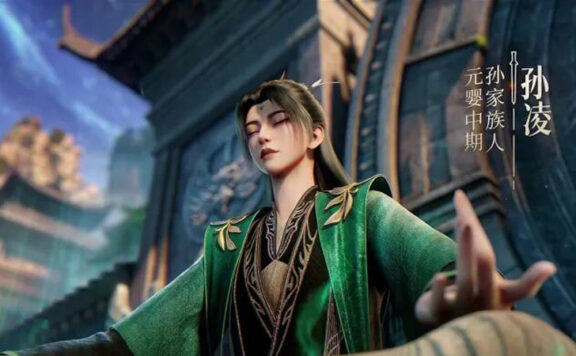
Renegade Immortal: Why Sun Ling Touched Wang Lin
When a Stern Lecture Becomes a Lifeline? How One Woman’s ‘Wasted’ Concern Saved Renegade Immortal’s (仙逆) Wang Lin (王林) on Ran Yun Star (冉云星) In the brutal cultivation world of Renegade Immortal, where every stranger hides a blade behind their smile, Wang Lin has learned to trust no one. His journey is a trail of blood and betrayal. So when he arrives on Ran Yun Star, a seemingly unremarkable planet, he expects more of the same. What he finds instead is a woman who treats him not as a threat or a tool, but as a disappointing student. Her scolding, born not from malice but from a genuine sense of wasted potential, strikes a chord deeper than any enemy’s attack ever could. It is in this unexpected, almost mundane interaction that the story reveals its most human moment, proving that in a universe of gods and demons, the simple, uncorrupted kindness of a stranger can be the most profound weapon of all. A Scolding from the Heart Sun Ling (孙凌) is not a powerful figure. She is a dedicated but perpetually stuck Nascent Soul cultivator, toiling away in the vast Sun family on Ran Yun Star. To her, the new… -
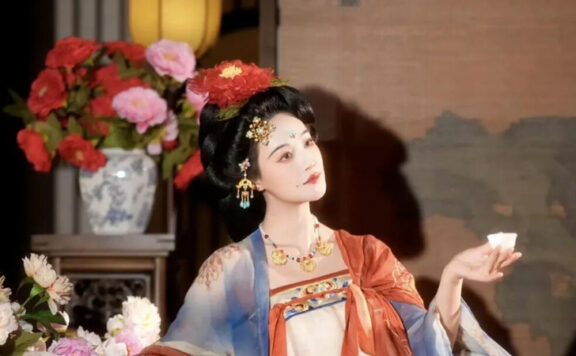
Lan Yingying Wows in Tang & Ming Style Hanfu
What if a single actress could show you, in two photographs, the entire emotional shift of a civilization? This morning, the internet was captivated by Lan Yingying (蓝盈莹) in two sets of Hanfu. One image placed her in the unrestrained, wine-drunk alleys of Tang Dynasty Chang’an; the next, she was a formidable lady of a Ming Dynasty manor, her posture radiating quiet power. It wasn’t just about the clothing. It was a masterclass in how fabric, color, and silhouette can define the very soul of an era. Looking at her, you understand why the aesthetic wisdom of our ancestors remains an untouchable, living legacy—one that has never, and will never, lose its relevance. The Tang in a Sleeve In the first image, Lan Yingying becomes a figure plucked directly from a painting—specifically, Court Ladies Adorning Their Hair with Flowers (簪花仕女图). She wears a gradient robe of blue and red, the wide sleeves of the Da Xiu Shan (大袖衫) paired with a chest-high Qixiong Ruqun (齐胸襦裙). A large peony is pinned in her hair, a delicate Hua Dian (花钿) adorns her forehead, and she holds a small wine cup. It is an image of pure, unbothered opulence. You can almost hear… -
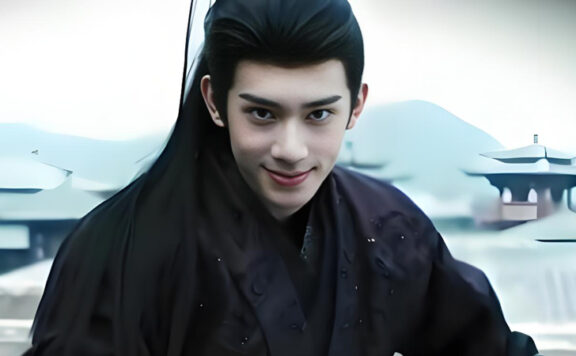
Pursuit of Jade: Sui Yuanqing’s Tragic Curse
Shadow of a Ghost: Why Did a Monster Choose Death to Prove His One Truth in Pursuit of Jade (逐玉)? In the brutal world of Pursuit of Jade, villainy often wears a mask of pure ambition. Yet, the final arc of Sui Yuanqing (随元青) forces us to look beyond the bloodshed. He is introduced as a monster who massacred a town and his own kin. However, his final act—offering his own head as a bargaining chip to save the woman he claimed to never love—paints a far more tragic picture. It is in this brutal end that we find the question haunting his existence: was he born evil, or was he engineered into a weapon destined to shatter? His life was not his own; it was a pale imitation dictated by four suffocating words: the "Little Marquis of Wu'an (武安)." The Heart of a Demon, The Tears of a Man To call Sui Yuanqing a demon is to state the obvious. His hands were stained with the blood of Lin'an (林安) Town and his cousin’s family. Yet, within this brutal framework, the drama reveals cracks of humanity. He spares Qi Min (齐旻), knowing full well the man is not his… -
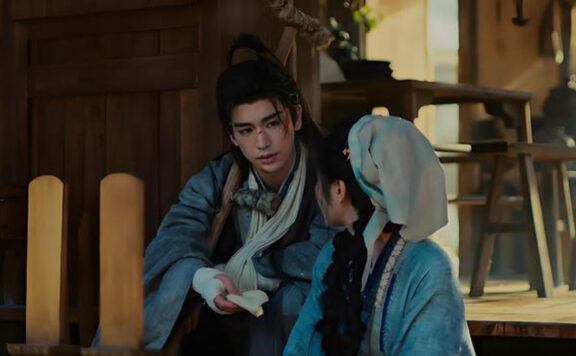
The Unspoken Truth of Wei Qilin in Pursuit of Jade
In the midst of a battlefield confrontation, a young woman’s blade reveals a past her family tried to bury. She discovers her father is not the humble butcher she remembers, but the most hated man in the empire—a traitor accused of causing the deaths of thousands. The truth, however, is buried under layers of royal conspiracy, a forbidden love, and a desperate sacrifice. The question that haunts her is one that cuts to the heart of power itself: who truly decides what makes a villain, and how many must suffer to protect that lie? A Butcher’s Daughter, A Traitor’s Blade The clash of steel on the battlefield brought more than the threat of death to Fan Changyu (樊长玉). When the Prince of Changxin (长信) recognized the style of her blade, he didn’t see a soldier; he saw a legacy. He spoke of the Wei brothers and named a man she knew only from childhood rhymes: Wei Qilin (魏祁林), the great traitor. In that moment, her world fractured. The loving father who taught her to fight, the honest butcher who never cheated a customer, was the very villain whose name was used to scare children. Her father was Wei Qilin. Her… -
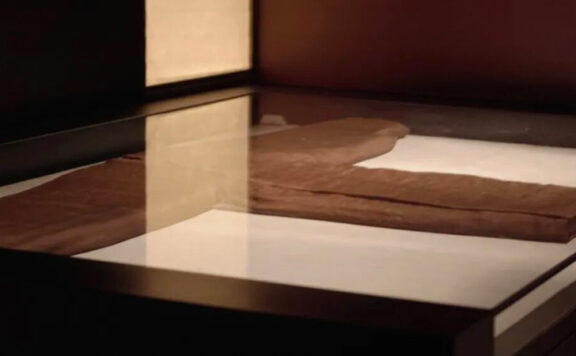
The Giant Chu Robe of Hubei Museum
Hubei Provincial Museum houses an artifact that routinely stops visitors in their tracks. They gather around a display case, craning their necks, and the question inevitably arises: was this colossal piece of textile a garment for a giant, or did someone mistakenly place a quilt in the ancient textiles exhibit? This initial confusion is the perfect entry point into a story about a garment that challenges our modern assumptions about clothing, scale, and the very philosophy of how fabric interacts with the human form. This is not a blanket but a robe—a reconstructed masterpiece known as the Small Diamond Pattern Brocade Cotton-Padded Robe. Its dimensions are staggering: a length of 200 centimeters and a sleeve span of 345 centimeters. For context, a standard single-size quilt in a modern home is roughly 150 by 200 centimeters. This robe, meant to be worn, is larger than the bedding we sleep under. It’s a relic from the Mashan Chu Tomb (马山楚墓), where it served as the outermost and largest garment for its occupant. More than just a conversation starter about size, it acts as a breathtaking canvas showcasing the intricate diamond-weave patterns and the luminous quality of pre-Qin dynasty silk craftsmanship. An Ingenious…