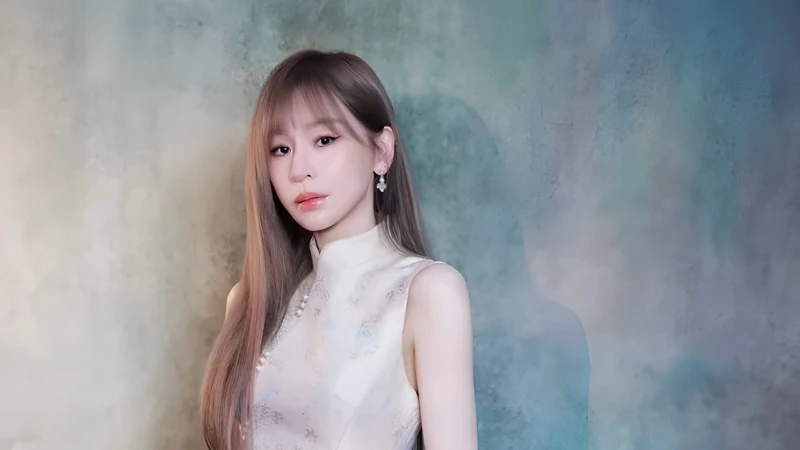
Cyndi Wang has long been dubbed Taiwan’s “Sweetheart” for her bubblegum pop hits and girl-next-door charm. But a recent set of photos has shattered that simplistic label, revealing a depth and sophistication that has left fans and fashion critics utterly speechless. Dressed in an exquisite cream-colored floral-patterned cheongsam, she isn’t just wearing a dress; she is embodying a mood, a moment of serene elegance. This look isn’t just beautiful—it feels like a quiet declaration of a new artistic chapter, one steeped in the lyrical beauty of Eastern aesthetics.
The Dress: A Modern Classic
The centerpiece of this stunning visual is undoubtedly the modernized Qipao. It moves away from the traditional form-fitting silhouette with a modern, flowing skirt that adds a touch of whimsy and grace. The cream brocade fabric itself is a character, its subtle sheen catching the light with her every movement. But the real magic lies in the details: delicate patterns of birds and flowers in soft blues and silvers are woven into the material. They don’t shout for attention; instead, they whisper stories of classical Chinese art, creating a look that is both deeply traditional and refreshingly contemporary.
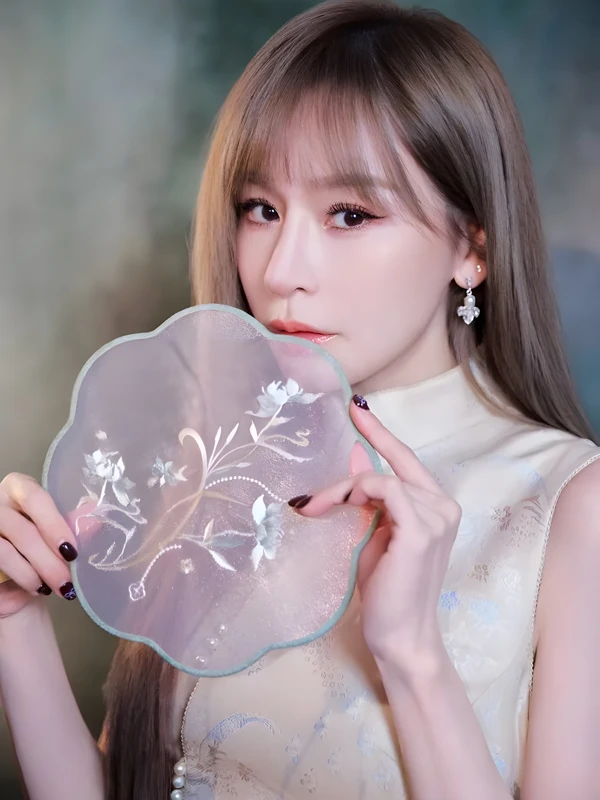
The styling choices around the dress are a masterclass in restraint. She accessorizes with simple, elegant drop earrings that catch the light without competing with the intricate fabric. Her long, straight hair falls naturally, a soft frame for her luminous, barely-there makeup that enhances her natural features. Posed against a backdrop of ink-wash paintings and red berries, the entire image is one of harmony. It is a perfect balance between the warmth of her established sweet image and the poised sophistication of a mature artist.
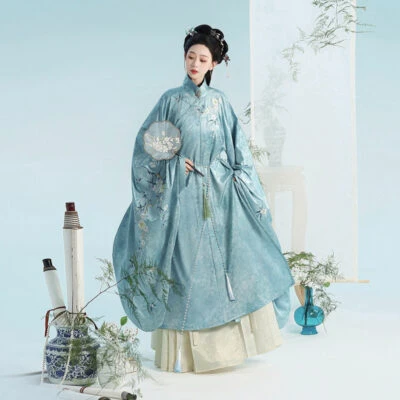
This breathtaking appearance is more than just a successful photoshoot; it’s a perfect example of a larger cultural current. We are witnessing a powerful renaissance of Eastern aesthetics in modern fashion. Designers are increasingly looking to their heritage, not to simply copy the past, but to innovate. They are deconstructing and reimagining elements like the Qipao and Hanfu, blending them with contemporary cuts and fabrics to create something entirely new. It is a style that resonates deeply, offering a way to wear one’s culture with pride while looking firmly towards the future.
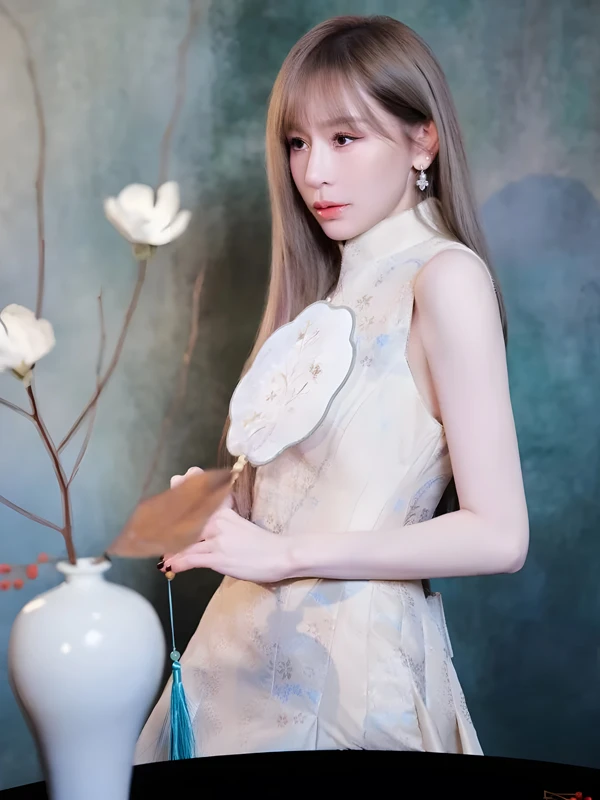
Wang’s interpretation of this trend is particularly potent. She isn’t just wearing the clothes; her decades-long career, marked by a consistently warm and positive public image, gives the look an added layer of authenticity. The woman in the cream Qipao is not a different person from the girl who sang “Love You” (Ai Ni); she is her, evolved. She demonstrates that the sweetness of youth can naturally mature into the elegance of womanhood without being lost. It’s a powerful visual statement that one can be both sweet and sophisticated, both modern and deeply connected to tradition.
The Art of Aging
Perhaps the most compelling aspect of this new image is what it reveals about Wang herself. At 42, she has navigated the treacherous waters of the entertainment industry with a grace that is becoming increasingly visible. This is not the frantic energy of a starlet chasing the spotlight. It is the calm, grounded confidence of an artist who has made peace with time and with herself. Her look isn’t an attempt to freeze time, but to move with it gracefully, trading the high-energy appeal of youth for the quiet power of self-possession. This shift is her true “secret” to remaining eternally relevant.
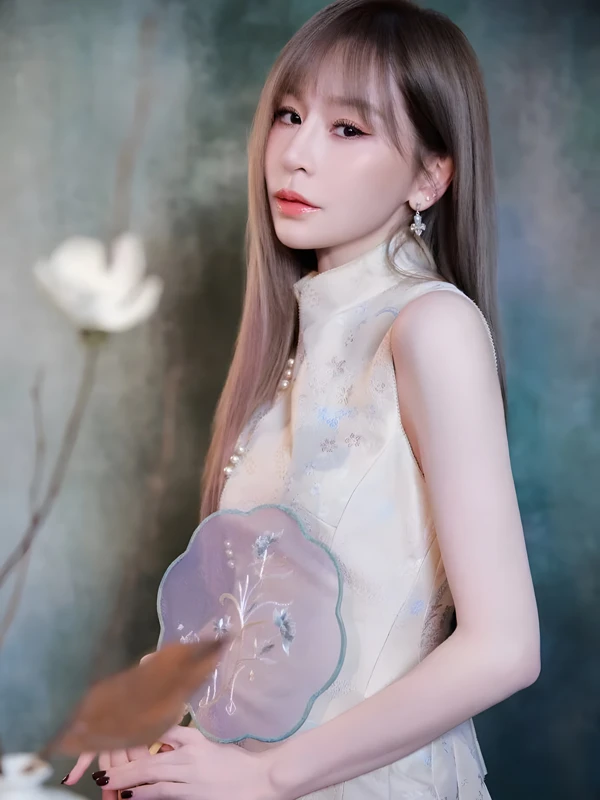
The online reaction has been a chorus of awe. Comments like “a fairy who walked out of a painting” and “this is her best look of the year” flood social media. Fashion bloggers are dissecting the look, praising its seamless fusion of old and new. But beyond the compliments, there’s a feeling of genuine admiration. She reminds us that style is not just about the clothes, but about the person wearing them. Her look is a masterclass in personal branding—a testament to the fact that true elegance comes from owning your story, your heritage, and your age, and presenting them to the world not as a defense, but as a gift.