As the Lunar New Year approaches, a familiar anxiety creeps into the hearts of millions living away from their hometowns: Is it okay to go back if you haven’t “made it”? This poignant question is at the very core of “Worshiping the Ancestors,” the seventh episode of the acclaimed animated series Yao-Chinese Folktales 2 (中国奇谭2).
Released just before the holiday, the story arrives like a mirror held up to the soul of every wanderer, reflecting our deepest insecurities about success, family, and belonging. It moves beyond a simple tale of returning home, using elements of fantasy to dismantle the very pressures that keep us away.
The Weight of “Face” and the Loneliness of the City
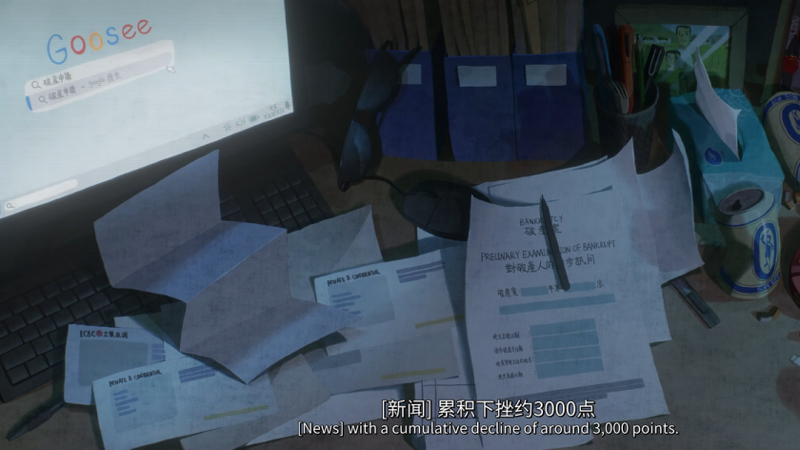
The episode introduces us to A Yuan (阿远), a young man adrift in Hong Kong. His reality is a montage of modern urban despair: instant noodles for dinner, a blaring TV reporting a crashing stock market, and a desk cluttered with bankruptcy papers. He is the embodiment of the “struggling drifter.” When his father calls to invite him home for the ancestral rites, A Yuan’s instinct is to refuse. He is ashamed, believing his failure is a visible stain that everyone back home will see. This fear is so powerful that it overrides the simple desire to see his family.
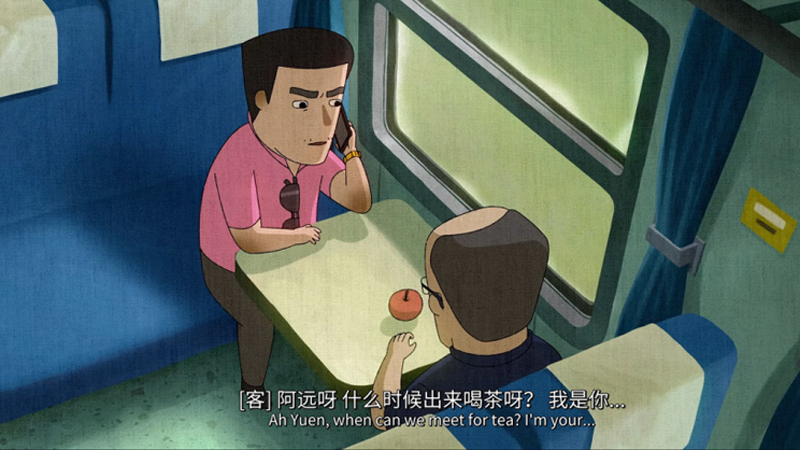
Yet, on the train home, A Yuan wears a mask of success. He is dressed sharply, a stark contrast to the unkempt man in his tiny Hong Kong flat. This duality is a performance, a costume for the gaze of his hometown. A phone call from an unknown number interrupts the journey. The caller speaks Hakka, his native dialect, but A Yuan quickly hangs up. His father, however, recognizes the familiar sounds. This moment is subtle but powerful. The native tongue, a symbol of home and intimacy, is met with rejection by A Yuan, highlighting how far he has drifted, not just in distance, but in emotional connection.
Back in the village, a relative’s casual comment—that A Yuan’s long-lost uncle hasn’t returned in decades, not even for his own mother’s funeral—strikes a nerve. A Yuan’s immediate, almost reflexive guess is that the uncle must also be a failure. This single line lays bare the toxic equation that governs his worldview: absence equals shame. He projects his own deepest fear onto his absent uncle, revealing the core conflict within himself. He has internalized the belief that you only have the right to return if you return with trophies.
A Family Feast and a Trip to the Spirit World
The family welcome dinner is a masterclass in social anxiety. Relatives fire questions about his “big company” in Hong Kong and plans for their visits. Trapped, A Yuan’s embarrassment becomes so suffocating that the animation brilliantly visualizes his emotion: he shrinks, becoming a tiny figure that desperately hides under an overturned bowl. It’s a surreal, heartbreaking image of how shame can make us feel insignificant and desperate to disappear.
The story’s true magic unfolds during “Bai Shan” (拜山), the ritual of honoring ancestors at their graves. Amidst the smoke of incense, A Yuan gets a work call and wanders away from his family, accidentally stepping into the realm of the dead. This is not a frightening hellscape, but a deeply Chinese vision of the afterlife. The deceased reside in paper “spirit houses” burned for them by the living, and they are served by the golden figures from funerary paper art, the Golden Boy and Jade Maiden. It is a world sustained by the memories and offerings of those still living.
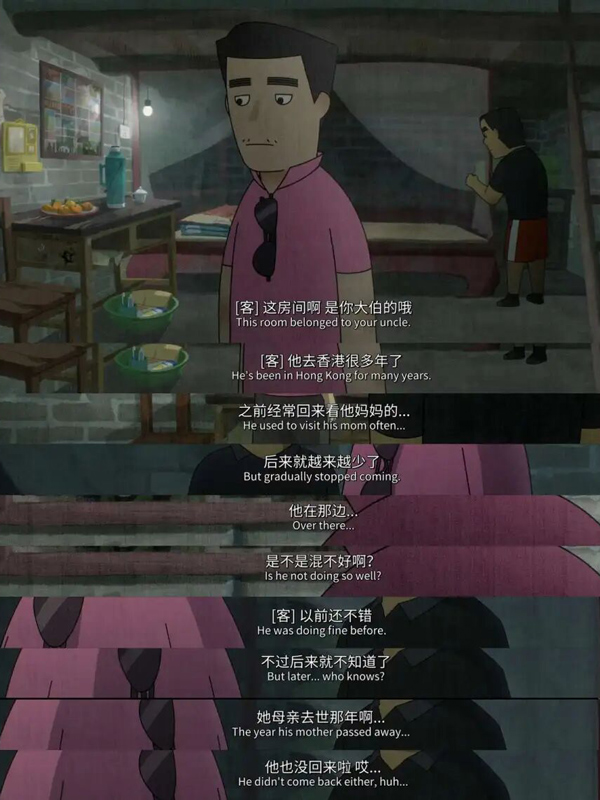
In this realm, A Yuan is hilariously and terrifyingly mistaken for an offering. He is transformed into a pig and presented to his own grandmother, who has passed away. The moment is absurd, yet it carries profound weight. His grandmother, recognizing something in this “pig,” spares him from being roasted, instead asking for him to be served as sashimi. This act of mercy, wrapped in a mundane request, becomes the first step toward his emotional salvation.
As the grandmother leads him back toward the world of the living, she speaks of her own son—A Yuan’s uncle. She expresses pride in his achievements, but then delivers the story’s core truth: “It doesn’t matter if he’s capable or not. The most important thing is that he is happy, that he eats well and sleeps well.” In that moment, the immense pressure of “face” and “success” that A Yuan has been carrying dissolves. The fears that have kept him away are revealed to be self-imposed chains, not the hopes of his family.
Reunion, Reconciliation, and a Simple Truth
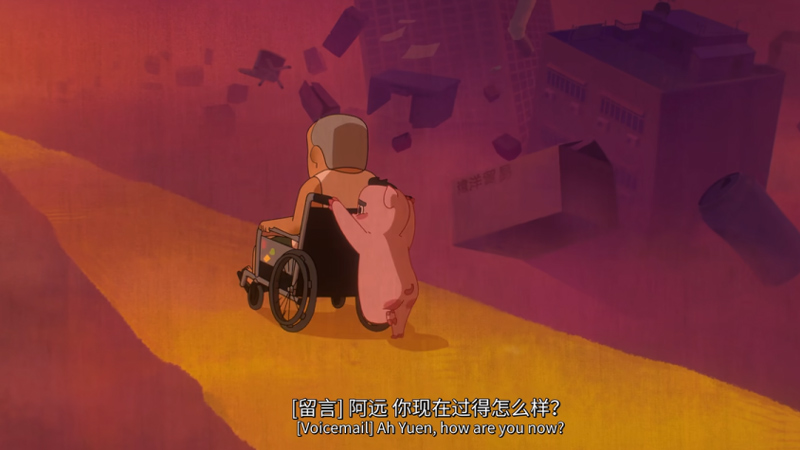
On the cusp of returning to reality, A Yuan finally encounters his long-lost uncle. The truth is simple and tragic: the uncle is not a shameful failure, but a man who lost his legs and, with them, the ability to make the journey home. He is a prisoner of circumstance, not of ego. The uncle had been the one calling A Yuan, desperately trying to send a message—a simple request for someone to bring his mother a roast goose, her favorite dish. His pleas for connection were ignored, dismissed as a stranger’s nuisance.
In a moment of pure emotional clarity, A Yuan grabs his uncle’s wheelchair and sprints back toward the spirit world, racing against time so the son can finally see his mother. This desperate dash is the story’s climax. It is a physical act of atonement, not just for his uncle, but for himself. He is no longer pushing a wheelchair; he is breaking down the walls of pride and fear he had built around his own heart. The guilt of ignoring the calls melts away, replaced by a profound understanding.
“Worshiping the Ancestors” offers a gentle but powerful answer to the question that haunts every migrant soul. It suggests that the concept of “wearing the brocade robe back home,” of only returning in glory, is a trap. The story’s final message is one of radical acceptance: your family is not waiting to judge your bank account or your career. They are waiting for you—to see if you are happy, healthy, and whole. As the New Year arrives, it reminds us that the most important journey isn’t the one to success, but the one home, where we are loved not for what we have achieved, but simply for being there to share a meal. The ghosts we fear are often of our own making, and the ancestors are not judges, but a welcoming committee.