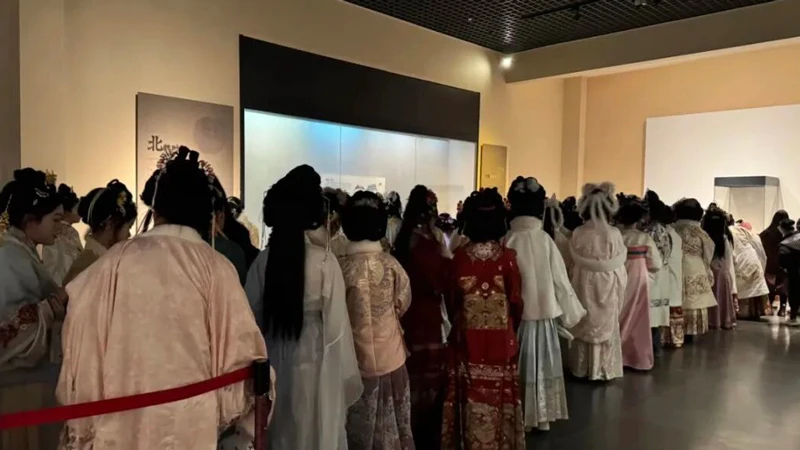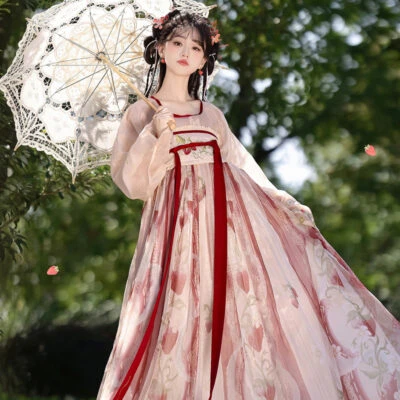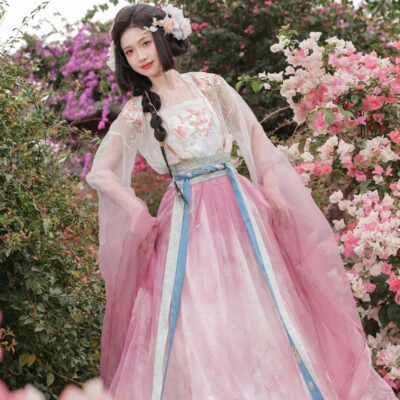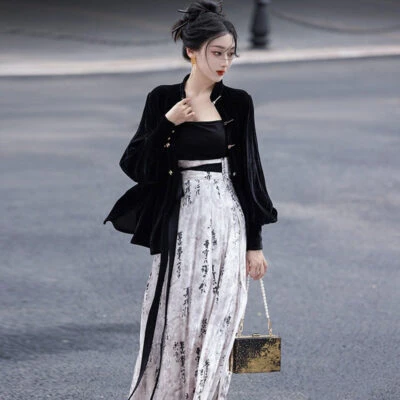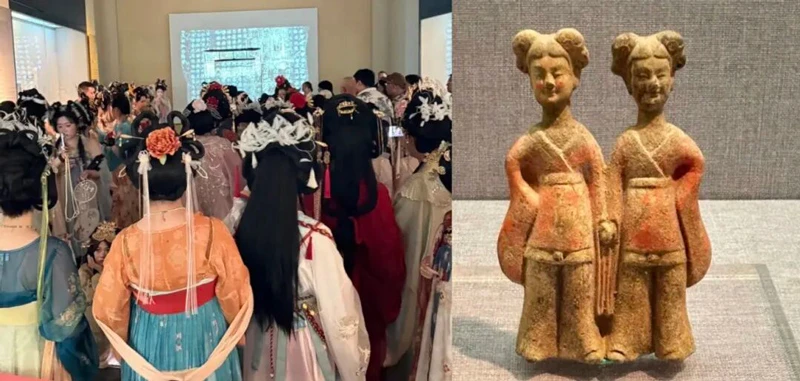
At the Luoyang (洛阳) Museum, a queue of young women, dressed in flowing Hanfu, snakes past a single glass display case. Their quarry isn’t a golden treasure or a famous painting, but a pair of small, 17-centimeter-tall ceramic figures. These are the Northern Wei painted pottery hand-holding female figurines . For the sake of a “friendship that’s number one under heaven,” as a popular Chinese saying goes, besties are traveling thousands of miles to pose for a photo with these two ancient “little sisters.”
It’s a story of millennial friendship that has captivated the internet, but these figurines are far more than just cute mascots for platonic love. They are silent witnesses to one of the most radical transformations in Chinese history, and their outfits hold the very DNA of cultural fusion.
Fashion Icons from the Grave
Look closely at this ancient pair. Their hair is styled in elaborate double buns, their cheeks rosy with pigment that has lasted over a millennium. It’s a look that wouldn’t be out of place on a modern street-style blog. But the real story is in their clothes. They wear what appears to be a chic, matching pantsuit, a style known as a tunic and wide-leg trousers. The crossover closure, or left lapel, is a key detail—this is a hallmark of the nomadic cultures of the northern steppes, designed for the practicality of horse riding . It’s sharp, functional, and undeniably cool.
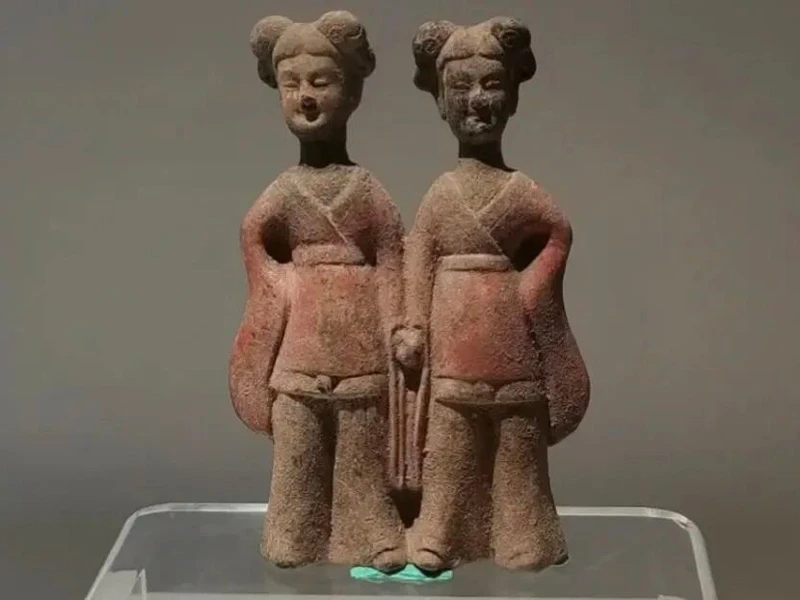
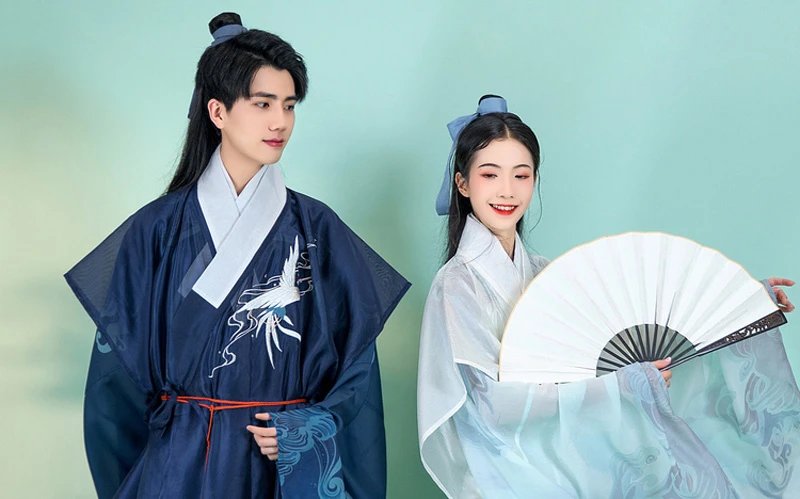
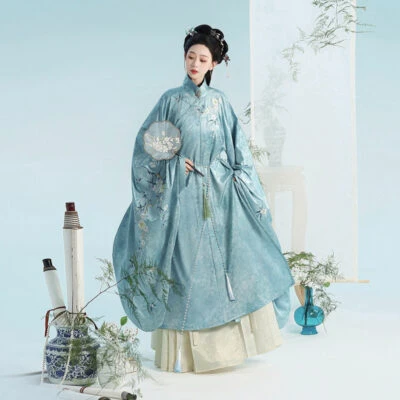
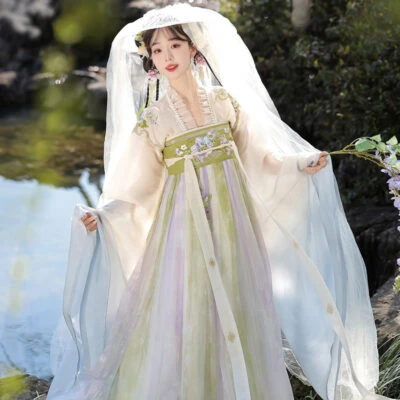
The genius of the outfit, however, lies in its details. The sleeves and pant legs flare out into a dramatic, bell-bottom shape. This is a graceful nod to the elegant and voluminous robes of the Han Chinese, known as Hanfu. It’s a perfect blend of contrasts: the fitted silhouette of the nomadic rider meets the flowing drape of the Central Plains scholar. This wasn’t just a random fashion experiment. It was the direct result of a top-down imperial decree. After moving the capital to Luoyang, Emperor Xiaowen (孝文) of the Northern Wei dynasty launched a sweeping sinicization campaign . “Reforming the clothing system” was a key part of this. This “mixed” style, which retained the practical fit of the steppes while adopting the broad elegance of the Han, became the era’s defining “It” look.
The Politics of a Lapel
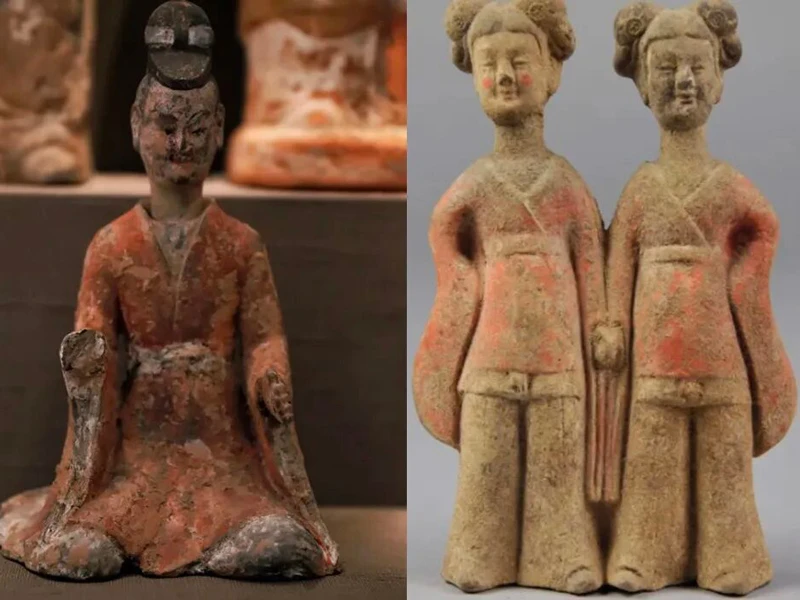
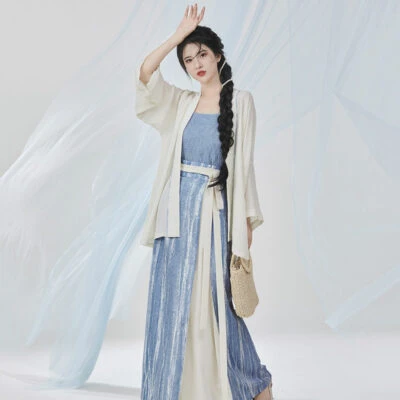
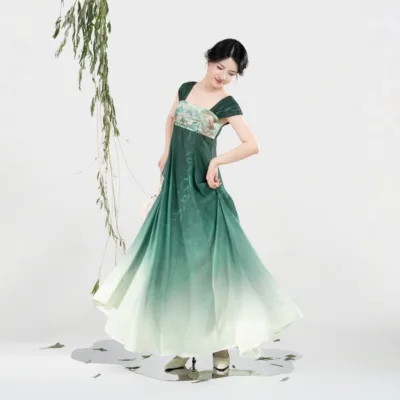
This outfit was a truly unisex and cross-generational trend, seen on everyone from court officials to commoners. It was a “national fashion item,” and wearing it was a statement—not just of style, but of identity and acceptance of a new, blended culture. The tight fit for movement and the wide cut for grace; the northern practicality and the southern elegance. This wasn’t just stitching; it was statecraft, woven into fabric. This tiny figurine is a textbook example of how political reform can trickle down to become a personal, everyday expression of identity. It’s a reminder that fashion is never just about clothes; it’s about the complex interplay of power, culture, and who we want to be. Even modern celebrities like the actress Yang Mi have been spotted in styles that echo this ancient fusion, proving that some trends are truly timeless.
A Modern Mirror for Ancient Sisters
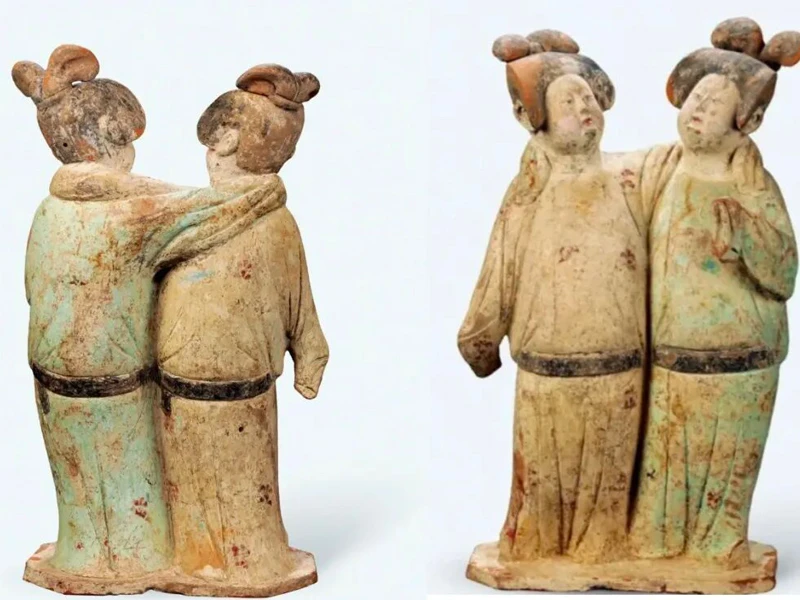
Today, the scene at the Luoyong Museum is a beautiful echo of the past. Young women, often dressed in their own Hanfu, line up to get a photo with their “ancient besties.” They instinctively mimic the figurines’ pose—hands clasped, a slight tilt of the head, radiating the same unspoken bond. This ritual transforms a museum visit from a passive viewing into an active, emotional connection. It’s a tangible link, a moment where the 21st century reaches back and holds hands with the 6th century. And the love for these sisterly poses didn’t stop in the Northern Wei. There are also Tang Dynasty figurines of women with their arms around each other’s shoulders, proving that the celebration of close female friendship is a timeless artistic theme in Chinese culture.
So, the next time you see these two smiling figurines online or in person, don’t just see a cute photo op. See the political statement in their left-closing lapel. See the cultural compromise in their bell-bottom pants. See a young woman from the steppes and a scholar from the Central Plains, their identities woven together into a single, harmonious silhouette. These little sisters are offering us more than just fashion inspiration; they are holding out a key to understanding a pivotal moment when China wove its diverse threads into a richer, more complex fabric. They remind us that history isn’t just in the past—it’s in the clothes we wear, the friends we cherish, and the stories we line up to be a part of.