Article
搜索结果:
-
What did Ancient Chinese Peasants Wear?
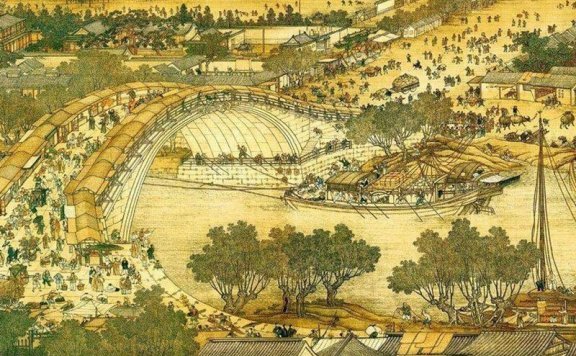
In modern society, everyone is equal. There is no difference in clothing. What you want to wear is optional. But in ancient times, there was a very strict hierarchy, which clearly stipulated that emperors, nobles, officials, rich people, ordinary people, servants, people of different identities had relevant dress regulations on different occasions. So what are the Chinese peasants wear? As early as the Xia and Shang Dynasties, the hierarchy of clothing has been initially established. In the Zhou Dynasty, a set of the more complete hierarchical system was established, and the form, texture, color, pattern, and ornament of clothing were specified in detail, which became an important part of the etiquette system of the Zhou Dynasty. Peasants, as the largest part of the ancient Chinese common people, mostly wore Duan Da (短打) clothes that could do farm work. Duan Da is a kind of ancient Chinese Hanfu, made of coarse cloth, include with top and lower trousers, the length of the coat is generally above and below the hips and knees. Duan Da is also called "Shu He (短褐, 裋褐)", the word "He (褐)" refers to clothing woven from hemp fabric or animal hair. So, the original meaning of the… -
Why is Wearing Jade Pendant Popular in Ancient Times?
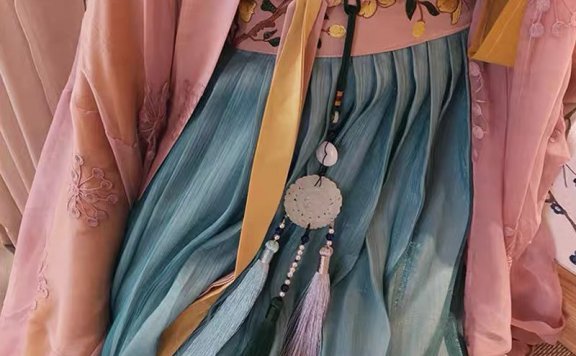
Jade pendant is not new to us. It often appears in ancient costume films and TV plays. I wonder if you are curious about why the ancients wear jade pendants, and why they are made of jade? Today, let's talk about the interesting stories behind the jade pendant. Why are jade pendants all the time and rarely heard of gold or copper pendants? Jade has a special position in the history of Chinese civilization, and it symbolizes the fine character of human nature. With the prosperity of ancient jade culture, a large number of various kinds of jade ornaments appeared in the folk, wearing jade as a trend. Jade materials are divided into several grades to meet the quality requirements of different classes, so that the jade covers a wider range of people. Why wear a jade pendant? The ancients often said: gentleman without reason, jade does not go to the body. Is the ancient man wearing jade pendants just to look good? No, it isn't. Identity symbol: accessories with different texture and appearance often have the function of distinguishing grades. Good wishes: people often give the jade pendant auspicious and wishful, exorcising evil and protecting the body. The function… -
How to Wear Hanfu - Song Dynasty Style
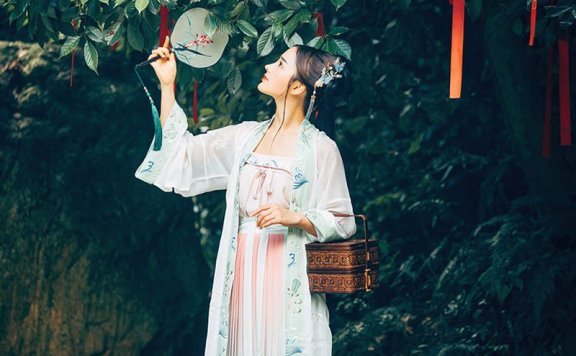
Today, let's talk about how to wear Hanfu in Song Dynasty. Many people think that Hanfu is the clothing of the Han dynasty. In fact, Hanfu is not simply the clothing of which dynasty but contains the clothing of previous dynasties. Now, more and more young people begin to contact Hanfu, and the cultural elements of Hanfu also frequently appear in our sight. The Hanfu of the Song Dynasty is not as elegant as that of the Tang Dynasty, which saves a lot of bright colors. The characteristics of the Song style are more simple and elegant. Beizi is the daily traditional dress of women in the Song Dynasty. The style of Beizi is the straight neck and Duijin (对襟), split under the armpit, tied with cloth at the waist, knee-long at the bottom. Later, it was often worn by women of later generations. Beizi began in Sui Dynasty. In Song Dynasty, the main style of Beizi was large sleeves, on the edge of Duijin, it would be embroidered with some lace, the straight collar was from top to bottom, and it would also be embroidered with lace at the cuff. Wearing method of one-piece Ruqun + Beizi Now the… -
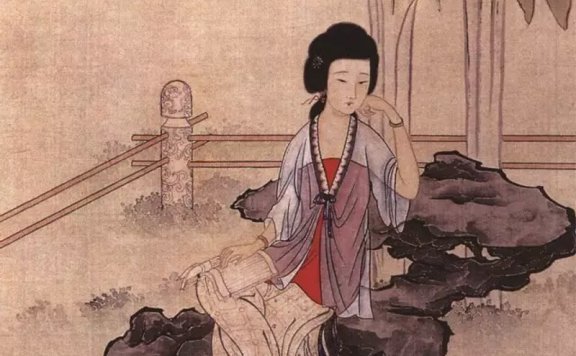
Hanfu History of Ancient Chinese Underwear
In the long years of change, Chinese underwear not only plays the role of covering the body and keeping warm but also carries the long Chinese civilization and records the ancient and mysterious oriental culture. Compared with other traditional Chinese costumes, there are not many descriptions of underwear in ancient Chinese books, which makes it difficult for people to see through thick clothes directly to the thin shelter. Only through precious historical materials can we have a glimpse of ancient Chinese underwear. The history of Chinese underwear has a long history. The following historical clues of underwear are beginning with the Han Dynasty. Chinese Underwear of the Han Dynasty - Baofu (抱腹) The underwear of the Han Dynasty is called "Baofu" or "Xinyi (心衣)". There are records in the historical materials of the Han Dynasty: Baofu, with belts up and down, and wrap the abdomen. The basis of "Xinyi" is "Baofu". The common point of the two is that the back is exposed without a back piece. Wei Jin - Liangdang (两当) The difference between "Liangdang" and "Baofu" and "Xinyi" lies in that it has a back piece, which can be used as both the chest and the back. Most of… -

Hanfu Themed Restaurant - Why Boss Wearing Hanfu Every Day?
Hanfu is becoming more and more popular. More and more people begin to wear Hanfu in their daily life. Today I'd like to introduce two bosses who really integrate Hanfu into daily life. Hanfu theme noodle shop, do you want to try it? Nowadays in Xi'an, there are more and more people wearing Hanfu. Han Tingting (韩婷婷) is the owner of a noodle shop in Xi'an. She just contacted Hanfu and didn't hide her love. In Han Tingting's view, Xi'an is a city with a special historical background, and the Tang Dynasty is one of the most prosperous dynasties in Chinese history. Han Tingting especially likes the culture of the Tang Dynasty and thinks that the clothes of the Tang Dynasty are the most beautiful clothes. She was fascinated by the grandeur and prosperity of the Tang Dynasty and the beauty and delicacy of her clothes. Han Tingting said that she spent three hours every day to make up because the makeup is more elegant, clothing, accessories and so on are also more exquisite, and she is very tired to remove makeup every day. Although tired, Han Tingting enjoys it. She runs a noodle shop near the north square of… -
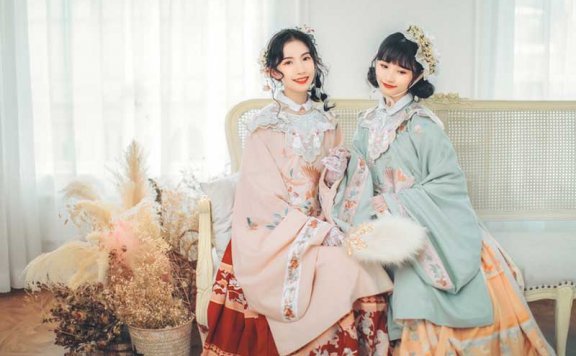
Chinese Fashion - Wear Hanfu with Auspicious Patterns
Chinese fashion elements have always been closely related to Chinese traditional culture, auspicious patterns and Hanfu also have a very good combination. There are many auspicious patterns in Chinese folk. On the new year's day, or on a festive day, people like to decorate their rooms with these auspicious patterns to express their yearning for a happy life and the celebration of a good day. It is the most common way to extend and extend the natural attributes and characteristics of some animals and plants. For example, dragon and Phoenix are used to symbolize power. From ancient times to now, Dragon is the auspicious God of ancient China. It is regarded as the totem of the Chinese nation and has supreme status. In Chinese, pronunciation often corresponds to several Chinese characters, so using the same and similar pronunciation can achieve a certain rhetorical effect. These auspicious patterns have been popular from the Han Dynasty to Ming Dynasty, and they are mostly seen in ancient porcelain of the Ming and Qing Dynasty. Today, Chinese fashion elements are constantly integrated into our modern life, and our Hanfu and auspicious patterns are also very well combined. Let's follow the steps of Hanfu Time… -
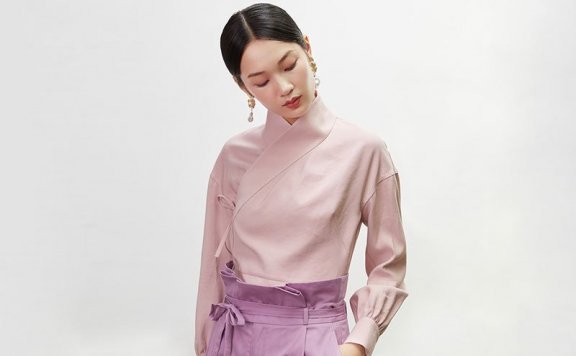
Hanfu Guide | How to Wear Hanfu on Weekdays
"What should I wear tomorrow", it's like an epic puzzle, just like people asking you "what to eat at noon every day". According to a survey, in fact, many people want to try to wear Hanfu to work. Even if they are new to Hanfu, they also want to try more Hanfu styles on different occasions, but traditional Hanfu is too eye-catching and time-consuming. What should we do? Hanfu Time have prepared #How to wear Hanfu on weekdays# for you, made a plan for you to wear Hanfu on weekdays. Monday Monday must be a nightmare for many people. On this day, you need some stylish clothes to decorate your neat and generous office style. Focus on simple collocation, black and white sense of conciseness, and win in detail. Wear Examples: Tuesday Continuing the style of Monday, the style in Tuesday's dress can be slightly gentle, mainly comfortable and fashionable, adding some fresh colors, and the decoration of dark lines. It's very suitable for matching with wide-leg pants. Wear Examples: Wednesday On Wednesday, you can bring yourself and your colleagues a more comfortable mood. At this time, you can wear more outstandingly, even in bright colors and printed skirts. Wear Examples:… -
How to Wear Hanfu | Quju Shenyi
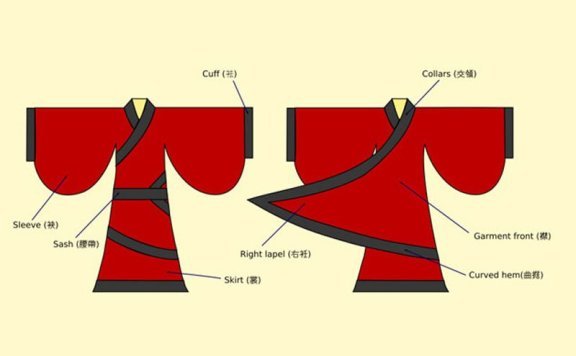
Quju (曲裾) is a kind of Shenyi (深衣). Shenyi, that is, the top and the dress are connected together, use different colors of fabric as the edge. It is characterized by the deep hidden body, it looks graceful and elegant. Shenyi can specifically be subdivided into “Straight Ju Dress” and “Wavy Ju Dress”. This article introduces the way of wearing Quju. Step1: Get ready for Quyi. Put on the right sleeve first. Turn the inside of Quyi around behind you. Step2: And tie the laces behind you and under your right axilla. Step3: Put on the left sleeve. Step4: Tidy collar. Step5: Wrap Quju backward. Step6: Turn the sharp corners of the outer skirt behind you. Step7: Fix the end of the apex at the left hip. Step8: Fold the collar part of the outer jacket neatly. Step9: Belt tie. Step10: Find the midpoint of the belt, tie the belt in some places below the waist, the midpoint of the belt is aligned with the middle of the waist. Step11: Wrap the belt around your back and overlap the ends of the belt. Step12: Tie a bow in the middle of the waist. Step13: Tidy up the overlap of the… -
What Kind of Hanfu did the Song Dynasty Wear?
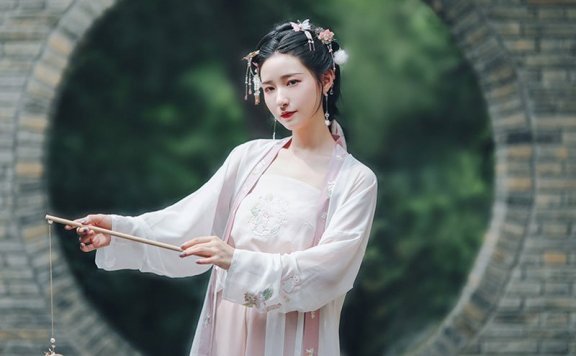
Hanfu in Tang Dynasty was introduced to you before. Today, it brings you the style of Hanfu in Song Dynasty. Before introducing the Han clothes of the Song Dynasty, let's first understand the Song Dynasty. The Song Dynasty (960 - 1279) was divided into two stages, the Northern and Southern Song Dynasties. It experienced eighteen emperors and enjoyed the country for 319 years. The greatest feature of hanfu in the Song Dynasty is simple and elegant. Compared with the elegant appearance and bold colors of the Hanfu of the Tang Dynasty, the Hanfu of the Song Dynasty is simple in shape, simple in tone, and the whole temperament seems more natural and elegant. Song Dynasty civilian men's clothing, mainly to the "Ao (袄)" and "Ru (襦)". In ancient times, the poorer people wore "Duanhe (短褐; short and thick clothes)", which were designed to facilitate work. In addition, men in the Song Dynasty also liked to wear a shirt (衫). Unlike the clothes we imagined, this kind of clothes was very self-cultivating, not the kind of generous design we imagined. Compared with men's clothing, women's clothing is more abundant, in the Song Dynasty, women generally wore Ao(袄), Ru(襦), Shan(衫), Beizi(褙子), Banbi(半臂), dress… -

What did the Tang Dynasty wear? | Chang'an Twenty-four Hours
Some time ago, I watched the hot Chinese drama Chang' a Twenty-four Hours (长安十二时辰). I was attracted by the hanfu of the Tang Dynasty in the play. So I did some research on the clothes and fittings of the Tang Dynasty. Let's see who is the most fashionable in Chang'an. Ruqun Talking about the trend of wearing and matching in the Tang Dynasty, it's natural that we can't do without ruqun. Ruqun is one of the most common and distinctive dresses in the Tang Dynasty. The main features of this dress are short clothes on the upper body and long skirts on the lower body. Some of them wear silk shoulders around their arms. Others wear half-arm outside the gown and then wear silk. "Ru (襦)" is for internal wear, sleeve length, upper and lower shorter, just to the waist. Long skirts were the clothes of women in the Tang Dynasty, most of which were made of silk. Skirt waist is high, can hide the chest, outside shoulder put on a yarn shirt, can make upper body skin half-covered, there is a kind of vague aesthetic feeling. Banbi (半臂) is a short-sleeved shirt, sleeve length to the elbow, knotted in… -
Do You Want Wear Hanfu Travel Around the World?
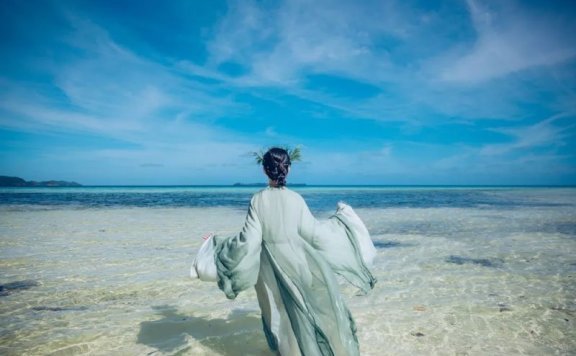
Today, I will introduce you to a photographer. Her name is Dang xiaoshi (当小时). She is a Sichuan girl. She spends most of her time in Beijing. Like many people, Dang xiaoshi has been shooting some "commercial works" in order to live. However, due to a strong preference for "Chinese Style", there are occasional works of ancient style in private. At first, Dang xiaoshi just liked the costume style, but all the changes started with an invitation. A friend of hers got married and invited her to Nepal to take wedding photos. At that time, Dang xiaoshi put forward the idea of shooting with the theme of "Hanfu" to her friends. Originally, she just wanted to take a meaningful wedding photo for my friends, but when the photo came out, it got a lot of praise. Looking at the endless praise of Chinese clothes, she found that the charm of the original culture is so great. So she left beautiful pictures around the world with her Chinese clothes. Let's see what beautiful places she's been to. Hanfu in the United States When Hanfu, music and American enthusiasm are combined, there is a different spark. Hanfu in Nepal Hanfu in Japan… -
Wearing as an angel: Chinese Hanfu in Japan
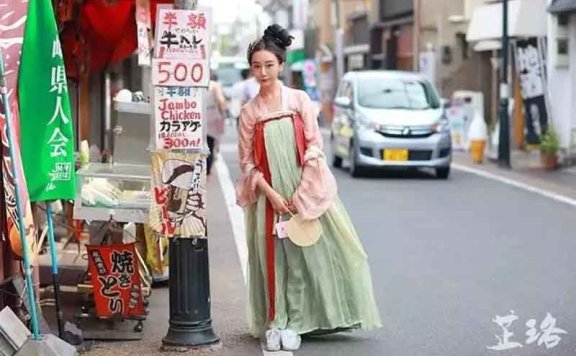
Kyoto is an ancient capital of Japan. It preserves a large number of historic buildings. Many Japanese and tourists will feel Japanese culture in kimonos. However, in this ancient city, some local people often see a Chinese girl in Chinese costume walking down the street. Local Japanese all raised their thumbs: so beautiful, just like a fairy! The girl's name is Zhi Luo. She was born in 1993. She is from Beijing, China. Because her husband (Chinese) has been a photographer in Japan for many years, she came to Kyoto to work more than half a year ago. Why does Zhiluo like Hanfu? This is closely related to family education, she has often participated in activities about Chinese culture since childhood. Nowadays, Zhi luo works in Kyoto. As a result of working in photography, Zhi Luo wore Hanfu to work and became a landscape on the street. Although there were differences in the form and system of Han uniforms in different dynasties, Zhi Luo was very fond of it. She said: "Wear Tang and Song style when it's hot, Wei, Jin and Ming-style when it's cold, you can wear it all year round." Usually, Zhi Luo wears Chinese clothes to… -

Chinese Girls Wear Hanfu to Climb the Highest Chug Peak in Germany
March is a hanfu enthusiast, She also insists on wearing Chinese clothes every day in her daily work, which affects colleagues and many people in the company. This time, she climbed the highest Chug peak in Germany in her hanfu, and the beautiful hanfu was praised by many tourists. Some photos of her trip to Germany: Some photos of daily wearing Hanfu: -
How to Wear Chest Ruqun Hanfu
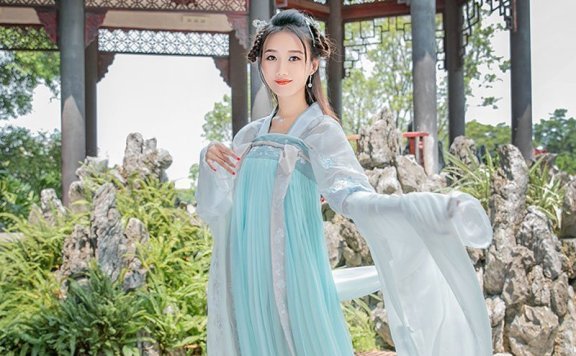
Before, we introduced the way to wear a wist ruqun(one slice), and next, we will simply tell you how to wear a Qi xiong Ruqun(Chest Ruqun). Qi Xiong Ruqun is made up of front and back pieces(as the picture show). Step 1: Separate the front and back pieces and wear the back ones first. Step 2: tie up the back pieces. Step 3: tie up the front one(put white tape and red tape together). Step 4:Put an X-fork behind you, then take the tape to the front. Step 5: Make a knot. Step 6: The next step is to decorate the extra tape, wrap them in circles, just like a kind of Chinese food: Mahua (麻花, Fried Dough Twists). Step 7: Tie a knot at the end. Step 8: The red tape also needs to be wrap in circles. Finished~ Wearing Hanfu does not seem to be such a difficult thing, but it also requires repeated attempts to get the best look. If you have any questions during the wearing process, you are welcome to contact us by email, we will give you a more detailed explanation. More about how to wear Hanfu can be found here. -
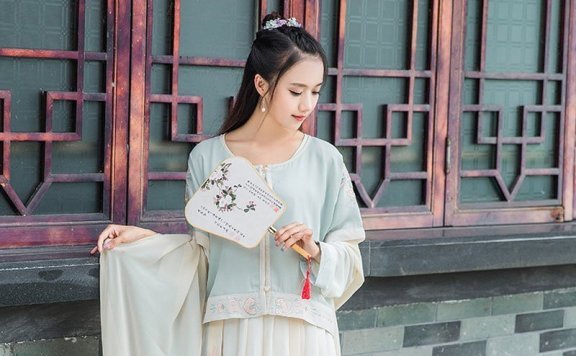
How to Wear a Waist Ruqun
Many friends who have not touched Hanfu will have a lot of confusion when they wear Hanfu for the first time. How to wear it? Well, we will have a series of articles to simply tell you how to wear Hanfu. Today, let me show you how to wear a Waist Ruqun. First of all, what you have to know is that the Hanfu were without belts and buttons, all by lacing. The first one to introduce is Waist Ruqun(one slice), one slice means that the only one piece of dress. Step 1: Put the skirt over the waist, align the center of the skirt with the middle of the body, wrap the skirt around the waist and wrap the lower body. (This process is similar to a bathrobe after bathing.) Step 2: Sort out, and from the side, the place to be tied is left out. Step 3: Wrap the rope around the back (Note: cross the rope twice) Step 4: Then wrap around the front of the body. Step 5: Pass the rope through the part of the rope that has been tied to the waist Finished~ Wearing Hanfu does not seem to be such a difficult thing, but… -
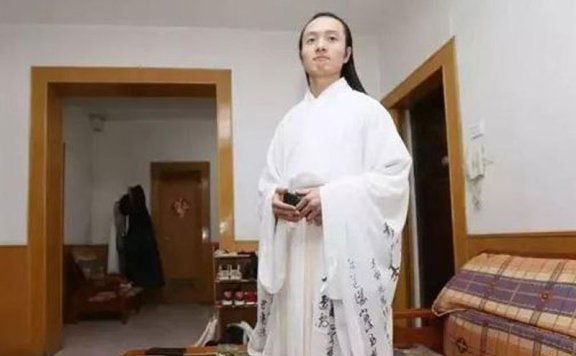
A Men Wear Hanfu for 8 Years
Today, we are talking about a magical guy, because he is very obsessed with Hanfu for 8 years, and in order to wear Hanfu, he has stayed his long hair for 4 years. What's the story of wearing Hanfu every day? Let's take a look! He is only 23 years old, wearing a Hanfu is very ancient. From the beginning of junior high school, he watched the Hanfu on TV. He thought that Hanfu is very traditional and has a feeling of traditional nationality, so he began to obsess with Hanfu from that time. Hanfu is a traditional national costume that has been inherited by the Han people for more than 4,000 years. It gives a fresh feeling to him. In order to make Hanfu more beautiful, he began to keep his hair. Opened his home wardrobe, all are Hanfu clothes, there are more than 30 sets of various styles, all kinds of colors, the habit of buying Hanfu, the love of Hanfu, is obsessed. Whether it is cold winter or hot summer, he insists on wearing Hanfu to go out. Everyone has paid a lot of attention to him, and he has become the "Starman". How do you understand… -
10 Upcoming CDramas You Need to Watch
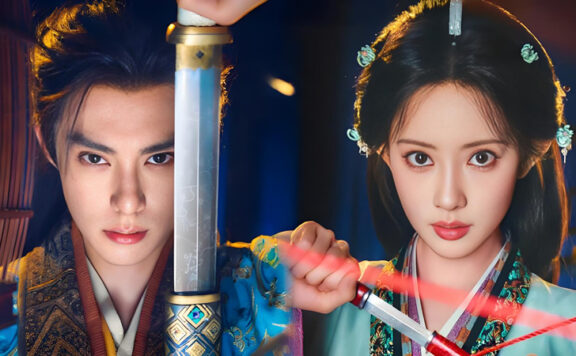
From blood-soaked Wuxia and cunning rebirth revenge to cosmic Xianxia and Tang dynasty mysteries—this slate of ten upcoming dramas has something for every craving. Whether you want Gong Jun's blade-sharp detective, Wang Hedi (王鹤棣) as a "crazy beauty" antihero, or Cheng Yi's (成毅) brutal wartime transformation, these stories ditch clichés for raw emotion, real locations, and earned romance. No fairy tales here. Just fierce heroines, morally gray masters, and plots that respect your intelligence. Dive in. The Legend of Lu Xiaofeng (凤舞九天) Platform: Tencent Period Background: Fictional ancient Jianghu (江湖) setting Genres: Wuxia (武侠), Mystery, Detective, Unit-based storytelling Adapted from: Gu Long's (古龙) classic novel Lu Xiaofeng Legend (陆小凤传奇) Main Roles: Gong Jun (as Lu Xiaofeng), Zheng Yecheng (as Ximen Chuixue), Wang Yilun, Quan Yilun, Chen Qiaoen (as Guo Changu), Zhu Xudan Plot Deep Dive: A blind friend. A desperate search. A world of deception. Lu Xiaofeng (陆小凤), the four-eyebrowed detective, is not chasing glory or gold. He wants one thing: a cure for his closest companion Hua Manlou's (花满楼) lost sight. That simple wish drags him into a web of strange deaths, missing artifacts, and whispered conspiracies across the martial arts underworld. The drama adopts a "one case, one… -
Xianbei Costume Features of Northern Wei
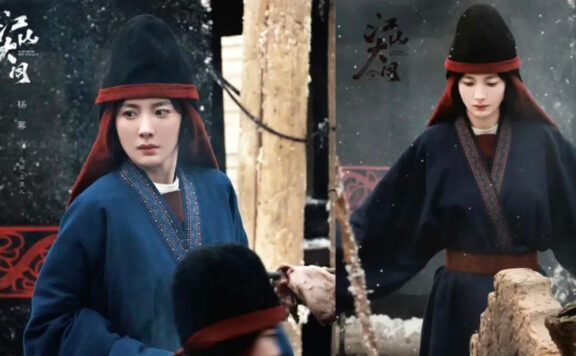
Yang Mi’s (杨幂) latest historical drama, Jiangshan Datong (江山大同), has sparked online buzz before its release. A leaked set photo shows her as Empress Feng (冯) of the Northern Wei (魏) dynasty, dressed in an early Xian Bei (鲜卑) outfit. Viewers are asking: why does it look so odd? The answer lies in three striking features—a soft hood with dangling fabric, a left-over-right collar, and a tight-sleeved jacket paired with tied leggings. These elements scream “nomadic” rather than “Han Chinese.” But look closer, and you’ll see subtle Han influences too. This isn’t random costume design; it’s a visual story of cultural clash, identity, and survival. Let’s break down each piece and uncover what Yang Mi’s strange outfit really tells us. The Hood That Fights Wind The most eye-catching part is the Feng Mao (风帽), a signature Xian Bei headwear also called the “skirted hood.” It has a round, soft top and long cloth flaps hanging from the back and sides, reaching the shoulders. You might think it’s for decoration, but it’s purely practical. The Xian Bei were steppe nomads, constantly exposed to harsh winds and sand. This hood blocked dust while protecting their braided hair—a lifesaver on the grasslands. Early… -
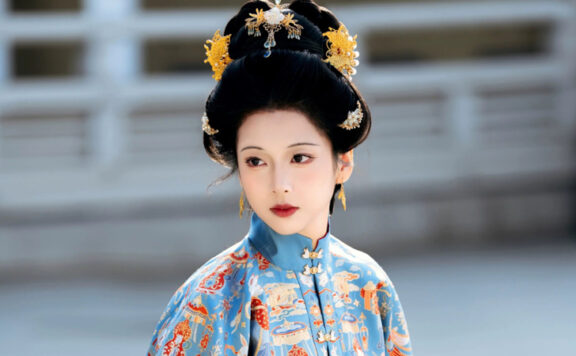
Symbols of Ming Dynasty Female Attire
What Secrets Lay Beneath a Ming Woman's Sleeve? During China's Ming Dynasty (明朝, 1368–1644), clothing reached a peak of refinement after two millennia of evolution. From strict rank markings to luxurious materials, every stitch told a story of identity, power, and daily life. Unlike the flowing robes of Tang or the subtle layers of Song, Ming attire stood out for its dignified tradition and vibrant colors. It became the ultimate expression of Han Chinese dress. But what did a woman’s wardrobe actually reveal? Let’s lift the veil on three key aspects: ceremonial grandeur, everyday wear, and the tiny details that shaped her world. Crown & Scarf For noblewomen, known as Ming Fu (命妇, titled ladies), ceremonial dress was strictly regulated. She wore two main categories: Li Fu (礼服, ritual robes) and Chang Fu (常服, regular court attire). The most striking piece was the Feng Guan (凤冠, phoenix crown). Made from a metal wire frame and decorated with kingfisher feathers, jade phoenixes, and pearl tassels, it originated in the Qin-Han period as an exclusive accessory for empresses and grand empresses. During Ming times, it split into two forms: one for imperial consorts featuring dragons alongside phoenixes, and another for ordinary noblewomen… -
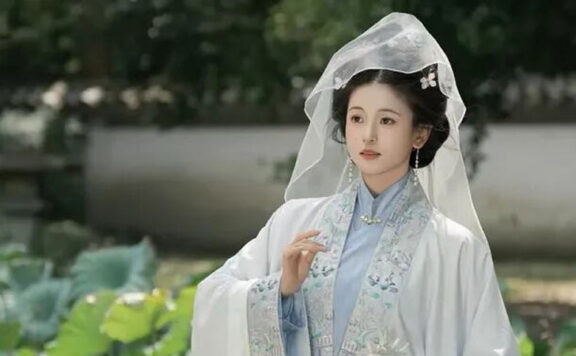
Qingming Hanfu for Ritual and Outing
The annual Qing Ming (清明) festival arrives with spring’s first warmth. It marks both a solar term—“clear and bright”—and a solemn day to honor ancestors. Yet it also calls for outings, kite flying, and feasting on green rice balls. How does one choose Hanfu that respects the rituals of mourning while embracing the joy of spring? The answer lies in two distinct wardrobes: one somber and restrained, the other light and playful. This guide walks through each, from grave-sweeping robes to willow-branch headdresses, so you can move between reverence and revelry without missing a step. Somber Respect For ancestral rites, Hanfu becomes a vessel of propriety. The ancient principle “clothing carries the Way” demands muted colors, clean lines, and no flashy ornaments. Dark blues, off-whites, and deep greens set the tone. Two Ming dynasty styles work especially well: the round-collar overlapping jacket paired with a Mamian (马面) skirt. A bean-green or rice-white jacket embroidered with subtle Ru Yi (如意) and Ling Zhi (灵芝) motifs—symbols of blessing and longevity—keeps the look pious yet elegant. A touch of woven gold on the hem is acceptable if hair and makeup remain simple. The outfit speaks without shouting, honoring the departed while praying for…