Article
搜索结果:
-
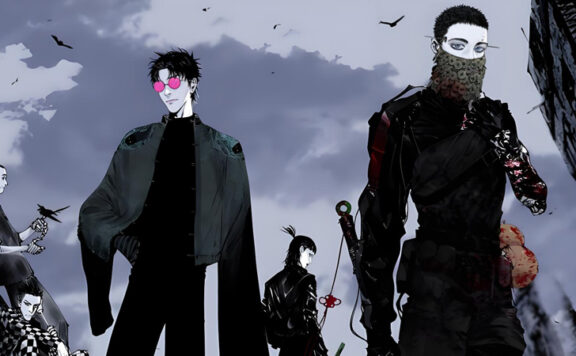
The Crow: Weaving Chinese Folklore into Modern Horror
What happens when a routine food delivery becomes a one-way ticket to a world of Chinese horror? For 18-year-old courier Zhang Zha (张炸), a simple mistake—mixing up floor numbers—leads to a brutal murder and a terrifying rebirth in The Crow (楚乌). This new animated series, adapted from Mo Fei's (墨飞) award-winning Manhua (漫画), arrives on Youku to redefine the genre. It blends the mundane with the macabre, pulling viewers into a modern Jianghu (江湖) where restless spirits threaten the living and a secret organization fights in the shadows. Forget cultivation clichés; this story grounds its supernatural terror in the grit of everyday life, asking what happens when death isn't the end, but the beginning of a much darker obligation. The Lore of "Shang" The genius of The Crow lies in its core concept: "Ren Si Hua Shang" (人死化殇). When individuals pass away with intense, unresolved obsessions, they do not simply fade away. Instead, they transform into Shang (殇)—malevolent entities fueled by lingering regret. These spirits can re-enter the human world through a mysterious, forbidden gateway, bringing chaos and danger to the realm of the living. This isn't a random haunting; it's a cosmic rule with dire consequences. Those who become… -
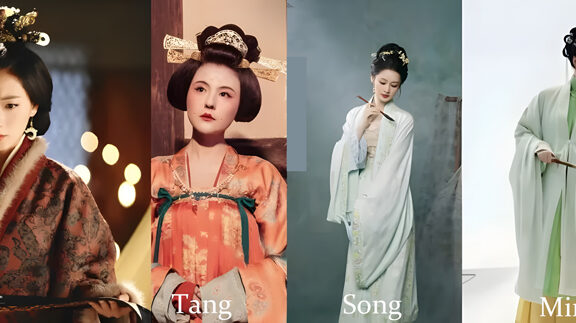
Why Many Period Dramas Mistake Japanese for Chinese Style
Why do so many period dramas look Japanese instead of Chinese? This question has sparked heated debate among viewers who sense something off about the aesthetics in recent productions. The distinction between authentic Chinese style and borrowed Japanese elements isn't merely academic—it's visually immediate once you know what to look for. While Japanese culture historically drew inspiration from China, centuries of separate evolution created fundamentally different aesthetic systems. Today's controversy stems not from overly critical audiences but from production teams who, whether through laziness or ignorance, substitute Japanese elements for Chinese ones. This isn't cultural appreciation; it's cultural erasure dressed in period costumes. The Clothing Code: One Fold Changes Everything The most commonly confused elements appear in costume design, particularly between Hanfu and Japanese kimono. Yet their fundamental structures diverge completely. Traditional Chinese clothing spreads horizontally across the body, with overlapping right-side closures, wide sleeves, and hidden ties instead of exposed buttons. Whether from Han, Tang, or Ming dynasties, these garments create flowing lines that move with the wearer—dignified, expansive, and structurally elegant. Even commoner's clothing maintains this generous proportion, never constricting the body unnaturally. Japanese kimono structure operates on opposite principles. Straight lines dominate—narrow sleeves that barely reach the… -
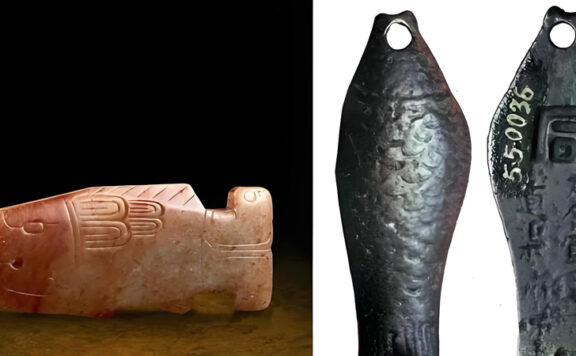
What Did an Ancient Chinese ID Look Like?
Imagine an object that everyone possesses, made from the same material, and engraved with the details that make you, you. In our modern world, the answer springs to mind instantly: it's an ID card. This little piece of plastic holds our birth date, our birthplace, and essentially summarizes all our social connections. In a way, it declares that we are who our society requires us to be. Within our familiar circles, we rarely need to prove our identity. But the moment we step into a completely new environment, our first task is to convince strangers that we are indeed ourselves, and not someone else. The ID card is the physical key to that proof. Today, it's a thin, simple card, yet it acts as a passport, safeguarding our journey wherever we go. But in the distant past, long before plastic and photographs, what object did a person use to answer the fundamental question: "Who are you?" 1. Sui and Tang Dynasties - Fish Tally China’s earliest known official ID emerged during the Sui and Tang Dynasties. It was Emperor Taizong (太宗) of the Tang who, during his Zhenguan (贞观) era, distributed a unique item to his officials called a "fish… -
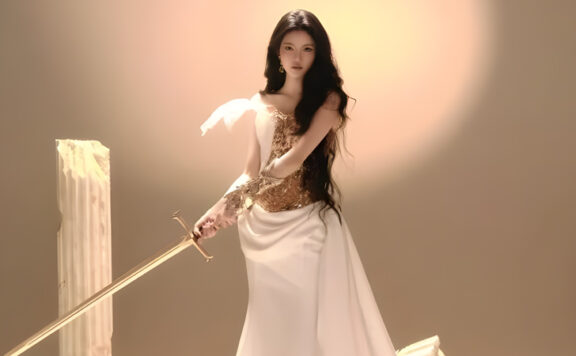
The Rise of Sun Zhenni’s Majestic New Image
Is Sun Zhenni (孙珍妮) Hollywood's Next Big Fantasy Heroine? Her new look, a striking combination of gilded bodice and flowing white satin, has ignited the internet. It feels less like a photoshoot and more like a teaser trailer for an epic saga. We are witnessing the arrival of a "Dark Queen," a persona that is both icy and majestic, powerful and elegant. This isn't just a fashion moment; it's a statement that completely redefines her public image, leaving fans and onlookers utterly captivated by every single frame. Gilded Armor and Silken Strength The centerpiece of this transformation is a meticulously designed strapless gown. The upper half features a metallic gold fabric that catches the light, creating a shine that is bold yet never gaudy. Its sharp cut perfectly highlights the lines of her shoulders and neck. A single, large white satin bow drapes down one side, softening the golden intensity and adding a touch of dramatic flair. It is a masterful blend of strength and grace. Below, the dress flows into a high-quality white satin skirt. The fabric drapes perfectly, with smooth folds extending to the floor. This creates a rich, layered look that is both grand and understated. The… -
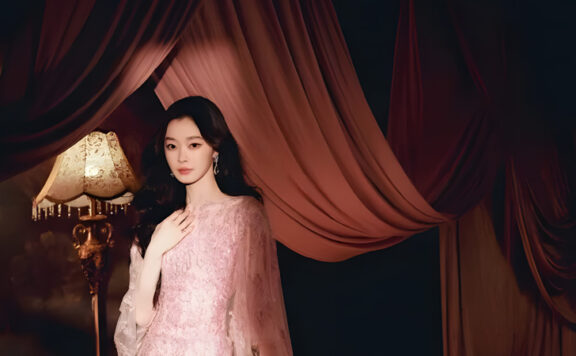
The Quiet Glamour of Song Yi’s Red Carpet Look
At a recent awards ceremony, actress Song Yi (宋轶) captivated audiences and ignited social media in a custom dusty pink gown. The look was an immediate sensation, hailed as a perfect fusion of classical Eastern aesthetics and modern high fashion. It wasn't just a dress; it was a statement that redefined red carpet elegance, proving that true glamour lies in subtlety and grace. As she moved through the venue, her silhouette evoked the charm of a classic film star, leaving onlookers mesmerized and sparking a viral debate on the power of understated beauty in a world of fleeting trends. The Canvas of Quiet Elegance This was far more than simply putting on a beautiful dress. The fitted silhouette of the gown was meticulously crafted to highlight her slender waist and graceful figure without being overt. The entire surface was a constellation of fine details, featuring three-dimensional embroidery and a sprinkle of diamond-like crystals that caught the light, creating a delicate, shimmering effect. It was as if fragments of a starry sky had been gently brushed onto the fabric—brilliant, yet never loud or ostentatious. The most breathtaking feature was the integrated cape sleeves made of diaphanous silk. This design moved with… -
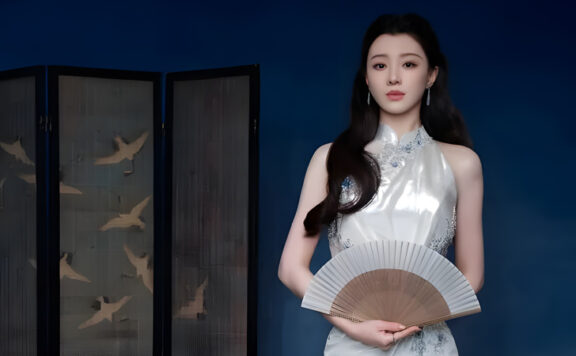
The Charm of Qipao in Wang Herun’s Guofeng Look
On a drizzly afternoon that seems plucked from a classical ink painting, actress Wang Herun (王鹤润) emerges not just in a new set of photographs, but as a living canvas of refined Oriental aesthetics. Her recent look—a silver-white modified Qipao with a halter neck and a plain fan—has ignited conversations across social media, not merely for its beauty but for how it seamlessly weaves centuries-old artistry with contemporary chic. This is more than a fashion moment; it is a statement about identity, heritage, and the evolving language of Chinese elegance in the modern world. A Stitch in Time: The Dress as Narrative The centerpiece of this visual symphony is undoubtedly the dress itself. Crafted from a fabric with a luminous, pearl-like sheen, the Qipao moves away from the rigid formality of vintage designs. Its true genius lies in the hand-embroidered motifs that cascade from the collar to the hem. These aren't just floral patterns; they are a gradient story of blue and green threads, each petal and leaf rendered with a lifelike quality that suggests the breeze of a Jiangnan (江南) water town is just about to stir them. This is where tradition speaks—through the painstaking art of Suzhou embroidery—but… -
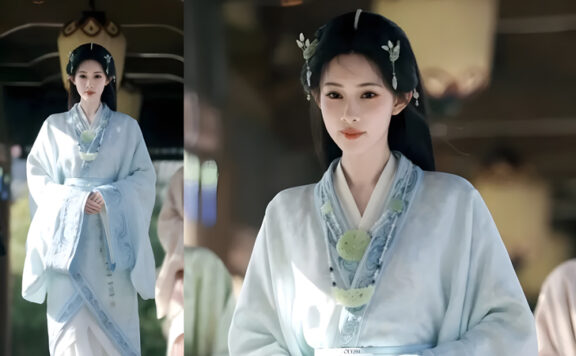
Meng Ziyi’s Shen Miao: True to the Original?
The announcement of the cast for the highly anticipated historical drama Jiang Men Du Hou (将门独后) has sent ripples through the Chinese entertainment sphere. Based on the beloved novel Jiang Men Du Hou (将门毒后), the series will see Wang Hedi (王鹤棣) and Meng Ziyi (孟子义) stepping into the roles of the legendary protagonists. While the pairing itself has ignited fervent online discussion, it is the first official images of Meng Ziyi in costume that have truly captured the spotlight. Fans and critics alike are now scrutinizing every detail, asking a single, pressing question: does this visual interpretation align with the Shen Miao (沈妙) they have imagined for years? Han Dynasty Inspirations The initial promotional stills and leaked set photos reveal a distinct stylistic direction for Jiang Men Du Hou. The creative team appears to have anchored the aesthetic in Han Dynasty (汉代) fashion. This is most evident in Meng Ziyi’s costume, a flowing, water-blue gown that is a modern interpretation of the Quju (曲裾), a type of formal Han-era robe. The design features the characteristic wrapped and overlapping front, creating a deep V-neckline and a layered silhouette that is both elegant and structured. It represents a specific vision for the… -
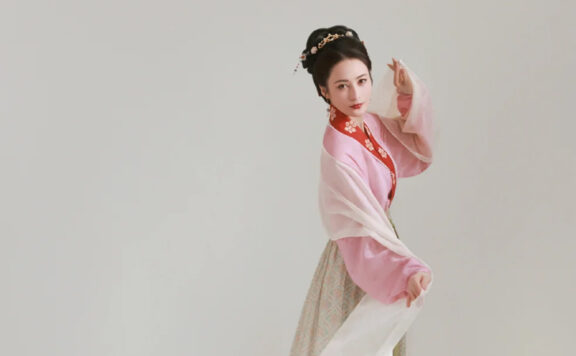
Jiang Qinqin Shines in Song - Style Hanfu
At a recent gala celebrating intangible cultural heritage, Jiang Qinqin (蒋勤勤) stepped back into the public eye. She didn't just appear; she arrived wrapped in the quiet elegance of Song-style Hanfu. The photos quickly rippled across social media, sparking a familiar question among viewers: Why has she stepped away from the screen so completely? The collective hope is for her to bring this very aesthetic—the muted tones and classic lines of the Song Dynasty—to life in a period drama. It feels like the perfect fit. Style Notes The outfit she wore is deceptively simple, yet it represents one of the most classic silhouettes in Hanfu. It’s a style centered on the Jiaoling (交领) or cross-collar, often paired with a long silk scarf known as a Pibo (披帛). Depending on the season and layering, a single layer is typically called a Shan (衫), while a lined garment is a Ru (襦). Historically, the combination of top and skirt was termed Ruqun during the Han and Jin dynasties. By the warmer Tang and Song periods, people often called it Shanqun. It's a subtle linguistic shift, but it reflects a real evolution in comfort and wearability. The genius of Song-style clothing lies in… -
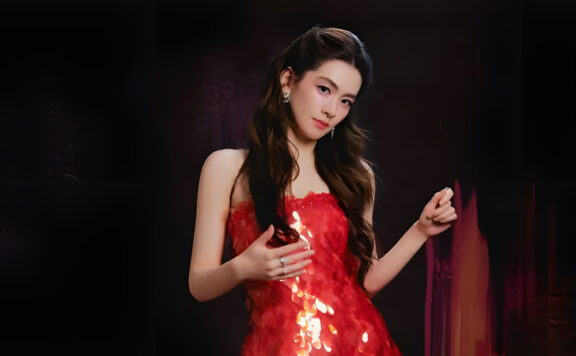
Chen Haoyu’s Iconic Red Carpet Look
Chen Haoyu (陈昊宇) doesn't just wear red; she commands it. Recently, the actress ignited social media with a look that was less about fashion and more about pure, unapologetic presence. It was a visual declaration that sparked a firestorm of praise, proving that sometimes, all it takes is one dress to remind everyone of the power of confident self-expression. Scorching the Red Carpet The outfit in question was a dazzling red sequin strapless mini dress. It wasn't merely clothing; it was a cascade of light. The densely packed, scale-like sequins caught every beam, creating a fluid, almost liquid fire that moved with her. Against the dark backdrop of the event, she became the living, breathing center of the flame. The choice was a masterclass in silhouette. The strapless cut highlighted her elegant shoulders and neck, while the flared A-line skirt celebrated the freedom of movement, adding a touch of playful energy to the intense heat of the color. Every detail was meticulously curated to amplify the effect without overwhelming it. She chose silver rhinestone earrings and a ring that mirrored the dress's sparkle, and stepped into a pair of strappy silver heels that added both height and a delicate finish.… -
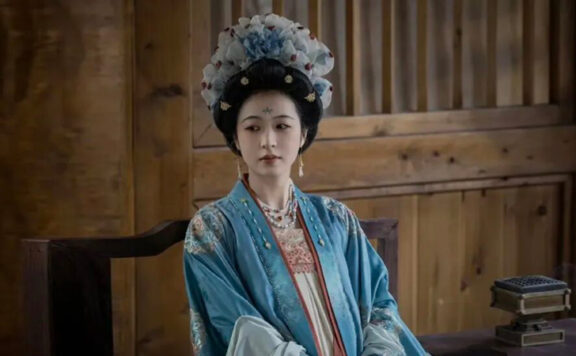
Baoji: China’s Ancient Wrapped Hairstyle
What if a seemingly simple hairdo from a period drama could unlock centuries of fashion secrets? The recent buzz around the costume design in the historical series Swords into Plowshares (太平年) has done just that. Actress Zhou Yutong's (周雨彤) portrayal of Sun Taizhen (孙太真) features a headpiece that sparked a quirky online debate: is that a bath puff on her head? This initial confusion has opened a fascinating window into a traditional Chinese hairstyling technique known as Baoji (包髻), a practice rich with history and surprisingly relevant to modern aesthetics. More Than a Hairdo The eye-catching style worn by Sun Taizhen is not a product of modern fantasy. It is a sophisticated interpretation of Baoji, a method of wrapping the hair with cloth that was particularly prevalent during the Song Dynasty. In its simplest form, a woman would style her hair into a bun and then cover it with a piece of silk, cotton, or gauze. This was not merely about restraint; it was an art form. The wrapping could be shaped to resemble various flowers, a practice that dovetailed with the era's love for fresh blooms, creating a "flower crown" effect on the head. This specific look in Swords… -
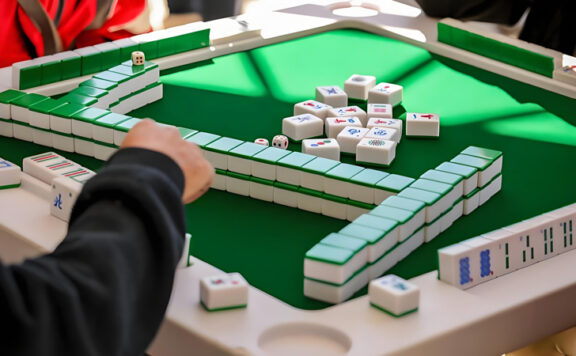
5 Chinese Health Habits Going Viral Globally
What started as a playful hashtag has quietly turned into a global movement. Earlier this year, a Chinese-American blogger named SherryXiiruii jokingly suggested everyone "become Chinese" by adopting simple daily habits—drinking hot water, eating hot pot, and embracing cozy comforts. To everyone’s surprise, millions of international users didn’t just laugh; they joined in. Now, social media feeds are flooded with posts about brewing Go Ji (枸杞) berries, practicing Ba Duan Jin (八段锦), and rediscovering the joy of long underwear. But beneath the humor lies something real. These viral trends aren’t just quirky fads—they are windows into a lifestyle rooted in balance, mindfulness, and centuries of observation. Here’s what the world is discovering, and why these practices might be worth keeping around. 1. Mahjong Therapy It is one of the first challenges new “Chinese” recruits take on: learning to play mahjong. To outsiders, the clacking tiles and complex rules can seem intimidating. Yet once the game clicks, it often becomes an obsession. International fans post videos of their makeshift tables and tile-scrambling techniques, marveling at the "advanced technology" of automatic tables (a common sight in Asian homes). But beyond the fun, research suggests mahjong offers genuine cognitive benefits. The game demands… -
March 1st Shanghai Fangta Park Hanfu Lantern Festival Party
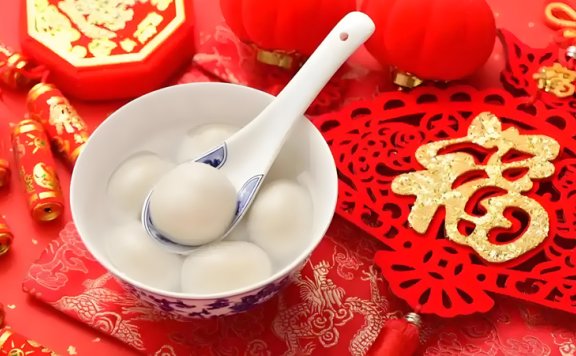
Have you ever wondered what it feels like to step directly into a traditional Chinese painting, surrounded by ancient architecture and the soft glow of lanterns? This March, Shanghai Fangta Park (上海方塔园) is turning that fantasy into reality by inviting thirty young men and women to ditch the modern world for an afternoon and immerse themselves in a curated Lantern Festival Garden Party. It is not just about observing traditions; it is about living them. Performance Time: Sunday, March 1st, 2026 Venue: Shanghai Fangta Park An Invitation to Step Into the Frame This isn't your typical festival fair where you simply walk around and look at displays. The park is actively seeking thirty participants to become part of the living tapestry. Organizers want you to "enter the painting," not just watch it from the outside. Scheduled for the afternoon of March 1st, this event is a deliberate move away from passive observation. It asks you to wear a set of Hanfu, the traditional clothing of the Han Chinese, and wander through the classical gardens as if you truly belong to another era. The focus is on personal experience, making the ancient traditions feel immediate and personal. By limiting the main… -
Harbin Bookstore’s Hanfu Lantern Festival Feast on March 1st
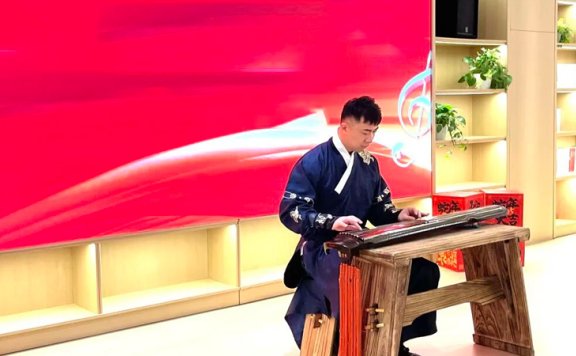
What if you could step through the doors of a modern bookstore and find yourself in a classical Chinese painting? On March 1st, the Harbin Xinhua Bookstore is transforming its third floor into a living tableau of lanterns, moonlight, and ancient melodies. It’s inviting the public to do more than just read about tradition—it’s asking them to wear it, hear it, and play it. This isn't a history lesson; it's a sensory invitation to experience the Lantern Festival through the rustle of Hanfu silk, the twang of the Guqin (古琴), and the suspense of a well-aimed arrow in a pitch-pot game. As the last of the winter snow melts outside on Gogol Street, inside, the warmth of community and culture awaits. Performance Time: Sunday, March 1st, 2026 at 14:00 Venue: Harbin Xinhua Bookstore Music on the Strings, Spring in the Air Forget a stuffy concert hall. Here, the music is part of the atmosphere. The Longjiang Guqin Society (龙江古琴社) is set to perform Drunken Fisherman Singing the Evening (醉渔唱晚) and Beating Clothes (捣衣). These are not just tunes; they are stories told through the fingers. One piece might paint a picture of ancient warriors on horseback, fitting for the energy… -
Hanfu Horse Patterns Through Chinese Dynasties
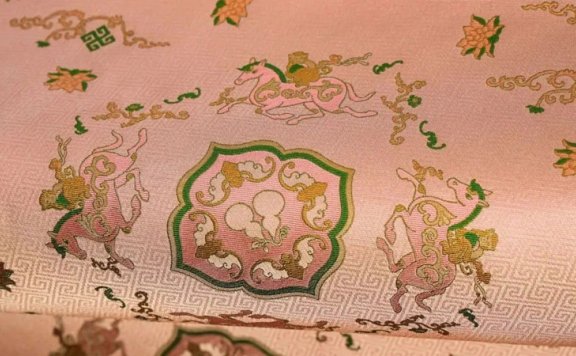
As the Year of the Horse gallops into our lives, the streets are filled with decorations featuring this majestic animal. But the presence of the horse in Chinese culture extends far beyond New Year's ornaments. For centuries, it has been a powerful symbol woven into the very fabric of Hanfu, China's traditional clothing. From mythical beasts to emblems of official rank, the evolution of the horse motif offers a unique lens through which to view the changing aesthetics and values of Chinese civilization. Join us as we trace the hoofprints of this enduring symbol across the rich tapestry of history. Qin and Han Dynasties The story of the horse in Chinese art begins long before it appeared on clothing. In ancient texts like the Zhou Yi · Shuo Gua (周易・说卦), the horse was associated with the creative power of heaven, embodying strength, perseverance, and noble spirit. During the Qin and Han dynasties, this reverence took physical form in magnificent bronze sculptures, such as the renowned horses from the Terracotta Army of Emperor Qin Shi Huang (秦始皇). These were realistic depictions of a vital military asset. However, on the textiles of the time, the horse was notably absent, with cloud and… -
Generation to Generation: The Deadly Chess Player Cai Pingshu
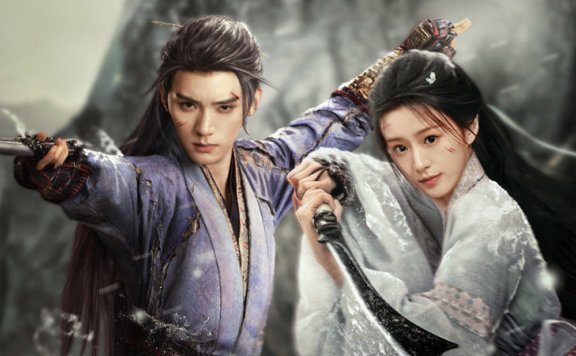
In the intricate tapestry of Wuxia (武侠) dramas, characters often wear masks that hide their true nature. The series Generation to Generation (江湖夜雨十年灯) introduces viewers to a web of love, betrayal, and calculated revenge. While the male lead, Qi Yunke (戚云柯), appears to be a tragic figure consumed by madness and nostalgia, a closer look reveals that the true architect of the entire story's conflict is a woman who has been dead from the start. Cai Pingshu (蔡平殊) is not just a memory that haunts the living; she is the ultimate chess player, a master strategist whose plans were set in motion long before the series' present timeline. Her influence dictates every major character's actions, making her the hidden, yet most powerful, force in the entire narrative. The Heart of the Battlefield: A Master Strategist Cai Pingshu was far more than a beautiful face in the martial arts world. She was a female martial arts fanatic whose true weapon was not just her exceptional skill, but her profound understanding of human nature. She saw people's hearts and desires as a battlefield, and she was undefeated in this arena. This is evident in her final days, when, severely injured and nearing death,… -
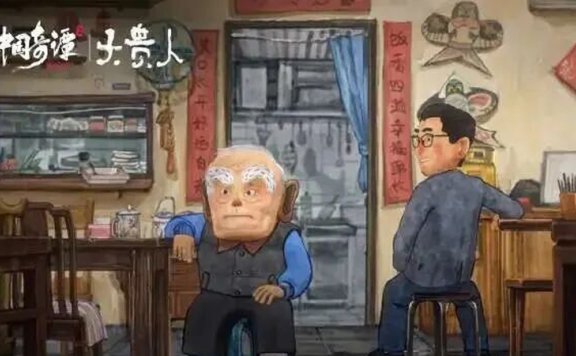
Da Gui Ren: Magic and the Hidden Noble in Beijing's Hutong
What happens when a grown son loses his job but cannot bring himself to tell his father? In the bustling, rapidly transforming city of Beijing, this silent crisis forms the emotional core of Da Gui Ren (大贵人), the ninth episode of the animated series Yao-Chinese Folktales 2 (中国奇谭 2). This is not a story of flashy heroes or epic quests. Instead, it is a quiet, magical realist portrait of two men living in a narrow Hutong (胡同) alley, separated by pride and connected by an unspoken love. The film uses magic not as a spectacle, but as a gentle lens to magnify the everyday dramas of dignity, memory, and the people who shape our lives without us even realizing it. It asks us to look beyond the surface, to find the "noble person" hiding in plain sight. Magic as a Silent Language The father in Da Gui Ren senses his son's shame. Every morning, the son puts on a suit and leaves for a job he no longer has, spending his days wandering the city instead. The father, an old man running a small shop in their aging Hutong, cannot bridge this gap with words. Chinese culture often leaves deep… -
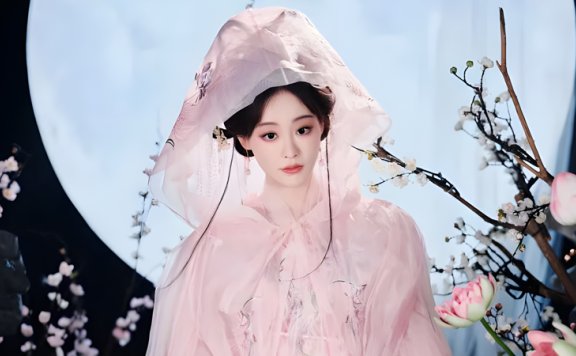
Zhu Xudan Shines in Pink Hanfu and Cloak
For years, the title of "ancient costume goddess" has been passed around liberally in Chinese entertainment. But every so often, an image arrives that doesn't just fit the label—it redefines it. Actress Zhu Xudan (祝绪丹) has just delivered one such moment. A recently released series of promotional photos shows her in a flowing, pink, fairy-like costume, standing under a full moon surrounded by winter plum blossoms. The internet has collectively stopped scrolling. It’s not just another pretty photoshoot; it feels like a glimpse into a living, breathing piece of classical art. The look masterfully blends ethereal grace with tangible texture, sparking immediate curiosity: what story does this "immortal" belong to? Silhouette of a Dream The magic of this look lies in its masterful simplicity. Zhu wears a layered, pink gradient Hanfu-style (汉服) dress. The fabric is a sheer, smoky gauze that seems to float around her rather than simply hang. It’s not a loud, vibrant pink, but a soft, dreamy hue that transitions from pale to deep, much like the fading light of dusk. Over this, she wears a hooded cloak made of the same ethereal material. The design is a stroke of genius—the cloak adds a sense of mystery… -
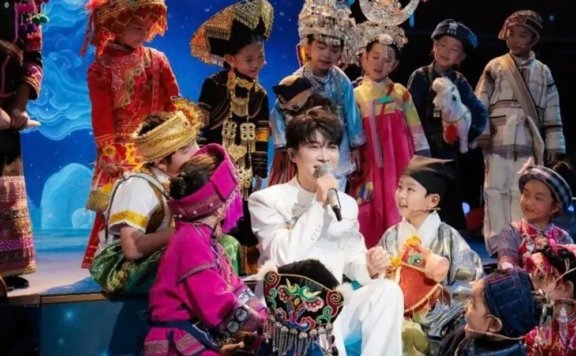
Zhou Shen’s Ji Liang Highlights Hanfu at CCTV Gala
For decades, a peculiar absence haunted China's grandest family portrait. When the nation's 56 ethnic groups gathered on public stages, one chair remained visually empty. The Han majority, representing over 90% of the population, appeared not in ancestral silk and robes, but in everyday t-shirts and shorts. This glaring omission finally found its correction on this year's CCTV Spring Festival Gala. As singer Zhou Shen (周深) performed the ethereal Ji Liang (吉量), a procession of children in ethnic finery walked the stage. Among the Miao, Tibetan, and Uyghur attire, a Han boy finally wore his own—a Ming Dynasty-style Dao robe (道袍), a scholar's scarf upon his head. For countless viewers, it was a moment of profound validation and a question answered: the Han do have traditional clothing, and it's called Hanfu. A Long-Awaited Portrait The image of that young boy, standing proudly alongside his peers from other ethnic groups, resonated far beyond the gala's runtime. It visually articulated what advocates have stressed for over two decades: Hanfu is not a costume, but the traditional attire of the Han ethnic group. Prior to this, the narrative was different. Official ethnic group photos, like one released by the Ministry of State Security… -
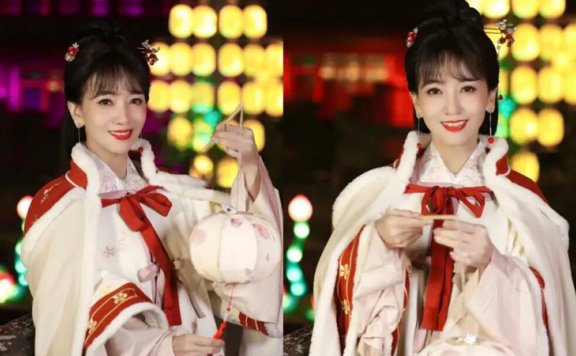
Zhao Yazhi Teaches the Art of Red-White Hanfu Matching
Can 72-Year-Old Zhao Yazhi (赵雅芝) Teach Us About Timeless Style? She dons Hanfu to promote her hometown, reminding us that elegance has no expiration date. This article explores how mature women can master festive, traditional-inspired looks using clever color combinations, drawing inspiration from the legendary actress herself. The Winning Formula: Red and White When Zhao Yazhi recently appeared in Hanfu to promote Henan province, social media took notice. At 72, she chose a striking ensemble: a white cloak over a red square-collared half-sleeve jacket, paired with a red pleated Mamianqun (马面裙). The foundation was a warm white cross-collared inner robe. Her secret? The timeless combination of red and white. These are her signature shades for a reason—they are universally flattering and know no age limit. Choosing the right shade is critical. For a classic look, avoid stark, cold white (like bleached fabric). Opt for a warm, off-white, often called natural white. This subtle shift in tone harmonizes better with traditional aesthetics and softer complexions. The balance of colors also matters. A fifty-fifty split is a safe start, but accessories can shift the energy. Adding more red accessories makes the outfit pop, warms the skin tone, and feels more vibrant and… -
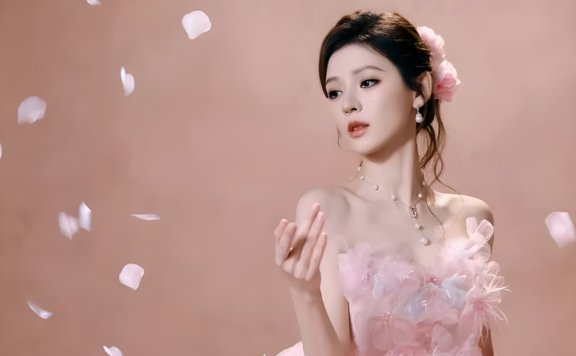
Zhang Yuxi Shines in Pink Fairy Tale Gown
Has Zhang Yuxi (张予曦) Finally Found Her Fashion Soulmate in a Pink Fairy-Tale Gown? The internet seems to think so. In a recent photoshoot that has since gone viral, the actress doesn't just wear a dress; she inhabits an entire dreamscape. Clad in a breathtaking pink tulle gown, she transcends the typical celebrity endorsement, offering a visual narrative that feels both deeply personal and universally resonant. This isn't merely about a beautiful outfit; it's a masterclass in atmosphere, a deliberate and successful alignment of garment, setting, and the star's own ethereal presence. The result is a collection of images that feel less like posed photographs and more like stolen moments from a storybook, sparking a widespread conversation about romance, aesthetics, and the power of a perfect look. The Anatomy of a Dream The magic begins with the dress itself, a confection of pale pink layers that seem to float around her. It's not a simple garment but a complex construction of sheer tulle and intricate, three-dimensional floral appliqués that climb from the bodice and scatter down the skirt. These delicate flowers catch the light in a way that creates a subtle shift in color, a soft gradient from petal pink…