Article
搜索结果:
-
Is That a Scallop or a Song Dynasty Crown?
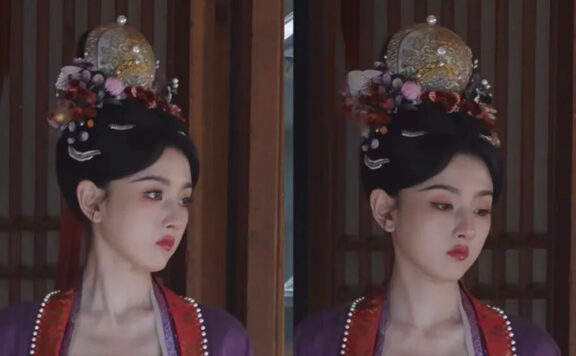
When photos from the set of Si Gong Ling (司宫令) surfaced online, fans did a double take. There stood Song Zuer (宋祖儿), dressed in period costume as Wu Mangmang (吴蒖蒖), with what looked like a giant scallop shell perched on her head. Social media erupted in amused confusion. Was this a quirky new fashion statement? A props department joke? Actually, it was neither. That “seashell” is a faithful—if slightly dramatized—recreation of a Tuan Guan (团冠), a round crown worn by women in the Song Dynasty. What seems bizarre to modern eyes was once a symbol of elegance, status, and everyday practicality. Let’s crack open this historical headwear and see what lies beneath the glossy surface. Not a Seashell The crown on Song Zuer’s head follows a distinct curve: arched at the top, slightly tapered on the sides, and rounded like an inverted bowl. From the front, it really does resemble half a scallop shell. That’s because the Tuan Guan’s basic silhouette is round, plump, and gently domed—think of a shallow ceramic bowl or a flattened ball. The drama’s costume department made it flatter and shinier for the camera, which amplified the seafood resemblance. But the original was never meant to… -
Classical Proportions in Hanfu Flower Hairstyles
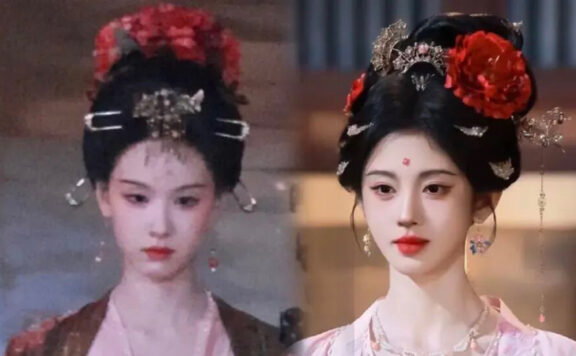
Two actresses, two flower crowns, and one heated online debate. Recent set photos from upcoming Chinese period dramas have revealed the Zan Hua (簪花) hairstyles of Ju Jingyi (鞠婧祎) and Chen Duling (陈都灵). While both looks are stunning, netizens quickly noticed a glaring difference: Chen’s flowers seem to overwhelm her head, while Ju’s appear perfectly proportioned. Why does one feel “off” and the other so harmonious? The answer lies not in the flowers themselves, but in a thousand-year-old painting, a forgotten Tang dynasty secret about hair height, and the tricky art of balancing visual weight. Let’s dive into what makes a Zan Hua work—and why even modern costume designers sometimes get it wrong. The Tall Hair Secret Chen Duling’s styling immediately drew comparisons to Zhou Fang’s (周昉) masterpiece, Court Ladies Wearing Flowered Headdresses (v). This painting, believed to date from the Five Dynasties period (no earlier than late Tang dynasty), has been copied by countless film and TV productions. Yet almost none have truly captured its essence. Why? The secret lies in the Eji (峨髻), a towering hairdo that literally means “lofty and soaring.” Unlike ordinary high buns, the Eji rises to a height at least equal to the wearer’s… -
Love That Lets Go in Love Beyond the Grace
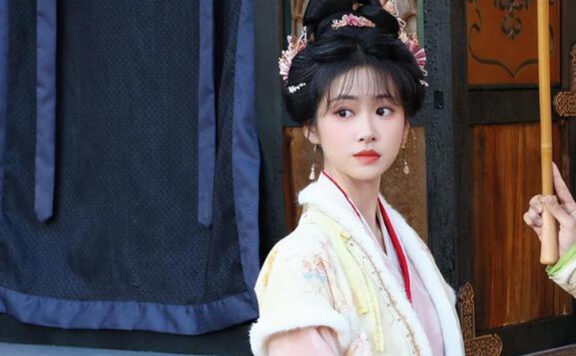
Five years after they parted, a ghost and a general meet again—only to discover that love’s deepest act is not holding on, but walking away. In the finale of Love Beyond the Grace (白日提灯), He Simu (贺思慕) and Duan Xu (段胥) make choices that shatter hearts and redefined sacrifice. He, a four-hundred-year-old spirit who guards the realm of Gui Xu (归墟), finally tastes food again after swapping senses with him. But that taste comes with a price: his blood, his years, his life. Meanwhile, Fang Xianye (方先野) watches from the shadows, loving Duan Jingyuan (段静元) in silence, refusing to speak a single word of confession. Why? Because when tomorrow is a battlefield, the truest love wears armor—and says goodbye before the first arrow falls. Bitter Sweetness He Simu devoured ten meat pies in one breath. For the first time in four centuries, she felt the salt, the grease, the warmth sliding down her throat. That was the gift Duan Xu gave her when they exchanged their senses—taste, touch, smell, all the things she had lost after death. But gifts from the living to the dead are never free. The moment she left his side, he coughed up a mouthful of… -
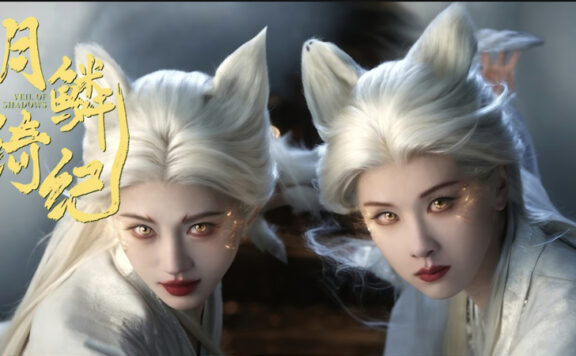
A Werewolf‑Style Drama in Veil of Shadows
What if a TV drama felt like a giant game of Werewolf, yet wrapped you in visuals so hauntingly beautiful they seem to drift outside time itself? That is exactly what Veil of Shadows (月鳞绮纪) delivers. It doesn't just tell a story; it traps you in a maze of lies, loyalty, and reverse after reverse. Here, every character looks like a painting come to life, and every frame whispers a question: who is the real villain? For viewers tired of predictable plots and flat aesthetics, this Xianxia series offers a feast for both the eyes and the mind. You don't just watch it — you fall into its world, where beauty and betrayal are two sides of the same jade. Beauty That Breaks the Clock Let’s be honest: most fantasy dramas look good, but few stop you cold with a single image. Veil of Shadows does that constantly. Take the moment when Lu Wuyi (露芜衣) collapses while shielding Ji Ling (寄灵) from a falling spike. Her skirt explodes outward like a midnight flower, catching light as if the sun itself paused to admire her. That is not just a costume; it is a statement. Director Guo Jingming (郭敬明) has always… -
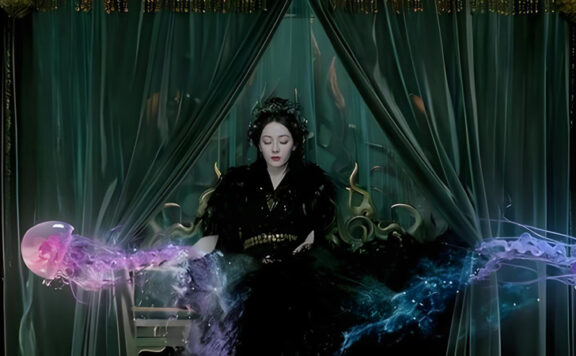
He Simu’s Clever Trap in Love Beyond the Grace
Love Beyond the Grace (白日提灯) hides a brilliant scheme behind a bloody rescue. He Simu (贺思慕) kills a mortal to save Duan Xu (段胥) from his former master Mu’er Tu (穆尔图) in the Northern Chong (崇) prison. But was it rage? Or a clever trap? She knew breaking the Jinbi Fa (金壁法) – the law her own father created – would cost her. Yet she struck anyway. The story asks: when justice wears a mask, who sees the face underneath? What follows is not a tantrum but a chess move. One that takes five years of her life. One that exposes a killer hiding in plain sight. The Doubt He Simu never believed her father simply died. He had promised to stay with her after her mother passed. A man who loved her that much would not break his word. Plus, Gui Xu (归墟) was in chaos. He would never leave her that mess. So when she became the next Ling Zhu (灵主), she started digging. Her eyes landed on Yan Ke (晏柯). He seemed loyal. Too loyal. When Yan Zhang (颜璋) tried to kill her with puppet magic, Yan Ke silenced him immediately – no questions, no trial. That… -
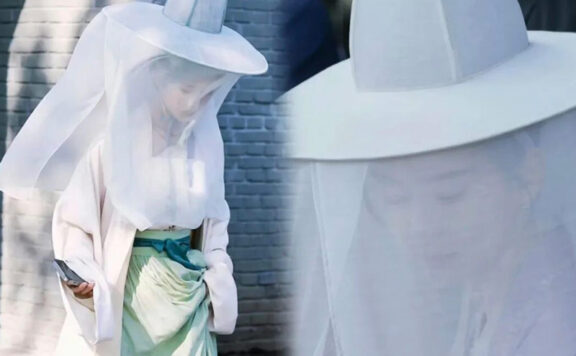
Why Ju Jingyi’s Veil Looks Like Guan Yin
In a recent promotional still from the Chinese costume drama Veil of Shadows (月鳞绮纪), actress Ju Jingyi (鞠婧祎) appears with a translucent veil draped over her head. Within hours, the internet lit up with comparisons to Guan Yin (观音), the bodhisattva of compassion. But here's the twist: that "divine" look wasn't invented for deities or bridal photos. Your great-great-great-grandmother—or rather, her Song Dynasty ancestor—might have worn the exact same thing to buy tofu at the market. Long before Western wedding veils or Hollywood red carpets, Chinese women threw a square of purple silk over their heads and called it a day. They called it Gai Tou (盖头), and it was as ordinary as your favorite hoodie. So why do we now see it as holy? Let's rewind a thousand years. Song Dynasty Roots The Song Dynasty (960–1279) inherited plenty from the Tang Dynasty (618–907), including fashion rules. But while Tang women wore a hat called Wei Mao (帷帽)—a stiff bamboo hat with a dangling mesh curtain—the Song version was stripped down. According to Zhou Hui (周煇) in his Qingbo Magazine (清波杂志), "A scholar-official on horseback wears a cool-shirt; a woman walking the street covers half her body with a square… -
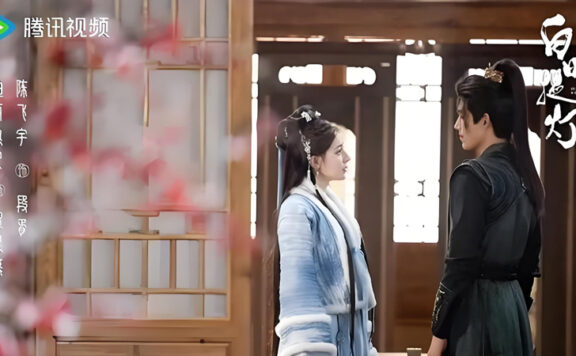
Why 22 Lovers Failed But He Succeeded in Love Beyond the Grace
In Love Beyond the Grace (白日提灯), a supernatural romance set in a war-torn fictional realm, the ghost ruler He Simu (贺思慕) has lived for four centuries and cycled through twenty-two lovers. None of them stuck. Then comes Duan Xu (段胥), a mortal general with a sharp mind and an even sharper scheme. He does not win her with grand speeches or desperate fights. Instead, he orchestrates a fake wedding, a kidnapped bride, and a clever trick with a paper talisman. The result? He becomes number twenty-three — and the last. How did he pull it off while twenty-two others failed? The answer lies in three things: his strategic mind, his willingness to truly see her, and a wedding night that was anything but ordinary. The Calculated Wedding When Duan Xu returns to his family home in Nan Du (南都), his father pushes him to marry. Three noble daughters are offered. Most viewers might expect Duan Xu to fight for his love, He Simu. He does not. Instead, he investigates quickly and picks Wang Suyi (王素艺), the third daughter of Minister Wang. Within days, he sets a wedding date. He Simu feels a sting of jealousy — but she should have… -
Veil of Shadows: The Truth About Ji Ling and Yuan Xizai in Ep18
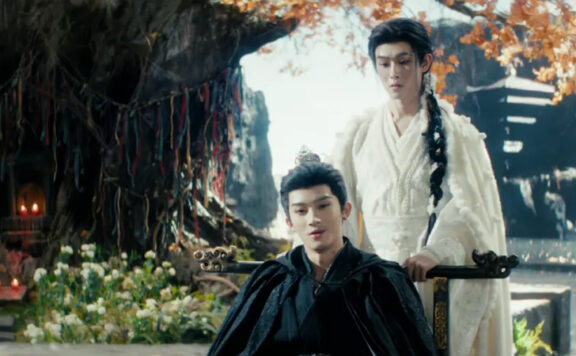
Who Is the Real Dragon God? Veil of Shadows (月鳞绮纪) Episode 18 Finally Answers! After watching episode 18 of Veil of Shadows, one burning question finally got its answer. Why do three people—Yuan Wuhuo (源无祸), the butterfly demon Yuan Wuhuo (源无获), and Li Jie (厉劫) from the Serpent Scale Sect—share the exact same face? And what is the real connection between Ji Ling (寄灵) and Yuan Xizai (源息灾)? The episode drops clues like falling leaves, and by the end, the picture becomes painfully clear. It is a story of sacrifice, stolen identity, and a brotherhood that refuses to die—even after death. The Butterfly and The Lost Long before the events of the Starstone Illusion, the ancient monster Jiuying (九婴) had already planted her seeds. After possessing Wu Wangyan (雾妄言) to slaughter the serpent tribe, she learned that Wu Shiguang (武拾光) was actually the tenth son of the dragon. To track him, she smashed a piece of Wu Wangyan’s soul essence into young Wu Shiguang’s body. But years passed, and he never turned into a dragon. Suspicious, she sent out her spies: a pair of twin Six-Eyed Butterfly Demons. The butterflies found Yuan Wuhuo alone in a mountain cave. He was… -
The Truth About Imitating Chu Qiao in Rebirth
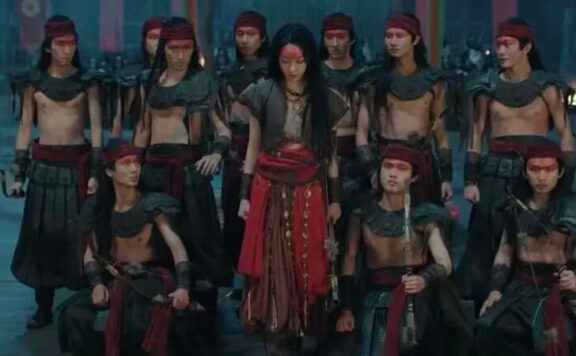
In Rebirth (冰湖重生), after Yan Xun (燕洵) tricks Zhuge Yue (诸葛玥) into falling through the ice, Chu Qiao (楚乔) loses all love for him. She escapes as soon as she recovers her memory. But Yan Xun (燕洵) cannot let her go. Missing her drives him restless and moody. Meanwhile, the tribes in Yan Bei grow restless too, each hiding its own schemes. One night, a dancer who looks and moves like Chu Qiao appears before Yan Xun. He cannot take his eyes off her. Yet when she sneaks into his tent later to seduce him, he nearly strangles her to death. Soon after, another woman, Helian Ling (赫连凌), uses the same “look like Chu Qiao” trick. She spends one night with him and wakes up as his princess. Why does one copycat win the prince while the other almost loses her life? The answer lies in three simple differences. One Nearly Dies The dancer’s mistake was thinking that looking like Chu Qiao was enough. She dyed her hair, copied her movements, and danced the same way. When Yan Xun watched her perform, he did feel a pull. But she moved too fast. That same night, she walked into his tent… -
Ji Ling the Puppet in Veil of Shadows
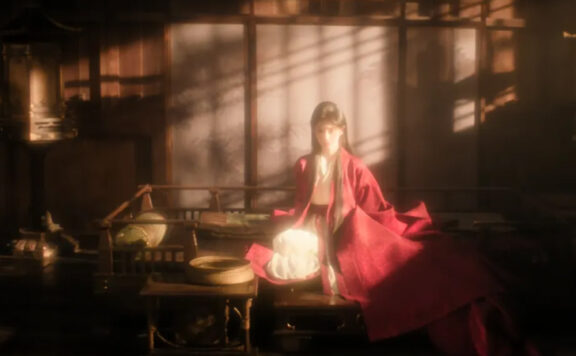
What if the god you trusted turned out to be a puppet himself? In episode 9 of Veil of Shadows (月鳞绮纪), the drama delivers a gut-punch twist: the Dragon God is not the real Chiwen (螭吻). He is just a stand-in, a hollow mask hiding an even stranger truth. And yet, beneath that cold facade, his feelings for Lu Wuyi (露芜衣) burn with an intensity he cannot deny. This episode does not just flip the script on power and identity—it asks a painful question: can a fake god feel real love? The answer, it turns out, is more heartbreaking than any lie. The Wooden Truth When Wu Shiguang (武拾光) hunts down Ji Ling (寄灵), he believes he has found the Dragon God—the one who destroyed his clan. He slices off Ji Ling's arm, expecting blood. Instead, a piece of carved wood falls to the ground. Ji Ling is not a god. He is a puppet. A beautifully crafted marionette with the exact face of the Dragon God. Ji Ling refuses to believe it. He touches fire to prove he can feel pain. He wipes a tear from his eye. He remembers being a little fox saved from falling rocks. How… -
How Jiu Ying Fell for Ji Ling’s Trap in Veil of Shadows
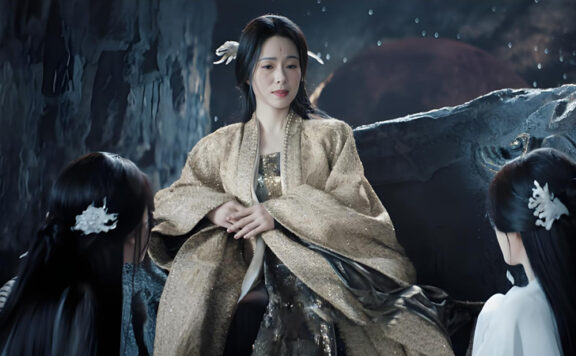
She's an ancient beast who has lived for tens of thousands of years. She nearly destroyed the world. She's so sharp that she can spot a lie from a mile away. So how did Jiu Ying (九婴), the main villain of Veil of Shadows (月鳞绮纪), get tricked by a few simple sentences from Ji Ling (寄灵), a blind fox from under Nan Shan (南山)? The answer isn't that Ji Ling is some master manipulator. It's that Jiu Ying's own mind built the trap for her. She wanted something so badly that her common sense took a holiday. And that made her the easiest mark in the entire drama. The Arrogance of an Ancient Beast Jiu Ying has been around since before humans learned to make fire. She's seen empires rise and crumble. She's watched heroes beg and villains weep. In her eyes, Ji Ling is a child playing dress-up. She doesn't fear his little schemes because she believes she can crush him with one claw behind her back. The power gap between them is that enormous. Remember, it took nine dragons sacrificing themselves just to seal her away the first time. Each dragon swallowed one of her nine heads. And… -
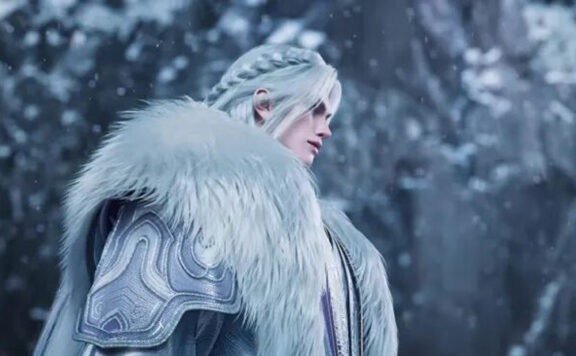
Qi Jingchun’s Magic Line in Sword of Coming 2
In the animated series Sword of Coming 2 (剑来2), a lingering ghost of Qi Jingchun (齐静春) drifts through the world long after his death. He rarely appears to anyone, yet when he does, it always revolves around one poor boy from a small town. That boy is Chen Ping'an (陈平安), and Qi Jingchun has a strange but powerful trick: he asks powerful beings to “take a look at that boy.” It worked on the legendary Sword Mother, who ended up bonding with Chen Ping'an. Now, Qi Jingchun tries the same line on Bai Ze (白泽), the strongest creature in the Wildlands. What happens when a god-like being watches a mortal child’s life? This article explores why a single glance at Chen Ping'an can change minds, break prejudices, and even offer hope to the most weary of souls. The Wandering Soul When Bai Ze finally meets Qi Jingchun’s remnant spirit, his first words are telling: “I tried to find you, but you hid. Now that I’ve given up, you show up yourself.” For a being as powerful as Bai Ze, this admission is rare. He is the undisputed number one fighter in the Wilderness, known as the “Teacher of Ten Thousand… -
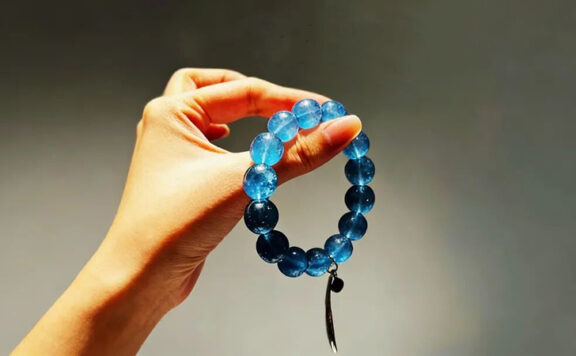
Why Your Outfit Needs That Crystal Touch?
Most people think of crystals as little energy boosters or spiritual talismans. But if you only wear them for their metaphysical properties, you are missing out on a serious style secret. In fact, a well-chosen crystal can be one of the most elegant accessories in your daily wardrobe. It sits somewhere between a gemstone and jade—less flashy than a diamond, yet far more lively and transparent than ordinary costume jewelry. Whether you pair it with a casual linen shirt or a tailored blazer for work, a single crystal piece can become the focal point that makes you stand out. This article shares four simple, practical ways to use crystals for that effortless, high-end look. Pick Your Color If you want a crystal that goes with everything, start with White Crystal or Moonstone. Neither one fights with your skin tone. Their clean, clear appearance works just as well in a boardroom meeting as it does at a weekend brunch. They also add a subtle brightness around your face without screaming for attention. That is why many stylists call them the "little black dress" of crystal accessories. For those with a yellowish undertone to the skin, try Aquamarine or Prehnite. The cool,… -
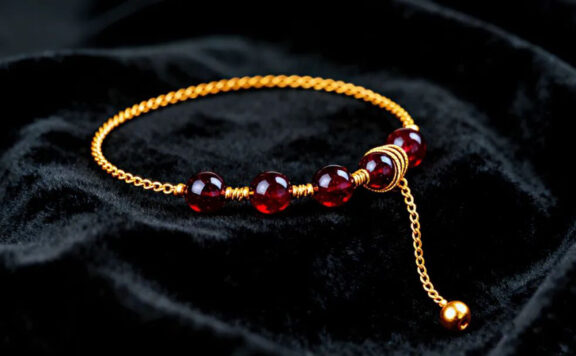
4 Ways to Style Garnet Jewelry for a Look
Many women own a garnet bracelet but rarely wear it, thinking it looks dull or outdated. In fact, wine red garnet and Zi Ya Wu (紫牙乌) have beautiful deep colors, but they only shine when paired with the right accessories. Below are four perfect pairings to bring out the best in your garnet, for daily casual wear or glamorous occasions. Garnet & Pearl The combination of deep red garnet and creamy white pearl is elegant and balanced, like red wine beside a seashell. The strong red tone softens beautifully, while the pearl gains a warm glow instead of appearing overly formal on its own. This pairing flatters women in their 30s and 40s, suitable for both office meetings and dinner parties—polished and confident without being flashy. For the best look, choose white or cream pearls slightly larger than garnet beads; pink pearls should be avoided as they clash with the stone’s warm hue. Many who wear this combination receive compliments, often mistaken for designer jewelry. Feminine, graceful, and versatile, it is a timeless match that belongs in every jewelry collection. Garnet & Cloisonné Cloisonné, a traditional Chinese craft with vivid blue enamel, creates a striking contrast with garnet. As complementary… -
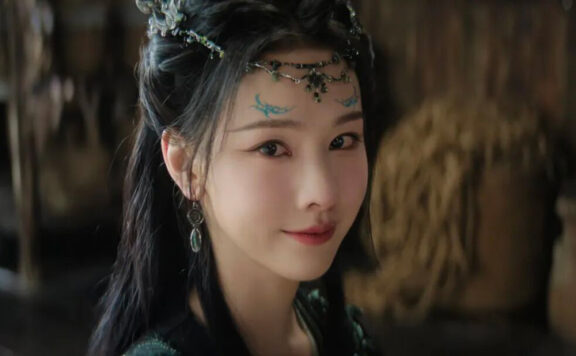
Veil of Shadows: Why Fog and Light Tops
Veil of Shadows (月鳞绮纪) dropped a bombshell in early April. Within days of its release on Youku, the fantasy drama broke the platform’s heat index record. But here’s the twist: the couple everyone is losing their minds over—nicknamed “Fog and Light”—gets less than ten minutes of screen time per episode. Meanwhile, the main pair played by Ju Jingyi and Tian Jiarui has far more scenes yet struggles to match that frenzy. So what’s the secret? It’s not about who has more minutes. It’s about what those minutes do to your heart. Fake Identities, Real Hearts The “Fog and Light” duo—Cang Hao (沧淏, played by Zeng Shunxi) and Qing Yi (清漪, played by Chen Duling)—enter a dream realm called the Star Stone dimension. They know it’s an illusion. He knows she’s not really his wife. She knows he’s not truly her husband. Yet they decide to live fifty years as if none of that matters. That choice changes everything. He brings home a baby girl, Wu Shiguang (武拾光). She paints demon marks on the child’s face, sews tiny clothes, and weaves a bracelet from sea grass and shells—a symbol of eternal love among his merfolk clan. When he confesses he wants… -
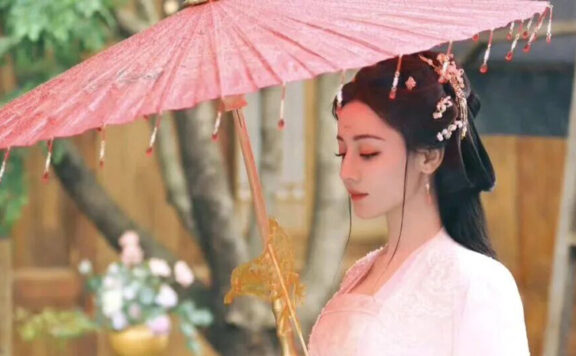
Love Beyond the Grace: He Simu Marries Duan Xu
How Did He Simu (贺思慕) Gain Her Senses and Marry Duan Xu (段胥) in Love Beyond the Grace’s (白日提灯) Finale? After four hundred years as the ruler of the dead, she finally smashed the lantern that bound her to an endless, numb existence. In the hit Chinese drama Love Beyond the Grace, the ending flips everything upside down. He Simu, once the emotionless master of Gui Xu (归墟), a dark realm of lingering souls, trades her godly power for something far more fragile and precious: the ability to feel. No more cold void. No more watching lovers turn to dust. She walks into a small human town, takes the hand of a mortal general named Duan Xu, and becomes his wife. This is not a grand epic of armies or magic. It is a quiet story about a woman who learns to taste tears, hear laughter, and finally understand why humans fear death so little when love is real. Five Senses Awaken The moment the Wanling (万灵) Lantern goes out, a strange warmth floods her body. For centuries, He Simu felt nothing—no wind, no scent, no pain. She was a ghost queen ruling over shadows. But now, as the flame… -
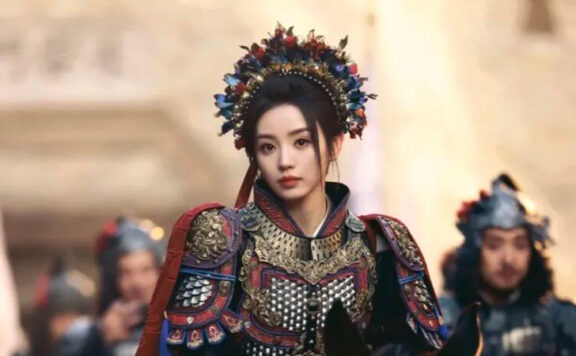
Pursuit of Jade's Armor and Flowers: Brave or Bizarre?
A female general strides onto the battlefield. Her body is wrapped in dark iron armor, yet her hair blooms with a cascade of fresh peonies, jasmine, and roses. This is the image of Fan Changyu (樊长玉), played by Tian Xiwei (田曦薇), in the historical drama Pursuit of Jade (逐玉). The moment the stills dropped online, Chinese social media exploded. Some called it a breathtaking fusion of steel and softness. Others mocked it as a ridiculous costume fail—asking, “How can she fight with flowers wobbling on her head?” The debate isn’t just about a TV show. It cuts to the heart of how traditional culture should be adapted for modern screens. Should armor be purely menacing? Can delicate beauty ever share space with bloody conquest? And what does a real female warrior from 400 years ago have to do with a fictional character’s hairdo? Let’s walk through the petals and the plate metal. History vs. Fantasy The loudest critics point to one word: authenticity. They argue that a military commander’s first duty is to intimidate enemies, not to look pretty for a photoshoot. “Flowers on a general feel too feminine and distracting,” one Weibo user wrote. “In a real fight, those… -
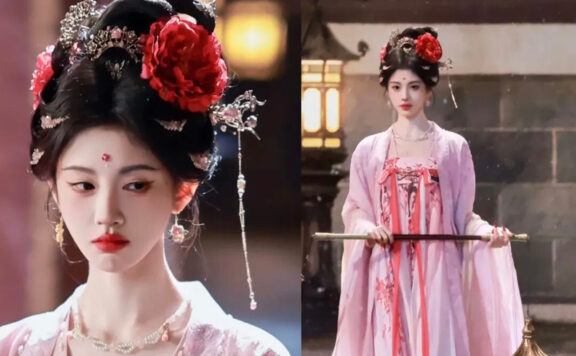
Ju Jingyi’s Floral Headdress in Veil of Shadows Sparks Debate
Is Ju Jingyi (鞠婧祎) wearing a flower the size of a dinner plate on her head in the new costume drama Veil of Shadows (月鳞绮纪)? Netizens think so, and they are not happy. The actress, playing a character named Lu Wuyi (露芜衣), recently unveiled a Tang Dynasty-inspired look that features an enormous, bright pink blossom perched atop her elaborate bun. While the drama promises fantasy and romance, the internet has zeroed in on one question: is that flower historically possible, or just a stylistic train wreck? The answer, according to historical records and paintings, leans heavily toward the latter. This isn't just about one actress's accessory—it's about how modern productions misunderstand an entire era's aesthetic. Let's dig into why that flower feels so wrong, and what Tang women actually put in their hair. Historical Reality If you time-traveled to the late Tang or Five Dynasties period, you would be hard-pressed to find a lady sporting a flower as loud and oversized as the one on Lu Wuyi's head. Tomb murals and religious paintings from that era tell a different story. In scenes of daily life, women with complex, sky-high buns often accessorized with small, delicate blossoms or a combination of… -
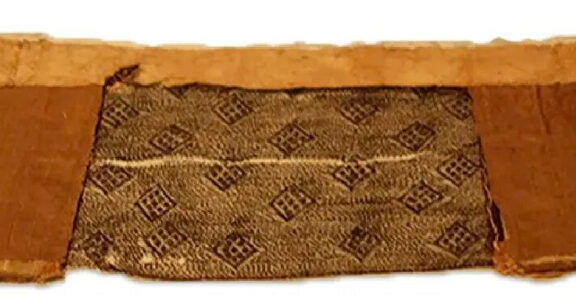
Eye Veil: Ming Dynasty's Social Anxiety Solution
In a world where social anxiety feels like a modern epidemic, imagine stepping out with a face covering that hides your expression, blocks the sun, and excuses you from awkward greetings. Sounds like a designer gadget from today’s e-commerce sites, right? Surprisingly, this accessory existed centuries ago in Ming Dynasty China. It wasn't a medical mask or a fashion statement for celebrities—it was the“eye veil,” a square silk cloth with two narrow slits for the eyes. People wore it alone, tied behind the head, often made of thin gauze decorated with pearls. It kept dust away, shaded the face from harsh sun, and—most intriguingly—offered a perfect escape from social obligations. Think of it as a portable invisibility cloak for the socially overwhelmed. And one of its most famous fictional users? Jin Ping Mei’s (金瓶梅) notorious playboy, Ximen Qing (西门庆), who donned it to hide his identity while sneaking around town. But was he hiding from enemies—or from having to bow and chat? Let’s pull back the veil. Face Hiding, Freedom Finding Why would a grown man in the Ming Dynasty walk around with his face nearly covered? Portuguese missionary Álvaro Semedo, in his book History of the Great and Renowned… -
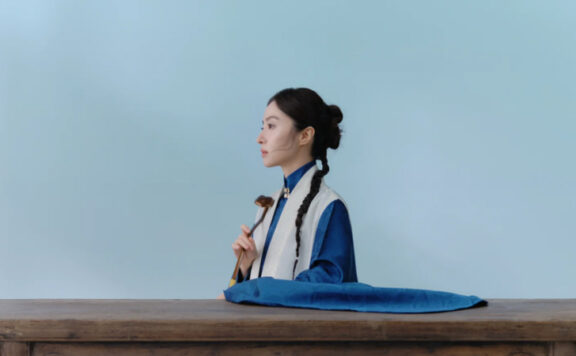
Deep Cyan & White: Hu Bingqing’s Bijia Hanfu
She looks like she just walked out of a silk painting. When actress Hu Bingqing (胡冰卿) released her latest magazine photoshoot in Hanfu, the internet paused. Unlike the typical glamorous or overly romanticized styles seen on other celebrities, her outfit carried a quiet, scholarly elegance. The color palette was unusual—deep, almost moody green paired with crisp white. And the garment itself? A sleeveless, open-front long coat that few modern wearers would recognize. It wasn't a familiar Ming Dynasty robe or a Tang Dynasty skirt. It was a Bijia (比甲), a forgotten piece of nomadic practicality turned aristocratic fashion. Hu Bingqing didn't just wear clothes; she wore a historical footnote. And in doing so, she reminded us that the most striking fashion statements are often the ones buried deepest in the past. A Vest from History At first glance, the Bijia resembles a modern vest or a long waistcoat. But look closer. It has no sleeves, no standing collar, and opens straight down the front with a center split. The sides are slashed from armpit to well below the knee. Its length varies—some versions stop at the hip, others at the knee, and a few nearly graze the ankle, leaving less…