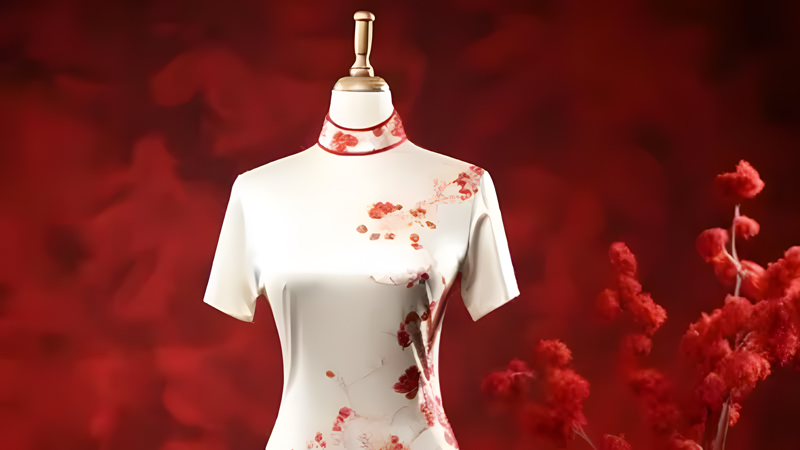
The Qipao, instantly recognizable by its high collar, delicate Pankou (knotted buttons), and figure-skimming silhouette, transcends mere clothing. It's a canvas where Chinese heritage meets feminine grace. More than just fabric, it demands a certain presence – a synergy of posture and movement that elevates its inherent elegance. Wearing a Qipao beautifully isn't solely about physique; it’s an art form rooted in understanding its evolution and mastering the subtle language of deportment. From its practical origins to its status as a global fashion statement, the Qipao whispers stories of resilience and refinement. To truly honor this garment and project its intended allure, embracing specific etiquette is paramount. Let's decode the posture secrets that unlock the Qipao's full, captivating potential.
1. Standing
Foundation is everything. A Qipao magnifies the line of the body, making impeccable posture non-negotiable. Imagine a gentle string pulling you upwards from the crown of your head. Shoulders should be effortlessly open and back, not stiffly squared, allowing the collar to frame the neck elegantly. Engage the core subtly, lifting the ribcage and tucking the pelvis slightly to avoid arching the back. This creates the signature elongated, "growing upwards" stance.
Legs remain together, knees soft but aligned. Avoid locking them rigidly. The goal is a line of effortless verticality – head, shoulders, hips, calves, and heels ideally forming one graceful column. This alignment prevents the fabric from pulling awkwardly and showcases the dress's clean lines.
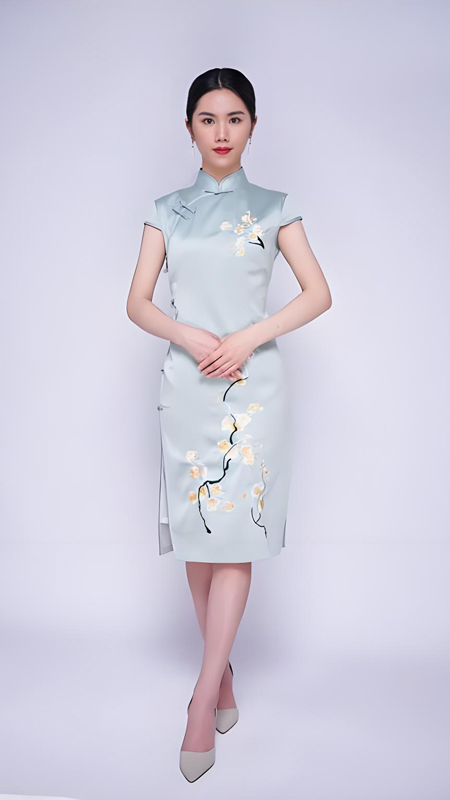
Arm placement varies by context. For daily interactions, let arms rest naturally at the sides, hands relaxed. A poised variation involves gently overlapping the fingers, thumbs tucked softly into the palms with the "tiger's mouth" (the space between thumb and index finger) facing inward. This prevents fidgeting and maintains a serene line.
In formal or business settings, adapt. One graceful method is to rest the forearms lightly on the hips, hands again overlapping with thumbs tucked inwards. For the utmost formality, especially in official situations, clasp hands gently in front, just below the navel, left hand beneath the right, thumbs neatly enclosed within the palms. This projects calm authority and respect.
2. Seating
Transitioning from standing to sitting requires mindful fluidity. Approach the chair, turn smoothly, and lower yourself with control, ideally using one hand to lightly gather the back of the Qipao beneath you as you sit. This prevents unsightly wrinkles or bunching that can distort the dress's sleek drape.
Once seated, occupy roughly the front two-thirds of the chair. Resist the urge to slump back against the support; maintaining an independent, upright spine is crucial for preserving the Qipao's elegant line and your own regal bearing. Leaning back often causes the fabric to pull across the torso or hips awkwardly.
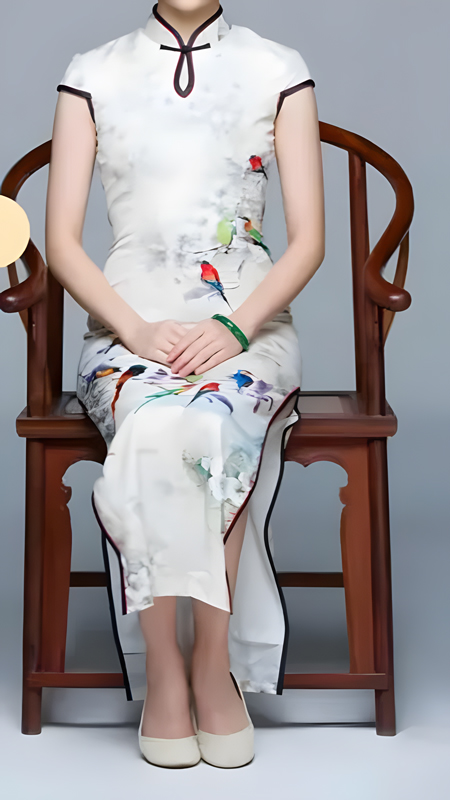
The classic Qipao sitting posture involves keeping the knees together and angled subtly to one side. This creates a flattering diagonal line and prevents the skirt from hiking up excessively, especially with higher slits. Feet can be slightly staggered or neatly tucked beside each other. Ensure the slit falls naturally and modestly.
Keep your upper body lifted, shoulders relaxed but not slumped. Hands can rest gently clasped in the lap or follow the formal standing hand positions adapted for sitting. The key is sustained poise – avoid crossing legs tightly or sprawling, which compromises both the dress's integrity and the desired image of composed elegance.
3. Walking
Movement brings the Qipao to life. Initiate steps from the core, maintaining the same vertical alignment cultivated while standing. Visualize the head, shoulders, and hips moving as a connected unit. The ideal stride creates the illusion of the head, shoulders, hips, calves, and heels moving in a harmonious, near-vertical plane.
Keep shoulders level and stable, avoiding any visible up-and-down bouncing or rolling. Arm swing should be minimal, natural, and originate from the shoulder joint, not the elbow. Hands swing gently forward and back in rhythm with the opposite leg. Stiff, robotic arms disrupt the fluidity; overly wide swings look inelegant.
Step length should be moderate – neither mincingly short nor overly long and lunging. Aim for smooth, gliding steps where the ball of the foot touches down first, followed by the heel, creating a quiet, graceful progression. This controlled pace allows the Qipao to sway gently with the body's motion, highlighting its cut and the subtle reveal of the leg through the slit without being hurried or revealing.
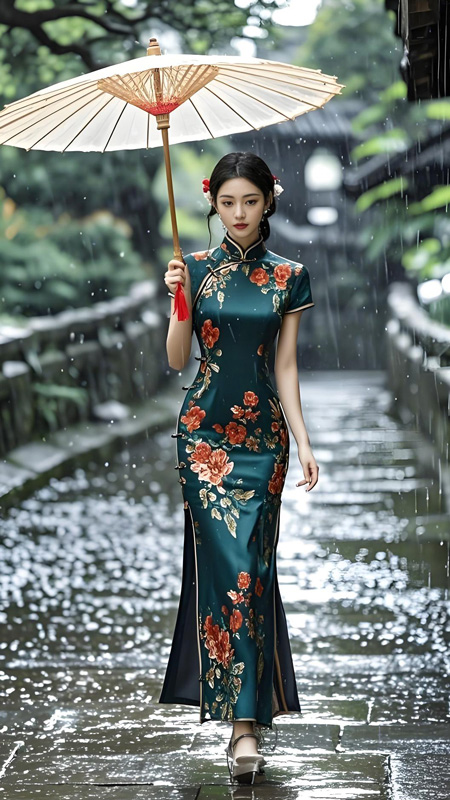
A relaxed, genuine smile is the perfect finishing touch. It softens the formality of the posture and radiates the inner confidence that truly completes the Qipao's transformation. Focus forward, move with quiet assurance, and let the rhythm of your walk be an extension of the dress's inherent grace. The Qipao becomes a moving sculpture.
The Qipao is more than attire; it's an invitation to embody a centuries-old ideal of cultivated femininity. Mastering these postures – the grounded stance, the poised descent, the rhythmic glide – isn't about constraint, but liberation. It awakens an awareness of line and presence that translates into profound elegance. By honoring the Qipao's heritage through mindful movement, the wearer doesn't just wear a dress; she becomes its most captivating expression, projecting a beauty that is timeless, confident, and undeniably alluring.