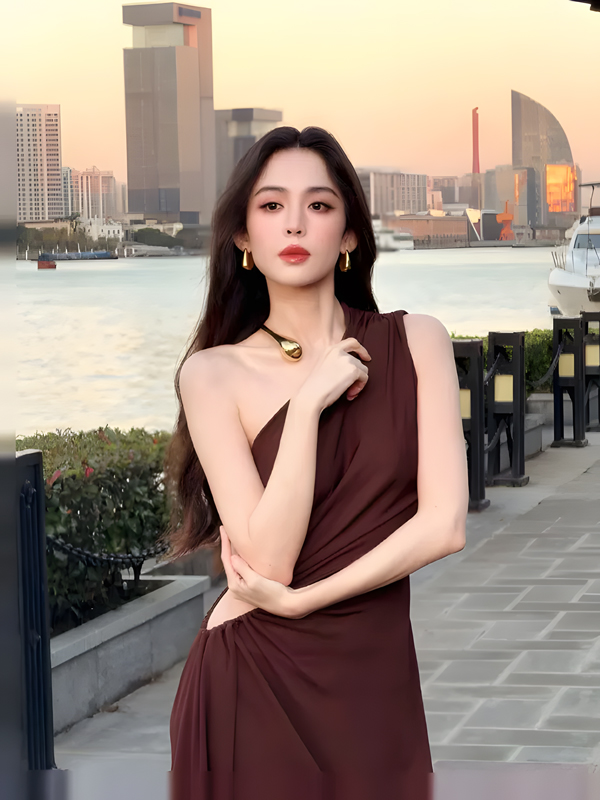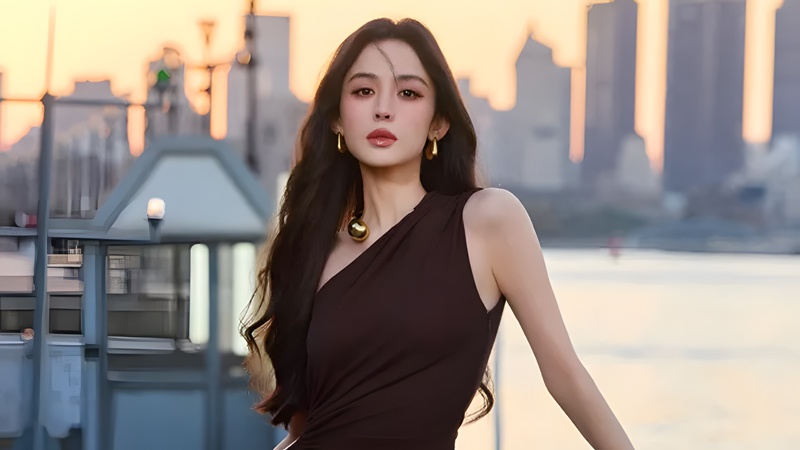
What happens when fashion becomes a language of its own, speaking through silhouette, light, and landscape? A recent series of photographs featuring actress Nazha (娜扎) offers a compelling answer. Captured against the backdrop of a dusk riverside, she is dressed in a deep chocolate brown, one-shoulder gown. The images transcend mere celebrity photography, resembling carefully composed painterly frames where human form and environment engage in a silent, elegant dialogue. This is not just a display of attire but a statement on modern elegance, where subtlety and precision create an impact far greater than overt spectacle.
A Dusk Canvas
The location is as crucial as the attire. The fading golden hour light by the river provides a soft, diffuse glow that naturally enhances the rich, chocolate hue of the gown. This warm, natural spotlight illuminates Nazha's complexion and adds a layer of cinematic depth to the scene. The water's surface, reflecting the twilight sky, creates a serene and expansive canvas, making the figure appear both grounded and ethereal. The choice of this setting demonstrates a sophisticated understanding of how environment frames fashion, transforming a photoshoot into a narrative moment suspended in time.
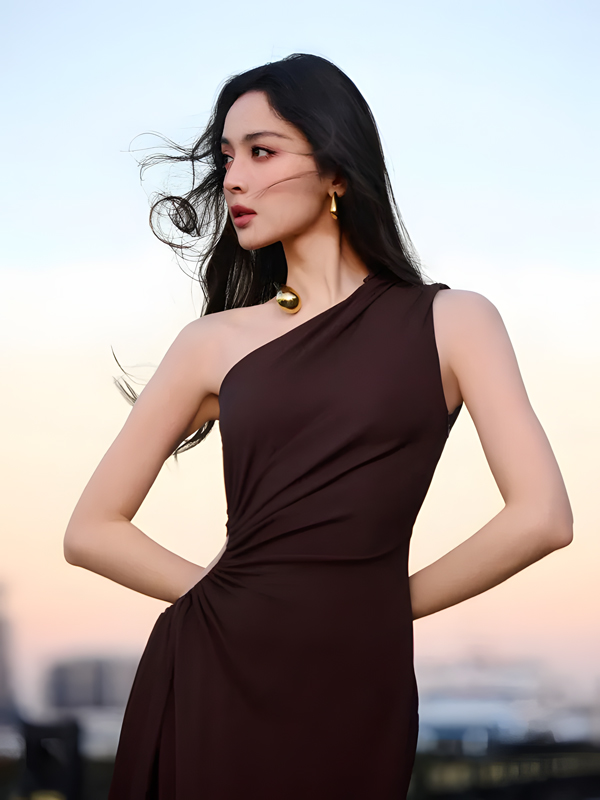
The gown itself is a masterpiece of understated design. Its single shoulder strap elegantly reveals her collarbone and neckline, offering a glimpse of femininity without excess. The fabric's excellent drape moves with a gentle fluidity, creating soft waves that echo the calm river behind her. This harmony between the garment's flow and the environment's tranquility is deliberate, showcasing a holistic vision for the visual story being told. Every element, from the natural lighting to the dress's movement, is curated to build a cohesive and immersive aesthetic experience.
Architecture in Detail
Upon closer inspection, the dress reveals its architectural genius. The most striking feature is a combination of twisted draping and a strategic cut-out at the waist. This design does not scream for attention; instead, it masterfully sculpts and defines her figure, highlighting a natural waist-to-hip ratio. The cut-out introduces a hint of skin, a subtle play of reveal and conceal that feels modern and sophisticated. It proves that sensuality in fashion can be powerfully communicated through implication and skilled construction rather than exposure.
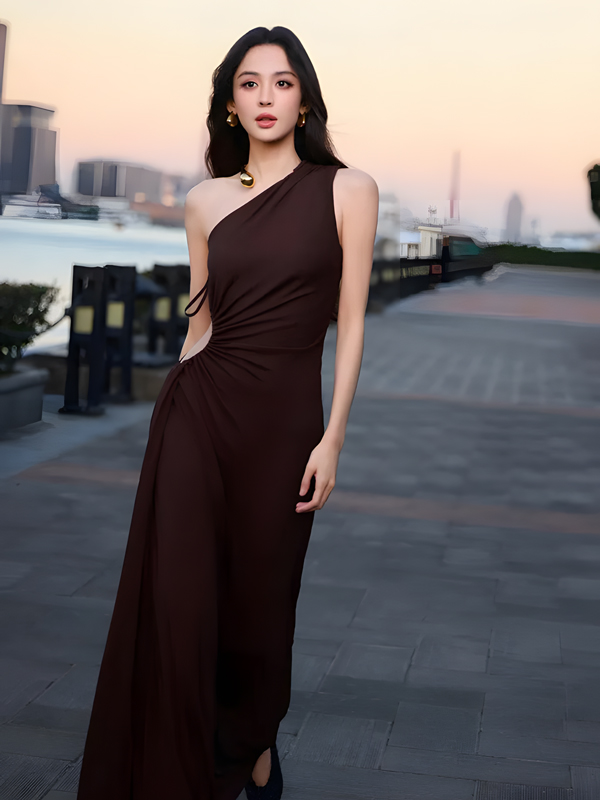
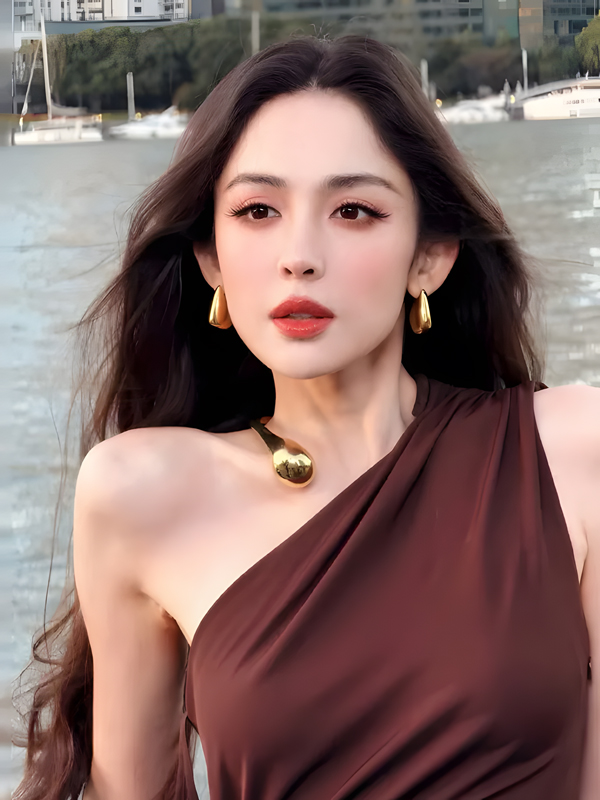
The color plays a foundational role. This particular shade of brown carries an inherent vintage warmth and richness, which contrasts beautifully with the cool tones of the dusk sky. It lends a timeless, almost tactile quality to the images. Accessories are minimal yet precise: geometric gold earrings and a neckpiece introduce a sharp, metallic contrast. This touch of hardware breaks the monochromatic warmth, adding structural balance and drawing further attention to her poised demeanor and defined features.
The Evolution of an Image
Nazha's journey in the public eye mirrors a refinement of personal style. Initially celebrated primarily for her striking looks, her fashion choices have evolved into a more distinct and confident signature. This recent presentation is a culmination of that growth. It departs from the notion that red-carpet glamour requires extravagance, instead advocating for intelligent design and personal authenticity. The response from observers highlights this shift, with many praising the "mood" and "advanced sense" of the look, noting its reliance on detail and bearing over sheer opulence.
This approach offers a broader lesson in aesthetic philosophy. True style often resides in precision and harmony, not accumulation. For the public, it serves as an inspiration: effective self-presentation is less about following every trend and more about understanding what designs resonate with one's own physique and essence. It encourages a focus on cut, color, and context—how an outfit interacts with its surroundings and the individual wearing it. The goal shifts from being seen to being understood, with fashion as the medium for that expression.
Ultimately, such a presentation blurs the lines between a fashion moment and a portrait. It reminds us that clothing, at its best, is a partner in storytelling. The chocolate gown against the riverside at dusk is more than an outfit; it's a character in a visual narrative about calm confidence, refined beauty, and the quiet power of a perfectly realized idea. It sets a standard, suggesting that the future of celebrity style may lean towards this kind of thoughtful, atmospheric, and deeply personal curation.