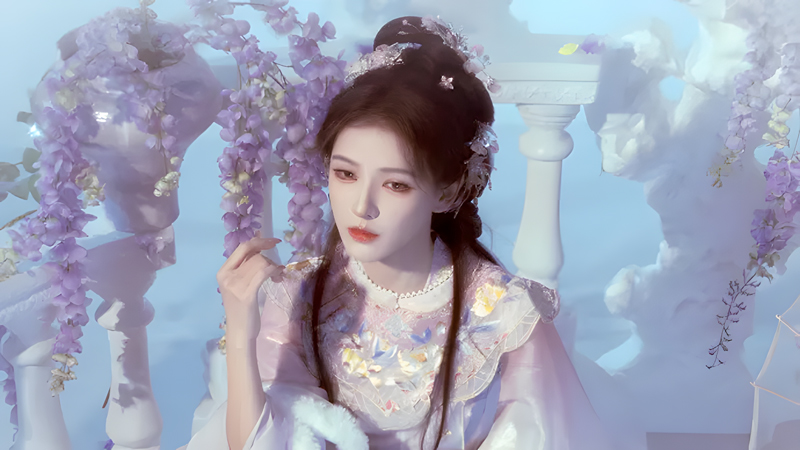
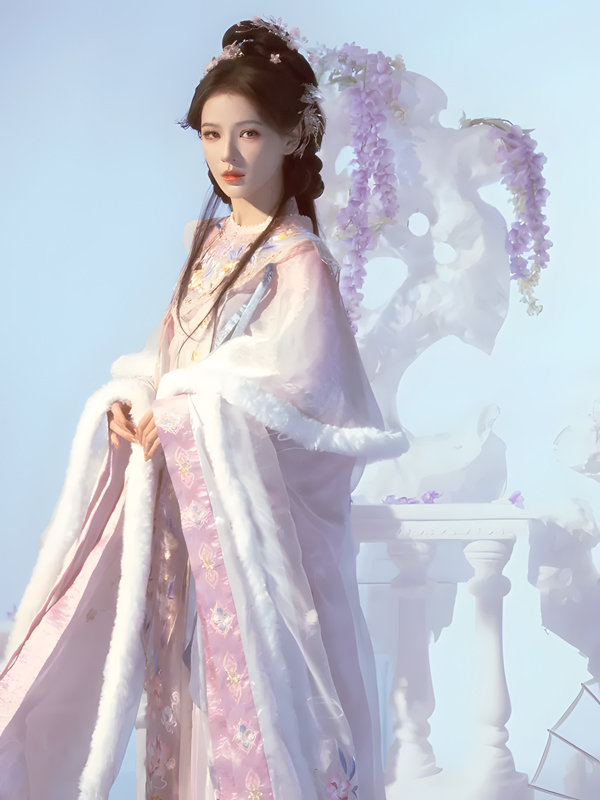
The image stopped countless scrolling fingers mid-motion. There, bathed in the ethereal lavender haze of blooming wisteria, stood actress Zhang Yuxi (张予曦), transformed. At 34, she was not merely wearing a costume but embodying a vision, a seamless blend of person, place, and tradition. Her photoshoot, set against the unexpected backdrop of European-style architecture draped with cascading purple flowers, became an overnight sensation. It was more than a celebrity fashion spread; it was a statement. This moment captured a powerful contemporary dialogue between a modern Chinese woman and an ancient sartorial art form, suggesting that true elegance is not bound by era or age, but is a living, breathing continuum.
A Portrait in Violet
The genius of the look lies in its meticulous harmony. Zhang Yuxi's Hanfu is a soft symphony in powdered lavender and plum, its delicate embroidery tracing floral patterns that seem to echo the living wisteria around her. The ensemble avoids ostentatious grandeur, opting instead for a refined, almost poetic grace. A pivotal detail is the outer robe, trimmed with a subtle, downy fringe. This touch adds a tangible texture and depth, preventing the flowing silks from appearing flat, and introduces a whisper of delicate luxury.
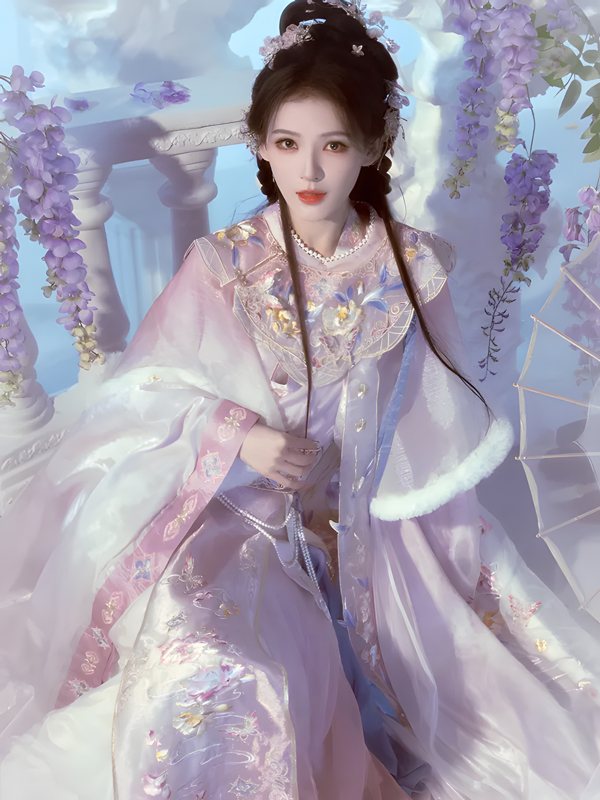
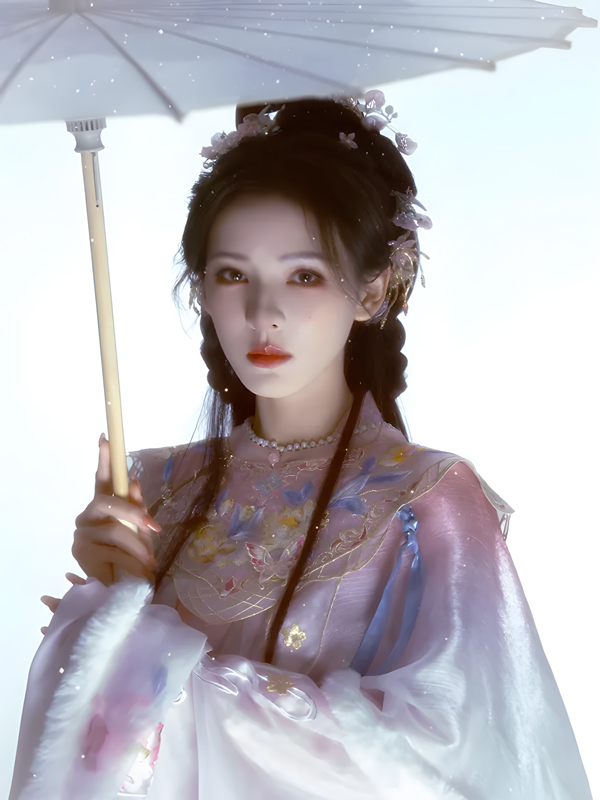
Every accessory serves the whole. The semi-transparent parasol she holds is less a shield and more a prop of atmosphere, diffusing the light and enhancing the dreamlike quality. Her hair is adorned with minimal floral pins, a deliberate choice that complements rather than competes with the natural floral canopy above. Her expression completes the portrait: a gaze that is both present and distant, a faint smile that hints at an inner serenity. There is no dramatic posing, only a calm embodiment that makes the fantasy believable.
The setting is a masterstroke of thematic contrast. The wisteria, a classic motif in East Asian art symbolizing love, longevity, and the fleeting nature of beauty, tumbles over ornate Western stonework. This intersection creates a unique visual language. Zhang Yuxi stands precisely at this junction, a human bridge connecting these aesthetic worlds. The scene argues that beauty is a universal dialect, and traditional Hanfu is fluent within it, capable of conversing with architectures and landscapes far from its historical origin.
More Than Fabric
Public reaction was immediate and profound. Beyond comments on her striking beauty, a deeper appreciation surfaced. "This isn't the Zhang Yuxi we usually see on screen; she's been completely transfigured," one observer noted. Hanfu enthusiasts dissected the craftsmanship, praising the color grading and fabric choice as authentically inspired yet perfectly calibrated for modern photography. The conversation quickly expanded from an individual's appearance to the garment's symbolic power.
This resonance stems from a tangible cultural shift. The wearing of Hanfu has moved from niche hobbyist circles into mainstream fashion and conscious cultural expression, particularly among the youth. It represents a reconnection with historical identity, worn with pride during festivals, in photo studios, and even on city streets. Zhang Yuxi, known for her contemporary roles, choosing this attire for a high-profile shoot lends significant visibility and legitimacy to this movement.
Her personal affinity for the tradition adds sincerity to the image. It is reported that she privately collects Hanfu and enjoys wearing it, suggesting this photoshoot was not an arbitrary styling decision but a reflection of genuine interest. This authenticity translates. She does not wear the clothes as an outsider looking in, but with the intuitive understanding of someone who appreciates their cultural weight and aesthetic grace, making her portrayal all the more compelling and influential.
An Ageless Dialogue
Perhaps the most potent message lies in the confluence of her age and the ancient attire. In an industry often preoccupied with youth, Zhang Yuxi at 34 presents a powerful counter-narrative. The photos radiate a beauty that is nuanced and assured, qualities honed by experience. The Hanfu, with its lines designed for grace and dignity, complements this perfectly. It demonstrates that some forms of beauty are not diminished by time but are, in fact, amplified by it.
The images suggest a reclaiming of narrative. This is not a young ingenue playing dress-up, but a woman in her prime engaging with her heritage on her own terms. The maturity in her demeanor aligns with the historical depth of the clothing, creating a synergy that feels both respectful and refreshingly modern. It challenges narrow definitions of attractiveness and expands the visual vocabulary available to public figures.
Ultimately, the viral spread of these photos points to a widespread hunger for this fusion. People are drawn to the fusion of recognizable celebrity, timeless tradition, and artistic setting. It offers a form of escape that is culturally rooted and aesthetically rich. Zhang Yuxi’s wisteria-draped moment is more than a personal highlight; it is a vivid snapshot of a cultural moment where past and present, East and West, individuality and tradition, can meet to create something spectacularly new, proving that sometimes, to look forward, we find profound inspiration in looking back.