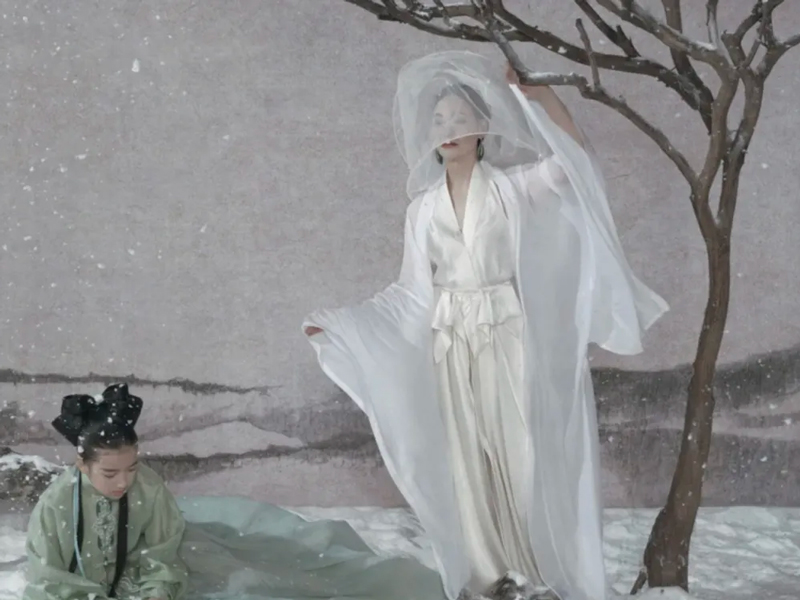
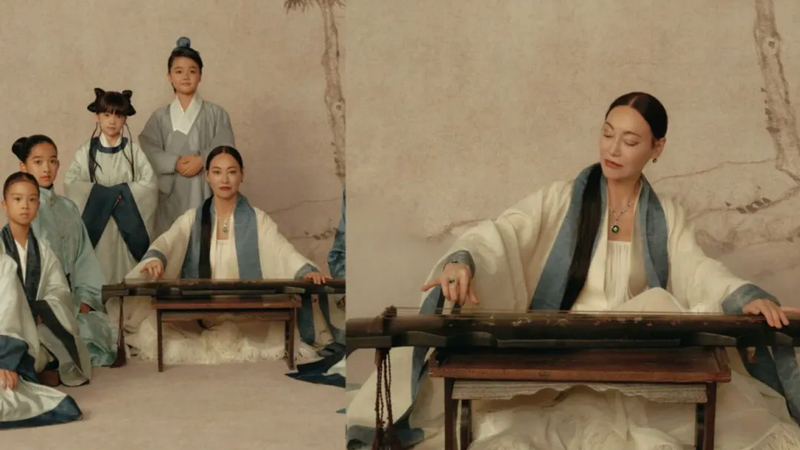
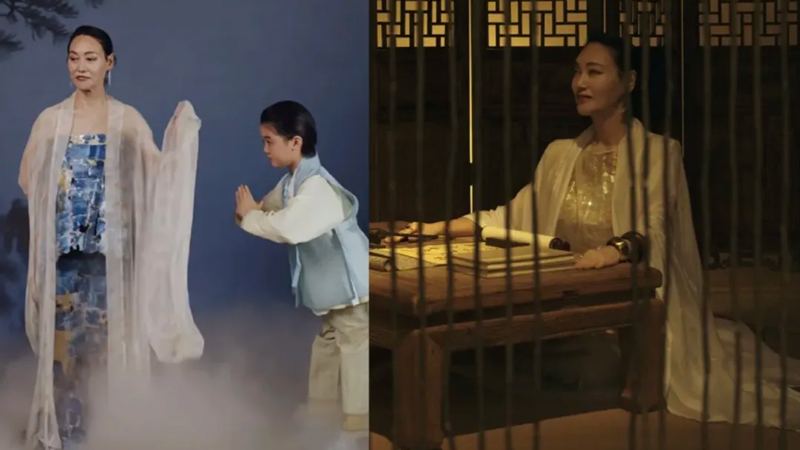
A photograph stops the scroll. Actress Hui Yinghong (惠英红), a figure synonymous with cinematic gravity, stands not in a contemporary gown but wrapped in the sweeping lines of a traditional Daxiushan (大袖衫). The image sparked immediate fascination: the grand-sleeved robe, a relic of ancient Chinese elegance, was worn not as a historical costume but as a striking modern outer layer. This was not a museum piece but a living garment. The public reaction was a mix of surprise and admiration, highlighting a collective realization. Here was a tangible bridge between a profound aesthetic past and the dynamic language of present-day style. This single sartorial choice posed a compelling question about the very nature of tradition—is it a boundary to be preserved, or a foundation to be built upon?
Historical Silhouettes
The Daxiushan is far from a monolith; its form evolved across dynasties, each cut telling a story of its time. In the luxurious courts of the Late Tang and Five Dynasties periods, its most dramatic iteration emerged: a robe with a front hem reaching the waist or knees, while the back cascaded into a long, trailing train. Paired with high-waisted skirts, this created an unmistakable silhouette of flowing, dignified movement, often captured in period paintings of noblewomen. The sleeves themselves, wide and pendulous, were designed to fall like soft clouds with every gesture.
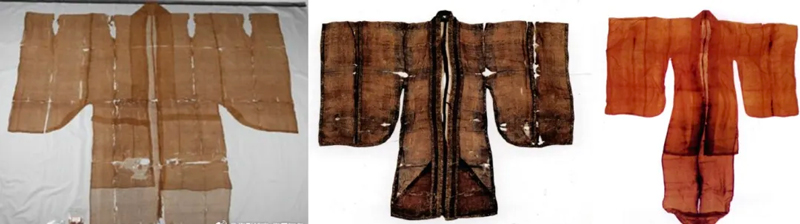
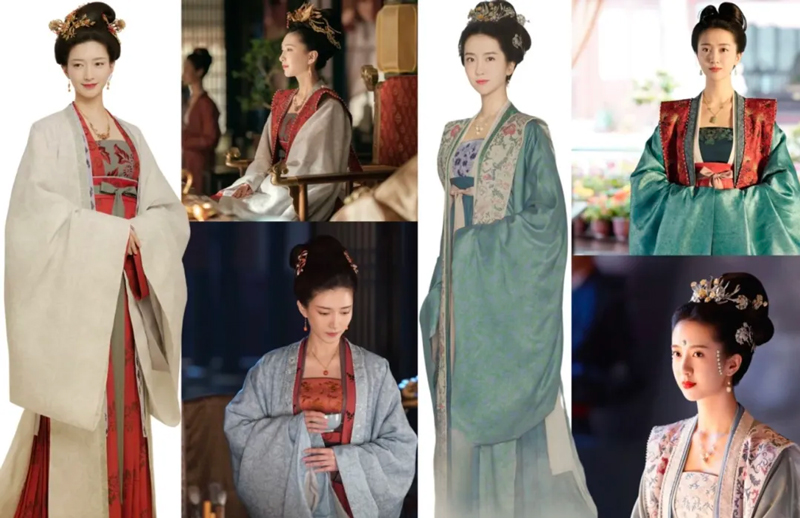
By the Song and Ming dynasties, the robe's function solidified within formal wear. The ceremonial version for elite women was typically floor-length but not trailing. It served as the foundational garment for the prestigious Xiapei (霞帔), a long decorative stole. Ming designs even incorporated a small triangular pouch at the back to secure the Xiapei's drape. For men, a parallel garment existed: the Changshan (氅衣) or great cloak. More restrained in color—favoring whites, browns, and deep blues—and cut above the ground, it offered a masculine counterpart to the women's opulent sleeves.
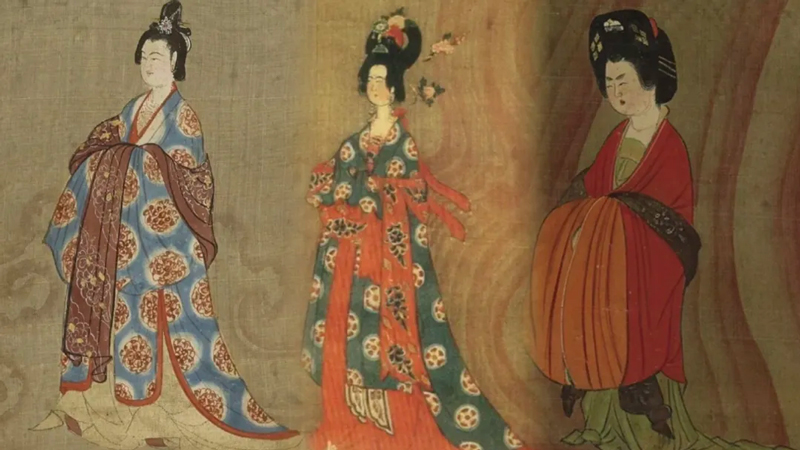
The rules governing these robes were once strict, markers of social status. Yet, history shows these boundaries were always porous. By the Southern Song era, sumptuary laws relaxed, and elements like the Xiapei trickled into commoner use, albeit in simpler fabrics and patterns. This historical precedent of adaptation is key. It shows that these garments, while symbolic, were never static. Their journey from exclusive courtly regalia to more widespread ceremonial use, especially in weddings where one wore their finest available clothing, hints at an innate versatility.
Modern Translation
Hui Yinghong's styling taps directly into this latent versatility. Her approach is not costume play but a deliberate act of translation. The foundational principle is recontextualization: treating the Daxiushan not as a full ensemble but as a statement outer piece. The dramatic sleeves and elegant lines become the focal point, contrasting with minimalist contemporary tailoring beneath. This creates a dialogue between epochs, where the robe's grandeur is balanced by modern simplicity.
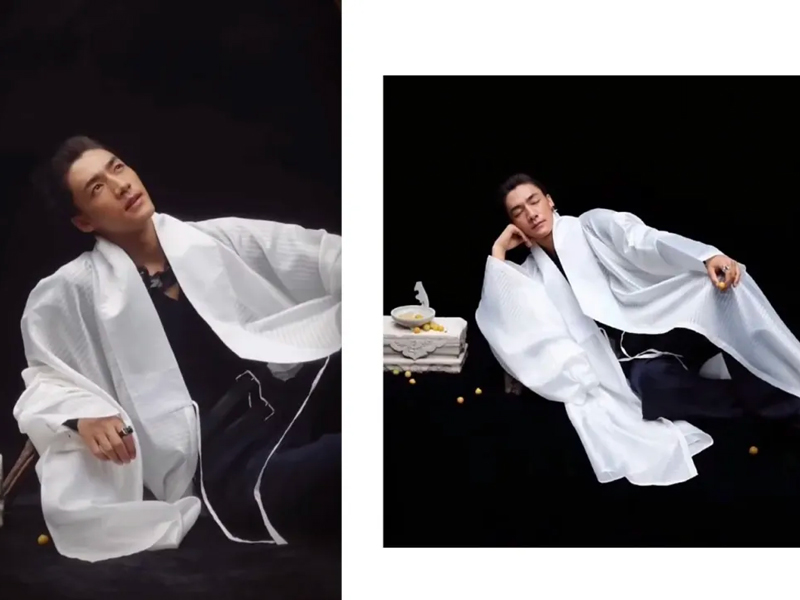
This philosophy opens a world of stylistic possibility. For women's fashion, a Daxiushan in a solid, bold hue can elevate a simple evening dress into a uniquely powerful red-carpet look. For daily wear, the concept can be scaled down—a shorter, less elaborate outer robe over modern separates offers a nod to tradition without the grandeur. Men's fashion finds a parallel path. Actor Cisha (此沙) has demonstrated this, pairing a simple white Changshan with tailored trousers, creating a look that is both relaxed and intentionally refined. The success lies in contrast and balance, allowing the historical piece to breathe without overwhelming the wearer.
The resonance of this trend speaks to a broader cultural moment. It aligns with a global interest in heritage fashion, but with a distinctively local voice. As seen in the lavish costumes of dramas like Story of Yanxi Palace (延禧攻略), there is a renewed public appetite for the beauty of Hanfu. Styling like Hui's moves the conversation from pure historical recreation into the realm of personal expression. It asks how these forms can live with us now. The answer is not found in rigid rules, but in creative confidence—the same confidence that once allowed a commoner to adopt a noblewoman's stole. The modern sleeve, it turns out, has plenty of room for a new story.