Article
Search results:
-
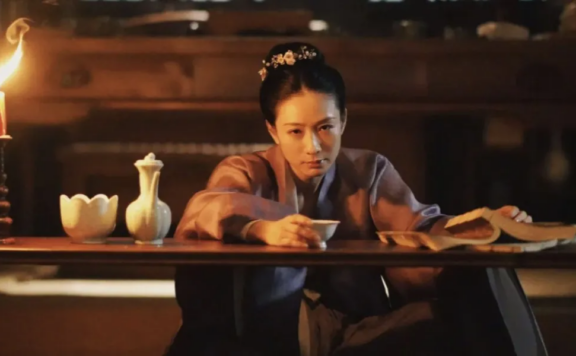
Tao Xinran Transforms into Li Qingzhao
In the documentary "Phoenix: Her Legend", Tao Xinran (陶昕然), who previously played the role of 'An Lingrong', portrayed Li Qingzhao (李清照). To start with, Li Qingzhao lived around the transition between the Northern and Southern Song Dynasties, so the clothing style at that time was somewhat grand and elegant, leaning towards the Northern Song style. The Northern Song still retained the legacy of the Five Dynasties, so compared with the Southern Song, there was still the beauty of layering and wide sleeves. Influenced by Neo - Confucianism, the makeup and dressing of women in the Northern Song tended to be reserved and simple, adhering to the aesthetic philosophy of 'A light touch is always appropriate, and charm comes naturally'. In the Northern Song's 'Dongjing Meng Hua Lu', it was described that 'Gold and jade glistened, and silk wafted fragrance.' In the Southern Song's 'Wu Lin Jiu Shi', it said, 'Women and children were dressed gorgeously and walked around in crowds.' In the Huang Sheng Tomb and the De'an Zhou's Tomb, the style of wide - sleeved clothing, which was the dressing style of noble women, can still be seen. The prevalence of the shirt - skirt combination reached its peak… -
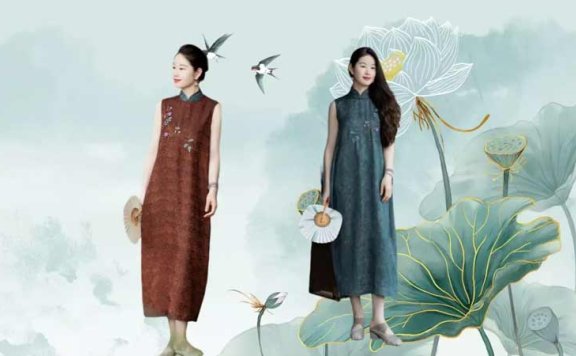
Wildflowers and Xiangyunsha Silk: A Double-Sided Stitched Dress
Inspired by the untamed beauty of wildflowers and the refined artistry of Xiangyunsha (香云纱) silk, this double-sided embroidered dress embodies the serene grace of women over 40. Drawing from the poetic imagery of Xi Murong's (席慕容) writings and the natural elegance of Jingyue Lake, the garment weaves together themes of resilience, craftsmanship, and timeless style. This piece is not just clothing; it's a celebration of life's journey, offering versatility and sophistication that resonates with the wisdom of age. Through its thoughtful design and meticulous embroidery, it invites wearers to embrace a sense of calm confidence, reflecting how nature and nurture intertwine in a symphony of beauty. Nature's Poetry in Silk Xi Murong's admiration for wildflowers—symbols of unbridled freedom and joy—finds a parallel in the creation of Xiangyunsha silk. Her poetry captures how these blooms thrive without cultivation, much like the silk's journey from raw material to luxurious fabric. Xiangyunsha, often called "soft gold" in textiles, begins with premium mulberry silk. It undergoes a natural dyeing process using Dioscorea cirrhosa juice, where sun, wind, and rain impart a gentle luster. This method preserves the silk's innate softness, resulting in a tranquil, powder-blue hue that evokes misty mornings at Jingyue Lake. The… -
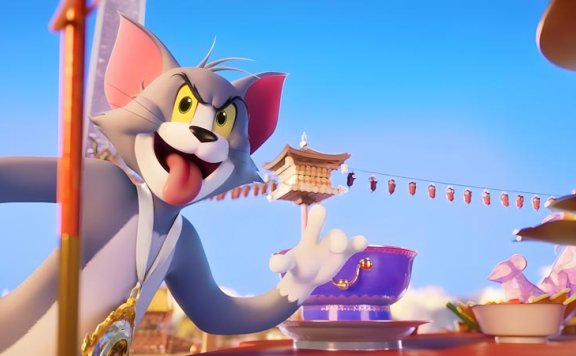
Tom and Jerry's Wild West Magic Chase
Prepare for a spectacular genre collision as the world's most iconic cat-and-mouse duo, Tom and Jerry, blast out of their familiar haunts and into a dazzling, danger-filled dimension in the animated feature Tom & Jerry: Forbidden Compass. This high-stakes adventure catapults the eternal adversaries from their classic chases into the heart of the Wild West Magic, a realm where dusty saloons sit beneath floating islands and six-shooters fire enchanted bolts. Their mission? To recover a shattered cosmic artifact before a malevolent sorceress uses its power to enslave dimensions. What begins as another frantic scramble over cheese spirals into an intergalactic rescue operation demanding an unprecedented truce. Broken Magic The chaos commences during one of their signature, house-wrecking pursuits. A tussle over a prized morsel inadvertently activates an ancient, ornate device known as the Star Chaser. This isn't some forgotten trinket; it's a relic of immense interstellar power. The sudden activation unleashes a swirling vortex of cosmic energy, swallowing both combatants and their contested treasure whole. Disoriented and tumbling, they crash-land in a landscape utterly alien yet hauntingly familiar: the Wild West Magic. Imagine sun-baked deserts stretching beneath levitating rock formations, cacti whispering secrets, and grizzled bovine gunslingers packing arcane ammunition.… -
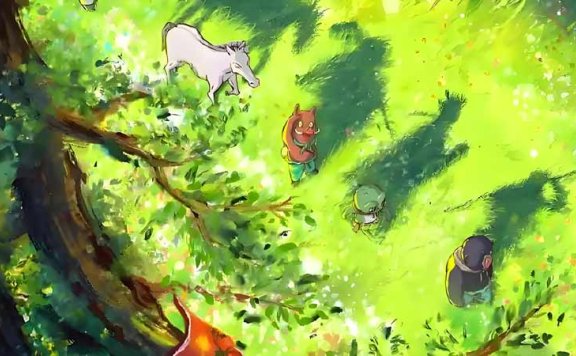
Nobody: Laughter and Struggle in a World of Hierarchy
Originally stemming from a standout episode in Yao-Chinese Folktales (中国奇谭), Nobody (浪浪山小妖怪) captivated audiences with its relatable workplace satire before being expanded into a full-length feature by the Shanghai Animation Film Studio. This film retains the studio's signature ink-wash aesthetic, blending ethereal landscapes with meticulous character details, creating a visually stunning experience rare in modern animation. Building on its short-form roots, the story evolves from a simple tale of underdog monsters into a profound exploration of ambition and societal structures, balancing humor with biting social commentary that resonates deeply in today's world. Comic Characters At its core, Nobody delivers non-stop laughter through the misadventures of four unlikely heroes. These underlings from Langlang Mountain decide to impersonate the revered pilgrims of Journey to the West (西游记) to reach enlightenment before the real team. This setup generates comedy from stark personality clashes, like the timid Ape Monster struggling to embody the bold Sun Wukong (孙悟空), his social anxiety making even a simple declaration impossible. Weasel Spirit's incessant chatter as Sha Wujing (沙悟净) leads to hilarious scenes, such as Piglet handing him a whetstone to grind whenever he talks too much, turning exhaustion into absurdity. The film's brilliance lies in how it uses… -
Nian Lun and Die Lian: A Melodic Controversy Revisited
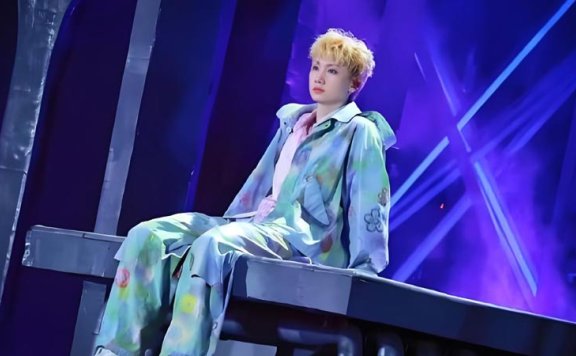
The recent copyright dispute between singers Wang Sulong (汪苏泷) and Zhang Bichen (张碧晨) over the song Nian Lun (年轮) has reignited an older, more complex debate: allegations that the popular television soundtrack plagiarized the classic game theme Die Lian (蝶恋). This renewed scrutiny places two beloved musical pieces from different eras of Chinese entertainment under an uncomfortable spotlight, forcing fans and professionals alike to confront difficult questions about inspiration, originality, and the fine line between homage and theft in music composition. The controversy transcends a simple copyright clash, touching upon industry practices, legal definitions, and listener perception in the digital age. The Resurfaced Controversy Allegations that Nian Lun copied Die Lian are not new. First voiced in 2015 when Nian Lun served as the haunting insert song for the massively popular drama The Journey of Flower (花千骨), the claims initially gained little traction. However, the spotlight returned fiercely following the highly publicized dispute between Wang Sulong and Zhang Bichen regarding the official vocal rights to Nian Lun. This clash propelled the song back into trending topics, inadvertently dragging the old plagiarism accusations along with it. The catalyst for the renewed debate was a fan-made comparison video circulating online. This video… -
Hairpins and Wigs: The Art of Ancient Chinese Hairstyling
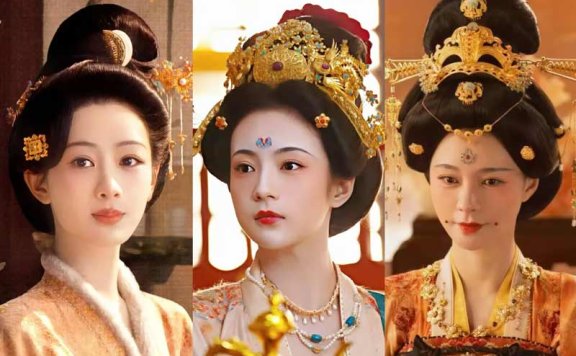
Ancient portraits and modern period dramas showcase women with gravity-defying towers of hair. From The Glory's (雁回时) intricate Ming-style coiffures to the Tang Dynasty grandeur in Flourished Peony (锦绣芳华), these elaborate styles spark wonder. How did historical figures achieve such volume? The answer lies not in mythical hair growth, but in ingenious artifice. Long before modern extensions, ancient artisans crafted sophisticated hairpieces known as Ji (髻)—the foundation of historical hairstyling. Materials of Illusion Far from relying solely on precious human hair, craftsmen employed diverse resources. Excavations at Astana Graves in Xinjiang revealed a lacquered wooden Ji shaped like a "single-blade half-upturned bun." This hollow structure, painted black with white floral motifs and clouds, featured small holes for securing hairpins. Wearers concealed their natural hair within this lightweight frame, creating instant volume and a base for ornaments. Another ingenious example used dyed palm fibers. Wrapped around a linen core and shaped into spirals, these pieces offered a ready-to-wear solution. Early classifications in the Zhou Li (周礼) distinguished types: the ornate Fu (副), the simpler Bian (编), and the blended Ci (次). Later terminology simplified to Bi (髲) and Ti (鬄). Materials ranged from affordable palm and horsehair for daily use to… -
Finding Your Perfect Shape: The Art of Qipao Length
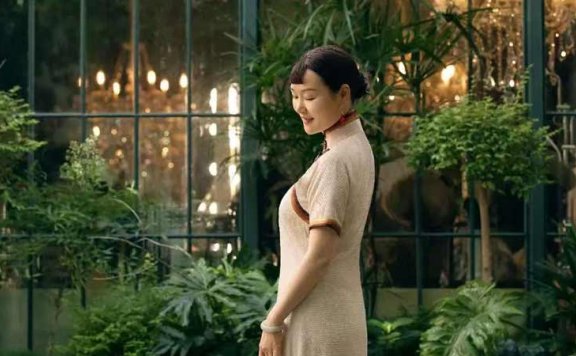
Selecting the ideal Qipao length is far more than a simple measurement; it's a nuanced decision shaping elegance, proportion, and personal confidence. This iconic garment demands careful consideration of individual physique, the occasion it will grace, and the specific design language of the dress itself. The right length acts as a sculptor, enhancing natural lines and creating a harmonious silhouette, while an ill-fitting choice can inadvertently highlight areas one might prefer to subtly downplay. Understanding how different lengths interact with your body and the garment's inherent flow is paramount to unlocking the Qipao's timeless allure. The Evolution of Qipao Length The journey of the Qipao length reflects shifting societal norms and practical needs. Early iterations in the 1920s, heavily influenced by late Qing Dynasty styles, often featured dramatically long hemlines, sometimes even brushing the floor. This required wearers to lift the skirt while walking, a style impractical for contemporary life. By the 1940s, wartime austerity measures and a push for practicality led to significant shortening, with lengths typically settling around the mid-calf area. While functional for daily movement, this specific mid-calf length can, by modern standards, sometimes visually truncate the leg line, potentially making the wearer appear shorter or wider… -
Chinese Stars' Uncanny Doubles: Seven Pairs Like Mirror Images
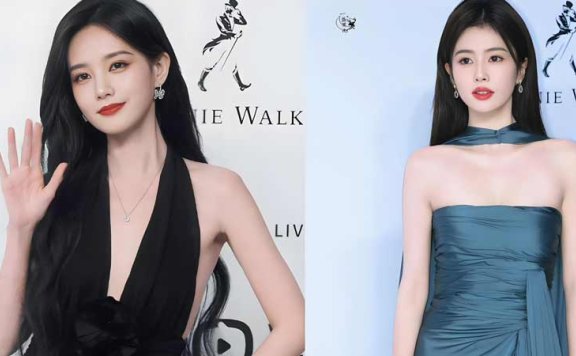
In the world of Chinese entertainment, celebrity lookalikes often spark fascination, with some pairs sharing such striking resemblances that they could pass for twins, despite having no blood ties. These uncanny doubles not only confuse fans but also highlight the quirks of fame, where appearances become talking points. From singers to actors, each duo offers a glimpse into how genetics and style converge in unexpected ways, creating moments that captivate audiences worldwide. 1. Bai Lu and Li Yitong When Bai Lu (白鹿) and Li Yitong (李一桐) performed together on a national stage, their matching outfits and near-identical looks had viewers mistaking them for sisters. Born in 1994 and 1990 respectively, this four-year age gap doesn't diminish their shared delicate features and graceful stage presence. Fans often debate who is who in photos, adding to their viral appeal. Despite their visual similarities, their personalities shine differently. Li Yitong exudes a sweet, gentle charm in her roles, while Bai Lu is known for her infectious laughter and lively energy. This contrast became evident on variety shows like Keep Running (奔跑吧), where Bai Lu's humor boosted ratings. Both have built solid careers, with Bai Lu rising through dramas and Li Yitong gaining fame… -
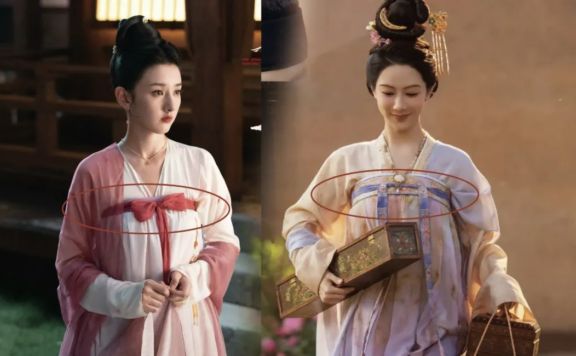
Why Tang Women Not Afraid of Qixiong Skirts Falling Off?
In ancient costume dramas or some images of Hanfu from the Tang Dynasty, you can often see these skirts that are directly tied around the chest. After all, there were no designs like elastic bands or safety pins for such skirts in ancient times. Did they rely entirely on large breasts to hold them up? Wouldn't they fall down? First, let's state the conclusion. In fact, this kind of skirt is supported by conforming to human engineering and the friction of the fabric. Moreover, this popular way of wearing was prevalent in the Tang Dynasty, and the plump body shape could also support such clothes. In addition, there were also designs like spaghetti strap dresses in history, so girls had a wide range of choices. Popularity in Tang Dynasty Why was this way of wearing popular in the Tang Dynasty? By the Sui and Tang Dynasties in the history of our clothing development, the waistline of skirts became popular to move upwards, especially during the prosperous Tang Dynasty and later. This was related to the confidence of women in their figures at that time and the trend of advocating a plump and strong body shape. Now, the common folk name… -
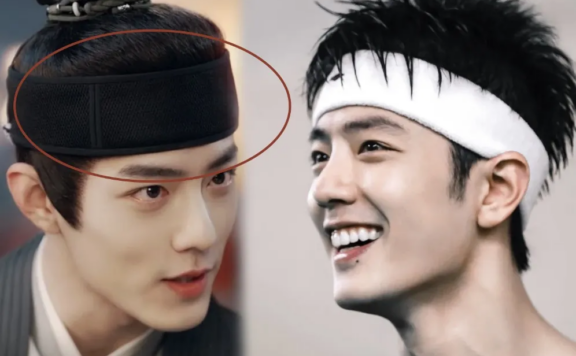
What's the Name of the Hairband in The Legend of Zang Hai
In the ancient costume cdrama The Legend of Zang Hai, when Xiao Zhan's character Zang Hai makes his appearance, he wears a similar 'hairband'. Netizens are saying, 'Isn't this the essential hairband for modern sportswear? Was it already around in the Ming Dynasty?' Let's start with the answer. It's a 'net cap' from the Ming Dynasty, more precisely, a simplified version of the Lazy Net Cap (懒收网巾) that was popular in the late Ming Dynasty. The net cap was a net-like headdress used by adult men in Ming Dynasty China to tie up their hair and gather loose strands. It has the same function as modern 'hairbands'. It can not only gather loose hair but also prevent hats from slipping. It's actually quite practical. The net cap could be worn alone in daily life. In the Ming Dynasty, people of status had to wear a cap over the net cap when attending important occasions. However, for convenience in daily life or among common people, they often didn't need to wear other hats after putting on the net cap. The popularity of the net cap can be attributed to Zhu Yuanzhang. It's said that one day, Zhu Yuanzhang visited the Shenleguan… -
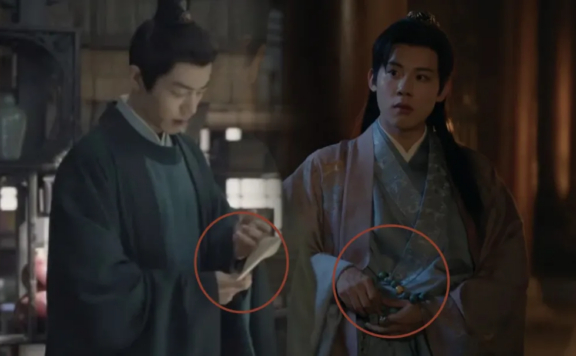
Exploring the Pockets in Cdrama: The Legend of Zang Hai
In the costume TV drama The Legend of Zang Hai, played by Xiao Zhan, can put letters in his sleeves. Can such seemingly large sleeves really hold things without them falling out? Let's start with the conclusion. In the past, most sleeves that could hold things had cuffs. Those completely open large sleeves were mainly for ceremonial purposes and generally couldn't hold things directly. Usually, there would be attendants following to carry bags. And Zang Hai's sleeves clearly have cuffs, so things can be directly stuffed into them. Additionally, apart from sleeves, the ancients also used handbags and backpacks. So, when we see characters like Zhuang Er taking out or stuffing things from their bosoms or belts, we can't help but wonder if it's uncomfortable. Moreover, things would fall out once the belt was loosened. Back to the issue of sleeves, there were actually some "tricks" in the design of ancient people's sleeves. Generally speaking, cuffed sleeves have two characteristics. One is the type with narrow - ended sleeves, such as the pipa - shaped sleeves popular in the Ming Dynasty and the hanging - beard sleeves popular in the Han Dynasty. The shape of these sleeves naturally forms a… -
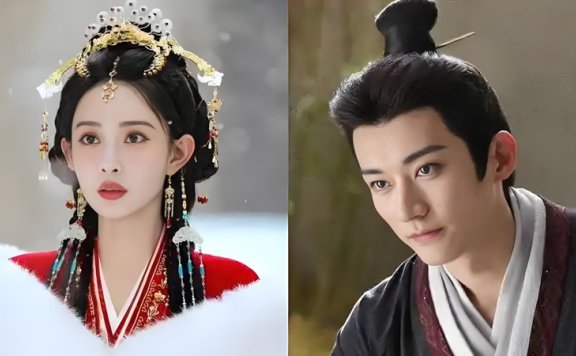
Why The Princess's Gambit Lagged Behind Competing Dramas
The historical drama The Princess's Gambit (桃花映江山), starring Liu Xueyi (刘学义) and Meng Ziyi (孟子义), premiered to high expectations but quickly saw a drop in viewership. Audiences and critics pointed to various reasons, from off-screen chemistry issues to an outdated storyline. This article explores why it couldn't match the success of shows like A Dream within a Dream (书卷一梦), examining the role of promotional dynamics, plot fatigue, and competitive pressures. By dissecting these elements, we uncover broader trends in viewer preferences during the 2025 drama season. The Off-Screen Dynamic Criticism often centered on the perceived lack of chemistry between Liu Xueyi and Meng Ziyi. Many viewers blamed this for the drama's declining ratings, arguing that their off-screen interactions felt forced during promotions. Unlike Meng's previous hit Blossom (九重紫), where her playful rapport with the co-star boosted buzz, her reserved demeanor with Liu fueled fan theories of discord. This overshadowed their on-screen performances, leading to unfair accusations against Liu's acting skills. The contrast was stark in promotional events. Blossom thrived on lively interviews and social media banter, creating viral moments that drew in casual viewers. In The Princess's Gambit, however, the actors' minimal off-stage closeness made fans question their believability as… -
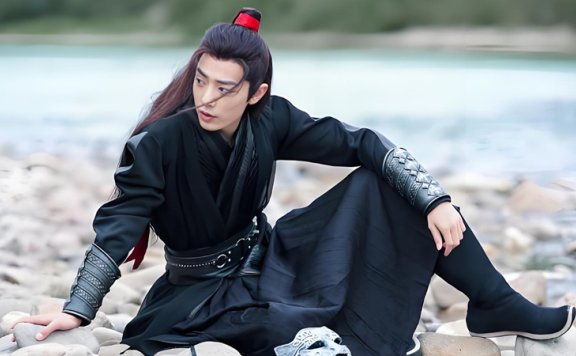
The Genuine and Approachable Side of Actor Xiao Zhan
Xiao Zhan (肖战) captivated global audiences with his intense portrayal of Wei Wuxian (魏无羡) in the 2019 phenomenon The Untamed (陈情令). This role cemented his status as a leading man known for powerful, often brooding characters. Yet, recent glimpses into his life reveal a delightful contrast to his on-screen personas, showcasing a youthful, authentic side that has surprised and charmed fans worldwide. This exploration delves beyond the actor's acclaimed performances, uncovering the genuine personality and relatable lifestyle that endear him to millions. Style Shift Stuns Observers Gone are the flowing robes and stern expressions of his dramatic roles. Recent candid shots showcase Xiao Zhan embracing a strikingly casual, almost boyish aesthetic. Think cozy cream hoodies paired effortlessly with wide-leg trousers, topped with a fuzzy baseball cap and trendy sneakers. The most unexpected touch? A large, cartoonish shoulder bag adding a playful vibe. This relaxed ensemble stands in stark contrast to the commanding presence fans associate with characters like Wei Wuxian or his modern CEO roles. The reaction was immediate and widespread. Fans expressed astonishment at the transformation, flooding social media with comments like, "I did a double-take! Is that really the same person?" Many highlighted the overwhelming sense of youthfulness… -
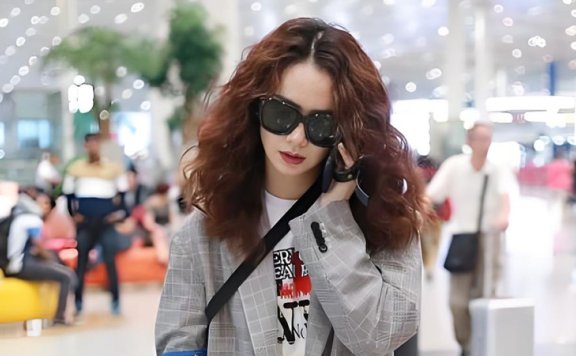
Qi Wei's Streetside Style: Grey Suit and Voluminous Curls
A recent glimpse into actress Qi Wei's (戚薇) latest film project captivated audiences not just for its stars, but for the striking fashion statement Qi Wei made on set. Spotted filming on the streets, Qi Wei, long celebrated for her bold personality and impeccable style, showcased an ensemble that perfectly blended power and allure. Her choice – a tailored grey pinstripe suit paired with an unexpectedly dramatic head of voluminous, wavy curls – instantly generated buzz online. This look, effortlessly merging sharp tailoring with a touch of playful extravagance, reaffirmed her status as a true fashion icon. Alongside her co-star Jiang Yiyi (蒋依依), Qi Wei commanded attention, proving that personal style can elevate even a casual filming moment into a memorable fashion event. The images quickly spread, sparking admiration for her ability to embody a modern, confident aesthetic. Camera Catches Fashion Icon Casual encounters with celebrities on film sets often offer unfiltered glimpses into their style, and Qi Wei’s recent street shoot was no exception. Photographs circulating online captured her fully immersed in a scene, yet her appearance was anything but ordinary. The immediate focus was her bold hairstyle: a cascade of large, defined waves framing her face. This "wool… -
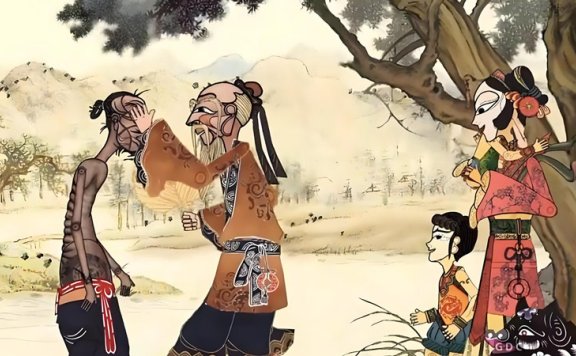
5 Chinese Animations That Shape Our Values
Chinese animation holds a unique mirror to the nation's soul. Beyond mere entertainment, a distinct category of films – often termed “philosophical animations” – weaves together threads of ancient scholar-gentry ideals, Buddhist and Daoist contemplations, and the enduring wisdom of the common people. These works, primarily suitable for audiences from middle school age upwards, don't just tell stories; they crystallize core aspects of Chinese cultural identity and values. Through masterful artistry and profound narratives, they explore timeless questions of existence, society, and the human spirit, offering young viewers a visually stunning gateway into the depths of Chinese philosophical tradition. 1. Tao Hua Yuan Ji (桃花源记) The 2006 animation Tao Hua Yuan Ji reimagines Tao Yuanming's (陶渊明) classic tale with striking visual and narrative depth. It employs a powerful flashback structure, following the fisherman after his return from the idyllic land. His report to the Prefect leads to a futile search and his punishment, countered only by the scholar Liu Ziyi's (刘子翼) intervention. The film significantly expands the story's social context, contrasting the harsh, shadow-drenched reality of common suffering with the luminous peace of Tao Hua Yuan using bold chiaroscuro. This visual strategy deepens the fisherman's motivations and internal conflicts, rendering… -

Animated Film Yaoguai Senlin Premieres on August 11
This August, families are in for a treat with the animated film Yaoguai Senlin (妖怪森林), a heartwarming tale of courage and self-discovery. Directed by Wang Shiwei (王世伟), this fantasy adventure follows young Raki as she navigates a mystical woodland filled with creatures, seeking her lost parents. Perfect for parents and kids alike, it blends thrilling escapades with valuable life lessons, all set against Taiwan's enchanting landscapes. After a decade in the making, this movie promises not just entertainment but a journey that resonates with everyday challenges. Get ready to be swept away by its magic and meaning. Into the Unknown Raki, a spirited 12-year-old, plunges into the Monster Forest after her parents vanish. This realm teems with over 200 unique creatures, from mischievous monkeys to towering tree spirits. Each encounter tests her wit, like outsmarting thieves on giant mushrooms or dodging attacks. Instead of waiting for rescue, Raki relies on her own ingenuity—a mirror to kids facing homework or playground squabbles. Her solo quest shows that independence isn't just for fantasy worlds; it's a skill for real life. The forest's dangers escalate as Raki befriends Luda (路达), a mysterious being inspired by Taiwanese legends. But when Luda betrays her trust,… -
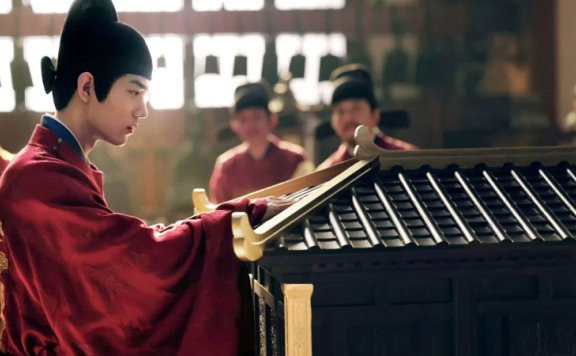
6 Historical Dramas Reviving China's ICH
Historical dramas are breathing new life into China’s intangible cultural heritage (ICH), transforming age-old crafts into dynamic narrative tools. From woodwork magic to culinary traditions, these series weave cultural preservation into gripping storytelling. Six recent productions stand out for their authentic integration of ICH, introducing global audiences to traditions once confined to regional workshops and ritual spaces. 1. The Legend of Zang Hai (藏海传) Premiering May 18, 2025, on CCTV-8 and Youku, this Quantum Entertainment production stars Xiao Zhan as Zang Hai, an architectural prodigy. The drama spotlights yaofa puppet theatre from Zhejiang’s Taishun County, where gunpowder propels intricate wooden figures. These pyrotechnic puppets become tactical tools in Zang Hai’s political schemes, showcasing a 300-year-old art recognized by UNESCO in 2006. Zang Hai’s mastery of mortise-and-tenon joinery drives key plot developments. This 7,000-year-old woodworking technique—China’s UNESCO-listed architectural heritage—enables complex structures without nails or glue. When Zang Hai enters the capital, an eight-meter Qinhuai lantern screen illuminates his arrival. Crafted using Nanjing’s 2008 nationally listed lantern techniques, this piece merges paper art, painting, and sculpture. The production team creatively scaled up shadow puppetry (UNESCO 2011), using tiger and centipede silhouettes as metaphors for court factions. These enlarged "ancient IMAX" projections visualize… -
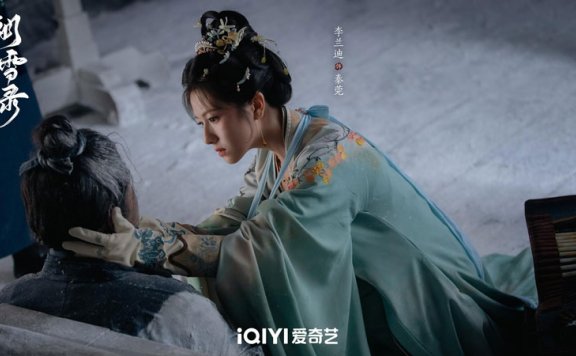
Everthing Behind the Coroner's Diary
On the evening of July 23, The Coroner's Diary (朝雪录) quietly climbed to the top of Weibo's trending list. It wasn't a mega-IP. It didn't boast big-name stars. Most media outlets hadn't even included it in their "most anticipated dramas" roundups. But somehow, it became iQIYI's third show in 2025 to break the platform's elusive 10,000 heat index mark. Funny enough, the night before, the show already hit Weibo's No.2 trending spot—almost there, sitting at 9991. People clicked in expecting to see a celebration. Instead, they found everyone holding their breath for those last 9 points. Then came the moment: the number ticked over. Producer Quan Haojin posted the milestone on his WeChat moments with three crying emojis. Director Li Huizhu, known for keeping things professional, used three "extremely"s before she even said the word "happy." "Honestly? This did way better than we expected," Quan said. "We worked on this for over four years. Hitting 10,000 is lucky. But even if we hadn't, I still wouldn't regret making it." Strong Numbers, Real Watchability Before the show aired, Quan was worried. Really worried. The Coroner's Diary wasn't showing up in any of the pre-season hype lists. Media didn't mention it. Even… -
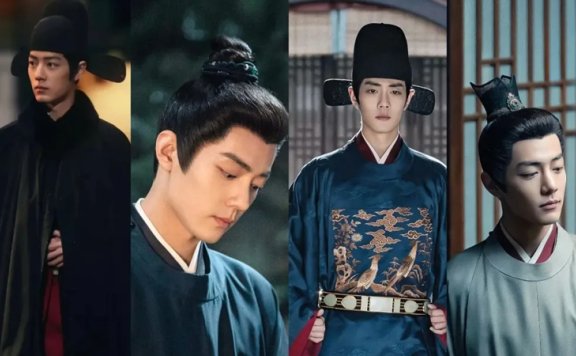
How Xiao Zhan Redefines Global Stardom
In an era saturated with fleeting digital fame, Xiao Zhan (肖战) emerges not merely as an entertainer but as a cultural phenomenon. His portrayal of Zang Hai in The Legend of Zang Hai (藏海传) transcends conventional idol appeal, embodying a renaissance of classical Chinese aesthetics while forging unprecedented international pathways. This evolution—from Wei Wuxian’s (魏无羡) fiery idealism in The Untamed (陈情令) to Zang Hai’s intricate duality—reveals an artist mastering the alchemy of beauty, intellect, and emotional resonance. Zang Hai: The Fractured Elegance Zang Hai’s allure lies in his contradictions: a strategist draped in jade-like composure yet fractured like Song-dynasty porcelain. Director Zheng Xiaolong’s (郑晓龙) vision demanded this duality—Zang manipulates political webs with Sun Tzu-inspired precision while radiating vulnerability that disarms tyrants. When Pingjin Hou (平津侯), a lord notorious for silencing dissent, races into flames to save him, the character’s psychological complexity crystallizes. Costuming becomes narrative. Zang’s black-gold robes, woven from 1,200 meters of hand-embroidered silk. This deliberate fusion of historical artistry and character depth transforms him into a living artifact, where every fold of fabric whispers tradition. Princess Xiang Anxue’s (香暗雪) loyalty—defending him even against her mother—stems not from grand romantic gestures but quiet reciprocity. Their bond mirrors contemporary desires… -
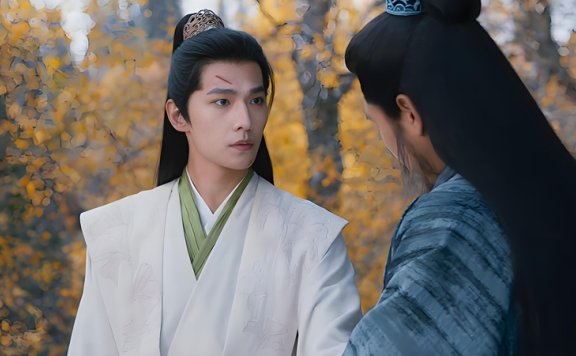
How Han Li's Survival Instinct Redefined Immortal Ambition
The Immortal Ascension (凡人修仙传) transcends typical cultivation narratives by centering on Han Li’s psychological evolution. Unlike protagonists reliant on destiny or intellect, Han Li’s strength stems from a primal survival instinct honed through betrayal. The drama’s early arcs, particularly his deadly chess match with mentor Mo Juren, reveal how trauma forges resilience. This character study explores three pillars of Han Li’s "strong mindset": embracing adversity as education, transforming victims into strategists, and recognizing that true power begins with self-preservation. Mo Juren: The Crucible of Cruelty Mo Juren’s duality as mentor and predator creates Han Li’s foundational trauma. A physician masking ruthless ambition, he selects the illiterate village boy precisely because Han Li seems malleable. Teaching him literacy, medicine, and the Everlasting cultivation technique, Mo Juren invests in Han Li only to harvest his body for a soul transplant. Actor Jin Shijie (金士杰) masterfully layers greed with twisted pride—his final moments acknowledge Han Li as a worthy adversary, not merely a failed vessel. This relationship dismantles the "noble master" trope. Mo Juren’s cruelty is pedagogical: he demonstrates that trust invites exploitation. When he poisons Han Li and attempts body theft, the betrayal becomes Han Li’s first lesson in immortal-world pragmatism. The…