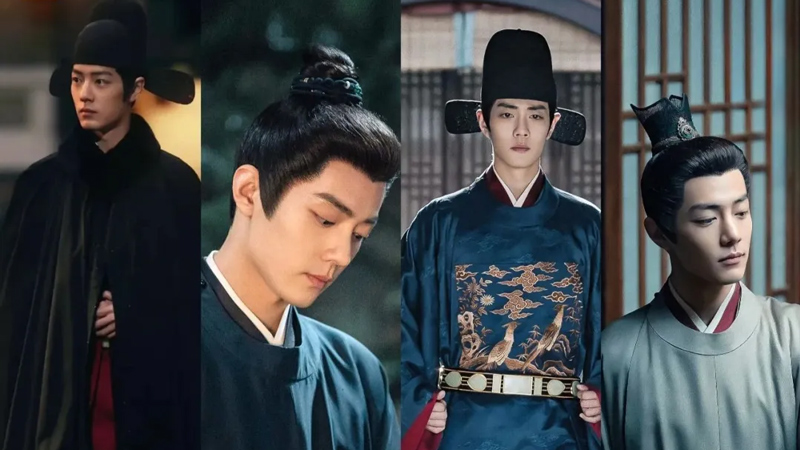
In an era saturated with fleeting digital fame, Xiao Zhan (肖战) emerges not merely as an entertainer but as a cultural phenomenon. His portrayal of Zang Hai in The Legend of Zang Hai (藏海传) transcends conventional idol appeal, embodying a renaissance of classical Chinese aesthetics while forging unprecedented international pathways. This evolution—from Wei Wuxian’s (魏无羡) fiery idealism in The Untamed (陈情令) to Zang Hai’s intricate duality—reveals an artist mastering the alchemy of beauty, intellect, and emotional resonance.
Zang Hai: The Fractured Elegance
Zang Hai’s allure lies in his contradictions: a strategist draped in jade-like composure yet fractured like Song-dynasty porcelain. Director Zheng Xiaolong’s (郑晓龙) vision demanded this duality—Zang manipulates political webs with Sun Tzu-inspired precision while radiating vulnerability that disarms tyrants. When Pingjin Hou (平津侯), a lord notorious for silencing dissent, races into flames to save him, the character’s psychological complexity crystallizes.
Costuming becomes narrative. Zang’s black-gold robes, woven from 1,200 meters of hand-embroidered silk. This deliberate fusion of historical artistry and character depth transforms him into a living artifact, where every fold of fabric whispers tradition. Princess Xiang Anxue’s (香暗雪) loyalty—defending him even against her mother—stems not from grand romantic gestures but quiet reciprocity. Their bond mirrors contemporary desires for partnerships built on equality and mutual resilience.
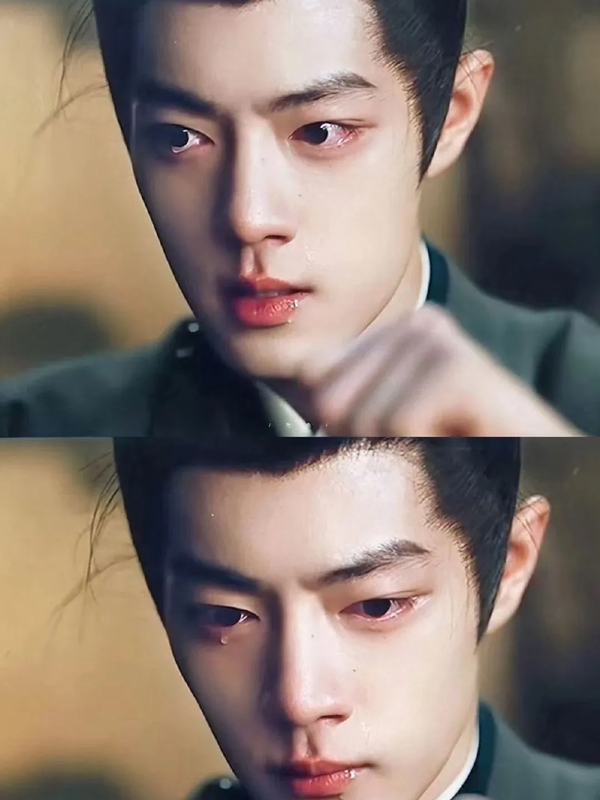
The "broken jade" quality Xiao Zhan embodies—eyes reddening mid-scheme, posture taut yet yielding—rewrites the rules of masculine appeal. It’s a vulnerability that empowers, making Zang Hai a vessel for modern audiences seeking strength without aggression.
An Artistic Metamorphosis
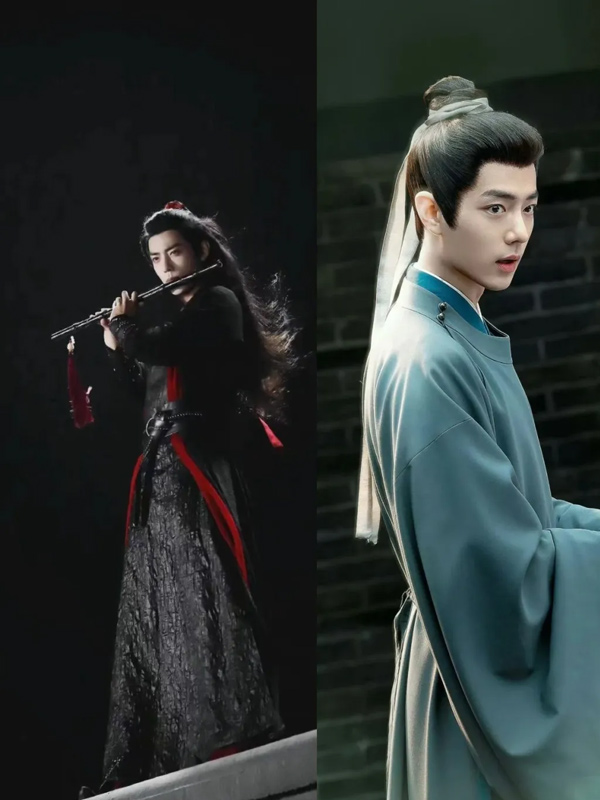
Five years separate Wei Wuxian’s crimson-robed idealism and Zang Hai’s ink-stained calculation. In The Untamed, Wei’s charm lay in unbridled passion—a rebel whose grin defied darkness. Xiao Zhan’s performance leaned into physicality: wind-swept hair, explosive laughter, tears like shattered rubies. This "red and black" dynamism captured the youth’s recklessness.
Zang Hai demanded inversion. Here, Xiao Zhan weaponizes restraint. A micro-twitch of the lip replaces full smiles; calculations flicker behind lowered lashes. The shift mirrors Xiao Zhan’s journey: from meteoric fame to deliberate craftsmanship.
Critics who once deemed him a "heaven-sent talent" now acknowledge his labor. Wei Wuxian’s charm was innate; Zang Hai’s depth is earned. Xiao Zhan’s evolution proves that longevity in art requires not just spark, but sustained combustion.
Global Resonance
The Legend of Zang Hai didn’t just dominate CCTV-8, and it ignited cross-continental dialogues. Disney’s unprecedented global release saw Japanese fans hailing "Xiao Zhan’s face as visual artillery," while French students replicated dou-gong joints after binge-watching. This isn’t mere export; it’s cultural translation.
Xiao Zhan’s face—often called "the global aesthetic denominator"—bridges divides. Indonesian media listed him among The Seven Most Handsome Men Worldwide, noting his appeal transcends "nationality, gender, or race". His UN speech on cultural heritage, delivered in crisp Mandarin and tailored suits, further cemented him as a diplomat of soft power.
Unlike predecessors reliant on martial prowess, Xiao Zhan exports scholar-artist ideals. Zang Hai’s fusion of astronomical wisdom and moral ambiguity presents Chinese masculinity as cerebral yet visceral—a rebuke to reductive stereotypes.
The Xiao Zhan Ecosystem
Fandom fuels Xiao Zhan’s ascent, but his strategy transcends hashtags. When endorsing brands, he disables live-stream purchases until after detailed product narratives—a move that prioritizes consumer literacy over hype. This ethos extends to artistry: his album Light Spot sold 250 million copies in 14 hours, with lyrics advocating rebirth through adversity.
The Xiao Fei Xia (小飞侠) fan collective mirrors his ethos, donating millions to build schools—proof that admiration can catalyze social good. Their "8-Second Red Sea" tribute—a stadium lit crimson during his performance—remains a masterclass in collective devotion.
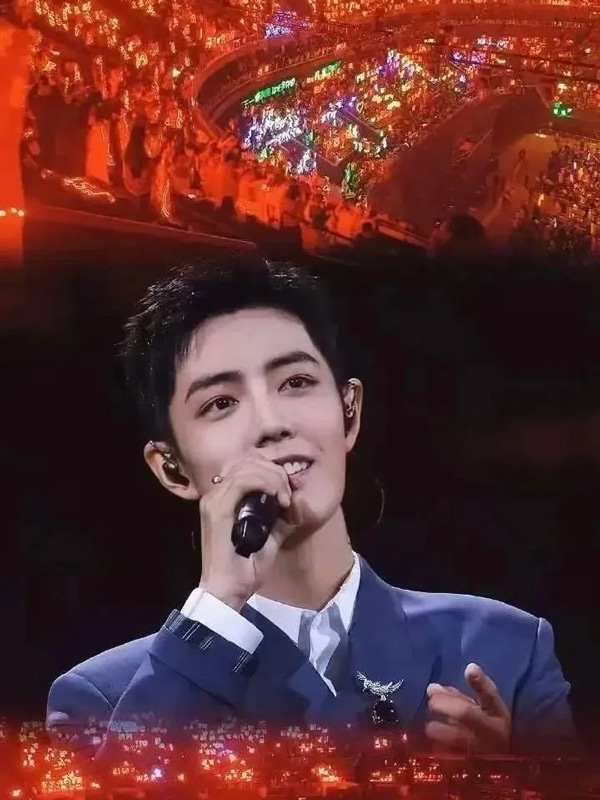
Yet Xiao Zhan’s true innovation lies in shared ownership. Fans don’t just support him; they co-create meaning—whether interpreting Zang Hai’s trauma or defending his artistic choices. This symbiotic relationship, managed by a studio balancing creativity and crisis control, offers a blueprint for post-idol stardom.
He resonates not through conquest but connection: between past and present, strength and fragility, artist and audience. As The Legend of Zang Hai reruns across continents, his quiet revolution endures—proving that in a fragmented world, true beauty unites.