-

5 Must-Watch “Marry First, Fall in Love Later” Period Dramas
Chinese historical dramas have a secret weapon. It is not flying swords or imperial consorts. It is a simple, almost absurd setup: two strangers marry for convenience, then—slowly, awkwardly, irresistibly—fall for each other. The trope is called “Marry First, Fall in Love Later”, or "marriage first, love later." And over the past two years, five shows have turned this formula into pure gold. From a fake warlord to a butcher's daughter, each series proves that the best love stories do not start with a bang. They start with a contract. And then they burn. What makes this trope so addictive? It is the tension. In real life, arranged marriages are relics. On screen, they are laboratories of emotion. The couple begins as strangers—polite, guarded, sometimes hostile. Every meal, every stolen glance, every accidental touch becomes a battlefield. The audience knows what the characters refuse to admit: that proximity breeds obsession. These shows do not rush. They let the slow burn simmer for thirty episodes, and we love every minute. But the magic is not just in the waiting. It is in the transformation. A cold general learns to smile. A shy bride learns to scheme. The marriage, once a cage,…- 0
- 0
- 33
-
Ashes to Crown Premieres on Netflix: June 2026's Cdrama
June 1, 2026 — The highly anticipated Chinese historical political drama Ashes to Crown premiered simultaneously on Netflix and YOUKU today, marking one of the most significant C-drama releases of the summer season. Starring Chen Duling and Zhou Yiran, the 24-episode series releases episodes daily through June 12, 2026, following a binge-friendly daily drop model that has already generated substantial social media engagement across both Chinese and international platforms. Plot Overview and Historical Backdrop The series is set during the Tumultuous Warring States period and follows Chu Zhao, the daughter of a respected general, who refuses to be manipulated as a political pawn by Xiao Xun, the ambitious heir to the State of Chu. Unlike conventional historical romances that prioritize romantic arcs, Ashes to Crown places political strategy, court intrigue, and female agency at the center of its narrative. The title itself — "Ashes to Crown" literally "noble woman") — signals the central theme: a woman's journey from political pawn to empowered strategist. The production has drawn attention for its willingness to engage with the darker dimensions of court politics: betrayal, strategic marriage, intelligence warfare, and the moral compromises required to survive elite power circuits. Early episodes establish Chu Zhao not as a passive…- 0
- 0
- 64
-
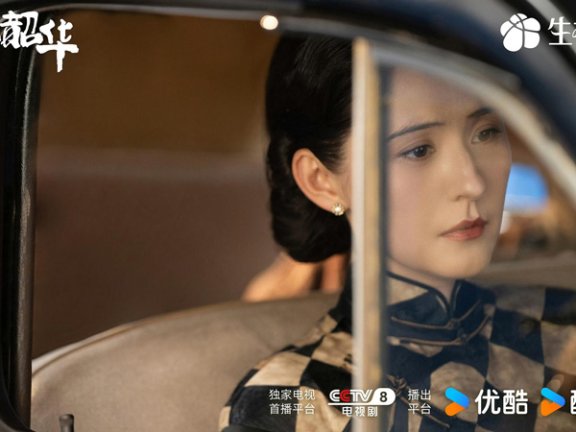
Wild Ambition Bloom: A 20th-Century Woman's Herbal Venture
"Fast-paced and satisfying." When this becomes the label most people attach to a period drama, it already hints at something unusual. Wild Ambition Bloom (灼灼韶华), now streaming on Youku, has indeed broken the mold. The show has cut through the crowded drama market with impressive results: a CVB rating above 2.6%, Youku's internal popularity index over 8000, and the top spot on Douyin's drama chart. Along with these numbers, the show has gained both public attention and steadily improving word of mouth. What makes Wild Ambition Bloom stand out is that it isn't just another so-called Shuang Drama (爽剧)—a fandom term used to describe shows built on fast payoffs, revenge arcs, and cathartic spectacle. The creative team tapped into what contemporary viewers want and reworked the familiar framework of Republican-era dramas. By leaning into three key areas—rare subject matter, modern character design, and an intensified rhythm of storytelling—the series updates the genre and adds new value. A Long Drama That Still Feels Fast The immediate market response was strong. In terms of ratings, its CVB performance not only started high but kept climbing. On Youku, the show crossed 8000 in popularity score, staying at the top of several charts: the…- 0
- 0
- 453
-
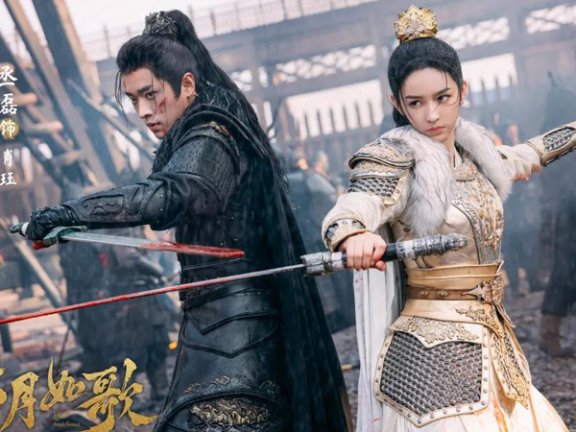
Legend of The Female General: Zhou Ye’s New Costume Dramas
Every summer, costume dramas built around female protagonists dominate the screen. This year, Tencent Video's Legend of The Female General (锦月如歌) has stepped into that spotlight. The series is adapted from The Reborn Female General, a hit novel by Qian shan Cha ke. As one of the leading authors in online literature, Qian shan Cha ke is particularly well known for her "rebirth" series, and this novel stands as one of its representative works. From the moment the drama adaptation was announced, the buzz around Legend of The Female General never really stopped. Its broadcast performance has been impressive. Since its premiere on August 6, the show quickly gained momentum. Within just four days, it crossed an internal popularity index of 26,000 on Tencent Video, earning a place in the "Most Watched" club. It also topped national TV ratings across three monitoring platforms—CSM, Huan, and Kuyun—for two consecutive days. As of this writing, it continues to hold the No.1 spot on Maoyan's real-time popularity chart, as well as Douban's television ranking. On social platforms, discussions have spread quickly. Viewers are sharing clips of punchy dialogue from a female perspective, the heroine's revenge moments, and the male lead Cheng Lei's performance—often…- 0
- 0
- 902
-
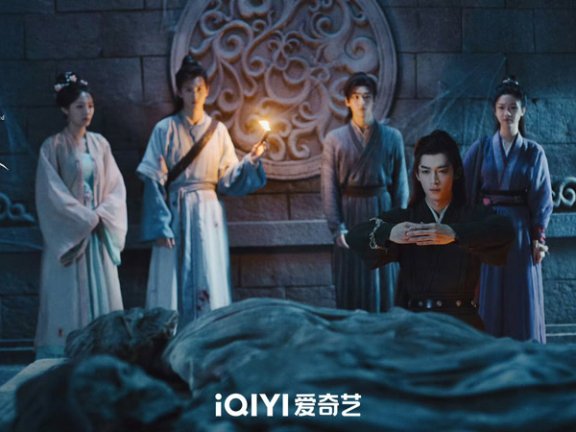
The Wanted Detective: Historical Crime Dramas Are on Fire
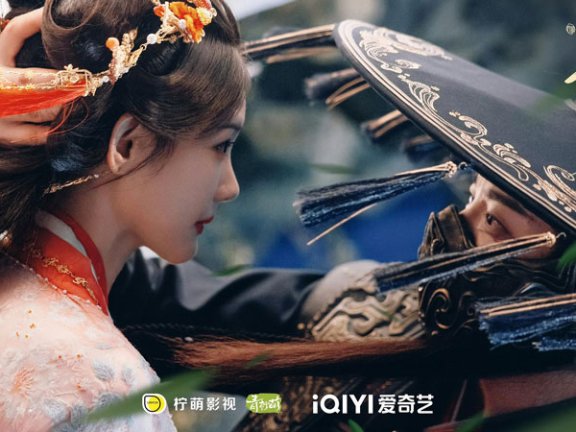
If you're someone who loves historical detective dramas, this summer's really treating you right. Just as Coroner's Diary (朝雪录) took off and became a surprise hit, now The Wanted Detective (定风波) has entered the scene—and it's making waves from episode one. Comments online say it all: "Each one's better than the last. Period detective dramas? Yeah, this track is getting seriously competitive." I powered through ten episodes in a row—here's why it's hard to stop: constant twists, tight plotting, and suspense that keeps pulling you in. Add in a strong cast and a distinctly Chinese supernatural vibe, and what you get is another top-tier mystery from iQIYI's summer lineup. Let's talk about it. The Wanted Detective Premiered August 1, 2025 · iQIYI A Case Within a Case – Twists You Don't See Coming A strong mystery series needs a powerful hook—and this one doesn't waste time. Three court officials die in quick succession, each one in a more bizarre fashion than the last: A rider's neck snaps mid-gallop, his head flying off. A man writing at his desk bursts into flames with no warning. Another drowns quietly in a washbasin, with no water spilled. All three deaths are sinister. All…- 0
- 0
- 1k
-
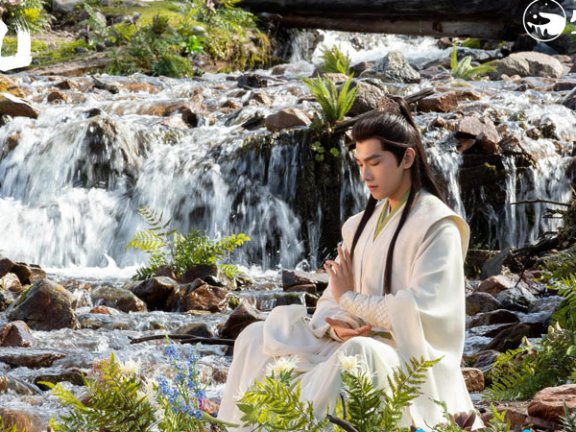
Can The Immortal Ascension Live Up to Its Reputations?
After a slow spell in the Chinese drama scene, things finally picked up a little with the arrival of The Immortal Ascension, a big-budget fantasy series adapted from the hugely popular web novel by Wang Yu. The drama is helmed by director Yang Yang and stars heartthrob Yang Yang in the lead role, with notable creative input from Wang Yuren, who directed the successful animated version of the same story. That crossover alone brought in a fair number of anime fans. Add to that the IP's long-standing reputation and a built-in fanbase, and it's no surprise that the show shot past 10,000 in Youku's internal popularity index right after launch. Let's break down what the show's really delivering—beyond the heat—and look at its launch stats, what people are liking so far, and the top three points of criticism from viewers. First, the Numbers: A Very Loud Debut This one hit the ground running. Before it even aired, Youku had logged over 5.28 million pre-release subscriptions. On launch day, the show pulled a heat index of 8,326—the highest day-one score for any Youku series in 2024 so far. By day three, it had officially broken the 10,000 mark. The drama took…- 0
- 0
- 1.1k
-
Everthing Behind the Coroner's Diary
On the evening of July 23, The Coroner's Diary (朝雪录) quietly climbed to the top of Weibo's trending list. It wasn't a mega-IP. It didn't boast big-name stars. Most media outlets hadn't even included it in their "most anticipated dramas" roundups. But somehow, it became iQIYI's third show in 2025 to break the platform's elusive 10,000 heat index mark. Funny enough, the night before, the show already hit Weibo's No.2 trending spot—almost there, sitting at 9991. People clicked in expecting to see a celebration. Instead, they found everyone holding their breath for those last 9 points. Then came the moment: the number ticked over. Producer Quan Haojin posted the milestone on his WeChat moments with three crying emojis. Director Li Huizhu, known for keeping things professional, used three "extremely"s before she even said the word "happy." "Honestly? This did way better than we expected," Quan said. "We worked on this for over four years. Hitting 10,000 is lucky. But even if we hadn't, I still wouldn't regret making it." Strong Numbers, Real Watchability Before the show aired, Quan was worried. Really worried. The Coroner's Diary wasn't showing up in any of the pre-season hype lists. Media didn't mention it. Even…- 0
- 0
- 944
-
Another Sleeper Hit in Historical Mystery: Coroner's Diary
Two summers ago, Mysterious Lotus Casebook lit up the martial arts scene with its trio of sleuths solving ten classic cold cases. Last year, The Ingenious Detective Lu Lingfeng brought Tang Dynasty aesthetics back in fashion with eight eerie mysteries. Turns out, the so-called "Chinese detective aesthetic" really does something to the audience — maybe it's the sense of order, maybe it's the ancient riddles, maybe it's just that familiar thrill of peeling back layers of lies. Now it's summer 2025, and the first historical mystery drama out of the gate is Coroner's Diary (朝雪录). And right from episode one, it pulls you in with a headless bride and a corpse buried in a well. No warm-up, just straight into the weird. Within days, the show's trending with over 9,000 heat index (a local metric for popularity), and multiple plot threads climbing the hot search charts. At the core of Morning Snow is a double-lead mystery arc, set against a backdrop rich with ancient forensic techniques and a distinctive Chinese visual style. But beyond the murder boards and blood trails, the show threads in themes that resonate with today's audience — fighting injustice, rejecting toxic romance tropes, and showcasing women…- 0
- 0
- 575
-
Women's Awakening and National Sentiment In the Name of Blossom
Every summer marks a fierce battleground for the Chinese TV industry. And one quiet rule has become increasingly clear in recent years: if you're going to launch a big historical costume drama, summer is your moment. Since the "xianxia/costume drama restriction order" (a policy aimed at limiting the number of historical and fantasy dramas on air introduced in 2019) was put in place, period dramas have noticeably declined on mainstream channels. Among them, love-centric historical shows have seen a particularly bumpy ride. To stay relevant, creators have been experimenting—pushing for quicker pacing, short-form storytelling, and even adding game-like elements. But the results? Mixed, at best. These tweaks might create short-term hype, but they don't offer a long-term solution. Now that long-format dramas are shrinking across the board, the industry's looking for a win—something high-quality and widely appealing enough to restore confidence. And top-tier costume dramas are under even more pressure: they not only have to look good but also find new ways of storytelling, inject real cultural depth, and raise the production bar to win back their audiences. Enter The Glorious Blossoms, which aired in late June, produced by Huace Media. It's the follow-up to the popular series Flourished Peony…- 1
- 0
- 311
-
After 9 Years in the Industry, Li Yitong Chooses to Change
It was 1:30 in the morning. Slightly tipsy from fatigue, Li Yitong still faced the camera with energy and a smile, wrapping up her final interview of the day — her 18th consecutive working hour during a packed publicity schedule. Even after such a long day, she didn't slack off in front of the camera. She tried her best to bring something new to every single interview, even when the questions were basically the same. She would shift the focus in her answers, trying to offer a different angle each time. On top of that, she instructed her team to buy late-night snacks for all the reporters present — and not just any random food. She only ordered things she had personally tried and liked, then shared them with everyone. To be able to manage things down to such small details, to make sure everyone is looked after, and still give her all — that's Li Yitong. And this, honestly, is just her default mode. Actress Ling Meishi, who is signed under the same agency as Li Yitong, has often been "taken care of behind the scenes"by her. Once, while filming in Hengdian, during a startup banquet for a new…- 0
- 0
- 886
-
A Dream Within A Dream Cracked Costume Drama's Burnout Cycle
That breath of fresh air in period dramas? A Dream Within A Dream just wrapped up—and it did something rare: it broke the tired rules while making us laugh and cry. Right out the gate this summer, it grabbed attention as the frontrunner among historical shows. Its trick? A clever "story-within-a-story" setup that pulled viewers behind the curtain of its own creation. Then came the accelerated finale. Every "cardboard character" woke up, shattered their scripted chains, and steered both story layers toward a proper happy ending. That move? Pure genius—sharp, funny, and weirdly touching. Trying to pin this show to one genre is hopeless. If I had to force it: A modern woman crashes into a script, hijacks her fate, and inspires her 2D co-stars to grab free will. An "ambition-only" actress melts her own rules and falls hard. By roasting tired tropes, it stitches together a new vision for costume dramas—breaking the mold to rebuild it. No wonder fans rallied behind it. We've all suffered through enough paint-by-numbers historical romances. Scrolls became our "proxy voice"—even swinging the knife at lazy writing for us. That cathartic chaos? Like hiring a top-tier real paid online arguers when you're outmatched in a…- 0
- 0
- 303
-
Why Chinese Dramas Can Never Seem to Get Emperors Right
From the moment Qin Shi Huang declared himself the first emperor in 221 BCE to the abdication of Puyi in 1912, China had more than two millennia of imperial history. Yet strangely enough, it wasn't until much later that Chinese audiences began seeing emperors on their screens. Before the 1980s, non-realist genres were few and far between on Chinese television—let alone any depictions of emperors. When Emperors Finally Entered the Frame According to media scholars, the earliest TV portrayals of emperors date back to 1982. That year, Shanxi TV produced Anecdotes of the Tianbao Era (天宝轶事), Shanghai TV aired Prince Qin Li Shimin (秦王李世民), and Hebei TV released Consort Yi (懿贵妃). All of these shows predate Nurhaci (努尔哈赤), a better-known 1986 drama by China Central Television (CCTV), which is often mistakenly believed to be the first of its kind on the mainland. On-screen emperors in Chinese TV dramas generally fall into two categories: the "official history" type and the "unofficial tales" type. Nurhaci is an example of the former. Directed by Chen Jialin—later crowned "the first director of Chinese historical drama"—the show laid out a grand, epic style that would set the tone for later historical blockbusters like Tang Minghuang,…- 0
- 0
- 356
-
When The Feud and A Dream Within A Dream Try Short-Form Tricks
Following the success of The Double (墨雨云间), Yu Zheng's heavily promoted The Feud (临江仙) has ignited the summer fantasy romance market. Riding on the momentum of Wonderland of Love, Huanyu TV seems to have found a new formula—recasting long dramas in the mold of short-form content. The strategy: emotional punch over plot depth, and a binge-friendly pace over traditional slow burn. An "immortal romance" centered on a so-called "marital war," The Feud drew both praise and backlash, yet undeniable buzz. Its iQiyi popularity index climbed past 9500, though whether it can break 10,000 remains to be seen. Written by Zhao Na and Ren Yanan, directed by Zhi Lei and Guo Hao, and starring Bai Lu, Zeng Shunxi, He Ruixian, and Chen Xinhai, the drama tells the twisted tale of Hua Ruyue (Bai Lu) and Bai Jiusi (Zeng Shunxi)—immortal sovereigns doomed to love, hate, and marry/divorce three times across realms. Promotion was intense. Within a day of airing, the show's index surpassed 9300, peaking at 9514 by day three. Yet buzz began to slow. Nonetheless, 1873 trending topics—152 on Weibo's Hot Search, 637 on the Hot Rising list, and 305 on the Entertainment list—kept attention strong. Yunhedata confirmed a 12% market…- 0
- 0
- 221
-
The Making of The Feud: Chatting with Director Guo Hao
Finally! The moment we've all been waiting for—the grand finale of The Feud aired! All the suspense and anticipation exploded in Episode 32. When Hua Ruyue travels back through parallel timelines, showing her mortal self everything Bai Jiusi has done... even though the past can't be undone, isn't making amends its own kind of perfect ending? That moment when they declared, "Never to be parted again, in heaven or on earth," melted away all those lingering "what ifs" for the audience! This xianxia series, built on "cross-temporal storytelling," shattered the usual BE (Bad Ending) vs. HE (Happy Ending) mold. The Feud pioneered its own PE (Perfect Ending) path. It's like finding a key to unlock emotional knots—not obsessing over philosophical questions of karma, or wrestling with clear-cut notions of right and wrong. It finds wholeness within regret, showing viewers that the courage to reconcile with yourself is the real power that transcends time and space. The finale's explosive buzz? That energy built up for weeks. Before launch, it smashed past 4 million advance viewers on just one platform. Once it aired, it broke records: "Highest premiere day heat ever on iQiyi (2025)," "Fastest to hit 100 million bullet comments," and…- 0
- 0
- 151
-
Every Wuxia Film Owes Something to This One
Dragon Inn sits in the middle of a desolate desert, looking like just another pit stop for weary travelers. Its thatched roof and mud-brick walls blend into the dry, rocky landscape that stretches for miles. A few strings of chili peppers and bundles of husks hanging on the walls are the only splashes of color. Inside, the layout is bare but orderly: a few wooden tables, and a staircase that leads up to some narrow rooms on the second floor. The place is set somewhere on the northern frontier of China, remote and anonymous—meant to be a quiet, forgettable location. A Standoff Under One Roof But when it first appeared on screen in King Hu's (胡金铨) Dragon Inn (1967), a group of mysterious men were already walking toward its door. You just knew trouble was about to walk in. Like the saloons in Westerns or the empty suburban houses in horror films, the humble setting becomes the perfect arena for a showdown. The flimsy walls and paper windows won't keep anything out. If A Touch of Zen—the three-hour epic Hu made four years later—is considered his most imaginative work, then Dragon Inn is where his visual language becomes the most…- 0
- 0
- 97
-
Can Bilibili's Period Dramas Outshine the Streaming Giants?
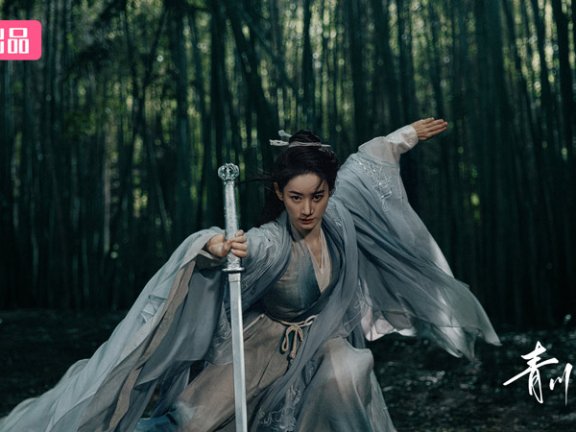
"Chastity? Purity? These are empty shackles... I stand whole and unbroken. That suffocating morality you worship? Keep it to yourselves." This fierce declaration from Bilibili's new period drama, Qingchuan's Veil of Vengeance (青川入梦), perfectly captures its modern feminist core. The story follows Mo Qingchuan, a female general framed for treason. After five years in captivity, she returns to the imperial court under the alias "Mo Wang" as a scholar, meticulously plotting her revenge. Following the success of 2023's An Ancient Love Song, Qingchuan's Veil of Vengeance arrives as another "compact gem"–just 18 episodes, each under 30 minutes. It blends "female-dominant relationships" and "taming narratives," proving that shorter mid-tier productions don't have to rely on cheap thrills. This drama marks Bilibili's continued push into the competitive period romance genre and a deeper exploration of focused, high-quality storytelling as the era of easy viewer growth fades. But zoom out: against giants like iQiyi, Tencent Video, Youku, and Mango TV pouring hundreds of millions into star-studded blockbusters, is Bilibili's "small but refined" approach naive idealism? Or could it actually shift the industry? The Power of "Small but Refined" Qingchuan's Veil of Vengeance isn't Bilibili's first compact hit. An Ancient Love Song (古相思曲) paved…- 0
- 0
- 199
-
Bai Lu's Triple Win: Acting Range, Commercial Clout, and Industry Influence
In today's fiercely competitive film and television landscape, only a rare few actors manage to level up across all fronts—critical acclaim, commercial value, and industry influence. Among the standout talents of the post-90s generation, Bai Lu has emerged as a model of multi-dimensional growth, propelled by the positive feedback loop between her on-screen performances and market response. As the summer 2025 season kicked off, Bai Lu's costume fantasy drama The Feud landed with impact. Not only did it shoot straight to the top of DeTavin's weekly rankings for historical dramas, but it also cemented her status as the only female lead on iQIYI's platform to headline two shows that surpassed the coveted 10,000 popularity index. What makes The Feud's success even more impressive is that it didn't rely on a big-name IP. Instead, it captured viewers with a tightly written original script and an unconventional, anti-cliché narrative. As the plot deepened, audience engagement soared—within just nine days of release, pop-up comment interactions exceeded 100 million, and the DeTavin buzz index peaked at 2.5, pushing the show past the 10,000 heat threshold. At the heart of this breakout was Bai Lu's portrayal of Li Qingyue (also known as Hua Ruyue). Her…- 0
- 0
- 523
-
Who's Truly Honoring Tradition in Chinese Costume Dramas?
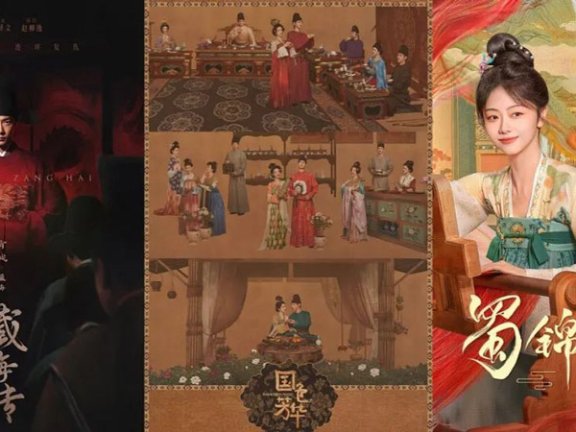
Integrating traditional culture into historical dramas isn't new. But more and more recent productions are going beyond aesthetics—embedding cultural heritage into the storylines themselves. Take Legend of Zang Hai (藏海传), a recent release that weaves an intricate political tale around the ancient art of geomantic architecture, or kanyu (堪舆营造)—a feng shui-based approach to site planning in traditional Chinese construction. And this is far from an isolated case. In A Dream of Splendor (梦华录), Song dynasty tea culture is not just a visual garnish—it defines the heroine Zhao Pan'er's livelihood and values. Similarly, The Scent of Time (为有暗香来) showcases the traditional art of herbal perfumery, Flourished Peony (国色芳华) explores plant-based fragrance making, and Brocade Odessey (蜀锦人家) dives into Sichuan's iconic brocade weaving. And more of these culture-driven dramas are in the pipeline. Could this be a meaningful evolution in the genre? As traditional Chinese culture continues gaining mainstream appeal, what should period dramas aim to achieve in order to truly tell cultural stories well? Why Does It Feel So Right? The fusion of traditional culture and historical drama isn't exactly groundbreaking—it's just finally being taken seriously. The first phase of this integration largely involved the adoption of Eastern aesthetics across costumes,…- 0
- 0
- 200
-
Talking with the Creators Behind The Litchi Road
A saying from ancient China goes like this: "One day, the color fades. Two days, the fragrance goes. Three days, the taste is gone." That's how fragile fresh lychees were—especially when you're trying to haul them over 5,000 miles from Lingnan to the imperial capital of Chang'an. For a low-ranking clerk like Li Shande, the lead character in The Litchi Road, this was basically mission impossible. Fast forward 1,200 years, and author Ma Boyong found himself in a similar bind: finishing a 70,000-word novel in just 11 days. Running on pure adrenaline (or what he called "flow state"), Ma pulled it off. And in his story, Li Shande does too—armed with nothing but math skills and the kind of desperation that leaves no room for failure. This whole "impossible mission" theme didn't stop at the book. It carried over to the TV adaptation too. The production team faced its own version of the lychee run: staying loyal to the book while also making bold changes, and doing it at a time when short-form web content is king and long-format storytelling feels like an endangered species. How hard was it? Well, that depends on how fast the TV industry decides to…- 0
- 0
- 434
-
Feud Hits 10K View Club, But Is Xianxia Drama Being Left Behind?
That big fantasy drama Feud just wrapped up, hitting major streaming numbers, but man, the reactions were all over the place. The head honcho at the studio, Yu Zheng, is proudly claiming his first foray into "Xianxia" (Chinese immortal hero fantasy) captured "authentic Chinese mythological essence." Meanwhile, folks outside this bubble are scratching their heads: "What was that? Xianxia? Seriously, who even watches this stuff anymore?" Here's the weird spot Xianxia dramas are in: they do pull big numbers sometimes, no question. But their audience feels super niche. Outside that dedicated fanbase? Barely a blip on the radar. Forget about breaking into the mainstream like other hits do. Creatively? They're stuck in a serious rut. Critics have been hammering this for ages: Predictable world-building checkboxes. Costumes and sets that look copy-pasted. The endless re-runs of the "three lifetimes, sweet-then-bitter romance" template. Way too much "love story," not nearly enough actual "heroics" (the 'Xia' in Xianxia). But maybe the real reason Xianxia feels out of step is simpler: it's not matching the current mood. Think about it. Xianxia's core stories haven't really changed in 20 years. It's always about cultivating immortality and saving the world. The Legend of Sword and Fairy…- 0
- 0
- 169
-
The Litchi Road: An Ancient Workplace Survival Guide
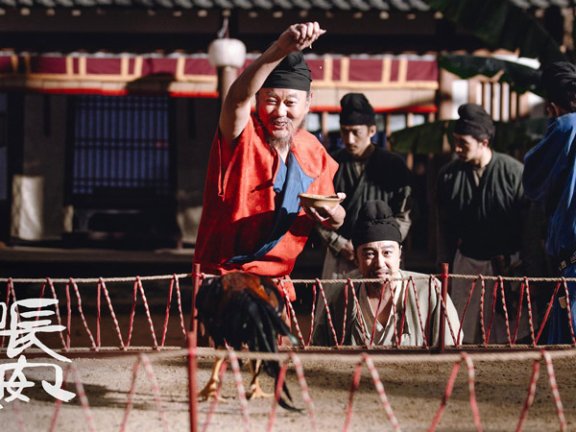
As a popular choice for screen adaptations, the novels of Ma Boyong always garner widespread attention when brought to the screen. The recently aired The Litchi Road is yet another work of Ma Boyong, following the success of The Longest Day in Chang'an, LUOYANG and Under the Microscope, that has been adapted into a TV series. The Litchi Road is produced by China Central Television, China TV Drama Production Center, Penguin Pictures, and Liubai Film & Television. Directed by Cao Dun and Gao Xiang, with Ma Boyong as a story consultant, the series stars Lei Jiayin and Yue Yunpeng. It is a witty drama that blends ancient and modern sensibilities. The story takes place during the Tang Dynasty and follows Li Shande, an inconspicuous low-ranking official in Chang'an, who is framed and reluctantly tasked with the nearly impossible job of transporting fresh lychees from Lingnan to Chang'an. With a tight deadline and limited resources, Li embarks on a journey that spans over a thousand miles to complete the mission. Known for using high-density information to drive the narrative forward, Ma Boyong is also adept at focusing on the fates of small characters. The Litchi Road continues this tradition, earning it…- 0
- 0
- 563
-
Sea of Hatred, Sky of Love: A Distinctly C-Drama Narrative Craving
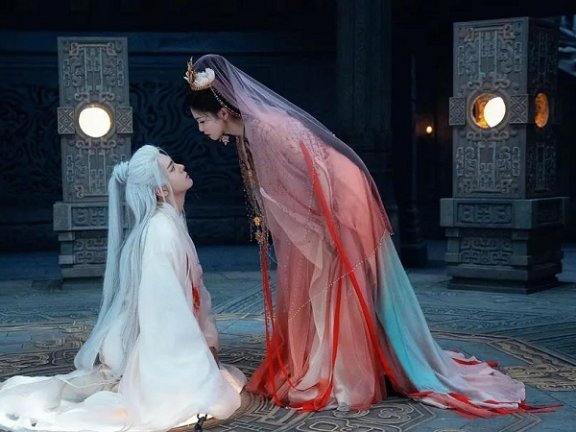
The distinction between modern and period idol dramas is particularly stark lately—modern ones depict characters "falling deep in love", while period ones are heavily featuring the "Sea of Hatred, Sky of Love" trope. Take the modern idol drama Be Passionately in Love (陷入我们的热恋), which focuses squarely on passionate romance. It follows a pure love line both on and off-screen—kissing scenes require camera angles! In contrast, the period idol drama Feud (临江仙) features two immortal leads who have already married twice, had a child, and are now going through divorce. Their story follows the path of love turning to intense hatred, a dynamic of mutual affection and mutual destruction. Feud isn't the only recent period idol drama embracing this "Sea of Hatred, Sky of Love" setup. In The Prisoner Of Beautyl (折腰), the male and female leads are heirs to feuding families who form a grudging union. The warlord Wei Shao bends for love, setting aside his hatred. While The Legend of Zang hai (藏海传) might not be a standard period idol drama, its romance subplot is textbook "Sea of Hatred, Sky of Love". Remarkably, the cluelessly cishet director even managed to infuse the dynamic between Zang Hai and Marquis Pingjin…- 0
- 0
- 257
-

Historical Dramas: A Tough Sell?
Since its premiere, The Litchi Road (长安的荔枝) has experienced a somewhat slow start. So far, the show's share on Yunhe platform has stabilized around 10%, which suggests that the effective per-episode view count hasn't broken the 10 million mark. Meanwhile, social media discussions show the series lacks breakout topics and overall buzz remains limited. Even on television, where historical dramas typically hold an advantage, The Litchi Road failed to ignite major interest. According to Kuyun statistics, after airing on CCTV-8, the daily ratings dropped from 1.4885 at debut to 1.2093 by June 10th. This raises another question: can historical dramas still activate the market today? Historical dramas—including both serious and legendary genres—have been frequently discussed in the industry over the past two years. Last spring's industry conference featured multiple remarks suggesting "historical dramas may make a comeback as a new market hotspot." A series of projects are also underway, positioning this genre as a key effort to solve current content challenges and boost the market. The reason lies in the past super high popularity of historical dramas on TV, which made people see the potential for activating diverse audiences. But judging by recent project performances, this assumption deserves a question…- 0
- 0
- 158
-
Director Cao Yiwen Reveals the Making of The Legend of Zang Hai
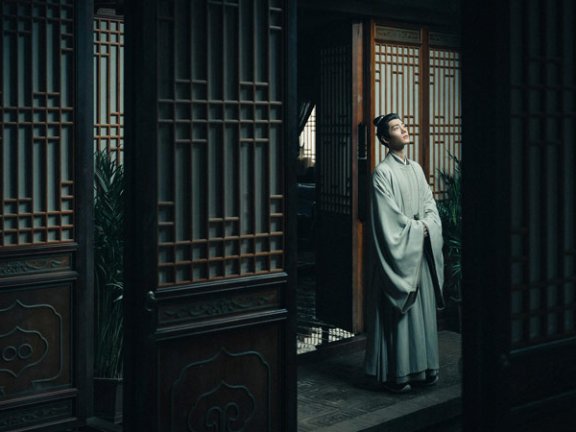
If you're still haunted by the twists and emotional gut-punches of The Legend of Zang Hai (藏海传), you're not alone. Whether it's the tangled web of loyalty between Zang Hai and his mentor Zhao Bingwen, or the eerie suspense surrounding the elusive "third man," social media remains ablaze with fan theories and character dissections. And here's the kicker—unlike your typical revenge fantasy where the protagonist rises through sheer plot armor, The Legend of Zang Hai gives us a tragic, deeply psychological hero. Zang Hai's arc has become a spiritual sinkhole fans can't stop falling into. Viewers don't just watch him—they breathe with him. What made this slow-burn success possible? According to the show's general director Zheng Xiaolong, much of the credit goes to a fresh face behind the camera: young director Cao Yiwen, whose approach breathed new life into the genre. His unique directorial style has fostered a whole ecosystem of fan-made scripts and alternative readings—what Chinese netizens call "wild screenwriters" (meaning audiences passionately creating their own interpretations and continuations of the plot). Tracing Cao's Creative Footprint Rewind to 2020, and you'll find Cao's name on another unconventional title: To Love (最初的相遇,最后的别离). It wasn't just another noir-tinged romance—it brought a…- 0
- 0
- 631
Cdrama Insights






Scan to open current page
-
$CouponsLimitation of use:Expired and UnavailableLimitation of use:
before
Limitation of use:Permanently validCoupon ID:×Available for the following products: Available for the following products categories: Unrestricted use:Available for all products and product types