

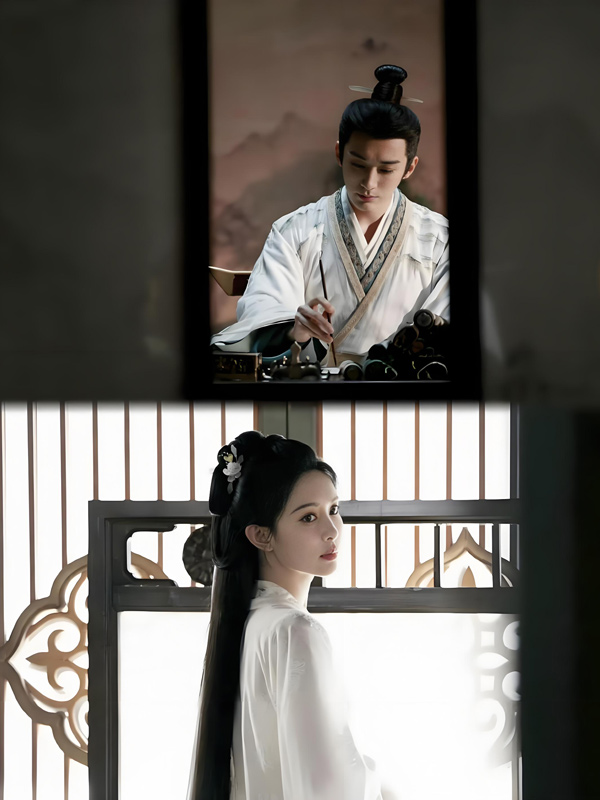
The historical drama The Princess's Gambit (桃花映江山), starring Liu Xueyi (刘学义) and Meng Ziyi (孟子义), premiered to high expectations but quickly saw a drop in viewership. Audiences and critics pointed to various reasons, from off-screen chemistry issues to an outdated storyline. This article explores why it couldn't match the success of shows like A Dream within a Dream (书卷一梦), examining the role of promotional dynamics, plot fatigue, and competitive pressures. By dissecting these elements, we uncover broader trends in viewer preferences during the 2025 drama season.
The Off-Screen Dynamic
Criticism often centered on the perceived lack of chemistry between Liu Xueyi and Meng Ziyi. Many viewers blamed this for the drama's declining ratings, arguing that their off-screen interactions felt forced during promotions. Unlike Meng's previous hit Blossom (九重紫), where her playful rapport with the co-star boosted buzz, her reserved demeanor with Liu fueled fan theories of discord. This overshadowed their on-screen performances, leading to unfair accusations against Liu's acting skills.
The contrast was stark in promotional events. Blossom thrived on lively interviews and social media banter, creating viral moments that drew in casual viewers. In The Princess's Gambit, however, the actors' minimal off-stage closeness made fans question their believability as a couple. Such perceptions can heavily influence a drama's early traction, as seen in positive cases like Bai Lu's dramas, where energetic promotions amplified audience engagement.
Ultimately, chemistry debates miss the core of acting. Liu Xueyi, known for his nuanced portrayals of cunning officials, delivered a solid performance here, while Meng Ziyi showed marked improvement from her earlier roles. Their professional skills allowed viewers to invest in the characters, proving that real-life dynamics shouldn't dictate on-screen success. Yet, the noise from promotions created a hurdle that the drama struggled to overcome.

Plot Fatigue Sets in
The storyline itself contributed to viewer disinterest. The Princess's Gambit relied heavily on cliched tropes: a marriage of convenience between the female lead, Jiang Taohua, and the male lead, Shen Zaiye (沈在野), evolving from mutual distrust to love. This formula, complete with misunderstandings, amnesia, and near-death escapes, felt overly familiar to audiences bombarded with similar narratives.
Predictability drained the excitement. Shen's archetype as a misunderstood nobleman and Jiang's journey from oppression to empowerment echoed countless other dramas, making the plot easy to anticipate. As one viewer noted, "You could guess the twists by episode five." This boredom stemmed from an industry-wide saturation; after years of such tales, audiences crave freshness, not recycled conflicts.
In contrast, the surprise hit A Dream within a Dream capitalized on unpredictability. Its chaotic, rule-breaking twists—like sudden character reversals—resonated with viewers seeking escapism from daily stresses. The "crazy" elements provided a cathartic release, turning it into a word-of-mouth phenomenon. This highlights how "Peach Blossoms" suffered not from poor execution but from an exhausted genre that failed to innovate.
Competitive Pressures
External factors played a crucial role. Premiering alongside strong contenders like A Dream within a Dream, The Princess's Gambit faced intense competition for viewership. A Dream within a Dream benefited from timing and buzz, drawing audiences away with its novel approach, while The Princess's Gambit was relegated to the background despite its merits.
Luck and timing were undeniable. Had The Princess's Gambit aired during a slower season, its solid acting and production values might have secured higher ratings. Liu and Meng's star power actually prevented a worse outcome; lesser actors could have turned the predictable plot into a total flop. Still, the drama's hidden gems, like Liu Lingzi's (刘令姿) compelling portrayal of Meng Zhenzhen (孟蓁蓁), offered bright spots that hinted at untapped potential.
The drama's legacy underscores a harsh truth: success hinges on multiple variables. From promotional missteps to genre fatigue and rival hits, The Princess's Gambit was a victim of circumstance. Yet, its strengths in character depth and performance remind us that even underperforming dramas can leave a mark, urging creators to blend familiarity with innovation in future projects.