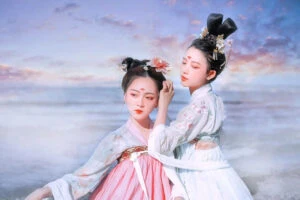
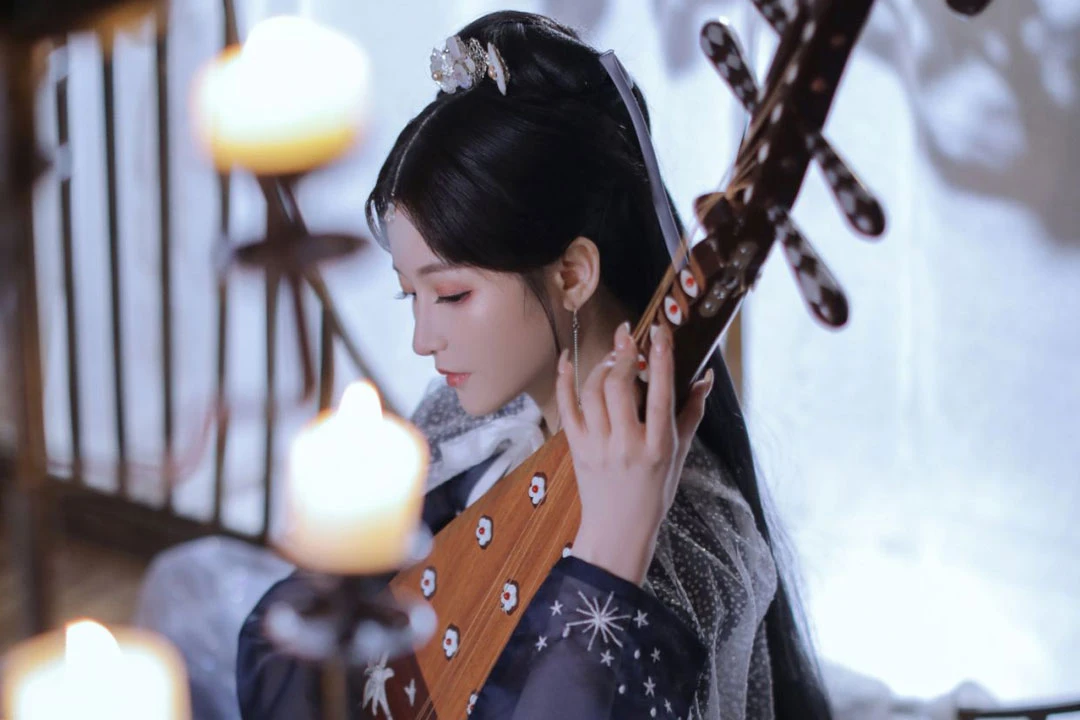
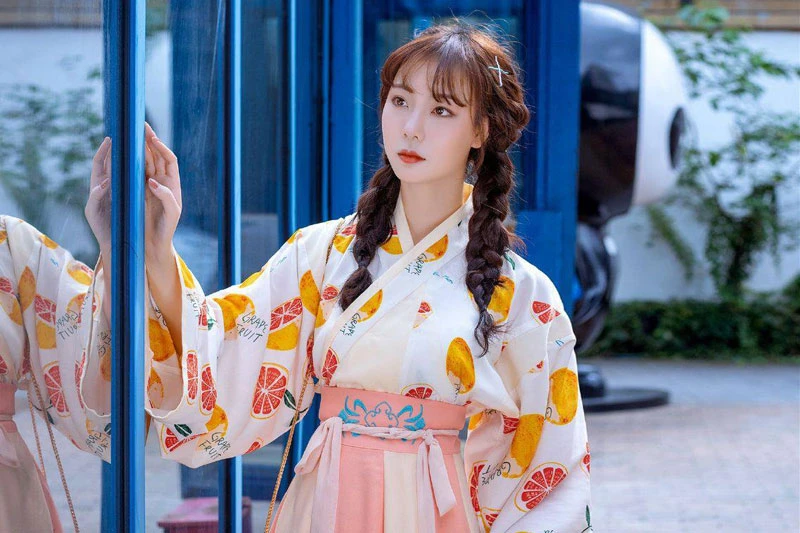
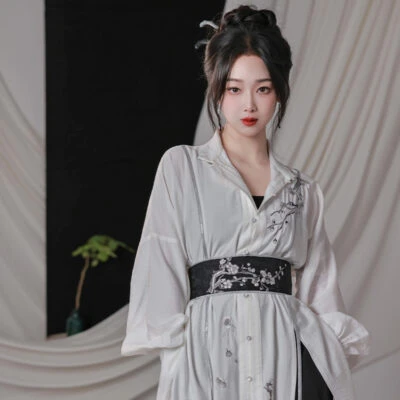
The Hanfu Movement is the campaign to bring the dress of the Han Chinese back into everyday and ceremonial life — and it began not with an organisation but with one man walking through Zhengzhou in a robe he had sewn himself, on November 22, 2003. Two decades later the clothes appear at festivals, weddings and museum galleries.
The Hanfu Movement is a grassroots revival campaign that began online in China in 2002 and entered public view on November 22, 2003, when Wang Letian walked through Zhengzhou in a self-made Hanfu robe. It seeks to restore pre-Qing Han Chinese dress to everyday and ceremonial life, and today spans festivals, weddings, museums and cultural events.
What the Hanfu Movement Is
Hanfu is the dress system of the Han Chinese as it existed before the Qing dynasty: a collar that closes right over left, ties instead of buttons, and a cut that changes with dynasty and occasion rather than with fashion seasons. The Hanfu Movement is the effort to return that system, and the occasions that go with it, to ordinary use. Participants address one another as Tongpao (同袍, literally “robe-mates”), a phrase taken from the Classic of Poetry. The garment itself is defined on the site’s Hanfu definition page, and the movement’s own two-decade record is kept on the summary of its first twenty years.
Vocabulary is where most outside descriptions go wrong, and the reason is historical: the movement itself grew out of a dispute about definitions. Hanfu names the garment system. Huafu (华服) is a broader term favoured by official bodies that takes in other ethnic minority dress as well. Guochao (国潮) names the commercial wave of Chinese-flavoured design that now sells the clothes. Qipao is a twentieth-century Shanghai garment built on a different cut, not a form of Hanfu. The table below sets the terms out the way the community uses them.
| Term | What it actually covers | Where readers mix them up |
|---|---|---|
| Hanfu | The Han Chinese dress system before the Qing, classified by construction rules | Treated as a single costume instead of a system of forms |
| Hanfu Movement | The revival campaign that began online in 2002 | Confused with cosplay or with a commercial trend |
| Huafu | A wider umbrella used officially, taking in all Chinese ethnic dress | Read as a synonym for Hanfu; it is broader |
| Guochao | The commercial Chinese-design wave, including fashion and consumer goods | Treated as an ideological movement; it is a market |
| Xinzhongshi | Contemporary clothing borrowing Han elements without claiming historical form | Counted as Hanfu by shops and by buyers |
| Qipao | A twentieth-century body-cut dress with Manchu and Western ancestry | Presented as China’s traditional dress, competing with Hanfu |
| Hanbok | Korean dress, with a short jacket and high-waisted skirt or trousers | Claimed as a Hanfu derivative, or the reverse |
Why It Began: Identity, Loss, and the 2003 Spark
Hanfu was not invented on a date. It developed out of the garments worn across the Yellow River plain during the Shang and Zhou dynasties, and by the Han dynasty the collar, the tie and the cross-body wrap had settled into a system that later dynasties adjusted rather than replaced. That is why a Tang robe and a Ming robe look different while obeying the same underlying rules. The oldest continuous feature is the collar, and the development of the robe system over time is traced on the Hanfu History page.
Everyday use of Hanfu ended in 1645, when the Qing court ordered men to adopt the Manchu hairstyle and style of dress under the decree usually shortened to “shave the hair, change the dress.” Enforcement was harsh enough that the change took hold within a generation. Women’s dress changed more slowly, but the system as a whole lost its public role. The accurate version is narrower than the word “banned” most English searches use: Han dress was displaced by decree and never restored as the default, which is the gap the modern movement set out to close.
The immediate trigger was an argument about national dress. At the 2001 APEC meeting in Shanghai, leaders posed together in Tang suits, and the sight set off a national debate about which garment could stand for Chinese tradition — a debate that exposed how thin public knowledge of ethnic dress had become. On February 14, 2002, a user writing as Huaxia Xuemai posted an essay, “A Lost Civilisation: The Han Ethnic Dress,” on the military history board of Sina’s Ship Knowledge network edition; reposted overseas, it drew close to 300,000 clicks within two years and is treated as the first important document of the modern revival.
The public break came on November 22, 2003, when Wang Letian walked through central Zhengzhou in a Quju Shenyi he had sewn himself. Zhang Congxing, a reporter for Singapore’s Lianhe Zaobao, came across the photographs and wrote the first article about Hanfu, which brought attention from Chinese and foreign media and made Wang Letian the public face of the revival. Sixth Tone, revisiting the origins in 2024, describes a generation that came of age with China’s rise but remained “sensitive to the damage done to the country during the colonial period and by China’s own rejection of its historical legacy in the twentieth century,” turning back to tradition to reconnect with cultural identity.
A Dated Timeline of the Movement, 2001 to 2026
The revival began with a piece of clothing that was not Hanfu, and with the argument that followed it. The timeline below runs from that 2001 spark to the current fixtures on the calendar.
| Date | Event | Why it matters |
|---|---|---|
| 2001-10 | APEC leaders pose in Tang suits in Shanghai | Opens the argument about national dress |
| 2002-02-14 | The lost-civilisation essay is posted on a Sina board | First document of the revival |
| 2003-01-01 | Hanwang is founded as a website | Gives the movement a permanent address |
| 2003-07-21 | Wang Yuliang publishes a photograph of himself in a robe he made at home | First recorded self-sewn Hanfu of the modern period |
| 2003-11-22 | Wang Letian wears a Quju Shenyi through central Zhengzhou | First public walk; the founding image of the movement |
| 2003-12-22 | Li Zongwei ties up his hair and teaches in Hanfu in Shandong | First modern classroom appearance |
| 2004-04 | Fang Zhexuan broadcasts a radio programme on Hanfu in Tianjin | The argument reaches mass media |
| 2004-10-05 | Thirty-three Hanwang users from six provinces meet in Beijing to honour Yuan Chonghuan | First nationwide offline gathering |
| 2004-11-12 | Fang Zhexuan attends a Confucius ceremony alone in Hanfu | Rite-led practice begins |
| 2004-12-07 | Wearers sue a company that altered Hanfu into a word for shrouds, and win | First legal defence of the term |
| 2005 | The first online shop selling Hanfu on the mainland opens | The clothes become buyable |
| 2006-04 | A dozen students stage an archery rite in Hanfu at Renmin University | First such rite on the mainland in 360 years |
| 2006-05 | 516 students aged 18 to 20 hold a coming-of-age ceremony in Wuhan | The practice reaches scale |
| 2006-12-17 | Chonghui Hantang sets up in Chengdu | First branded physical store |
| 2007-03-11 | Hanfu enters national political proposals for the first time | The issue reaches the legislature |
| 2007-05 | Fujian Hanfu Tianxia is approved by cultural and civil affairs authorities | First officially recognised Hanfu association |
| 2007-10-28 | Wang Hongbo dies of a heart condition, aged thirty | The movement loses its chief theorist |
| 2011-02-03 | The first Hanfu Spring Festival gala is released online | The movement produces its own media |
| 2013-04-30 | The first cross-strait Hanfu festival is held in Fuzhou | The network extends across the strait |
| 2013-11-01 | The first Xitang Hanfu Culture Week opens | An annual stage created from outside the community |
| 2018-04-18 | The first China Huafu Day, Daming Palace, Xi’an | Official recognition |
| 2023-11-22 | The twentieth anniversary of Wang Letian’s walk | The movement reaches generational age |
| 2025 | The 13th Xitang week runs nine days, its longest edition | The annual calendar holds without promotion |
| 2026-10-31 | The 14th Xitang Hanfu Culture Week will open | Current fixture on the calendar |
Two entries carry most of the weight. The Zhengzhou walk of November 22, 2003 is the date the dress entered public view, and the details are worth keeping. Wang’s outfit had two parts, a thin velvet Shenyi and a silk outer layer, and it used no buttons at all; ties held it closed. It was rough and a little ill-fitting, because a group of grown men had looked up specifications, taken up needles awkwardly, and by several accounts pricked their fingers doing it.
The other entry is a death. Wang Hongbo (汪洪波, 1977-2007) was the first to bind the cause to a wider revival of Huaxia culture as a programme rather than a preference, and he supplied the line the movement still quotes: to revive Huaxia, dress comes first. He extended it himself, saying the work begins with dress and reaches far beyond it, and he wrote three plans covering ritual revival, festival revival and industrialisation. He died of a heart condition on October 28, 2007, at thirty.
Annual events changed the pattern. On November 1, 2013, the lyricist Vincent Fang (方文山) opened the first Xitang Hanfu Culture Week in the water town of Xitang in Jiashan, Zhejiang. He built the week around participation rather than scholarship: a recitation at the opening, 370 enthusiasts completing a communal drinking rite (乡饮酒礼) that set a Guinness record for the largest rite of its kind, a costume carnival, an on-water wedding, a creative market, and a theme song he wrote with Jay Chou. He said at the time that he wanted a large event to spread Hanfu and to give Tongpao a sense of belonging.
Official recognition arrived in 2018 and settled the question of whether the dress belonged in public. The first China Huafu Day was held on April 18, 2018, the third day of the third lunar month and the traditional birthday of the Yellow Emperor, with the main stage at Zichen Hall in the Daming Palace ruins in Xi’an. It was organised by the China Youth New Media Association with Bilibili and the app Dongjia. By ten that night the livestreams had drawn more than 18.67 million viewers between them, and a topic on the Communist Youth League’s Weibo account passed 120 million reads.
Enthusiasts had been marking November 22 as Hanfu Travel Day since 2003, so the state added a second fixed date rather than the first. The culture week that Xitang has hosted annually became the third fixture, because it belongs to a place rather than to a date.
Who Drives It: Tongpao, Clubs, and the Diaspora
The movement spread through online forums and university clubs rather than through a central body, which is why it has no single leader today. Early participants called themselves Tongpao and found communities of like-minded people online, then began organising events in person to rediscover and reproduce what they saw as traditional culture, digging into historical documents and recreating garments from their descriptions. The Baidu Hanfu bar, the largest discussion space the revival produced, had 800 posts when its first moderator took over in April 2005, 20,000 members on June 21, 2010, and one million on August 8, 2019.
The diaspora was an early and often overlooked driver. Sixth Tone reports that Chinese students in the United Kingdom began establishing Hanfu clubs as early as 2007, organising around QQ before WeChat existed, with the stated aim of creating a space for Chinese students to wear Hanfu and “to promote it more broadly so that foreigners would become aware of it.” One founder said that “if Hanfu could be accepted overseas, perhaps it would gain more attention back in China” — and when overseas students began wearing the clothes on London’s streets, it drew attention from both locals and Chinese media. Chinese community parades in cities such as Paris have carried the dress into the cultural-diplomacy space as well.
Hanfu Movement and Han Nationalism
The movement’s relationship to Han identity is the part Western coverage focuses on most, and the scholarship is divided. Kevin Carrico’s ethnography The Great Han: Race, Nationalism, and Tradition in China Today (University of California Press, 2017) studies the movement as a “neotraditionalist and racial nationalist movement” that emerged after 2001, describing how participants pursue an imagined “pure” and ethnically homogeneous “real China” through dress, reinvented ritual and a stated suspicion of the foreign. Carrico’s reading is contested inside the movement itself: many participants describe their motive simply as cultural appreciation rather than politics, and Xinhua, reporting in 2019, quoted young wearers who said they wear Hanfu “to show appreciation for their heritage” and “instead of having any political intention.”
The historical thread that feeds the debate is the Qing-era displacement of Han dress. Some movement writing frames the 1645 order to adopt Manchu hair and dress as a wound to Han identity, and the restoration of Han dress as a recovery of that identity — the theme Carrico titles “The Manchu in the Mirror.” Critics, including some within the movement’s own “form faction,” counter that the dress system was always shared across regions and that ethnic exclusivity misreads it. Whether the movement is “Han nationalist” in a political sense is therefore less settled than outside headlines suggest: the scholarship frames it as containing nationalist currents, while many wearers reject a political reading, and survey data shows motives shifting away from explicit cultural revival toward simple enjoyment.
Criticism and Controversy
The movement has drawn criticism on three fronts. The first is the charge of ethnic exclusivity: ABC News, reporting in 2019, wrote that “critics of the trend say it promotes Chinese Han ethnic superiority,” and that some outside observers read the dress as “a medium for nationalism.”
The second is authenticity. Within the movement, a “form faction” (形制党) insists on strict construction rules, while a “show faction” (秀党) prioritises appearance; the two disagree constantly about what counts as Hanfu. Academic work complicates both sides — Carrico argues that a single fixed Han dress system did not exist before the Qing and that the “restoration” is itself a modern act of definition, and Antonia Finnane’s Changing Clothes in China: Fashion, History, Nation (Columbia University Press, 2008) traces the volatility of Chinese dress across the twentieth century rather than any unbroken line. The third is commercialisation: as the market grew into the billions, some early participants argued that mass-produced, historically loose garments diluted the cause, while others welcomed the wider reach.
Counter-perspectives are part of the record. State media and many wearers reject a political motive, framing Hanfu as heritage appreciation. The movement’s own surveys show motives shifting from “revive culture” (77.8 percent in 2014 to 56.8 percent in 2018) toward “simply like it” (15.2 percent to 34.3 percent), which supporters cite as evidence it has become a broad consumer culture rather than an exclusionary one. The disagreement is ongoing and is itself a feature of a movement that has no central authority to settle it.
Official Response and Soft Power
The state’s stance moved from silence to embrace. After the 2008 financial crisis and the rise of Guochao (国潮, “national trend”), official bodies began promoting traditional culture as part of cultural confidence (文化自信). The first China Huafu Day in 2018 drew more than 18.67 million livestream viewers by 10 p.m. and passed 120 million reads on the Communist Youth League’s Weibo. Xinhua, in 2019, described the movement as a “grassroots movement that is reviving China’s traditional clothing,” while also noting that “some even link the fashion movement to nationalist movements” and quoting wearers who say they have “no political intention.”
Internationally, Hanfu has become a soft-power asset. The same dresses appear at Chinese cultural events abroad and in diaspora parades — Sixth Tone notes Chinese community parades on the Champs-Élysées in Paris in 2024 — and in the “Chinamaxxing” trend where non-Chinese creators adopt Chinese cultural habits. How far the state directs this versus riding a bottom-up wave is debated, but the official endorsement removed the last doubt about whether the dress belongs in public, and it is why the movement now reads as both a cultural revival and, for some observers, a sign of rising cultural confidence projected outward.
Hanfu vs Kimono, Hanbok and Qipao
Hanfu and its neighbours are usually compared on appearance, which is why the comparisons keep going wrong; one construction rule settles most of them. Hanfu closes right over left, with ties and a sash. The kimono closes left over right and is held by a wide belt rather than by ties. The hanbok separates into two pieces, a short jacket above a high-waisted skirt or trousers. The qipao is cut to the body in one piece. Each comparison is worked through in full on its own page, linked below.
| Compared with Hanfu | The distinction in one line | Full comparison on this site |
|---|---|---|
| Kimono | Japanese; closes left over right, held by an obi, no collar ties | Hanfu vs Kimono and Hanbok · Kimono vs Hanfu |
| Hanbok | Korean; two pieces, a short jacket over a high-waisted skirt or trousers | Hanfu vs Kimono and Hanbok · Origins of Hanbok and Hanfu |
| Qipao (Cheongsam) | A twentieth-century Shanghai body-cut dress, not a Hanfu form | Hanfu vs Qipao, Cheongsam |
Shared features record documented contact rather than imitation. Tang dress travelled to Japan with the missions of the seventh and eighth centuries, and the Ming and Joseon courts exchanged formal dress as diplomatic gifts, so a common collar or sleeve shape is evidence of exchange rather than of derivation. On the narrow question Western readers ask most, the answer is plain: Hanfu is Chinese, Korean and Japanese dress are separate traditions with their own development, and overlaps between them come from centuries of contact along the same trade and diplomatic routes.
The 15 Main Forms (Reference)
Form matters more than fabric inside the community. Hanfu is classified by construction rules, and a piece is judged by whether its collar, sleeve, closure and layering follow one of the recognised forms. Fifteen forms cover most of what is worn today. This page is the hub for the system as a whole: the matrix below lists each form with its period, collar, sleeve, structure and the occasion it suits, and each row links to the dedicated guide on that form, where the cutting, the wearing and the history are covered in depth.
| Form | Period | Collar | Sleeve | Structure | Worn for |
|---|---|---|---|---|---|
| Quju Shenyi | Warring States to Han | Jiaoling, wrapping right | Narrow, fitted | One piece, tie-closed, hem wrapped across the body | Formal and ritual wear of the early period |
| Zhiju | Han | Jiaoling, right over left | Narrow | One piece, straight unwrapped hem, ties | Men’s everyday and formal dress |
| Ruqun | Tang | Jiaoling or Duijin | Narrow to very wide | Two pieces: short top over a high-tied skirt | Daily and festival dress; the Tang silhouette |
| Aoqun | Ming | Jiaoling, right over left | Narrow | Two pieces: jacket over a pleated skirt | Ming daily wear and weddings |
| Mamianqun | Ming and Qing | Skirt only | Not applicable | Pleated skirt with two flat unpleated panels, tied at the waist | The most widely worn skirt today |
| Beizi | Song and Ming | Duijin, no turned collar | Long, side slits | Open-front over-robe worn above inner layers | Daily wear, summer, layering |
| Banbi | Tang | Round or Jiaoling | Short, to the elbow | Brief over-garment, worn above a shirt | Summer; a layer rather than an outfit |
| Bijia | Ming | Jiaoling | Sleeveless | Long sleeveless over-robe, tied at the waist | Layering; autumn and winter |
| Pifeng | Ming | Jiaoling | Wide | Outer robe worn above everything, closed at the throat | Formal occasions and cold weather |
| Daxiushan | Tang | Duijin | Very wide | Sheer outermost layer above a full set | Ceremonies and formal portraits |
| Yuanlingpao | Tang | Round collar | Narrow | One piece with side openings, tied or buttoned at the waist | Court dress and men’s formal wear |
| Daopao | Ming | Jiaoling, right over left | Wide | One piece with a hidden inner flap at the hem | Scholars’ everyday dress |
| Hechang | Ming | Jiaoling | Wide | Outer robe worn above a Daopao | Scholars’ formal and ritual dress |
| Feiyufu | Ming | Round collar | Narrow | Decorated robe granted as a mark of favour | Ceremony and performance |
| Baidiequn | Song | Skirt only | Not applicable | Many-panelled pleated skirt, narrow pleats | The Song and Tang skirt silhouette |
The site’s fullest construction notes sit on the Mamianqun page, with the Beizi cut covered separately for the Song and Ming line.
What Hanfu Costs, and the Market Size (Reference)
Price is the question overseas buyers ask most often, and the spread is wide enough that any single figure would mislead. What separates a low-cost set from a bespoke one is not the silhouette but three things: the fibre, the finishing, and whether the garment is made to measurements. The table below sets out the tiers as makers usually describe them.
| Tier | Fabric | Construction | Where it comes from | What to check |
|---|---|---|---|---|
| Entry level | Polyester, printed cotton, viscose blends | Machine-sewn, printed motifs | Mass market and online marketplaces | Printed pattern instead of woven; confirm the collar closes right over left |
| Mid range | Cotton-linen, ramie, machine jacquard | Machine-sewn with hand finishing on edges | Specialist Hanfu brands | Real woven patterns and better weight; sizing is the main risk |
| Upper range | Silk, hand-woven brocade, tapestry silk | Partly hand-sewn and lined | Established studios | Period-correct material and hand embroidery; ask for the measurement chart |
| Bespoke and stage | Commissioned silk, hand embroidery | Hand-sewn to measurements | Individual workshops | Built for weddings, ceremonies and performance; longest lead time |
Two costs explain most of the gap: silk and hand-woven brocade are priced by the metre, and hand embroidery by time. Further guidance on choosing a first set is set out in the Hanfu buying guide.
Market size is the part of this subject where published numbers do not agree, and the disagreement is large enough to be a finding in itself. As of October 2026, a single search returned vendor estimates for the 2025 Hanfu market that ranged from 500 million to 9.4 billion US dollars, with implied growth rates between 7.8 and 15 percent. The table below sets out what each publisher states, without adjustment, so the spread is visible in one place.
| Publisher | Estimate for | Figure | Implied growth | How to read it |
|---|---|---|---|---|
| datainsightsreports.com | 2025 | USD 9.40 billion | 9.8% | Largest figure found; projects 21.7 billion by 2034 |
| pmarketresearch.com (page A) | 2025 | USD 2.96 billion | 12.18% | Projects 6.61 billion by 2032 |
| pmarketresearch.com (page B) | 2025 | USD 2.48 billion | 11.34% | Same publisher, different page, different number |
| datainsightsmarket.com | 2024 | USD 1.2 billion | 7.8% | Projects 2.03 billion by 2031 |
| datainsightsreports.com (second page) | 2025 | USD 500 million | 15% | Smallest figure found; same publisher as the largest |
| iiMedia (China domestic scope) | 2025 | CNY 1.911 billion | Not stated | Chinese domestic market only |
| Caoxian county reporting | 2025 | CNY 13 billion | Not stated | One county’s industry output, not the national market |
Three differences account for most of the spread. Currency treatment varies, and few publishers state the exchange rate or the year it was taken from. Scope varies more, with some counts including accessories, cosmetics and photography studios while others count garment sales alone. And the Caoxian effect distorts any national total that folds it in without labelling: one county in Shandong reports 13 billion yuan of Hanfu-related output for 2025 from more than 2,000 businesses and about 100,000 jobs. Until those variables are separated, every citation of a Hanfu market size in English quotes a number whose boundary is unknown. The site’s own tracked figures sit alongside it: the 2026 year-ahead projection and the 2023 market report.
Is Hanfu Historically Accurate?
The question contains two different ones. Hanfu as a category is historical: the collar, the ties and the cross-body wrap are documented in excavated garments, paintings and tomb figures from the Han dynasty onward. Individual modern outfits are not always historical, because the movement has a strict wing and a free wing, and the two argue with each other constantly. In Chinese the camps are known informally as the form faction, for construction rules, and the show faction, for whatever looks right on camera. Where the modern versions part company with the historical ones is set out on the page on modern Hanfu.
Academic writing on the subject is more careful than either camp. Kevin Carrico’s study of the movement argues that a single Han ethnic dress did not exist as a fixed system before the Qing, and that the revival’s claim to restore one is a modern act of definition. That reading is not hostile to the movement. It is close to the position the movement’s own strictest members take, which is why they argue about construction rather than about whether a system existed at all. Antonia Finnane’s history of modern Chinese dress reaches a related conclusion from the other direction, showing how volatile Chinese dress was across the twentieth century.
For a reader trying to judge a garment, three checks are more useful than any label. Look at the collar: it should close right over left. Look at the closure: ties are the historical default, while buttons and zippers are modern substitutions. Look at the layering: a form is usually one layer of several, and a single-piece costume version of a multi-layer form will not sit the same way on the body. A piece that passes those three checks may still be a modern design, and a piece that fails them may still be a good garment, but it will not be a reconstruction.
Where to See Hanfu in Person
Four fixtures now anchor the year, and all of them are open to visitors rather than to members only. Each one has a fixed date or a fixed place, which is what makes them usable as a first contact.
- Xitang Hanfu Culture Week, in late October or early November at Xitang in Jiashan, Zhejiang. The 14th edition will open on October 31, 2026. Rites, parades, an on-water wedding and a market. See the report on the Xitang week for what a past edition looked like.
- China Huafu Day, April 18 each year, with the main ceremony in Xi’an and events in other cities on the same date.
- Hanfu Travel Day, November 22, marked by wearers who organise their own walks, the largest of them in Zhengzhou. The origin of the date is explained on the Hanfu Parade Day page.
- Museum textile galleries, including the China National Silk Museum in Hangzhou and the Palace Museum in Beijing, both of which hold dress collections and run temporary costume exhibitions through the year.
Frequently Asked Questions
These are the questions that bring most readers to this subject, answered directly.
- What is the Hanfu Movement? A grassroots campaign, begun online in 2002, to return pre-Qing Han Chinese dress and the occasions that go with it to everyday and ceremonial life.
- When did the Hanfu Movement start? It began online in 2002 and entered public view on November 22, 2003, when Wang Letian walked through Zhengzhou in a self-made Hanfu robe.
- Who started the Hanfu Movement? It has no single founder. It grew out of an online argument about national dress, with Wang Letian’s 2003 walk becoming its public face and Wang Hongbo supplying its early programme.
- Who is Wang Letian? The wearer whose November 22, 2003 walk through Zhengzhou in a self-sewn Quju Shenyi became the founding image of the movement; the date is now marked as Hanfu Travel Day.
- Why did the Hanfu Movement begin? A debate about national dress after the 2001 APEC summit, combined with the sense that Han dress had been displaced by the 1645 Qing decree and that public knowledge of ethnic dress had grown thin.
- Is the Hanfu Movement nationalist? The scholarship, notably Kevin Carrico’s, frames it as containing nationalist currents, while many participants describe their motive as cultural appreciation rather than politics. Carrico’s study is one academic reading rather than a settled conclusion, and the movement has no central body to settle the question.
- Is the Hanfu Movement anti-Manchu? Some movement writing frames the 1645 order to adopt Manchu hair and dress as a wound to Han identity. Others, including the movement’s own “form faction,” counter that the dress system was always shared across regions and that ethnic exclusivity misreads it.
- Is the Hanfu Movement political or government-backed? It began as a grassroots, bottom-up movement with no central body. The state later embraced it, and the first China Huafu Day in 2018 drew official backing, but how far the state directs it versus riding a bottom-up wave is debated.
- Why is the Hanfu Movement controversial? On three fronts: a charge of ethnic exclusivity, an internal dispute over authenticity between the form faction and the show faction, and commercialisation as the market grew into the billions.
- Is Hanfu historically accurate? The category is historical, documented in excavated garments, paintings and tomb figures from the Han dynasty onward. Individual modern garments vary, so check the collar direction, the closure and the layering.
- What does Tongpao mean? Literally “robe-mates.” Participants use it to address one another, a phrase taken from the Classic of Poetry.
- Can foreigners or non-Chinese people take part? Yes, and it is common at festivals. Naming the form and buying from makers inside the tradition is what the community asks for.
- Is wearing Hanfu cultural appropriation? Not by itself. The objection is to claiming authority over the tradition, or presenting a fantasy version as the tradition.
- Is the Hanfu Movement still active, and how big is it? Yes. It anchors an annual calendar of festivals, including Xitang Hanfu Culture Week, China Huafu Day and Hanfu Travel Day, and its market is estimated in the billions, though published figures disagree widely on scope.
Two further pieces of background are worth reading alongside this page: the summary of the movement’s first two decades and an account of the revival that never fully stopped.
Sources
The historical and movement narrative draws on English-language scholarship and reporting (listed first below) and on Chinese-language documentation — the China National Silk Museum and the Palace Museum, China Youth Online, Xinmin Net, Sina News, and Baidu Baike (中文资料).
- Kevin Carrico, The Great Han: Race, Nationalism, and Tradition in China Today, University of California Press, 2017 — ethnography of the movement.
- Antonia Finnane, Changing Clothes in China: Fashion, History, Nation, Columbia University Press, 2008 — history of modern Chinese dress.
- Sixth Tone, “The Forgotten Drivers of China’s ‘Hanfu’ Movement,” 2024 — origins, Tongpao, and the overseas Chinese role.
- Xinhua / China Daily, “Hanfu sees revival as daily outfit,” 2019 — official framing and participant statements.
- ABC News / Australian Broadcasting, “Hanfu movement sweeps China,” 2019 — criticism and the “medium for nationalism” framing.
- Quartz, “Young people in China have started a fashion movement built around nationalism and racial purity,” 2017 — the 2001 APEC spark and the Han Network.