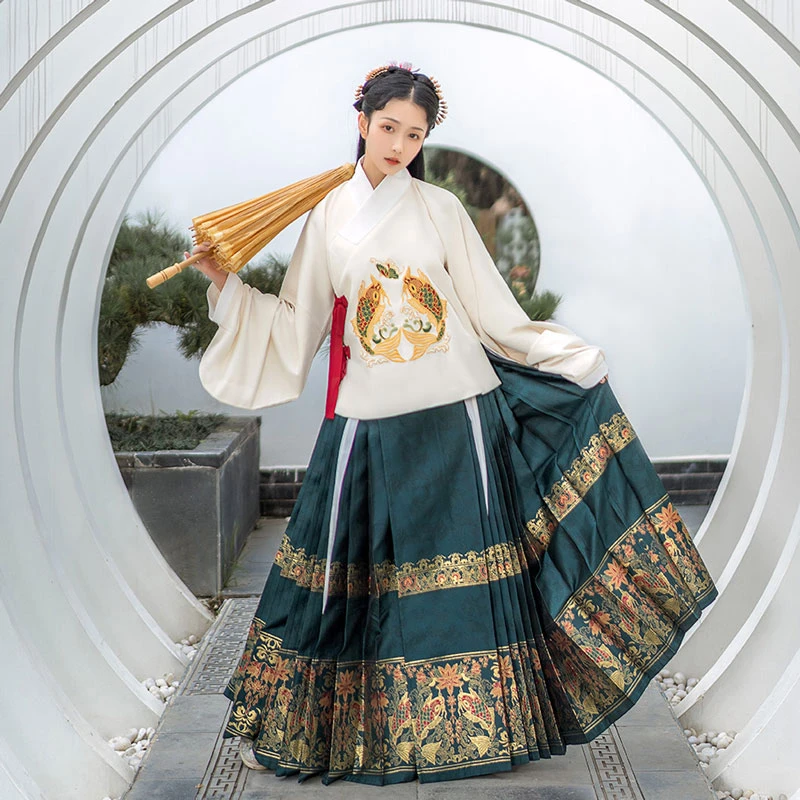
The mamianqun, also known as 马面裙 or the horse-faced skirt, has recently attracted considerable attention, largely because of the Dior controversy. This article provides an in-depth look at the history, construction, and distinctive features of this celebrated skirt.
A Brief History of the Mamianqun
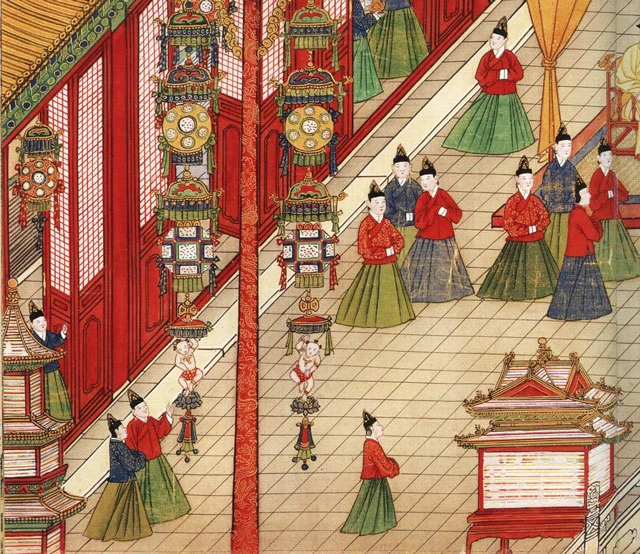
The mamianqun, or horse-faced skirt, is believed to have originated around the Song dynasty. It was worn by high-status courtesans—figures who functioned as celebrities and fashion trendsetters—in the form of brightly colored pleated silk. Its name comes from its resemblance to the mamian fortress, which has staircases on both sides (like the pleats) and a gate at the front and back (like the skirt doors). The “door” sides of the fortress were known as horse faces, or mamian/马面, because these were the surfaces through which horses would pass. The skirt became extremely popular during the Ming dynasty and remained fashionable throughout the Qing dynasty under Manchu rule—it has existed for a remarkably long time. Mamianqun allow greater freedom of movement and offer a regal, elegant appearance, along with a highly recognizable and distinctive silhouette. Even Princess Diana was photographed wearing one.
Basic Construction of a Mamianqun
The Skirt Doors
From the front, a mamianqun resembles a baidiequn: flat at the front and back, with pleats on the sides. Let us review the main features of the mamianqun.
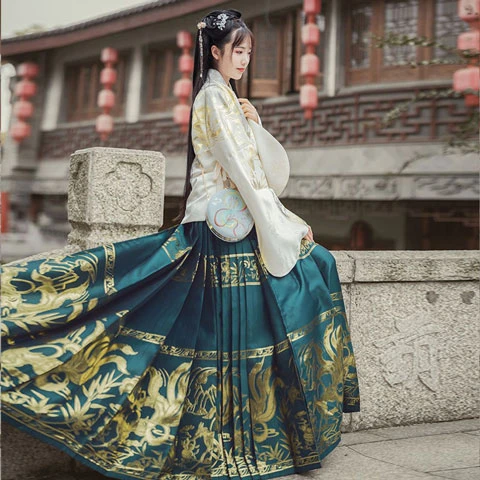
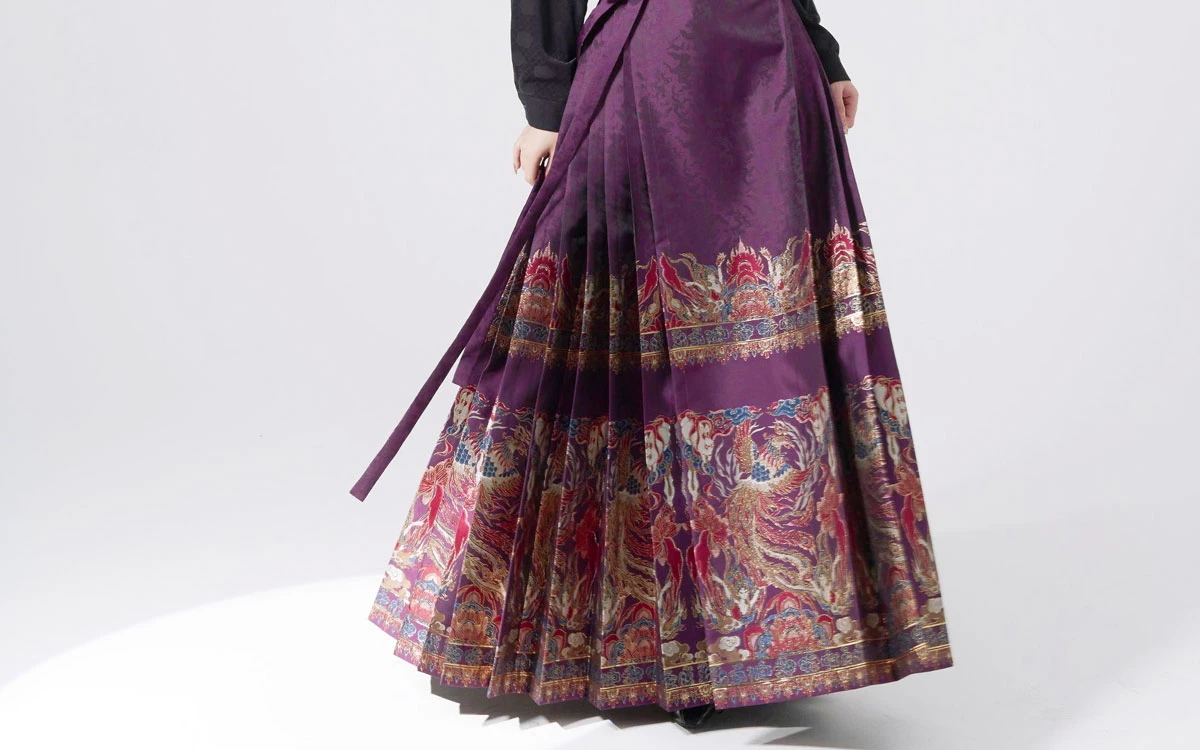
One of the most iconic elements is the skirt doors, 门. Structurally, the skirt consists of two pieces of fabric, each with a flat, unpleated panel at either end, resulting in four panels, or doors, in total. These two fabric pieces are joined by overlapping one door with another and sewing the entire assembly along the waist (the two overlapping doors are NOT sewn together; they can open freely and are attached only at the waist). When the skirt is laid flat, three doors are visible: one at each end and a pair overlapping in the middle. When worn, the two end doors also overlap at the back, so only two pairs of overlapping doors can be seen at the front and back.
Because the doors are not attached except at the waist, this construction allows the wearer maximum mobility, as the two fabric pieces can separate while remaining secured at the waist. It is entirely possible to ride a horse in this skirt.
The Pleats
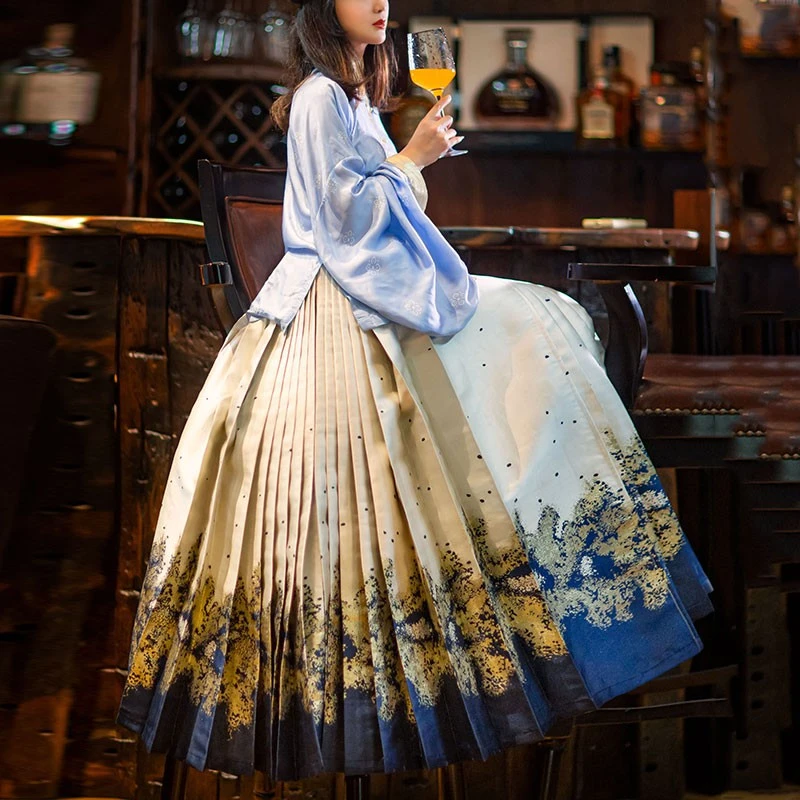
As for the folds, the pleats on a mamianqun are not knife pleats like those on many standard pleated skirts; they are a special type called 工字褶. In the pleated section, both sides are first folded toward the center and then back out again, with each fold spreading outward from the center, continuing until the two sides pleat in opposite directions. This produces a distinctive trapezoidal folding when the mamianqun is worn, as the two sides of the pleats fall forward and backward, allowing greater movement. Typically, there are 4–7 pairs of folds on the sides—a combination of the mamian and baidie skirts known as baidie mamian (百迭马面) has even more.
Fabrics of the Mamianqun
Like most hanfu, the defining characteristics of a mamianqun depend on its pattern and shape, not its fabric. However, the structure of this skirt often suits stiffer fabrics, which help preserve its shape and prevent it from flying about. Different dynasties favored different fabric styles.
Song Dynasty Mamianqun
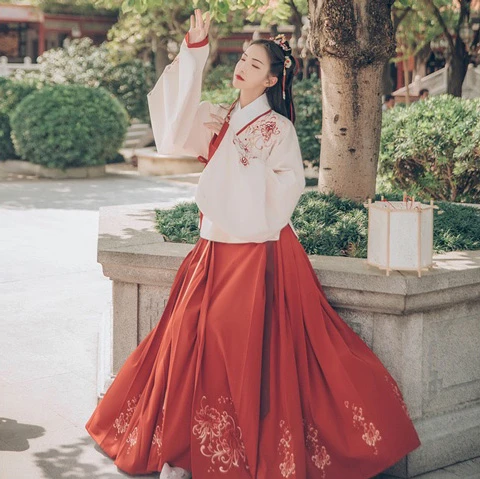
The Song Dynasty was the first period in which the mamianqun became truly popular. Song aesthetics favored sleekness and elegance; the mamianqun of that time was often very simple, monochromatic, made of softer fabrics, and perhaps decorated with embroidery. Most of the light-colored, softer mamianqun seen today are closer to the Song-dynasty style.
Ming Dynasty Mamianqun
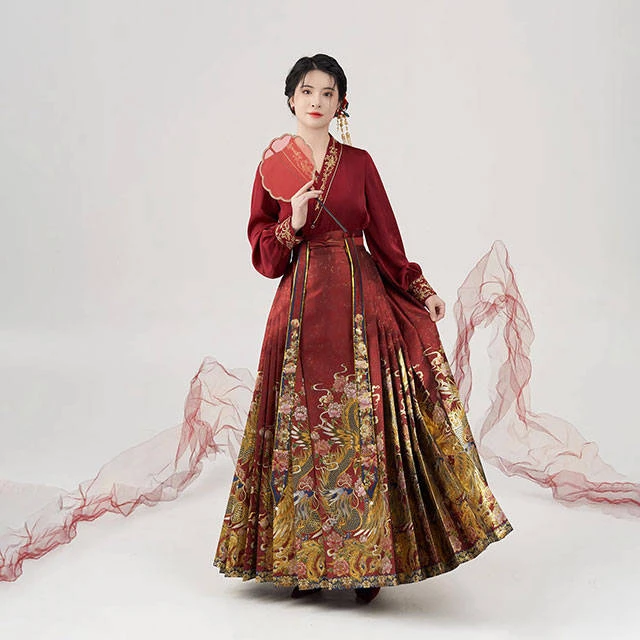
During the Ming dynasty, the mamianqun experienced a major rise in popularity. It is one of the most common skirts paired with the ao (袄), or untucked top. Ming dynasty hanfu tends to look rich and luxurious, and its interpretation of the mamianqun was no exception—bold reds, blacks, and blues were often the main colors, usually made of thick silk or wool woven with gold-thread embroidery. The iconic gold patterns that span in stacked, striped sections around the skirt can be seen in many merchant’s Ming dynasty wares.
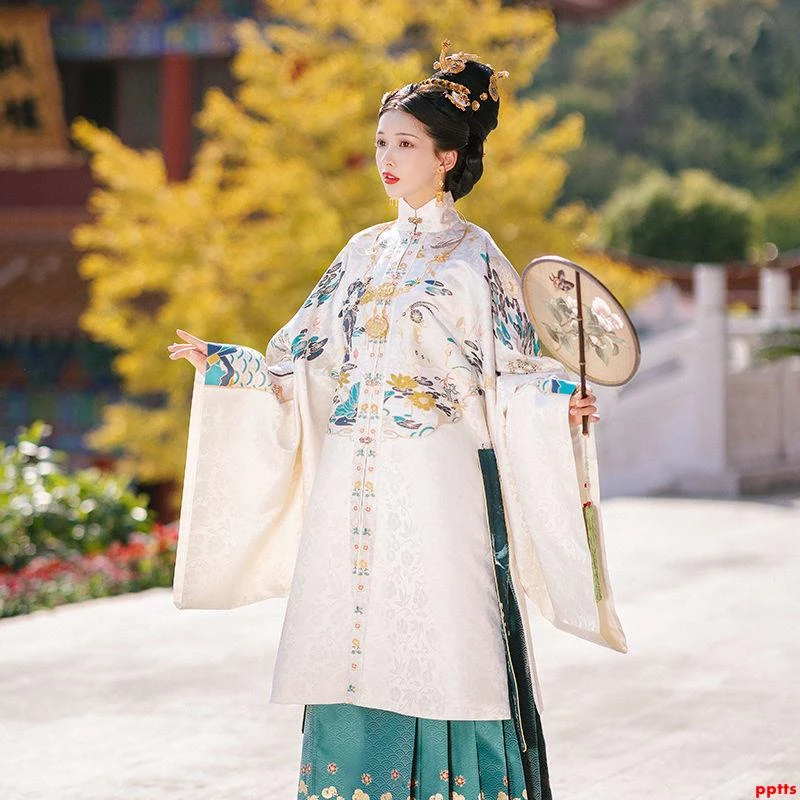
As the ao top became longer, it began to cover more of the skirt, until soon only the bottom third remained visible, with the rest hidden beneath the top. As a result, gold embroidery and decoration became concentrated near the bottom, while the upper part of the skirt remained a solid color with little ornamentation. Today, most mamianqun feature embroidery and patterns primarily near the bottom hem.
Qing Dynasty Mamianqun
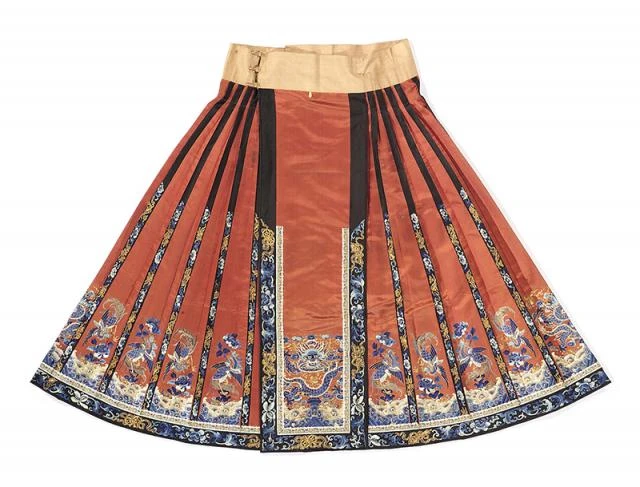
Regarding Qing dynasty mamianqun, it should be noted that this period is less familiar to researchers who focus on pre-Qing eras. However, one clear observation is the distinct contrast taping around the edges of the skirt doors in Qing style mamianqun, usually in white and decorated with floral embroidery. Princess Diana’s skirt, mentioned earlier, displays this same feature.
Wearing the Mamianqun
Today, the mamianqun has been modernized in many ways. Apart from the Dior incident, people around the world have been experimenting with this distinctive design for a long time. For example, pocketed mamianqun short skirts are praised by enthusiasts, especially because the folding pattern makes it remarkably easy to conceal a large pocket within the skirt.
Besides pairing it with a standard hanfu top, many people choose to wear a Ming dynasty mamianqun with a simple button-down shirt. Keep the shirt simple, usually plain white, so that attention remains on the colorful skirt and its intricate designs. This is an excellent way to incorporate hanfu into daily wear—the more fitted silhouette of this skirt, along with its skirt doors, provides maximum mobility, and the Ming dynasty’s regal style can make the wearer look very handsome and bold.
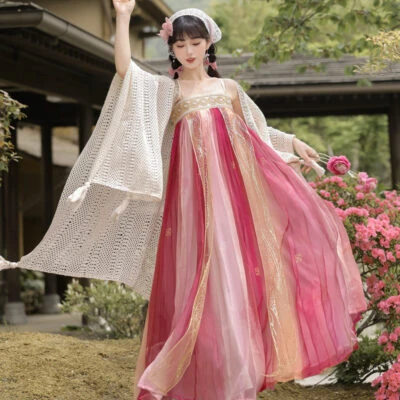
Alternatively, for a softer, more feminine feel, one can opt for a Song Dynasty inspired mamianqun, which typically comes in lighter colors and simpler designs, though they take longer to find. Some of the fabrics available for mamianqun today are incredible, featuring images of adorable cartoon rabbits and cats while still appearing very classy from a distance—there is plenty to choose from. Most are likely made from polyester and chiffon.
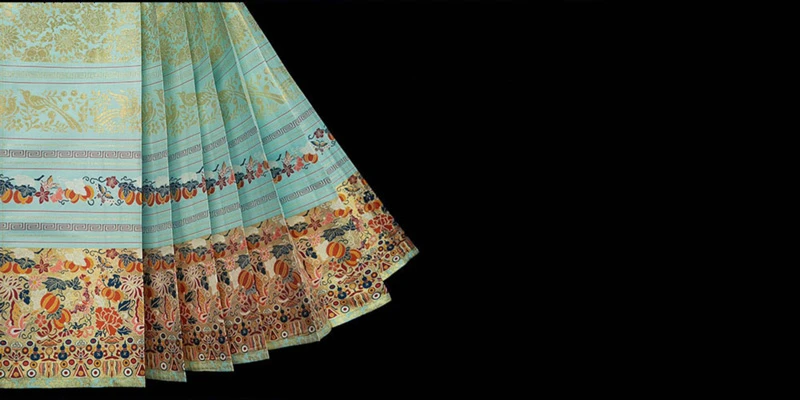
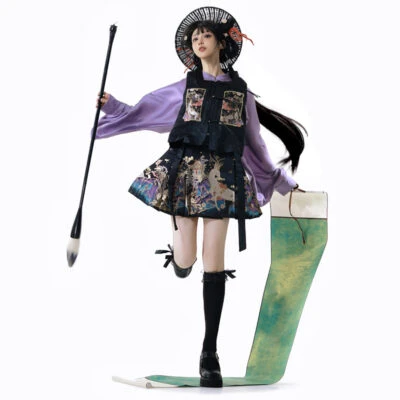
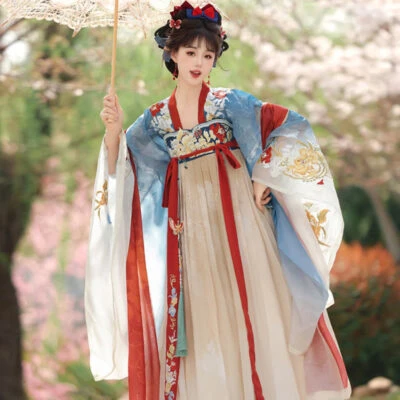
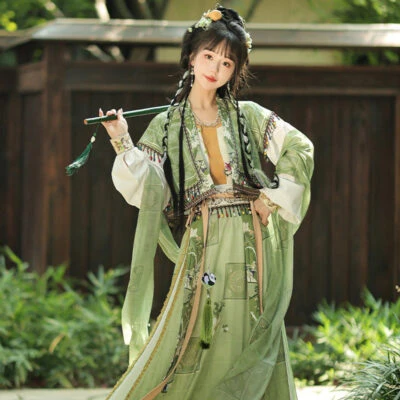





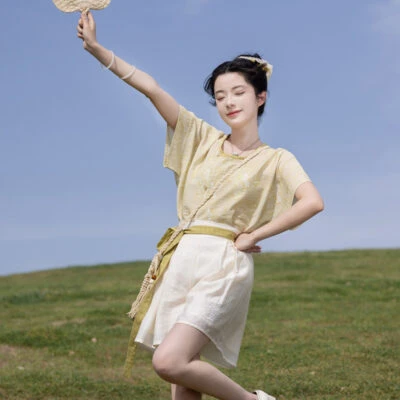
To add to the Qing Dynasty, I find there are more experimental and varying types of mamianqun. A lot of times, they also have knots and loops instead of ties, and at some times they have bigger waistband.
Great article about mamianqun!
So, Dior is cultural appropriation?
Is there a shop link to a Ming style Mamianqun? The whole dior fiasco only reminded me that I’ve been looking for one, but I don’t want the soft Song-style ones. Love the harsh pleats and geometric look!
Was wondering whether this post had anything to do with the Dior skirt….and bingo! ^^
Desain rok yang elegan
Nice article, it helped me completely understand mamianqun. Would you be interested in writing an article on the different kinds of hanfu skirts? That would be great.
I love the gold thread embroidery on the black mamianqun. It’s lovely❤️
The red and white Ming hanfu is soooo beautiful 😊❤️