Article
Search results:
-
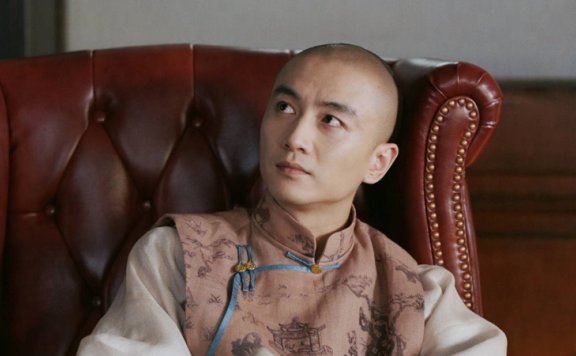
Legend of the Magnate: Lessons in Human Nature and Commercial Strategy
Set against the turbulent backdrop of late Qing Dynasty China, the television drama Legend of the Magnate (大生意人) has captured national attention. It follows the extraordinary journey of Gu Pingyuan (古平原), a man who rises from exiled convict to commercial titan. His ventures span banking, tea, and the lucrative salt trade, bringing him into complex dealings with officials, gentry, fellow merchants, and foreign interests. At its core, the drama is a masterclass in human psychology, demonstrating that success in commerce is inextricably linked to understanding people. The strategies Gu employs to navigate a world of greed, wisdom, and power are not relics of the past; they are timeless insights into human motivation. Mastering these principles of human interaction can provide a decisive advantage in any endeavor. Leveraging Greed The character of Wang Tiangui (王天贵) embodies insatiable greed. As a wealthy Shanxi (山西) banker, his vaults are full, yet his desire for more is endless. His ultimate goal is to seize the legendary Chuang Wang (闯王) treasure. Gu Pingyuan understands this driving force perfectly. Instead of confronting Wang directly, he dangles the ultimate bait: access to the treasure. Lured by the promise of unimaginable wealth, Wang follows Gu into a vault… -
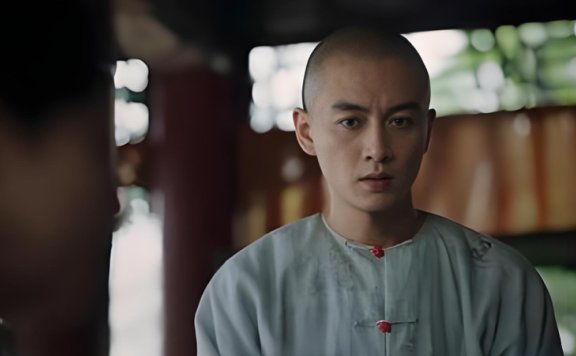
Legend of the Magnate: The Tea Merchant Who Outsmarted an Empire
Fictional sagas often chronicle the rise of heroes, but few journeys are as starkly transformative as that of Gu Pingyuan (古平原). His life, a tapestry woven with threads of betrayal, ingenuity, and relentless patriotism, transcends a simple business fable. Stripped of everything during the Qing dynasty, he faced exile in the frozen wasteland of Ningguta (宁古塔), a punishment orchestrated by the unlikeliest of foes. Yet, from this desolation, he would emerge not just as a survivor, but as a commercial legend whose decisions swayed national economies and challenged foreign powers. His story is not one of unchecked triumph, but a testament to the cost of greatness, where every victory is tempered by personal sacrifice and the ever-looming shadow of a crumbling state. Exile and Survival Gu Pingyuan’s early path mirrored that of countless scholars, defined by books and the imperial examinations. A brilliant student, his destiny seemed fixed until a cruel interruption—news of his mother’s critical illness—shattered his composure in the exam hall. The resulting disturbance earned him a 15-year sentence to Ningguta. Unbeknownst to him, this was no accident of fate, but a calculated move by his own father, who had abandoned his family and rebuilt his life as… -
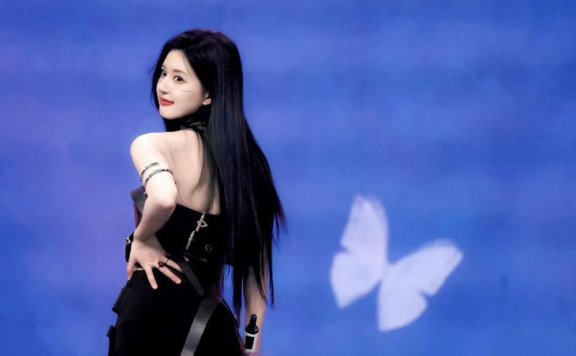
Zhao Lusi’s Move Signals Platform Strategy Shift
Major streaming platforms now act as primary patrons, directly shaping careers. Rumors swirl regarding actress Zhao Lusi (赵露思) aligning with Tiger Whale Entertainment, a move emblematic of a larger shift. These companies are no longer mere distributors; they are portfolio managers, treating artistic talent as strategic assets to be acquired and optimized. The relationship between creator and platform is being fundamentally rewritten, focusing on long-term value extraction over single projects. 1. Cost Efficiency Drives Star Contracts When a popular actress announced her new studio during a birthday celebration, thanking her new company, the camera panned to the founder of a prominent entertainment firm in the audience. This moment, swiftly amplified on social media, confirmed a significant shift within China's entertainment landscape. It symbolizes a growing trend where major streaming platforms are moving beyond mere content distribution to directly manage and contract top-performing talent. This strategic alignment between star and platform is redefining traditional artist-agency relationships, creating a new ecosystem built on integrated production, talent management, and financial efficiency. The implications extend far beyond a single celebrity's career move, pointing to a fundamental restructuring of how entertainment business is conducted. The Controlled Star The collaboration between actress Zhao Lusi and Alibaba's… -
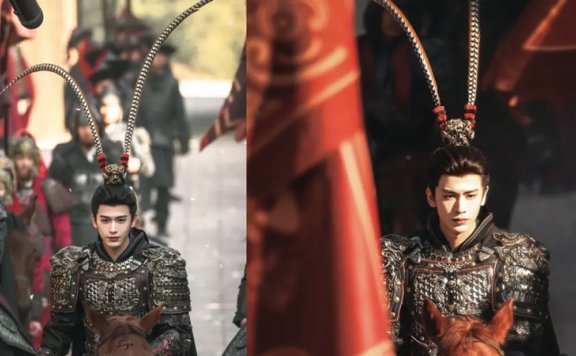
Zhang Linghe’s Feathered Helmet in Chasing the Jade
Have you recently scrolled past a historical drama photo where a young actor's helmet is crowned with two wildly long, colorful feathers? This exact image of actor Zhang Linghe (张凌赫) from the costume drama Chasing the Jade (逐玉) set the internet abuzz. Fans were instantly reminded of the iconic Monkey King, Sun Wukong (孙悟空), leading many to joke, "Has ancient costume drama borrowed the Great Sage's style?" This striking headdress, far from a modern fantasy invention, is a deliberate callback to a deep and symbolic tradition in Chinese performance arts. Known as pheasant feathers or "Zhijiling (雉鸡翎)", these plumes are more than decorative flair. They are a dynamic language of their own, whispering tales of character, status, and millennia of cultural evolution directly from the wearer's brow. Roots in Ritual and Battle The story of these feathers begins not on stage, but in ancient ceremony. Their earliest traceable lineage connects to the ritual dances of the Zhou Dynasty, governed by the strict codes of Zhou Li (周礼). In these performances, particularly the esteemed "Ba Yi (八佾)" dance reserved for imperial rites, dancers held ceremonial implements called "Di (翟)." These were often crafted from the long, iridescent tail feathers of pheasants,… -
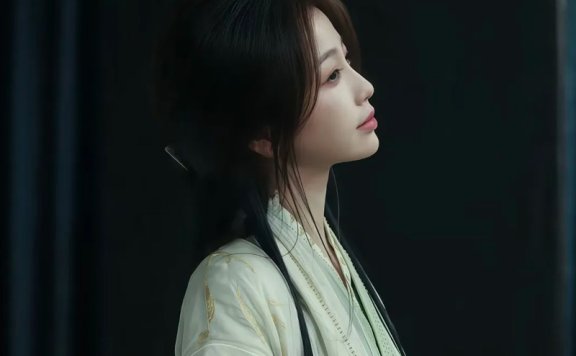
Yun Chu Ling: The Epic Revenge of Yun Chu in Imperial China
In the vibrant landscape of contemporary Chinese television, a new historical drama is capturing widespread attention. Yun Chu Ling (云初令), an adaptation of the novel by Chao Yunzi (朝云紫), weaves a captivating story of second chances and relentless vengeance. Helmed by director Zhu Ruibin (朱锐斌), the series features Yu Shuxin (虞书欣) in the lead role of Yun Chu, while speculation points to Zhang Yunlong (张云龙) as a potential co-star. Set in the intricate courts of imperial China, the plot revolves around a high-born woman who, after suffering a profound betrayal, is miraculously reborn to alter her fate. This narrative taps into the enduring appeal of redemption arcs, presenting a protagonist who evolves from a victim of circumstance to an architect of her own destiny. The anticipation surrounding this production stems not only from its promising cast but also from its engagement with themes of intelligence, strategy, and personal agency, offering a fresh take within the period drama genre. The Awakening Yun Chu's initial life was defined by misplaced trust and societal expectations. As the cherished daughter of a renowned military family, she entered a marriage that seemed ideal but concealed a dark reality. Her husband and his relatives systematically used… -

Why Zhang Yaqin’s Era-blending Outfit Divided the Internet
When actress Zhang Yaqin (张雅钦) recently appeared in a Hanfu ensemble, the internet divided. For some, it was an immediate callback to her role as Lu Yuan (陆鸢) in the time-travel drama An Ancient Love Song (古相思曲). For many others, the look missed the mark, feeling disjointed and overly busy. Why did this particular outfit, rich in historical references, fail to resonate? The answer lies not in a lack of beauty, but in a collision of eras. Her styling became a textbook case of how mixing distinct historical aesthetics without a unifying vision can create visual confusion, pulling the observer out of the immersive fantasy such clothing aims to build. Historical Harmony Lost The most striking issue is the temporal dissonance. Her hairstyle is a Shuang Huan Wang Xian Ji (双鬟望仙髻), a high, twin-loop style popular during the Wei, Jin, and Northern and Southern Dynasties, often seen in deity and court lady paintings. This ethereal look was complemented by dangling side locks, or Chui Shao (垂髾), enhancing the otherworldly vibe. However, the hairpins tell a different story. She wore two styles of Buyao (步摇), or step-shakers. One was a Western Han design, its dangling beads meant to sway gently with… -
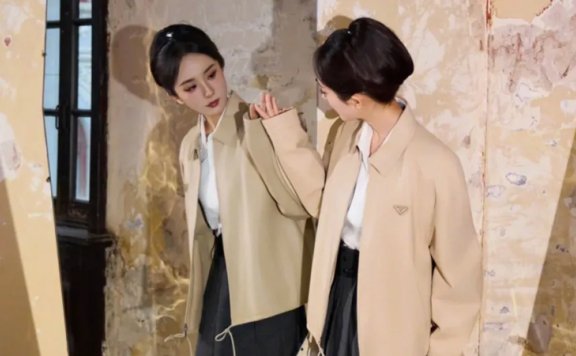
Why Yang Mi's Hair Buns Are Sparking a Fashion Reshape?
A recent public appearance by actress Yang Mi ignited a fiery online debate. Her choice? A meticulously crafted traditional Chinese hair bun paired not with a Qipao or modernized Hanfu, but with a crisp, contemporary blouse. Critics were quick to declare the mix a mismatch, questioning the logic behind blending a classical hairstyle with Western-style fashion. Yet, this seemingly simple style clash touches on deeper questions about tradition, modernity, and who gets to define the rules of cultural expression. Is this a fashion faux pas, or a bold step towards redefining a heritage art form for a new generation? A Historical Journey The Chinese hair bun, or Ji (髻), is far more than a hairstyle. Its history is woven into the fabric of social rites and personal identity. In ancient China, the act of a young woman putting up her hair for the first time during the Jiji Li (及笄礼), or Hair Pinning Ceremony, was a pivotal rite of passage into adulthood. This transformation from loose locks to a secured bun was a powerful social symbol. Archaeological evidence suggests the practice dates back to the Neolithic Age, evolving significantly through dynasties. The Han Dynasty favored soft, low-hanging chignons that conveyed… -
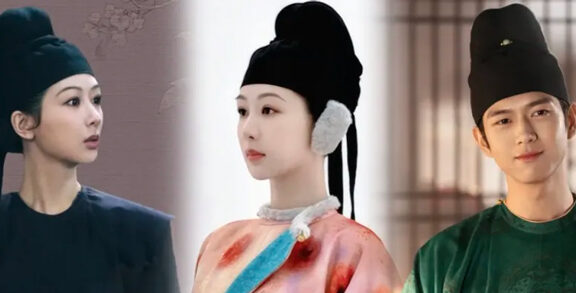
What a Tang Dynasty Hat Tells Us
In many television series set against the backdrop of the Tang Dynasty, like the popular drama Flourished Peony (锦绣芳华), audiences often notice the distinctive headwear worn by characters. This item, which might look oddly familiar to a modern eye, is called a Futou (幞头). It was the most common form of male headgear during that era, a simple yet sophisticated piece of cloth that evolved into a powerful symbol of identity and status. Far from being a static fashion item, its transformation mirrors the social and cultural currents of one of China's most celebrated dynasties. More Than Just Cloth The Futou originated as a practical headscarf. Its basic form involved wrapping a piece of black silk or linen around the head. There were two primary methods: the soft wrap and the hard wrap. The soft wrap was for everyday use, where the cloth was tied directly onto the head, conforming to its shape. The hard wrap was more structured. It required a stiffened base, known as a Jinzi (巾子), placed on the head first. The cloth was then wrapped over this frame to create a more pronounced and formal shape. The style of the Jinzi changed noticeably over time. In… -
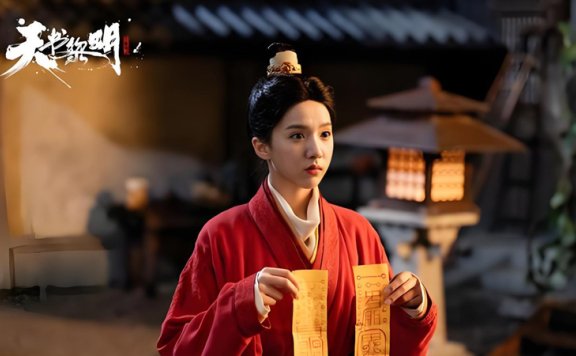
Is Treasure at Dawn the Best Mystery Show You're Not Watching?
A new period mystery series quietly premiered on national television, yet its arrival stirred little immediate fanfare. Treasure at Dawn (天书黎明) features young investigators using ancient medical wisdom to solve crimes, a premise that seemed ripe for attention. Starring Li Hongyi (李宏毅), Su Xiaotong (苏晓彤), and Yu Cheng'en (余承恩), the show promised a blend of historical intrigue and Traditional Chinese Medicine (TCM) unlike anything else on air. Despite its creative ambitions, viewer numbers have been modest, leaving many to wonder if this unique drama has been prematurely overlooked. What happens when a detective's toolkit contains not a magnifying glass, but acupuncture needles and herbal formulas? A Novel Prescription The series immediately distinguishes itself through its core investigative method. The story begins with a mass poisoning at a medical gathering. Li Hongyi's character, Fu Sheng (符生), a young physician, finds himself the prime suspect after his mentor dies clutching a rare medicinal ingredient. To clear his name, he must rely on the Yellow Emperor's Inner Canon (黄帝内经), applying diagnostic principles like observation, listening, questioning, and palpation to crime scenes. A discolored tongue coating or an irregular pulse becomes a vital clue. In the opening episodes, over twenty specialized TCM terms are… -
The Vendetta of An: A Strategist in the Imperial Capital
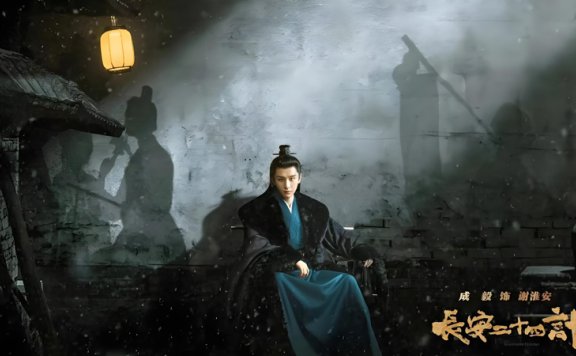
The long-awaited historical drama The Vendetta of An (长安二十四计) has premiered, plunging viewers directly into a world of political decay and personal vendetta. At its heart is Xie Huai'an (谢淮安), portrayed by Cheng Yi, a man whose life was shattered fifteen years ago when the ruthless commander of the Huben Army (虎贲军), Yan Fengshan (言凤山), slaughtered his entire family. Now, a summons from the turbulent capital, Chang'an (长安), drags him back from a hard-won life of exile. The empire is in crisis. After the emperor's death, Yan Fengshan seized power, installed a puppet child emperor, and purged the nobility. The rightful heir, Xiao Wuyang (萧武阳), has marched his army to the gates of Chang'an to reclaim the throne, only to find the city a nest of spies loyal to the vanished tyrant. Xie Huai'an, carrying the weight of a blood feud, is recommended as a tool to navigate this deadly labyrinth. But his return ignites a chain of betrayals, forcing him to confront the true cost of revenge and loyalty in a city where every ally could be a hidden enemy. A Debt of Blood Xie Huai'an's quest begins not with a triumphant return, but with a devastating personal sacrifice.… -
How a 7,000-Year-Old Lacquer Craft Defines Chinese Art and Identity
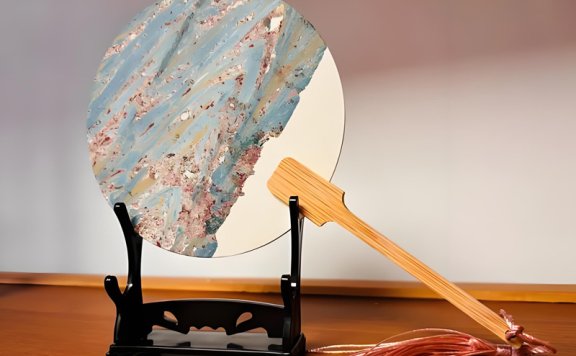
The story begins with a single tree, the Toxicodendron vernicifluum, and the precious sap it weeps. For millennia, this substance, known as Daqi (大漆), has been far more than a simple material; it is a flowing chronicle of Chinese civilization itself. Its deep, luminous sheen has reflected the faces of emperors and artisans, captured the ethos of philosophical schools, and preserved the artistic ambitions of countless dynasties. From the tombs of ancient kings to modern studios, the journey of lacquer is a testament to enduring beauty and resilience, a slow art in a fast world that continues to whisper secrets from the distant past. A Material History Archaeology provides the first chapter. At the Kuahuqiao (跨湖桥) site, a lacquered bow, silent for roughly 8,000 years, speaks of a Neolithic discovery. This artifact stands as the earliest known evidence of humanity's relationship with this transformative sap. Not long after, at Hemudu (河姆渡), a wooden bowl coated with a startling vermillion hue confirms that early communities had already mastered basic color application. These were not mere utilitarian objects; they were the first experiments in a medium that would come to define luxury and spiritual expression. By the Shang and Zhou dynasties, lacquer… -
Fu Sheng’s Quest for Truth in Treasure at Dawn
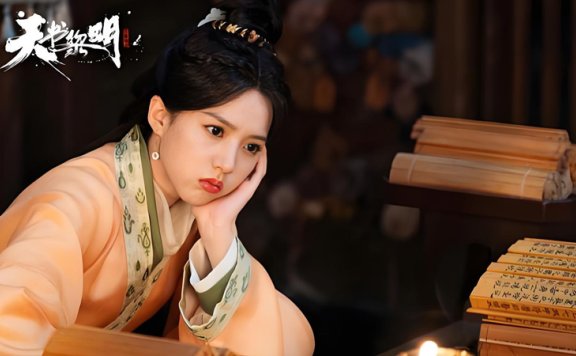
The journey to West River was meant to be straightforward. For Fu Sheng (符生), the task was simple: find the scholar Song Jingye (宋静野), as instructed by his father's plea. Yet, in the shadowy world of Treasure at Dawn (天书黎明), nothing remains simple for long. A single meeting is all they get before Song Jingye is found dead, his life brutally cut short. The only clue he leaves behind is a fragment of jade, carved like a wisp of cloud. This small token thrusts Fu Sheng, alongside the sharp-witted Junzhu (郡主) and their companions, into a turbulent region where power is fragmented and trust is a scarce commodity. They arrive in a land torn between merchant guilds, horse clans, and a city lord, each faction operating as its own sovereign island. The central mystery of Song's death becomes a key, potentially unlocking a greater puzzle tied to legendary treasure and a cryptic Tianshu (天书)—a celestial book promising untold secrets. A Fractured City West River is a cauldron of conflict. The powerful merchant Shanghui (商会) and the nomadic Mabang (马帮) are locked in a violent stalemate, their battles spilling into the streets and poisoning daily life for the common people. Initial… -
Did Han Dynasty Men Wear High-Collars?
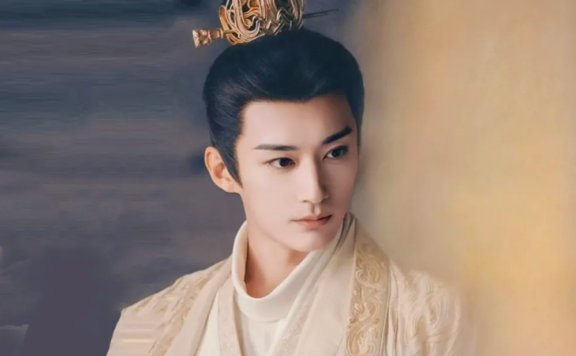
A recent period drama costume has ignited curiosity about ancient Chinese fashion. Actor Liu Xueyi (刘学义) appeared in promotional images wearing a high-necked inner garment, a style unfamiliar to many modern viewers. Fans quickly dubbed it the "neckless" undershirt, sparking online discussions about its historical accuracy. This sartorial detail is not a costume designer's fantasy but a potential revival of a real, yet enigmatic, item from the Han Dynasty known as the Quling (曲领). The debate surrounding Liu's attire mirrors a century-old academic puzzle: what exactly was this garment depicted on countless clay figurines? Clay Figurine Clues Archaeologist Zeng Zhaoyu (曾昭燏) provided crucial evidence in her study of pottery figurines from Pengshan (彭山) cliff tombs in Sichuan. She noted a distinct, raised ring around the necks of many figures. This was not a sculptural flourish or a folded collar. The ring had clear, parallel seams and a defined edge, suggesting it was a separate, detachable item with its own structure. The most compelling proof came from two unique "nursing mother" statues. On these, the outer robe was open, revealing a separate piece of cloth covering the chest. Zeng observed this chest piece was continuous with the raised ring at the… -
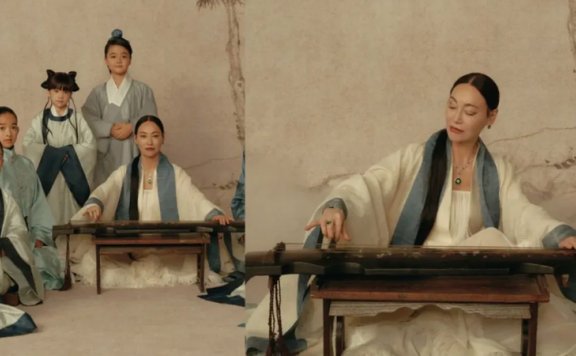
Can a Tang Dynasty Sleeve Walk the Modern Red Carpet?
A photograph stops the scroll. Actress Hui Yinghong (惠英红), a figure synonymous with cinematic gravity, stands not in a contemporary gown but wrapped in the sweeping lines of a traditional Daxiushan (大袖衫). The image sparked immediate fascination: the grand-sleeved robe, a relic of ancient Chinese elegance, was worn not as a historical costume but as a striking modern outer layer. This was not a museum piece but a living garment. The public reaction was a mix of surprise and admiration, highlighting a collective realization. Here was a tangible bridge between a profound aesthetic past and the dynamic language of present-day style. This single sartorial choice posed a compelling question about the very nature of tradition—is it a boundary to be preserved, or a foundation to be built upon? Historical Silhouettes The Daxiushan is far from a monolith; its form evolved across dynasties, each cut telling a story of its time. In the luxurious courts of the Late Tang and Five Dynasties periods, its most dramatic iteration emerged: a robe with a front hem reaching the waist or knees, while the back cascaded into a long, trailing train. Paired with high-waisted skirts, this created an unmistakable silhouette of flowing, dignified movement,… -
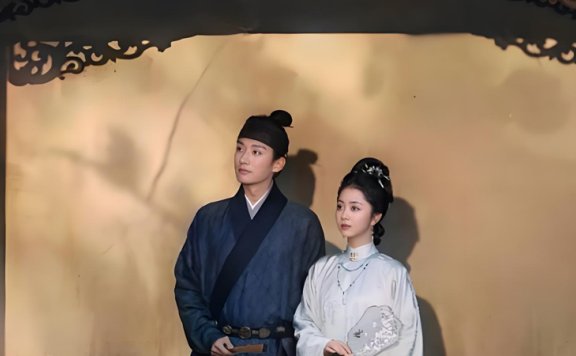
Against The Current: Tan Songyun and Liu Xueyi’s Gritty Historical Drama
Tencent Video is poised to launch a major historical drama in 2026, Against The Current (兰香如故), a series already stirring excitement among genre enthusiasts. Headlined by the talented Tan Songyun (谭松韵) and Liu Xueyi (刘学义), the story springs from the novel Lan Xiang Yuan (兰香缘) by renowned author Tong Hua (桐华), celebrated for crafting intense emotional and political narratives. This production immerses viewers in the Ming Dynasty, with sets and costumes rigorously designed to reflect historical accuracy, including dozens of exquisite, hand-stitched garments. It presents a compelling narrative of a privileged woman’s catastrophic fall and her clandestine struggle for justice and love, all while living under a borrowed identity. The combination of a revered source material, a dedicated cast, and visual splendor sets the stage for a memorable viewing experience. Star-Studded Ensemble Tan Songyun takes on the demanding dual role of Shen Jialan (沈嘉兰), the cherished granddaughter of a Grand Secretary, and later, the unassuming maid Xu Lanxiang (许兰香). Her performance traces a heartbreaking arc from opulent comfort to gritty survival, requiring her to masterfully depict both dignified grace and concealed intellect. The audience witnesses her character's inner strength as she endures the humiliation of servitude while secretly plotting a… -
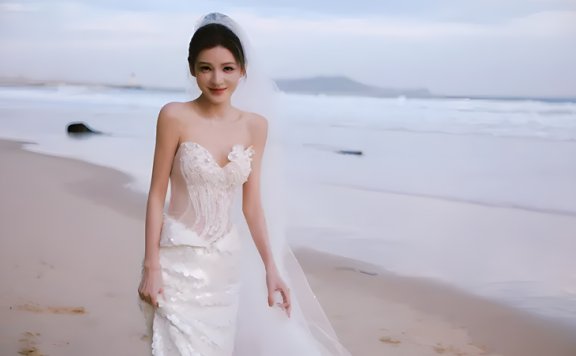
Zhang Yuxi’s Ocean-Inspired Gown Reshapes Bridal Fashion
A recent photoshoot featuring actress Zhang Yuxi (张予曦) has captivated social media, not for a new drama role, but for a breathtaking interpretation of bridal wear. Set against the backdrop of a windswept beach, the images present her not merely as a bride, but as a mythical figure emerging from the sea itself. The series transcends conventional wedding photography, framing a narrative where fashion, nature, and personal expression converge into a single, powerful visual statement. This isn't just a dress photographed near the ocean; it is a gown conceptually born from it, challenging traditional notions of bridal sanctity with a wave of liquid romance and effortless grace. The Gown as Art At the heart of this spectacle is the dress itself, a masterclass in thematic design. The sweetheart neckline bodice, embroidered with pearls and delicate feather-like motifs, catches the light with a subtle, shimmering effect. This careful embellishment creates the illusion of sunlight dancing on water, a direct translation of the ocean's sparkle into wearable art. The fabric appears alive, its texture and details meticulously crafted to echo the natural environment surrounding her. The silhouette is a defining feature. A fitted mermaid cut flares into a cascading train of layered… -
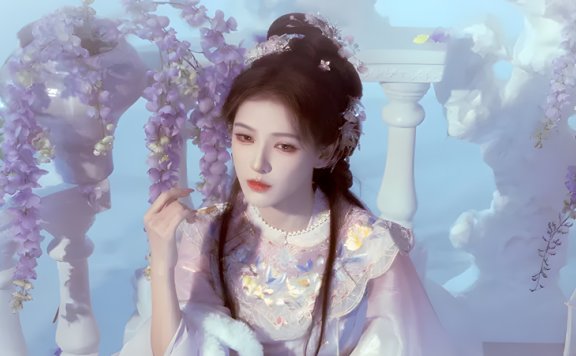
Zhang Yuxi’s Fusion of East and West Aesthetics
The image stopped countless scrolling fingers mid-motion. There, bathed in the ethereal lavender haze of blooming wisteria, stood actress Zhang Yuxi (张予曦), transformed. At 34, she was not merely wearing a costume but embodying a vision, a seamless blend of person, place, and tradition. Her photoshoot, set against the unexpected backdrop of European-style architecture draped with cascading purple flowers, became an overnight sensation. It was more than a celebrity fashion spread; it was a statement. This moment captured a powerful contemporary dialogue between a modern Chinese woman and an ancient sartorial art form, suggesting that true elegance is not bound by era or age, but is a living, breathing continuum. A Portrait in Violet The genius of the look lies in its meticulous harmony. Zhang Yuxi's Hanfu is a soft symphony in powdered lavender and plum, its delicate embroidery tracing floral patterns that seem to echo the living wisteria around her. The ensemble avoids ostentatious grandeur, opting instead for a refined, almost poetic grace. A pivotal detail is the outer robe, trimmed with a subtle, downy fringe. This touch adds a tangible texture and depth, preventing the flowing silks from appearing flat, and introduces a whisper of delicate luxury. Every… -
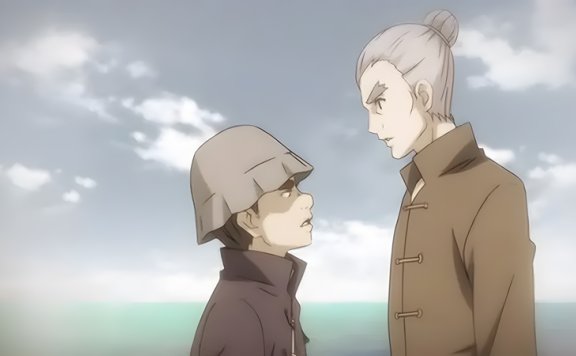
Why Does Zhang Chulan Flee Tianshi Du in The Outcast?
In the swirling, action-packed world of the hit animated series The Outcast (一人之下), one enigma stands above all others, casting a long shadow over its protagonist, Zhang Chulan (张楚岚). It is a legacy so potent, so dangerous, that he actively flees from it. What is this inheritance that promises ultimate power yet instills such profound fear? The Unbreakable Vow The Tianshi Du (天师度), or Celestial Master's Inheritance, is the core secret of Longhu Shan (龙虎山), guarded for over two millennia. It passes exclusively from one Celestial Master to the next. Most assume it grants the recipient immense power, explaining the current master's, Zhang Zhiwei's (张之维), unparalleled strength. Yet, this is a misconception. Zhang Zhiwei's might is entirely his own, evident from his youth long before he received the inheritance. His desire for Zhang Chulan to succeed him appears as protective mentorship. He offers safety and the truth about Zhang Chulan's grandfather, Zhang Huaiyi (张怀义). However, the old master's insistence hints at a deeper, more urgent agenda. The grand tournament, the Luotian Dajiao (罗天大醮), begins to look less like a selection ritual and more like an elaborate trap designed for one specific candidate: Zhang Chulan. Zhang Chulan's sharp intuition allows him… -
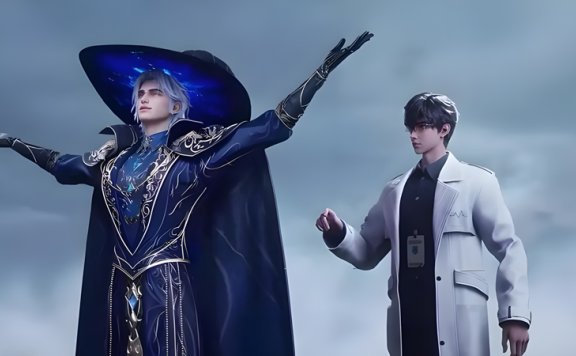
Who Has the Most Powerful Backup in Chinese Animation?
In the sprawling worlds of Chinese animation, a hero's own strength is only part of the story. Often, the true measure of power lies not in the protagonist's fist, but in the formidable allies standing behind him. These connections form an invisible shield and an unstoppable spear, turning seemingly ordinary youths into figures who can defy heavens and rewrite destinies. From ancient deities to peerless mentors, these backers are the ultimate cheat code, ensuring that when the hero calls, even gods must step aside. This exploration dives into the stories of five characters whose support systems are nothing short of legendary. 1. Lin Qiye's Divine Network Lin Qiye (林七夜), the protagonist of Slay the Gods (斩神之凡尘神域), operates with a safety net woven from the fabric of multiple mythologies. His connections read like a cosmic who's who. His younger brother is the formidable Erlang Shen (二郎神), Yang Jian (杨戬). His mother is the primordial Nyx, the Greek Goddess of Night. The legendary wizard Merlin acts as both his teacher and friend. His closest comrade-in-arms is revealed to be the Lingbao Tianzun (灵宝天尊), a supreme Daoist deity. His network extends further. He shares deep bonds with the Victorious Fighting Buddha, Sun Wukong… -
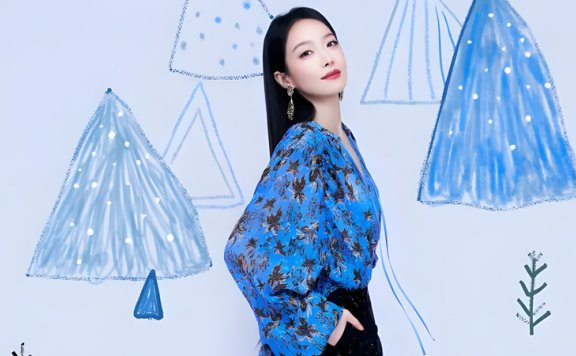
What Makes Song Qian's Bold Blue-and-Black Look So Electrifying?
A recent public appearance by singer and actress Song Qian (宋茜) has set fashion forums ablaze. Her outfit, a masterclass in confident color blocking, immediately commands attention. It’s a look that doesn’t just walk into a room—it announces its arrival. By pairing a vibrant, patterned blouse with a sleek, minimalist skirt, she achieves a balance that feels both daring and perfectly controlled. This ensemble transcends a simple style choice; it represents a deliberate fashion statement from an artist known for her sartorial intelligence. Deconstructing the Top The foundation of the look is the sapphire-blue floral blouse. This isn't a shy pastel, but a rich, jewel-toned piece that makes a powerful first impression. The print adds a layer of complexity, preventing the solid color from feeling overwhelming. A deep V-neckline introduces a hint of allure, skillfully balanced by the shirt's overall structure. This detail draws the eye while maintaining an air of sophistication. Further elevating the top are its thoughtful design elements. Gently gathered sleeves create a soft, blousoned effect that contrasts with the sharpness of the short skirt. This subtle volume adds movement and a touch of romance to the silhouette. A delicate drawstring at the neck or waist allows…
