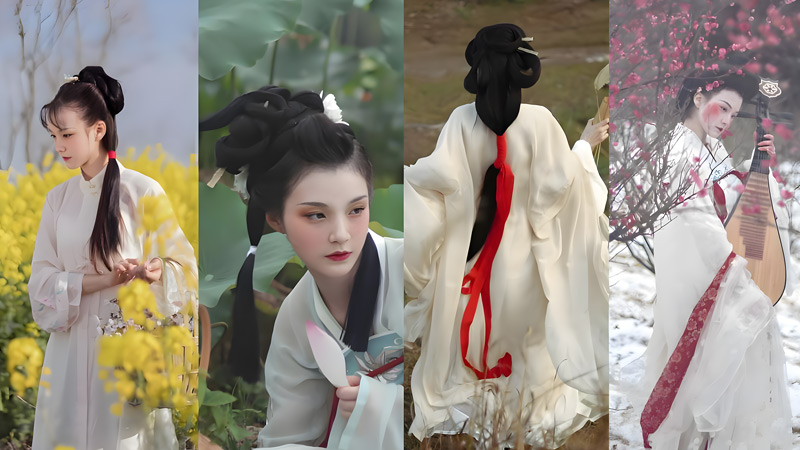
Beyond mere fabric and thread, traditional Hanfu served as ancient China's sophisticated dialogue with nature. Each season dictated distinct choices in material, cut, and decoration—a wearable language of weather wisdom. Far from rigid costume, it embodied practical adaptation: breathable linens for scorching summers, layered warmth for biting winters, and motifs celebrating nature's cyclical dance.
These weren't random choices; they were intentional, elegant responses to the rhythm of the year, woven into the very soul of the attire. This intricate system transformed clothing into a living almanac, where Ramie signaled spring's arrival and padded Zhidanyi whispered of winter's chill.
Spring's Light Embrace
As winter's grip loosened, wardrobes shifted towards airy renewal. Ramie, a natural fiber prized for its coolness and breathability, became the cornerstone for short Ru jackets. This allowed ease of movement for tending fields or enjoying vibrant festivals. Soft hues like budding willow green and tender peach blossom pink dominated the palette. Delicate embroidery adorned collars and hems—slender willow branches unfurling or clusters of cherry blossoms in full bloom. Wearing this was like draping oneself in the season's essence, a tangible echo of the poetic sentiment, "spring robes are complete". The lightness wasn't just physical; it embodied the spirit of rejuvenation and activity after the long rest of winter.

The focus remained firmly on practicality meeting aesthetics. Unlined designs prevented overheating during unpredictable spring weather. Silhouettes were simple, avoiding unnecessary bulk, facilitating the outdoor activities characteristic of the season—picnics, kite flying, and admiring the first flowers. Every stitch and seam choice reflected an understanding of spring's transitional nature, offering comfort as temperatures climbed. Garments felt fresh against the skin, mirroring the fresh growth sprouting across the landscape.
Summer's Cooling Canopy
Confronting the sweltering heat demanded ingenious solutions. Hanfu artisans turned to incredibly fine gauze and Luo silks. Valued for their near-transparency and porous weave, these fabrics allowed breezes to penetrate while deflecting harsh sunlight. The legendary Mawangdui zhidanyi exemplifies this mastery, weighing less than a cicada's wing. Specialized sleeve designs like the Chuihu sleeve (垂胡袖)—wide at the opening but tapered at the wrist—acted as personal air ducts, channeling cool drafts upwards. Loose collars tied with adjustable ribbons ensured ventilation without compromising modesty.
Decoration drew directly from the season's icons. Lotus patterns, symbolizing purity flourishing in muddy ponds, evoked watery coolness. Cicada motifs, recalling the insect's summer song, added rhythmic vitality. Wearing garments adorned with these symbols while strolling lotus ponds or resting in shaded courtyards wasn't merely fashionable; it was an immersive experience. The visual language of the clothes actively enhanced the feeling of cool respite. The rustle of silk against skin mimicked the whisper of reeds, creating a multi-sensory escape from the heat.
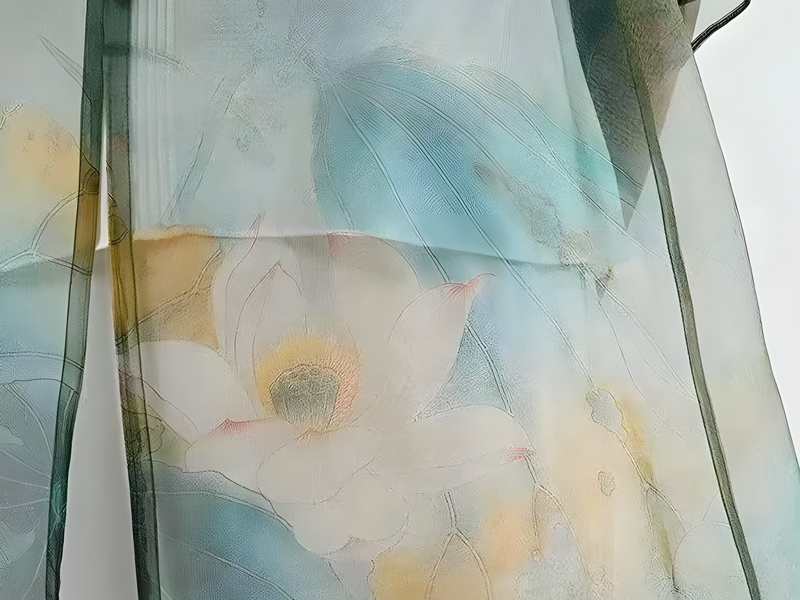
Beyond fabric, structure played a key role. Lightweight, unlined robes predominated. Layers were minimized, favoring single, flowing garments that allowed maximum air circulation around the body. Colors often leaned towards serene blues, cool greens, and pristine whites, visually suggesting water and shade. Every element conspired to combat the oppressive humidity and sun.
Autumn's Rich Tapestry
As the air crisped and landscapes turned golden, Hanfu mirrored the earth's deepening hues and bountiful yield. Lighter linens and gauzes gave way to heavier, warmer fabrics: richly textured brocades. Their denser weaves provided insulation against the encroaching chill while offering a luxurious, substantial feel. The palette shifted to embrace the season—deep ochre like fallen leaves, warm russet reminiscent of ripe persimmons, and profound indigo echoing the twilight sky.
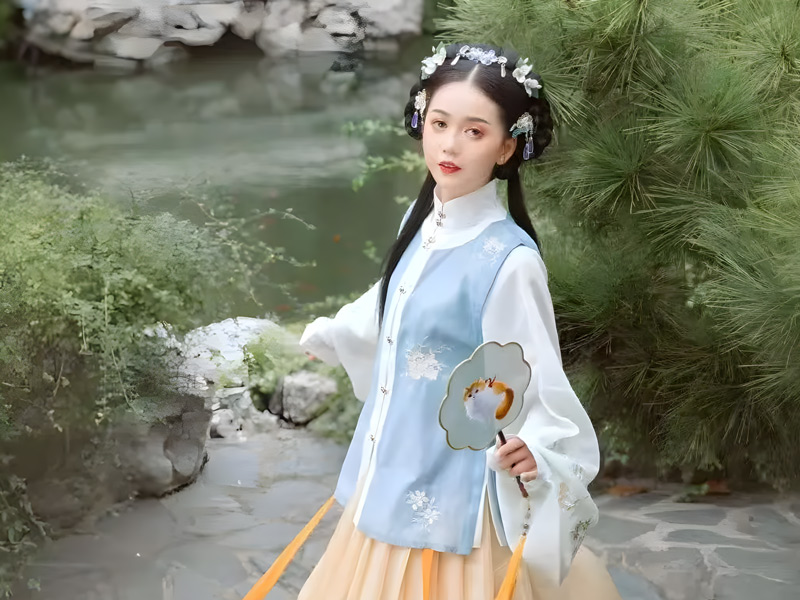
Patterns transformed into celebrations of abundance. Rice ear motifs, meticulously embroidered with plump, drooping grains, carried prayers for continued prosperity. Pomegranate designs, bursting with seeds, symbolized fertility and numerous offspring. Graceful wild geese, often depicted in flight, subtly referenced seasonal migration, aligning the wearer with nature's grand movements. Donning these robes for mountain hikes or chrysanthemum viewings created a profound resonance; the sway of a skirt might evoke rustling sheaves, and a sleeve's pattern recall flocks painting the autumn sky.
The structure adapted too. Slightly longer hemlines and closer-fitting cuts offered better protection from wind. Robes might feature subtle padding or be layered over light undergarments for transitional weather. Fabrics possessed a noticeable weight and sheen, reflecting the mature, reflective mood of autumn. Embellishments became richer and more detailed, mirroring the complexity of the harvest season.
Winter's Sheltering Warmth
When frost painted the world, Hanfu became a portable sanctuary. Practicality reigned supreme. Garments like long Ao jackets and the voluminous Mamian skirt (马面裙) were crafted from sturdy damask silk, often lined and padded with layers of silk floss or cotton wadding. Skilled stitching ensured this precious insulation stayed securely trapped. For the deepest cold, a Dou Peng (斗篷) cloak, lined with fur at the collar and hood, offered enveloping protection against snow and biting winds.
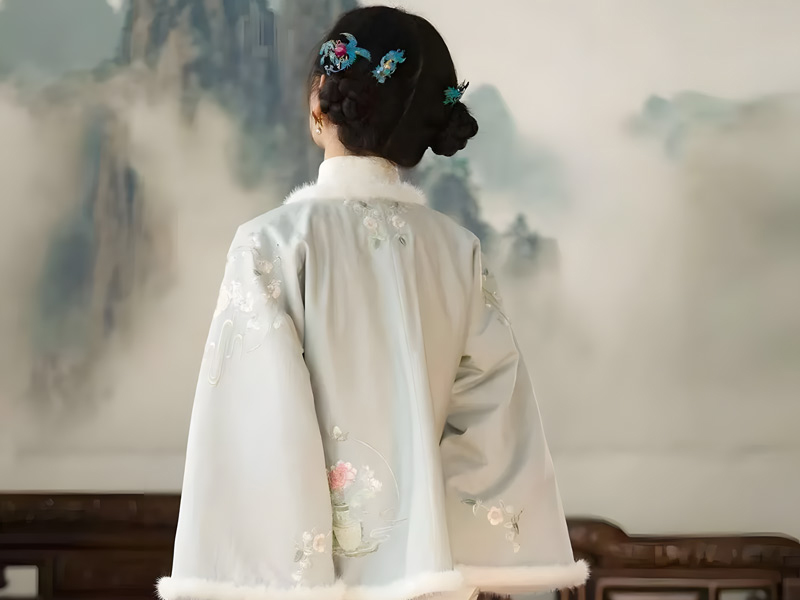
Motifs shifted towards symbols of resilience and hope amidst the bleakness. Intricate snowflake patterns, capturing the unique geometry of ice crystals, carried wishes for a "snow promises a bumper year". The revered "Three Friends of Winter"—pine, bamboo, and plum blossom—adorned cuffs and hems, embodying steadfastness and the promise of renewal to come. Even charming brazier patterns, depicting glowing coals, offered a visual suggestion of warmth during long nights spent indoors.
Wearing these heavily padded layers while gathering around a hearth or celebrating the Lunar New Year created a profound sense of security and comfort. The soft rustle of silk wadding and the rich depth of winter colors like deep blues, emerald greens, and vibrant reds fostered an atmosphere of cozy festivity within the home, turning necessity into a celebration of communal warmth against the outer chill. The focus was on creating a microclimate, shielding the wearer completely from winter's harshness.