

Major streaming platforms now act as primary patrons, directly shaping careers. Rumors swirl regarding actress Zhao Lusi (赵露思) aligning with Tiger Whale Entertainment, a move emblematic of a larger shift. These companies are no longer mere distributors; they are portfolio managers, treating artistic talent as strategic assets to be acquired and optimized. The relationship between creator and platform is being fundamentally rewritten, focusing on long-term value extraction over single projects.

1. Cost Efficiency Drives Star Contracts
When a popular actress announced her new studio during a birthday celebration, thanking her new company, the camera panned to the founder of a prominent entertainment firm in the audience. This moment, swiftly amplified on social media, confirmed a significant shift within China's entertainment landscape. It symbolizes a growing trend where major streaming platforms are moving beyond mere content distribution to directly manage and contract top-performing talent. This strategic alignment between star and platform is redefining traditional artist-agency relationships, creating a new ecosystem built on integrated production, talent management, and financial efficiency. The implications extend far beyond a single celebrity's career move, pointing to a fundamental restructuring of how entertainment business is conducted.
The Controlled Star
The collaboration between actress Zhao Lusi and Alibaba's entertainment arm is a textbook case. Corporate records show her new studio is ultimately majority-controlled by a subsidiary of Alibaba's Tiger Whale Entertainment. This structure places her firmly within the platform's "inner circle," a model mirroring arrangements by rivals like iQiyi and Tencent. For the artist, this move solves practical issues, resolving previous contract disputes and securing the future of pending projects on the platform, such as the drama Almost Lover (恋人). It represents a trade: top-tier traffic for institutional stability and guaranteed project pipeline.
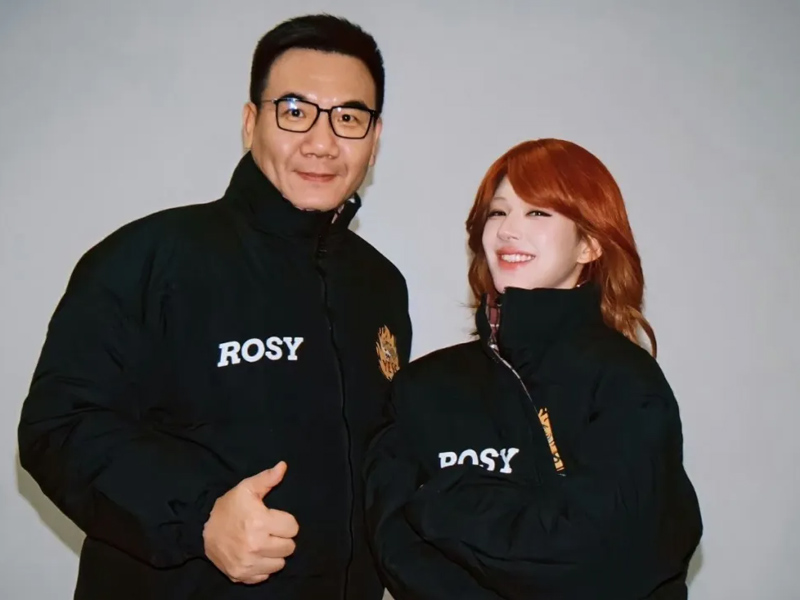
For platforms, signing established stars like Zhao Lusi or Bai Lu (白鹿) is a strategic power play. These artists are not just popular faces; they are leverage. Their proven ability to attract viewers—being what fans call "sales champions" or Xiaoguan (销冠)—grants their backers significant clout in production negotiations. A studio can secure co-production deals for major projects primarily based on the star's attached influence, as was seen with the series When Destiny Brings The Demon (献鱼).
A star's recent success further bolsters their value in this "transfer market." Zhao Lusi's well-received drama Love's Freedom (许我耀眼) on Tencent Video demonstrated her consistent commercial appeal, making her an even more attractive acquisition for a competing platform seeking to strengthen its own content arsenal. The platform gains a ready-made asset with a loyal audience.
The Cost Calculus
The primary driver behind this trend is starkly financial. "The main goal for a platform signing a mature artist is still cost control," explains producer Li Sha (栗纱). Previously, platforms had to pay exorbitant fees to external agencies for their stars' participation. Bringing the talent in-house allows the platform to drastically compress these acting fees. "This single item can save a seven-figure sum," Li notes. The savings are direct and substantial, improving a project's bottom line from the outset.

Furthermore, this model creates a continuous revenue stream. A top-tier artist is constantly working. Even when she appears in a project produced by a competing platform, her home platform, acting as her agency, still collects a management commission. This creates a scenario where one platform can effectively "use its own artist to earn money from others." From this perspective, securing established talent becomes a highly cost-effective strategy.
This financial logic has already been perfected in the micro-drama sphere. Platforms like Hongguo (红果) and iQiyi have launched "actor partnership programs" that tie remuneration directly to a project's revenue share. This mechanism grants the platform fundamental control over actor pricing and project matching, transferring financial risk and aligning success metrics.
Building the Stable
The long-term vision extends beyond individual stars. Platforms are essentially constructing proprietary "actor stables." This allows for closed-loop management, from project development and financing to casting and distribution. By internalizing key talent, platforms gain unprecedented control over their content pipeline. They can assign actors to projects that best serve the platform's overall strategic slate, ensuring optimal resource allocation.

The core objective is clear: better control, reduced costs, and increased efficiency. It transforms artists from expensive external contractors into integrated, managed assets. The relationship evolves from a transactional "rental" to a strategic partnership where the platform has a vested interest in the artist's long-term career trajectory, as it directly impacts the platform's own content library and financial health.
This shift signals a maturation of the Chinese streaming industry. The battle is no longer just for content, but for the very resources that make that content successful. By controlling top talent, platforms are securing their supply chain, mitigating market volatility, and building deeper moats against competitors. The announcement of a new studio, therefore, is more than a career update; it's a footnote in a larger corporate strategy reshaping entertainment.


2. How Streaming Platforms Remodel Stardom
A quiet but seismic recalibration is underway in China's entertainment industry. The relationship between streaming giants and the performers they elevate, once built on long-term cultivation, is showing deep cracks. Where platforms once acted as architects patiently constructing new stars, they now behave more like impatient landlords, seeking ready-made tenants for their prime properties. This shift from nurturing unknown talent to chasing established names reveals much about the pressures of modern content creation.
The Nurture Myth
For years, the dominant strategy was clear: identify fresh faces and build them from the ground up. Platforms like iQiyi and Tencent Video invested heavily in newcomers, offering multi-project contracts that promised a fast track to fame. Actors such as Chen Zheyuan (陈哲远), Zhou Yiran (周翊然), and Yang Chaoyue (杨超越) became beneficiaries of this system. They were branded as "platform-chosen" talents, starring in major productions designed to launch their careers.

This approach was seen as a cost-effective long-term investment. By controlling an artist's key projects, platforms could shape their trajectory and reap the rewards of their growth. A steady pipeline of series like Generation to Generation (江湖夜雨十年灯) or The Moon Over a Thousand Miles (月明千里) served as vehicles for these anointed stars. The model appeared sustainable, replicating past success stories where unknowns became household names.
However, the audience's verdict was harsh. Market reception grew increasingly cool toward these heavily promoted yet unproven talents. Viewers expressed fatigue with performers perceived as lacking the skill to justify their prominent roles. A project's failure often landed at the platform's doorstep, damaging its brand. The high risk and long incubation period of creating stars began to look less like a smart investment and more like a gamble.
Contractual Cracks
Disillusionment spread to the artists and their management teams. Contracts tying an actor to a platform for multiple projects often included complex revenue-sharing and performance clauses. One agent, Cindy, described a client's situation: a three-year deal promised specific earnings that the platform failed to deliver. The artist felt misled and is now seeking an early exit.

For traditional talent agencies, these platform partnerships became a source of tension. Revenue that was once split between artist and agency now had to accommodate a third party—the platform. This significantly diluted the agency's income. More importantly, agencies felt they lost creative and logistical control over their artist's career, leading to frequent clashes with platform executives over schedules and role selections.
Platforms, however, felt their efforts were unappreciated. "We provided numerous opportunities, but he just couldn't land the roles," complained Kirk, a platform executive. He cited instances where a platform-backed actor lost a part to a peer with a stronger independent track record. The blame game intensified: artists accused platforms of empty promises, while platforms questioned the talent's marketability and work ethic.
Chasing Established Light
This mutual disappointment has catalyzed a strategic U-turn. The focus has sharply pivoted from building to borrowing. Platforms now aggressively court already-popular actors with proven box-office or streaming appeal. Securing a top-tier star for a flagship series is seen as a safer bet than betting on an unproven newcomer's multi-year arc.

The calculation is purely economic. An established name brings a ready-made fanbase, immediate social media buzz, and lower perceived risk for advertisers. This trend sidelines the comprehensive "artist development" departments that were once a point of pride for platforms. Resources are reallocated to competitive bidding wars for the hottest talent of the moment.
This new landscape creates a stark divide. A small pool of top actors commands unprecedented leverage and compensation, while a growing number of mid-tier and new actors find their pathways narrowing. The "platform baby" system, for now, appears to be a fading experiment. The industry's scaffold has been rebuilt, not for patient growth, but for the immediate acquisition of pre-fabricated stardom.

3. Platforms in Transition
The once-familiar model of talent development is fracturing. Across the video streaming landscape, a profound recalibration is underway. The economic climate has shifted, making the old ways unsustainable. Fewer major productions are launching, creating a scarcity of opportunities. This scarcity forces a strategic pivot. Platforms are no longer investing in potential; they are securing proven assets. The era of speculative grooming is giving way to a colder, more calculated phase of talent acquisition.
The Calculus of Certainty
For platforms, risk mitigation is now the paramount concern. The data is stark: production rates have plummeted. In this environment, certainty holds immense value. An artist like Zhao Lusi represents this certainty. Her consistent audience draw and commercial appeal form a reliable equation. She can anchor in-house productions, controlling costs, or be leveraged in external co-productions for a share of revenue. This dual utility makes her a low-risk, high-clarity asset on any platform's balance sheet.

This shift creates two clear pathways for platform-signed artists. The first is external revenue generation. Top-tier talents are deployed to projects on other platforms, with their home company collecting agency fees. The second is internal cost efficiency. These artists headline proprietary platform productions, where resources can be streamlined and budgets tightly controlled. Both paths serve the same ultimate goal: consolidating the entire cycle of traffic generation and monetization.
Beyond Performance: The Artist as Node
The move for top artists is not merely a change of employer; it is an expansion of role and influence. Zhao Lusi's recent transfer is indicative. Her new agreement reportedly extends beyond acting. It encompasses potential ventures into talent scouting and business development. She is evolving from a star into a strategic node within the corporate ecosystem. Her value is multifaceted.
She is not an isolated case. Reports suggest Liu Haocun (刘浩存) has joined Huijing Entertainment, facilitated by a partnership with Zhang Yimou's (张艺谋) studio. This pattern reveals a new tier of artist-platform relationship. The most valuable individuals are integrated not just as contractors, but as partners who can influence the platform's wider creative and commercial matrix. Their career trajectories become intertwined with corporate strategy.
The Prefabricated Ecosystem
The logical endpoint of this strategy is a rigid, hierarchical system within platform walls. A video industry insider, Ah Xu (阿旭), describes it as a "prefabricated ecosystem." The previous model was akin to buying stock in an unknown startup, betting on future growth. The current model is about procuring finished, guaranteed components. A clear resource hierarchy is established.

Only the signed headliners gain access to the core reservoir of premier scripts, directors, and marketing budgets. Other artists find themselves locked out. As Ah Xu starkly puts it, many lesser-known talents cannot even obtain the "admission ticket." This creates a closed loop where platforms control production, distribution, and the stars themselves, minimizing unpredictable external variables.
This consolidation of power streamlines operations but raises questions about creative diversity. When platforms become the primary employers of top talent, the commissioners of major projects, and the distributors of the final product, the ecosystem risks homogenization. The market's role in testing and validating new faces diminishes. Stardom becomes less a public verdict and more an internal corporate appointment.
The long-term effects of this prefabrication are still unfolding. It may lead to more financially stable but artistically safer content. For the audience, it promises consistency from familiar faces. For the industry, it marks a decisive turn from the open, chaotic energy of its earlier years toward a more managed, corporatized future. The focus is no longer on discovering the next big thing, but on systematically deploying the last big thing, for as long as possible.

4. Corporate Control Remakes Stardom
The strategic pivot of China's streaming giants from talent cultivators to talent acquirers marks a fundamental corporatization of stardom. By directly contracting established artists like Zhao Lusi, platforms are no longer just buying performances but securing strategic, revenue-generating assets. This model prioritizes financial certainty, cost control, and ecosystem control over creative experimentation.

While it streamlines production and mitigates risk, it fosters a prefabricated hierarchy that may stifle diversity and obscure new talent. The artist-platform relationship has been permanently rewritten, transitioning from a narrative of potential growth to one of managed extraction and corporate calculus.