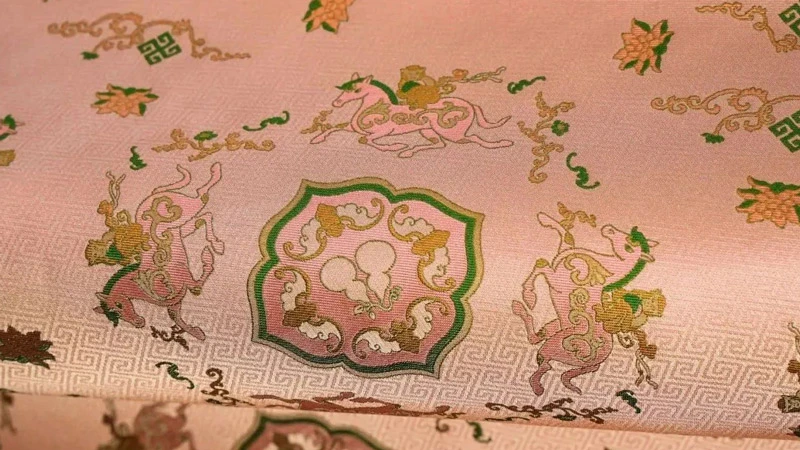
As the Year of the Horse gallops into our lives, the streets are filled with decorations featuring this majestic animal. But the presence of the horse in Chinese culture extends far beyond New Year’s ornaments. For centuries, it has been a powerful symbol woven into the very fabric of Hanfu, China’s traditional clothing. From mythical beasts to emblems of official rank, the evolution of the horse motif offers a unique lens through which to view the changing aesthetics and values of Chinese civilization. Join us as we trace the hoofprints of this enduring symbol across the rich tapestry of history.
Qin and Han Dynasties
The story of the horse in Chinese art begins long before it appeared on clothing. In ancient texts like the Zhou Yi · Shuo Gua (周易・说卦), the horse was associated with the creative power of heaven, embodying strength, perseverance, and noble spirit. During the Qin and Han dynasties, this reverence took physical form in magnificent bronze sculptures, such as the renowned horses from the Terracotta Army of Emperor Qin Shi Huang (秦始皇). These were realistic depictions of a vital military asset. However, on the textiles of the time, the horse was notably absent, with cloud and dragon motifs being far more common.
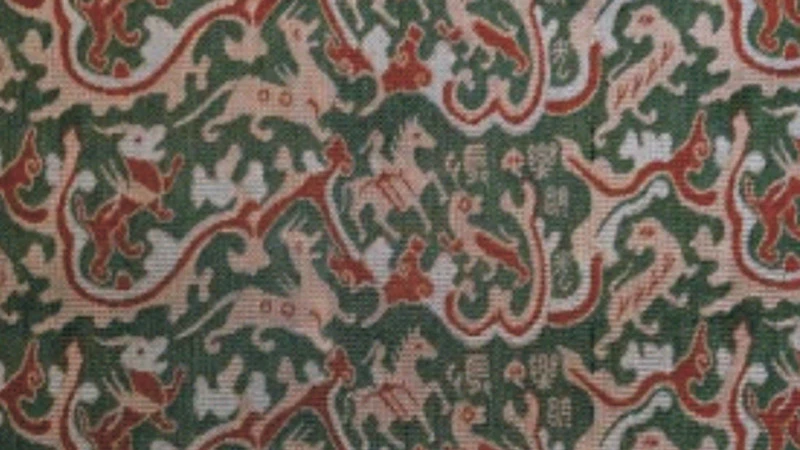
It was the Han dynasty’s fascination with Daoist mythology that first brought the horse onto silk. The concept of the Tian Ma (天马), or heavenly horse, emerged. These weren’t ordinary animals but winged creatures, often depicted carrying immortals through the clouds. A prime example can be seen in the “Changle Mingguang (长乐明光)” brocade from the Han-Jin (汉晋) period. In it, a winged horse, surrounded by swirling celestial vapors, calmly carries a divine being. This motif wasn’t just decorative; it was a visual prayer for good fortune and a guide to the afterlife, proving that the earliest horse patterns were more about spiritual aspiration than earthly reality.
Sui Dynasty and Tang Dynasty
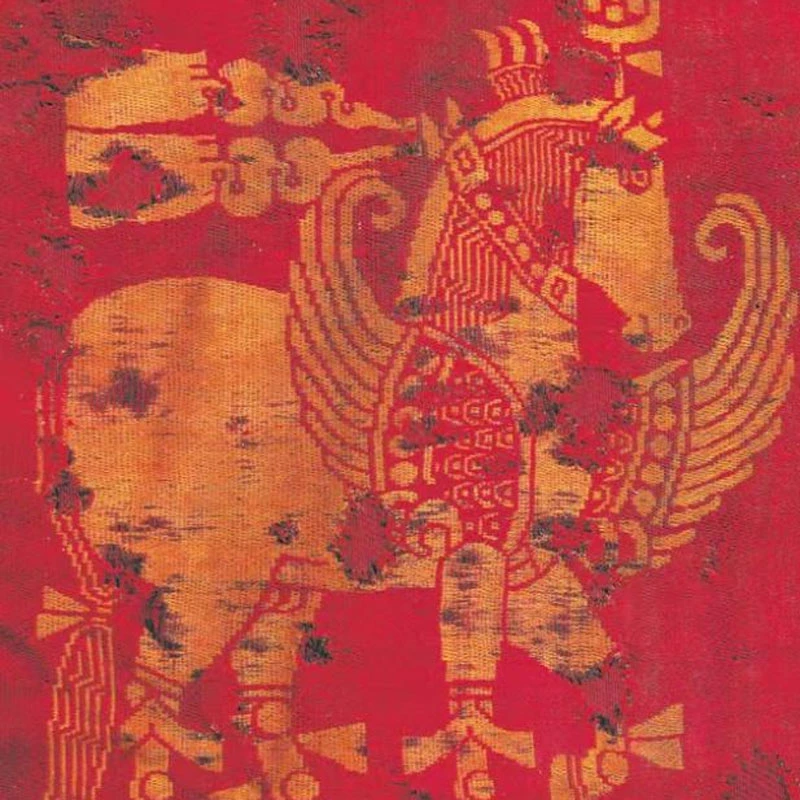
The Tang dynasty ushered in an era of unprecedented cosmopolitanism, and the horse motif on Hanfu was transformed by it. The lean, celestial horses of the Han gave way to a new, exotic creature. Tang dynasty textiles, particularly those excavated in the northwestern regions, feature a plump, majestic winged horse with elaborate decorations. This iteration, often called the Yi Ma (翼马), or winged horse, displayed ornate floral crowns and intricately curled wings, a direct result of cultural exchange along the Silk Road.
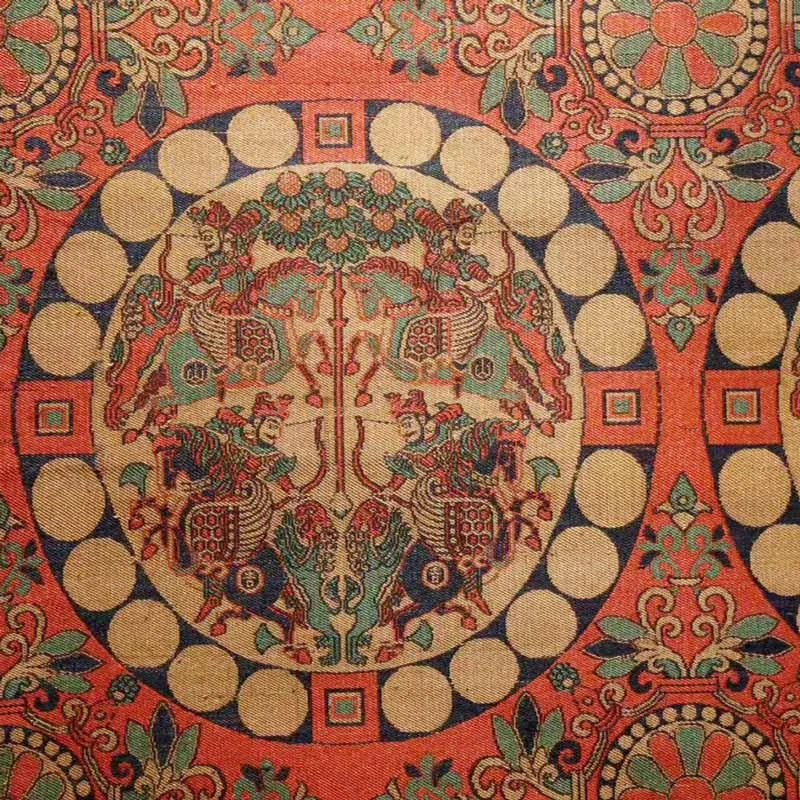
This new aesthetic blended Persian artistic styles with Central Asian myths. The stunning “Four Guardians Hunting Pattern Brocade” from the Sui dynasty and the “Red Ground Winged Horse Brocade” from the Tang perfectly illustrate this shift. In fact, the costume worn by actor Yue Yunpeng (岳云鹏) in the popular TV drama The Lychees of Chang’an (长安的荔枝) was based on a real artifact—a Tang dynasty brocade with paired horses inside pearl roundels, now housed in the Xinjiang (新疆) Museum. These designs were bold, symmetrical, and brimming with a romantic, worldly energy, a stark contrast to the more restrained aesthetics that would follow. After the Tang’s exuberance, the horse motif largely retreated from mainstream fashion, as floral patterns took center stage during the more introspective Song dynasty.
Ming Dynasty
The horse made a powerful comeback in the Ming dynasty, but in a completely new role: as a marker of bureaucratic rank. It found its place on the Bu Zi (补子), the square insignia worn on the official robes of military officers. According to the meticulous sumptuary laws of the time, the ninth-rank officer was entitled to wear a badge featuring the Hai Ma (海马), or “sea horse.” Unlike its winged predecessors, this horse galloped above the waves, its legs often adorned with flame-like patterns, symbolizing its ability to traverse both land and sea with unstoppable speed and courage.
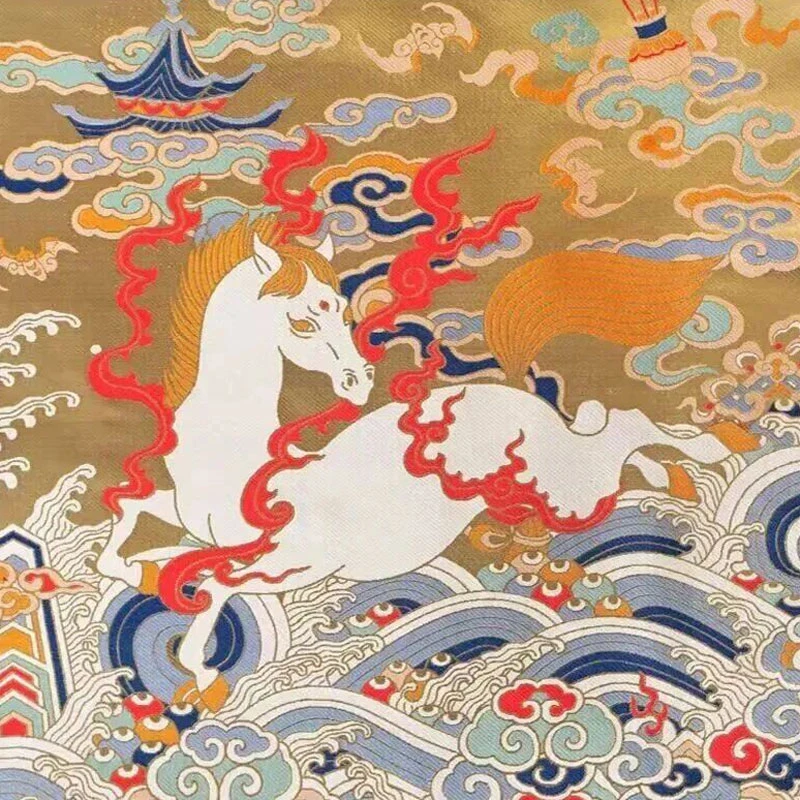
This depiction was a significant departure from the past. The mythical wings were gone, replaced by a dynamic image of an earthly creature performing a superhuman feat. By the late Ming dynasty, however, these strict hierarchies began to blur. The scholar Wang Ao (王鏊) noted in the Zhengde Gusu Gazetteer (正德姑苏志) that commoners in Suzhou were wearing fabrics with sea horse motifs, finding them visually appealing. The horse motif had escaped the confines of the court.
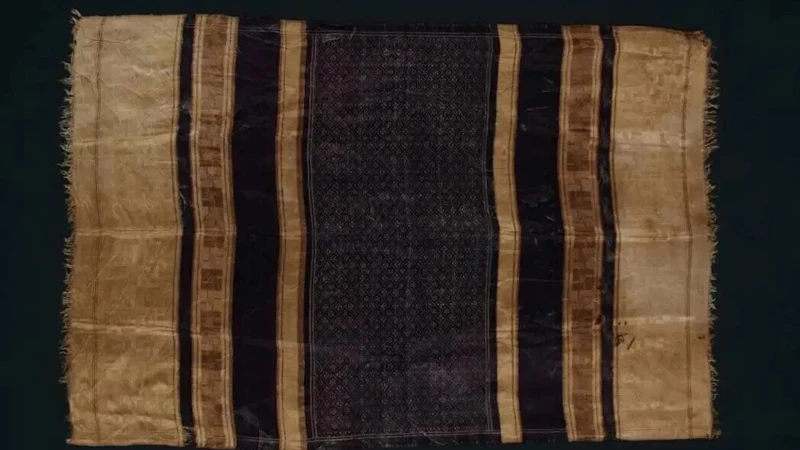
This period also saw the horse appear on accessories, like the stunning galloping-horse-patterned damask scarf unearthed from the tomb of Xu Fan (徐蕃) in Taizhou (泰州). The design, showing a horse running joyfully with its head turned back, brings a sense of lively, personal expression to a motif once reserved for spiritual or official use. Today, as Hanfu enjoys a global revival, the horse motif continues to gallop forward, blending ancient symbolism with modern creativity to inspire a new generation.




what a fascinating article!! i didn’t know about the Taoist inspiration
Aww, thank you! That Taoist inspiration is exactly what makes early horse patterns so special.
Taoist inspiration: follow nature, act effortlessly, live in peace and harmony.
now i want to learn more about taoism!
So cool! Hope you have fun learning more. ✨