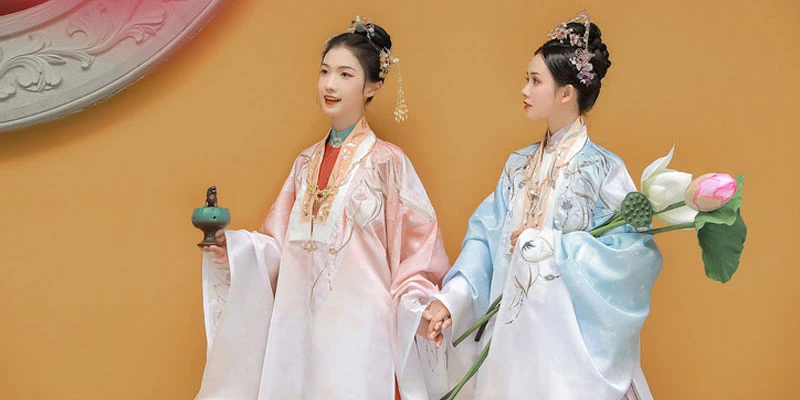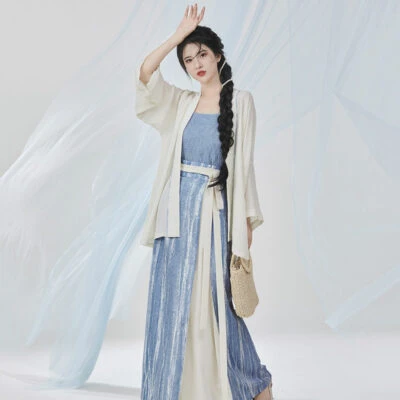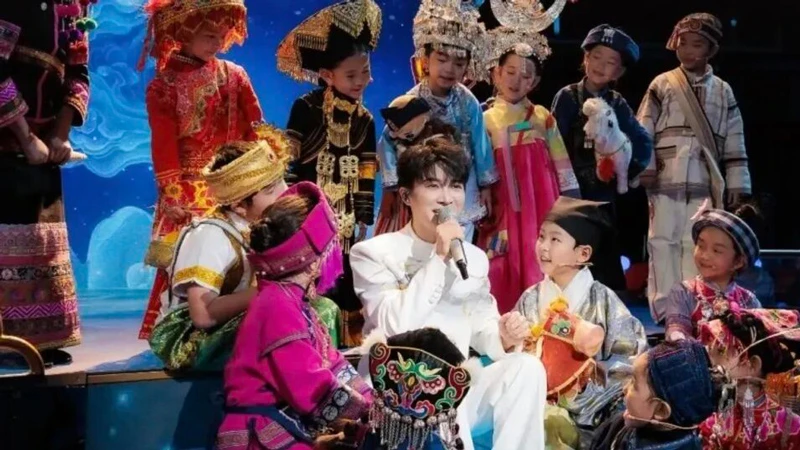
For decades, a peculiar absence haunted China’s grandest family portrait. When the nation’s 56 ethnic groups gathered on public stages, one chair remained visually empty. The Han majority, representing over 90% of the population, appeared not in ancestral silk and robes, but in everyday t-shirts and shorts. This glaring omission finally found its correction on this year’s CCTV Spring Festival Gala. As singer Zhou Shen (周深) performed the ethereal Ji Liang (吉量), a procession of children in ethnic finery walked the stage.
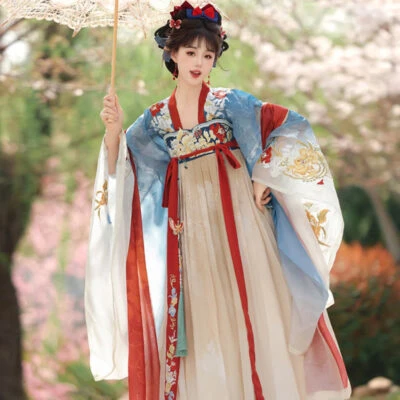
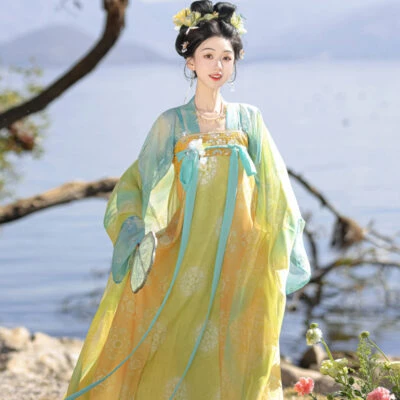
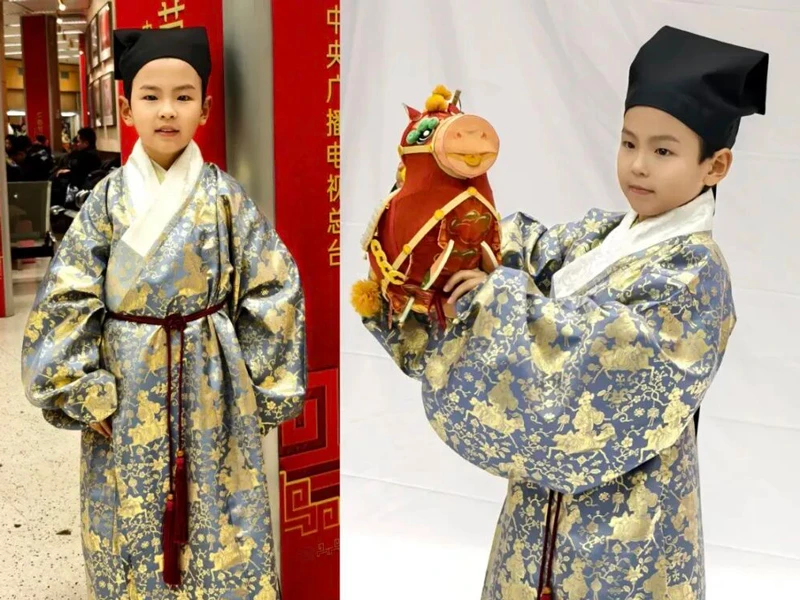
Among the Miao, Tibetan, and Uyghur attire, a Han boy finally wore his own—a Ming Dynasty-style Dao robe (道袍), a scholar’s scarf upon his head. For countless viewers, it was a moment of profound validation and a question answered: the Han do have traditional clothing, and it’s called Hanfu.
A Long-Awaited Portrait
The image of that young boy, standing proudly alongside his peers from other ethnic groups, resonated far beyond the gala’s runtime. It visually articulated what advocates have stressed for over two decades: Hanfu is not a costume, but the traditional attire of the Han ethnic group. Prior to this, the narrative was different. Official ethnic group photos, like one released by the Ministry of State Security in April 2025, began to show progress with Han representatives wearing Qixiong Shanqun (齐胸衫裙).
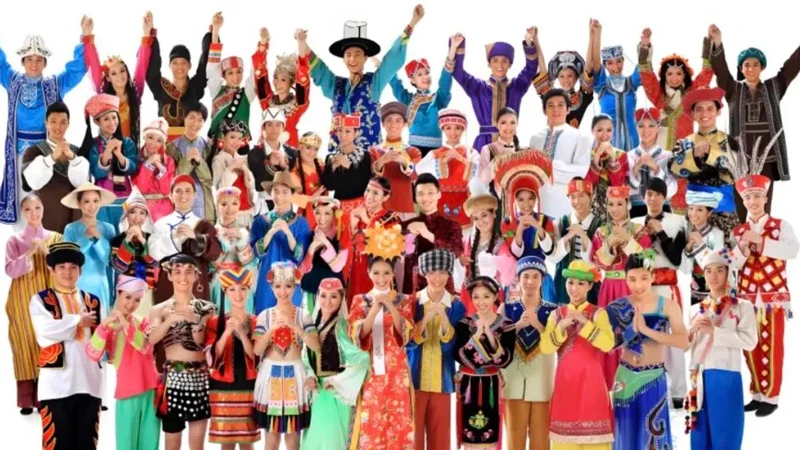
Yet, in everyday media, particularly in primary school textbooks, the Han child was consistently depicted in modern, non-descript clothing. This lack of representation led to widespread misconceptions, with many citizens, reflecting on their own education, admitting they grew up believing the Han simply had no traditional dress of their own. The Spring Festival Gala stage, with its immense viewership, finally offered a powerful and visible correction to this long-standing oversight.
The Symbolism in Ji Liang
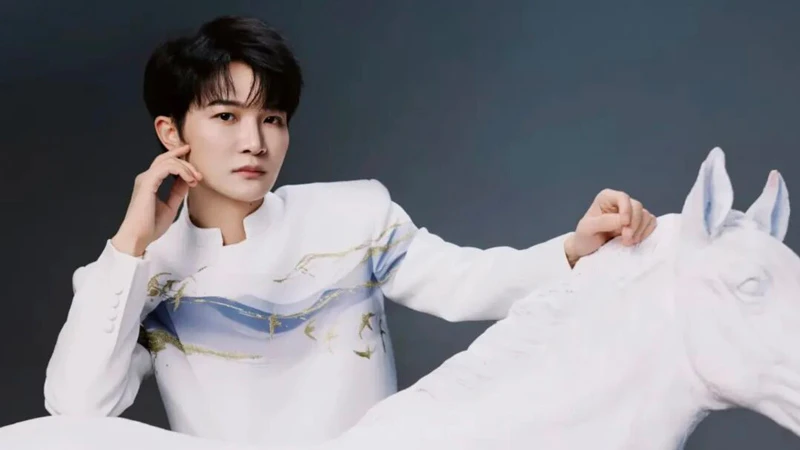
The choice of the song Ji Liang added a layer of profound meaning to the visual spectacle. In Chinese mythology, as recorded in the ancient text Classic of Mountains and Seas (山海经), Ji Liang is a mythical horse. Described with a snow-white coat, a fiery red mane, and eyes that shimmer like gold, riding this divine steed was said to bestow a millennium of life. It was a creature of hope and longevity.
By associating the first mainstream Hanfu appearance with this auspicious symbol, the performance was not just a display of clothing. It was a wish cast forward—a hope for the enduring future of these traditions, and for the children who wore them. The song’s theme perfectly mirrored the moment: a new beginning for an ancient culture, galloping confidently into the national spotlight, promising vitality and continuity for all the ethnic groups represented on stage.
A Future Woven with Threads of the Past
The significance of this moment cannot be overstated. While Hanfu has enjoyed booming popularity in online communities and city streets for years, recognition at the state level, on a platform as influential as the Spring Festival Gala, is a different order of achievement. It signifies a formal acknowledgment of Hanfu as the legitimate ethnic dress of the Han people, placing it on equal footing with the celebrated attire of China’s other 55 ethnic groups. For the grassroots movement that has tirelessly promoted Hanfu culture for over twenty years, this was a landmark victory.
The journey, however, is not over. The next frontier is the classroom. The hope now is that textbook publishers will follow the gala’s lead, updating their images to show Han children in Hanfu. Only then will every child learn this simple truth: that their heritage includes a beautiful and diverse wardrobe, and they too have the right to see their own ethnic identity reflected in the grand, colorful tapestry of the nation.