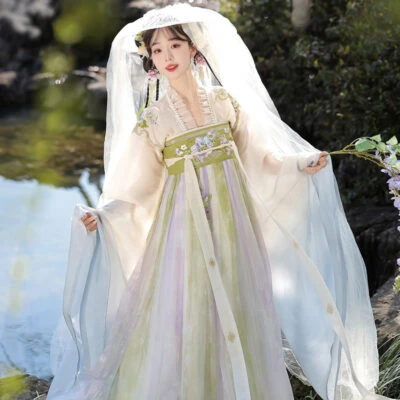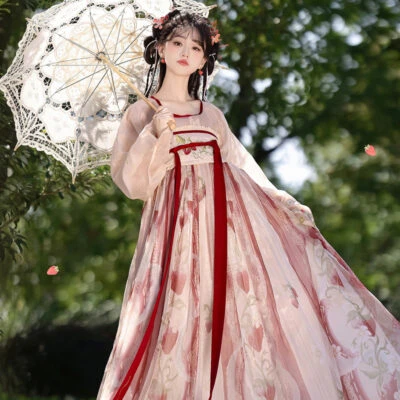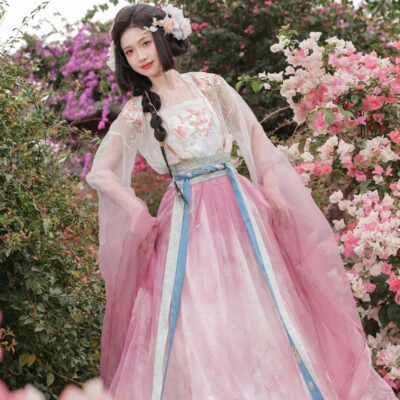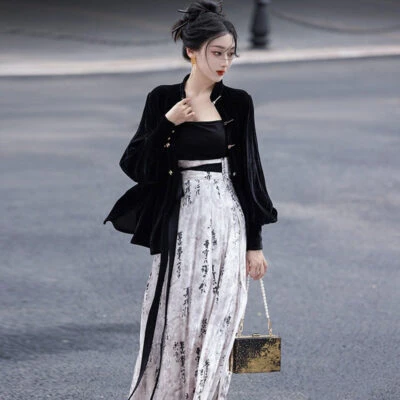
When actress Wang Churan (王楚然), recently featured on China Central Television, debuted her latest photoshoot in Hanfu traditional clothing, she set social media ablaze. Known for her elegant Song Dynasty styles, she surprised fans by stepping into something far more ancient and dramatic: the so-called “Warring States Robe.” But what exactly is this flowing, majestic garment that seems to transport the wearer back over two thousand years, and why has it become a favorite for creating cinematic, unforgettable portraits?
This style offers a window into ancient Chinese aesthetics, blending historical inspiration with modern photography to create a look that is both powerful and ethereal. We explore its origins, its unique design, and its place in contemporary visual culture.
Unpacking the “Warring States Robe”
The term “Warring States Robe” is a popular, modern catch-all for a very specific style of ancient Chinese clothing. It’s not a historically accurate term for a garment from that period, but rather a convenient name that has stuck. The primary inspiration for these robes comes from archaeological finds at the Mashan Chu Tomb (马山楚墓). Specifically, most designs are recreations of the straight-lapelled robe, catalogued as style N15, unearthed from this site in Hubei province. This tomb was a treasure trove of textile history, yielding dozens of well-preserved garments that provide our clearest picture of Chu-style clothing.
Because the Chu state was culturally dominant and its clothing styles likely influenced neighboring states, the distinct straight-lapelled robe seen in the tomb is often casually associated with the noble fashion of the entire Warring States period (475-221 BCE). So, when people today use the term “Warring States Robe,” they are almost always referring to a garment based on the Mashan Chu Tomb finds. It’s a fascinating example of how a specific archaeological discovery can shape modern understanding and even create a new, widely accepted term for an ancient fashion.
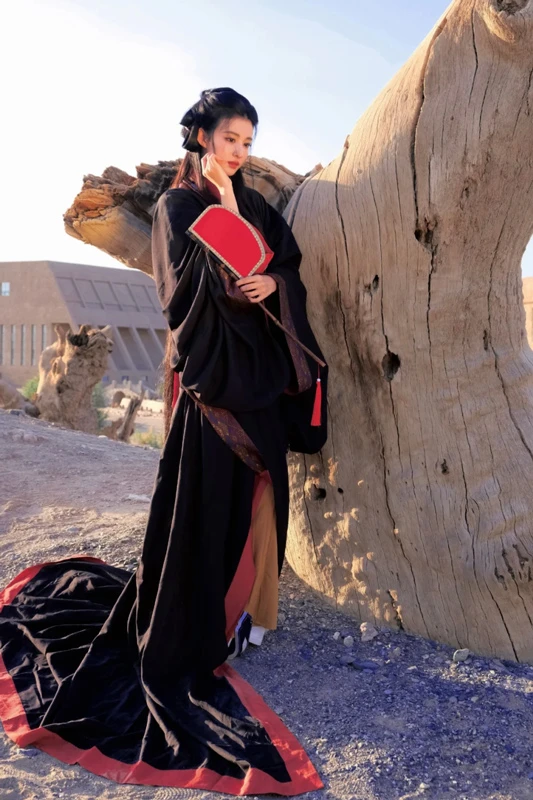
This robe is characterized by a few key design features. It has a cross-collar, an extremely generous cut with ample fabric, sleeves shaped like hanging gourds, and a wide sash. The skirt is long, often trailing on the ground. While variations like N10 and N14 exist, they share a common silhouette. The voluminous cut is not just for show; it creates beautiful, natural folds and a flowing, almost water-like effect in the fabric, which is why it photographs so dynamically.
Authenticity vs. Atmosphere
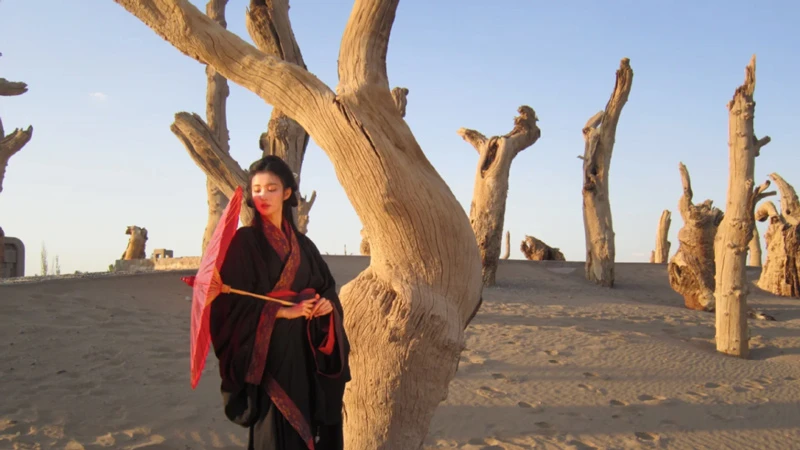
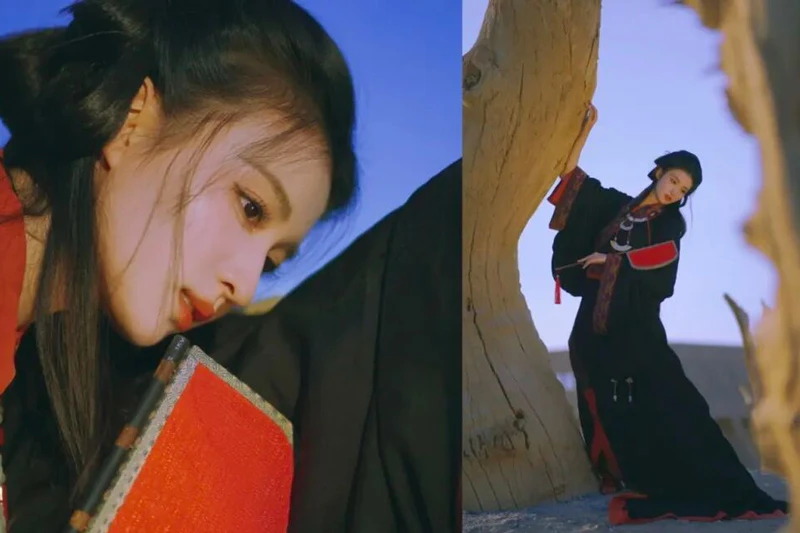
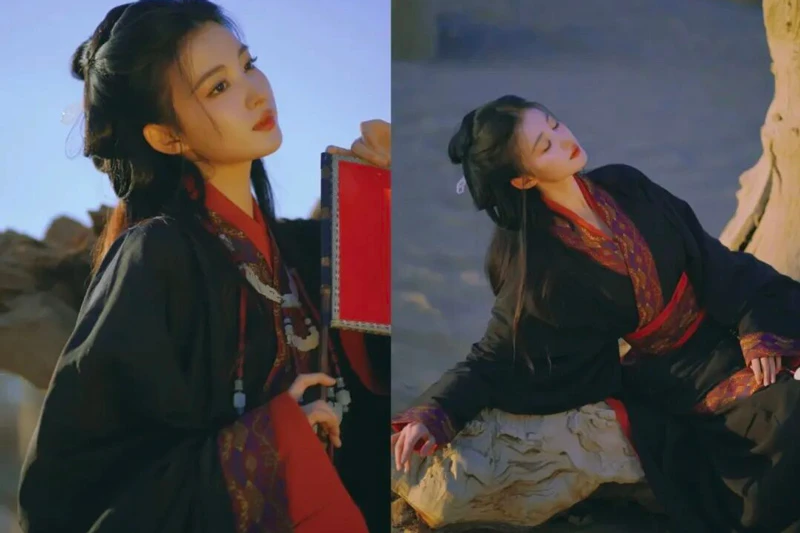
In her photos, Wang Churan wears a robe dominated by a classic red and black color scheme, a palette often associated with gravity and ceremony in ancient times. The garment is adorned with pre-Qin dynasty patterns, and she is pictured with a jade pendant set, itself a symbol of noble status and ritual propriety. The photoshoot was set against the dramatic, golden backdrop of a desert poplar forest in Northwest China, a choice that amplifies the robe’s sense of timelessness and destiny. The vast landscape and the flowing garments combine to create a powerful visual narrative.
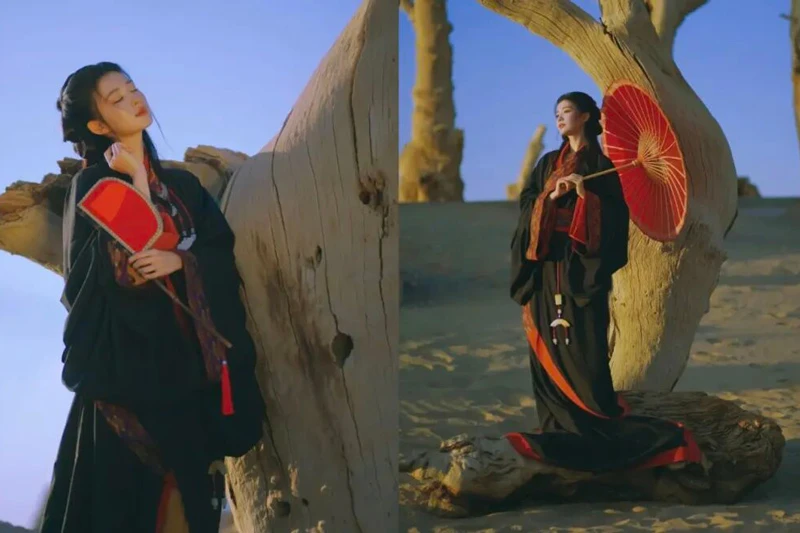
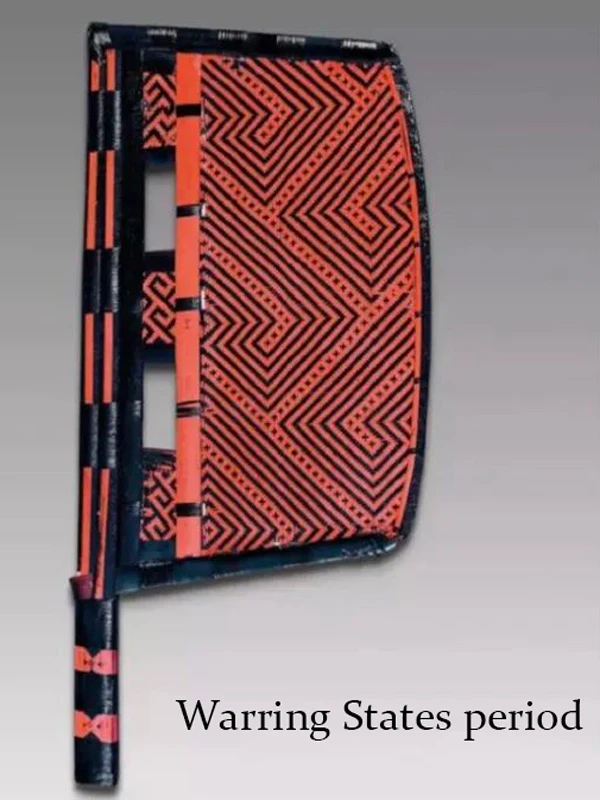
However, for the historically observant, the photos present some intentional or unavoidable anachronisms. For instance, the fan she holds is of a type known as a “convenience fan”, which became popular during the Han and Jin dynasties. In the Warring States period, fans for obscuring the face or for ceremonial use had a different, more rigid form. Similarly, the oiled-paper umbrella she carries would not have been a personal accessory at that time. Such umbrellas, known as “canopies”, were large, ceremonial items mounted on chariots or held by attendants, made with bronze or lacquered wood frames. Personal parasols for rain didn’t become common until after the Eastern Han Dynasty, when paper technology advanced.
These details are not necessarily criticisms but rather points of interest. If the primary goal is to create a captivating “Chinese-style” photoshoot that evokes an ancient spirit rather than achieving strict historical accuracy, then these elements can be seen as creative liberties. They represent a blending of eras to build a specific aesthetic—a fantasy of antiquity. For many, the overall mood and the majestic flow of the robe are the main attractions, and the mix of historical details adds to the layered texture of the image, even if they aren’t perfectly aligned with a single time period.
The Appeal of Cinematic Hanfu
The popularity of shoots featuring the Warring States Robe highlights a broader trend in modern Chinese portraiture. This style of photography, often called “Guofeng” (国风) or Chinese-style, prioritizes atmosphere, grandeur, and a connection to cultural roots. The robe itself is a photographer’s dream. Its voluminous cut and long, trailing lines create a powerful sense of movement and drama in a still image, especially when caught in a breeze or set against a sweeping landscape. The ample fabric provides a rich canvas for intricate, historically-inspired patterns.
This aesthetic resonates deeply with contemporary audiences for several reasons. It offers a tangible link to a distant and often mythologized past, allowing individuals to visually embody a piece of their heritage. The dramatic style also contrasts sharply with the fast pace and simplicity of modern fashion, offering a sense of romance and escapism. Wearing such a garment, even for a photoshoot, is an act of stepping into a story—a story of ancient states, noble scholars, and timeless beauty. It’s a form of cultural expression that is both personal and visually shareable.
Ultimately, Wang Churan’s photoshoot is more than just a set of beautiful pictures. It is a cultural artifact in its own right, demonstrating how ancient history is continuously reinterpreted through a modern lens. Whether one is a stickler for historical accuracy or simply appreciates the breathtaking visuals, the popularity of the Warring States Robe in contemporary photography proves that the desire to connect with the past, to dress up in its stories, and to create new art from old threads is as strong as ever. It invites us to ask ourselves: what part of our history would we choose to wear, and what story would we tell?